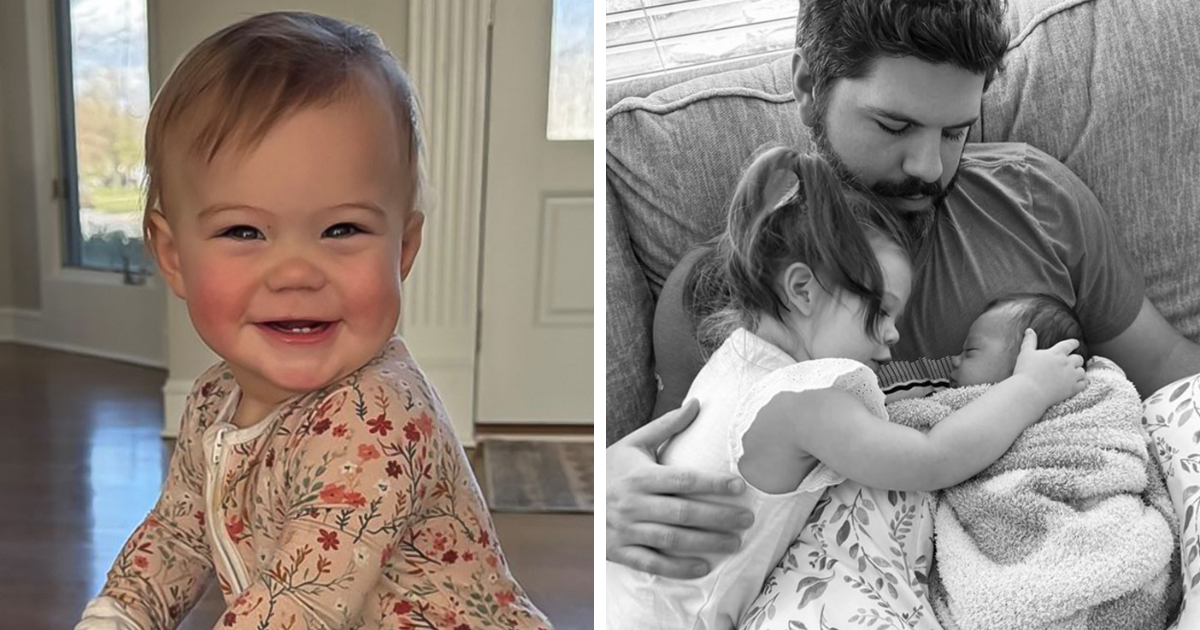
There are headlines that feel too heavy to scroll past, and this is one of them. Lizzie Kieffer, a Missouri-based physical therapist, health educator, and content creator known online for her pelvic floor and motherhood content, shared the heartbreaking news in April 2025 that her 12-month-old daughter, Lilian “Lily” Louise Kieffer, had died unexpectedly. The loss came only weeks after Lizzie and her husband, Matt Kieffer, had publicly revealed they were expecting their third child.
For followers who knew Lizzie through practical pregnancy tips, postpartum education, and relatable family updates, the announcement landed with stunning force. One moment, her online world was filled with growing-family joy. The next, it was marked by the kind of grief that has no tidy caption, no clean ending, and certainly no “right” way to process it.
Lizzie’s story is not simply a celebrity-influencer headline. It is a painful reminder that real families live behind the polished squares of social media. It also opens a wider conversation about child loss, pregnancy after tragedy, faith, community support, and how public figures navigate private pain while thousands of strangers are watching.
Who Is Lizzie Kieffer?
Lizzie Kieffer is widely known online as a physical therapist and wellness creator who focuses on women’s health, pregnancy, postpartum recovery, and pelvic floor education. Her content often blends professional guidance with motherhood, making her page a familiar space for parents looking for encouragement, mobility tips, and realistic support after birth.
She and her husband, Matt, are parents to their older daughter, Mia. Their second daughter, Lily, was born into what appeared from the outside to be a joyful and active family life. In March 2025, Lizzie announced that she was pregnant again, with the family expecting a third baby. The news was shared in the same warm, hopeful tone that many followers had come to associate with her online presence.
That context is part of why the loss felt so jarring to her community. The announcement of pregnancy had suggested a new chapter of excitement. Weeks later, Lizzie was sharing the unimaginable reality that Lily had passed away.
The Heartbreaking Announcement About Lily
In late April 2025, Lizzie shared that Lily had died on April 23, just days after her first birthday. In her post, she wrote that the family was shattered and described waking up to a nightmare they never imagined would become their reality. Lily was only 12 months old.
Lizzie’s words painted a picture of a child deeply loved in her 374 days of life. She described Lily as a bright presence who brought light into every space she entered. The family’s grief was raw, but so was their love. That love became the center of Lizzie’s message: Lily’s life was brief, but it was not small.
At the time of the initial announcement, Lizzie explained that the family did not yet have full answers. Doctors had discovered a large mass on Lily’s brain after her death, but additional testing was needed. That uncertainty added another layer to the heartbreak. The family was not only grieving a child; they were also waiting for explanations that could take months to arrive.
A Later Diagnosis: What Public Reports Shared About ATRT
In 2026, Lizzie shared more information about Lily’s diagnosis. According to public reporting, further testing identified an Atypical Teratoid Rhabdoid Tumor, often shortened to ATRT, located on Lily’s brainstem. ATRT is a rare and aggressive tumor that can occur in the brain or spinal cord, most often in very young children.
Medical organizations describe ATRT as fast-growing, with symptoms that may depend heavily on the tumor’s location, the child’s age, and how quickly it develops. In some cases, symptoms can appear suddenly or worsen over days or weeks. Public reports noted that Lizzie said Lily had seemed healthy, vibrant, and full of life, which made the loss even more shocking for the family.
It is important to say this clearly: nothing in the public reporting suggests parental fault. Mayo Clinic notes that ATRT is not caused by a parent’s actions, diet, injury, or ordinary environmental exposure. For grieving families, that distinction matters. Parents often replay every detail, wondering what they missed. But rare medical tragedies are not moral failures. They are tragedies.
Grieving While Pregnant: A Painful Emotional Collision
One of the most difficult parts of Lizzie Kieffer’s story is the timing. She was pregnant when Lily died. That means she was carrying new life while mourning the death of another child. It is hard to imagine a more complicated emotional landscape.
Months after Lily’s passing, Lizzie reflected publicly on the experience of grieving while preparing to welcome another baby. She described the intense contrast between mourning and pregnancy, a place where heartbreak and hope can exist in the same breath. That emotional collision is something many bereaved parents understand, even if they rarely have the words for it.
Pregnancy after loss can bring joy, fear, guilt, numbness, gratitude, anxiety, and love all at once. A parent may feel excited about a new baby and then feel guilty for feeling excited. They may worry that happiness dishonors the child who died. They may feel disconnected from the pregnancy, not because they lack love, but because grief has taken up so much space in the body and mind.
There is no simple emotional instruction manual for this. No laminated card appears in the mail saying, “Here is how to mourn one child while preparing for another.” Real life is messier. Grief does not politely leave the room because a new baby is coming. Hope does not cancel sadness. Both can sit at the same table, even if nobody asked for that seating arrangement.
Why Lizzie’s Story Resonated With So Many People
Lizzie’s followers responded with condolences, prayers, and messages of support. The response was not surprising. Parents, especially those who have experienced infant loss, pregnancy loss, or medical trauma, often recognize pieces of their own grief in someone else’s story.
Her story resonated because it shattered a common illusion about social media. Online, family life can look organized, filtered, and predictable. Milestones arrive in neat posts: birthdays, pregnancy announcements, first steps, matching pajamas, tiny shoes lined up by the door. Then tragedy enters, and suddenly everyone remembers that no algorithm can protect a family from real pain.
It also resonated because Lizzie did not present grief as a performance. She spoke from the place where language is imperfect. She leaned on faith, family, and community while acknowledging that the loss was beyond understanding. That honesty gave others permission to feel deeply, too.
The Role of Faith, Family, and Community Support
In her public posts, Lizzie has spoken about faith as an important part of how her family is moving through the loss. She has shared belief in God’s presence during darkness and expressed hope that Lily remains spiritually near to them. For some readers, that faith language may feel deeply comforting. For others, grief may look different. Both realities can be true.
Support after child loss is not one-size-fits-all. Some families want prayer. Some want silence. Some want meals dropped off without a long conversation at the door. Some want people to say the child’s name. Others may need space before they can talk. The most compassionate approach is not to assume, but to show up gently and consistently.
Organizations such as March of Dimes emphasize that loss can be profoundly isolating, and families often need community, resources, and ongoing care. The key word is ongoing. Support tends to flood in during the first few days, then fade when the rest of the world resumes its schedule. But bereaved parents do not “resume” on command. Anniversaries, due dates, holidays, birthdays, and ordinary Tuesdays can all reopen grief.
How To Talk About Child Loss With Compassion
When a public figure shares a tragedy, the internet often wants to respond quickly. Speed is not always the friend of sensitivity. Before commenting, posting, or writing about a family’s loss, it helps to remember that the people involved are not characters in a story. They are parents, siblings, grandparents, and loved ones living through something devastating.
Say Less, Mean More
A simple message can be more helpful than a paragraph trying to explain the unexplainable. Phrases such as “I am so sorry,” “Lily is remembered,” or “I’m holding your family in my thoughts” may sound small, but they do not minimize the loss. They acknowledge it.
Avoid Explaining the Pain Away
Statements like “everything happens for a reason” or “at least you have another baby coming” can wound, even when meant kindly. A new child does not replace the child who died. Pregnancy does not erase grief. Hope and heartbreak are not math problems where one cancels the other out.
Use the Child’s Name When Appropriate
Many bereaved parents appreciate hearing their child’s name. It confirms that the child mattered and continues to matter. In Lizzie’s case, she has publicly spoken of Lily with love and tenderness, and many supporters have followed that lead by honoring Lily’s name respectfully.
Pregnancy After Loss: The “Both-And” Experience
One of the most important lessons from Lizzie Kieffer’s experience is that human emotions are rarely either-or. Pregnancy after loss is often both-and. A parent can be grateful and devastated. Excited and terrified. Hopeful and exhausted. Present with a new baby and still longing for the child who is gone.
This is not emotional confusion. It is grief doing what grief does: refusing to be simple. For families who welcome another child after loss, the new baby may bring joy, but that joy often arrives alongside remembrance. There may be nursery preparations and tears. Baby clothes and memorial items. Ultrasound appointments and moments of panic. A future being built while the past remains beloved.
When Lizzie later welcomed her third daughter, Isla, public reporting described the moment as arriving only months after Lily’s death. That kind of chapter can never be reduced to a cheerful “happy ending.” It is better understood as a continuation of love. Lily remains part of the family story, not a chapter closed and shelved.
Why Responsible Reporting Matters
Stories involving child loss require care. Sensational language may attract clicks, but it can flatten a family’s pain into entertainment. Responsible reporting should focus on confirmed facts, avoid speculation, and respect the dignity of the child and family.
In this case, responsible coverage means acknowledging what Lizzie herself shared: Lily died unexpectedly, the family initially had limited answers, later testing identified ATRT, and Lizzie has spoken openly about grief, faith, and the complicated emotions of pregnancy after loss. It also means avoiding medical assumptions beyond what has been publicly disclosed.
For readers, the same principle applies. Curiosity is natural, but compassion should lead. A grieving parent does not owe the internet every detail. Public sharing is not the same as public ownership.
What Families Can Learn From This Tragedy
No article can turn a loss like this into a lesson, and it should not try too hard. Lily’s life deserves to be remembered as a life, not as a symbol created for strangers. Still, stories like Lizzie’s can remind families of a few tender truths.
First, ordinary days matter. The videos, cuddles, messy meals, bedtime routines, and tiny everyday rituals are not filler between milestones. They are the life itself. Second, grief deserves support that lasts longer than the first wave of sympathy. Third, parents who are grieving while pregnant need space for complicated emotions, not pressure to be inspirational.
Finally, families facing rare medical diagnoses deserve accurate information and compassionate care. ATRT and other rare pediatric conditions can be difficult to detect and understand. Parents should never be blamed for what they could not reasonably have known.
Experiences and Reflections Related to Lizzie Kieffer’s Story
Lizzie Kieffer’s loss brings attention to an experience many families live quietly: the strange, painful overlap between celebration and sorrow. A family can have a pregnancy announcement on the calendar and grief in the house. They can receive congratulations and condolences in the same season. They can be asked about due dates while still trying to understand how to breathe through the absence of a child.
For parents who have been through child loss, one of the hardest parts is how quickly the outside world expects normal life to return. Bills still arrive. Laundry still piles up. Emails still ask for replies. The refrigerator still makes that weird humming sound at 2 a.m., because apparently appliances have no emotional intelligence. Meanwhile, the parent is living in a reality that has been permanently divided into “before” and “after.”
When pregnancy is part of that reality, the body itself can feel like a place of contradiction. A pregnant mother may feel kicks while crying for the child she cannot hold. She may attend medical appointments that are supposed to be joyful but feel frightening. She may prepare for birth while fearing another loss. None of these reactions are wrong. They are human.
Families in similar situations often describe the need for people who can sit with them without trying to repair the pain. The best support may be practical and quiet: bringing dinner, helping with childcare, remembering important dates, sending a message weeks later, or saying, “I don’t know what to say, but I’m here.” That sentence may not be elegant, but grief is not grading anyone’s essay.
Another meaningful experience is the act of continuing to include the child who died in family life. Some families keep photos visible. Some celebrate birthdays. Some light candles, plant gardens, create memory boxes, donate to research, or speak the child’s name in everyday conversation. These rituals are not about staying stuck. They are about keeping love connected.
For public figures like Lizzie, grief carries an additional challenge: the audience. Social media can offer community, but it can also create pressure. People may want updates, explanations, or emotional access. A grieving parent may want to share one day and disappear the next. That is valid. Privacy is not a betrayal of followers. Silence is not a lack of gratitude. Boundaries are a form of survival.
Readers can take something deeply practical from Lizzie’s story: be gentle with families who are grieving, especially when new life is also present. Do not assume a pregnancy makes the grief lighter. Do not assume a new baby “fixes” the loss. Love expands; it does not replace. A family can welcome a child with joy while still missing another child with every part of themselves.
There is also a broader cultural lesson here. We often want grief to become inspiring quickly because inspiration is easier to consume than pain. But some stories should not be rushed toward silver linings. Sometimes the most respectful thing to say is that a child was loved, a family is hurting, and the love continues. That is enough.
Conclusion
Lizzie Kieffer’s mourning of her 12-month-old daughter Lily, only weeks after revealing she was pregnant, is a story marked by devastating loss, complicated hope, and enduring love. Public updates have since shared more about Lily’s diagnosis, but no diagnosis can fully explain the size of a family’s grief. Lily’s life was brief, but the way her parents speak about her makes one thing unmistakably clear: she remains deeply present in their family’s story.
For readers, the most compassionate response is not speculation, but remembrance. Say the name. Respect the boundaries. Support the grieving. And understand that joy after loss is not a replacement for sorrow; it is another expression of love learning how to keep living.