A quantum circuit that uses just a few atoms sounds like something a science-fiction writer would invent after drinking one espresso too many. Yet this idea is no longer trapped in the “maybe someday” drawer. Researchers have shown that by placing atoms with extraordinary precision inside silicon, it is possible to build quantum structures small enough to make ordinary microchips look like city blocks. The result is not merely a tiny gadget; it is a new way to think about computation, chemistry, and the future of electronics.
The headline “Quantum Circuit Uses Just A Few Atoms” points to a remarkable trend in quantum computing: scientists are learning to design devices at the same scale where nature itself operates. Instead of forcing classical computers to approximate molecular behavior from afar, atom-scale quantum circuits can imitate quantum systems directly. In plain English, it is like asking a fish to explain water instead of asking a toaster to do it. The fish has home-field advantage.
What Does “A Few Atoms” Really Mean?
In everyday electronics, smaller usually means faster, cheaper, and more efficient. But when engineers shrink components close to the atomic scale, the rules change. Electrons no longer behave like polite little marbles traveling through wires. They behave like quantum objects, with probabilities, wave-like behavior, tunneling effects, and all the other strange habits that make physicists both excited and mildly sleep-deprived.
In an atom-scale quantum circuit, individual atoms or small clusters of atoms are positioned so precisely that they can act as quantum dots, qubits, or controllable sites in a quantum simulation. A quantum dot is often described as an “artificial atom” because it can confine electrons in discrete energy states. These states can be engineered, tuned, and measured. That gives researchers a tiny but powerful playground for controlling matter.
The Breakthrough Behind Atom-Scale Quantum Circuits
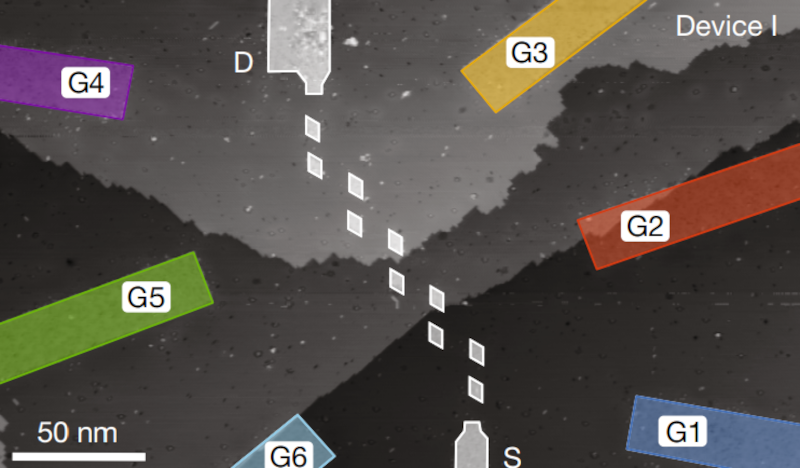
One major milestone came from researchers at the University of New South Wales and Silicon Quantum Computing, who demonstrated an atomic-scale quantum integrated circuit in silicon. Their device used a chain of 10 quantum dots to simulate the behavior of polyacetylene, an organic molecule made of repeating carbon and hydrogen units. That may sound modest until you remember that accurately modeling molecules is one of the hardest jobs in computing. Molecules are quantum systems, and quantum systems do not politely line up for classical spreadsheets.
The experiment showed that atomically placed structures in silicon could reproduce meaningful molecular behavior. This matters because one of the original dreams of quantum computing was quantum simulation: using one controllable quantum system to model another. Richard Feynman famously argued that nature is quantum, so a machine built on quantum principles should be better suited to simulate it. Decades later, researchers are turning that idea into hardware.
Why Silicon Is Still the Star of the Show
Silicon is the celebrity material of modern computing. It powers laptops, phones, servers, cars, cameras, appliances, and probably at least one smart refrigerator that judges your snack choices. The exciting part is that silicon may also help power quantum computers. Silicon-based quantum computing is attractive because it builds on decades of semiconductor manufacturing knowledge.
In classical computing, silicon chips use transistors to control electrical current. In silicon quantum computing, researchers may use electron spins, nuclear spins, quantum dots, or precisely placed donor atoms such as phosphorus to store and manipulate quantum information. The long-term hope is that future quantum processors could benefit from existing chip-making infrastructure while operating in an entirely different computational universe.
Silicon-28 and a Quieter Quantum Home
One challenge in quantum computing is noise. Qubits are delicate. A stray magnetic field, heat fluctuation, material defect, or environmental disturbance can cause information to degrade. That process is known as decoherence. To reduce noise, researchers often use purified silicon-28, an isotope with no nuclear spin. Think of it as giving a qubit a quiet library instead of asking it to concentrate in the middle of a marching band rehearsal.
How Quantum Dots Make Tiny Circuits Useful
A quantum dot confines electrons in a small region, allowing their energy levels to be controlled like settings on a very fussy but very powerful instrument. When several quantum dots are arranged in a chain, researchers can tune how electrons move or interact from one dot to another. This makes quantum dots useful for simulating molecules, designing qubits, and exploring new states of matter.
In the 10-dot atomic-scale circuit used to model polyacetylene, the dots acted like stand-ins for atoms in a molecular chain. By adjusting the system, researchers could observe energy patterns similar to those expected in the real molecule. This is a specific example of why quantum simulation is so promising: instead of calculating every quantum interaction with brute-force classical methods, scientists can build a quantum system that naturally follows similar rules.
Why Classical Computers Struggle With Molecules
Classical computers are excellent at many tasks. They stream movies, run spreadsheets, manage databases, and help people argue about fonts in shared documents. But simulating quantum systems becomes brutally difficult as complexity grows. Every additional electron, orbital, or interaction can expand the number of possibilities that must be considered.
For small molecules, classical computers can do impressive work. For larger molecules, catalysts, advanced materials, or strongly correlated quantum systems, the math can become overwhelming. This is where quantum computers may eventually shine. Because qubits can use superposition, entanglement, and interference, they may represent and process certain quantum problems more naturally than classical bits.
Superposition, Entanglement, and the Quantum Weirdness Toolkit
A normal bit is either 0 or 1. A qubit can exist in a superposition, meaning its state can involve a combination of 0 and 1 until measured. That does not mean it is “both” in the same casual way a snack can be both salty and crunchy. It means the qubit is described by probability amplitudes, which can interfere with one another.
Entanglement is another crucial feature. When qubits are entangled, the state of one qubit becomes linked with the state of another, even when each individual result may appear random. Interference then helps amplify useful outcomes and suppress less useful ones. Together, these effects allow quantum circuits to process information in ways that classical circuits cannot simply copy.
Quantum Circuit vs. Quantum Integrated Circuit
The phrase “quantum circuit” can mean two related things. In quantum software, a quantum circuit is a sequence of operations applied to qubits. It is like a recipe: prepare qubits, apply gates, entangle them, measure results, and hope the soufflé does not collapse too early. In hardware, a quantum integrated circuit refers to a physical device that implements controllable quantum behavior.
The atom-scale silicon work is exciting because it brings the hardware meaning of the phrase into sharp focus. Researchers are not only drawing quantum circuits on whiteboards; they are placing atoms into structures that can perform quantum simulation. That is a major step from theory toward engineered quantum machines.
Why “Just A Few Atoms” Is a Big Deal
The fewer atoms involved, the more precise the engineering must be. At this scale, one misplaced atom can change the behavior of the device. That sounds terrifying from a manufacturing perspective, because it is. But it also means scientists are gaining an extraordinary level of control. Atomic precision allows researchers to design quantum behavior from the bottom up rather than carving smaller and smaller patterns from the top down.
This is important for scalability. A useful quantum computer may require large numbers of high-quality qubits, strong connectivity, reliable control, and error correction. Atom-scale circuits do not solve all of those challenges immediately, but they show that researchers can build repeatable, meaningful quantum structures at dimensions once considered nearly impossible.
Potential Applications of Atom-Scale Quantum Circuits
1. Chemistry and Drug Discovery
Molecules are quantum objects. A quantum computer that can accurately simulate molecular structure and energy could help researchers design better catalysts, batteries, fertilizers, and medicines. Drug discovery often involves understanding how molecules interact, fold, bond, and change. Better simulation tools could reduce trial-and-error work and reveal possibilities that classical methods miss.
2. New Materials
Many advanced materials depend on quantum behavior. Superconductors, magnets, semiconductors, and topological materials all involve interactions that can be difficult to model. Atom-scale quantum circuits could help researchers test theories about these materials in controlled systems, speeding up the search for stronger, lighter, cleaner, or more efficient technologies.
3. Quantum Error Correction
Quantum computers are famously error-prone. Useful machines will need ways to detect and correct errors without destroying the quantum information being protected. Silicon spin qubits and atom-based registers are interesting because they may offer long coherence times and compatibility with compact architectures. If researchers can combine precision placement with reliable error correction, the path to practical quantum computing becomes less foggy.
4. Ultra-Miniaturized Electronics
Even beyond full quantum computers, atom-scale engineering may influence future electronics. Devices that use quantum effects intentionally could lead to sensors, switches, and low-power components with properties unavailable to conventional transistors. In older electronics, quantum behavior was often a nuisance. In the next generation, it may become the feature everyone came to see.
The Challenges: Tiny Circuits, Giant Problems
Building a quantum circuit with a few atoms is difficult. Scaling it into a useful machine is even harder. The challenges include fabrication accuracy, qubit control, readout, error correction, cooling, wiring, and integration with classical electronics. A laboratory breakthrough is not the same thing as a commercial product. Nobody is slipping an atomic quantum processor into a smartwatch next Tuesday.
Cooling is another major issue. Many quantum systems need extremely low temperatures to preserve fragile quantum states. That means dilution refrigerators, specialized measurement equipment, and carefully controlled environments. The hardware around the quantum chip can be much larger than the chip itself. A quantum processor may be microscopic, but the support system can look like a golden chandelier designed by a very serious refrigerator engineer.
How Atom-Scale Quantum Circuits Compare With Other Quantum Platforms
Quantum computing is not a one-horse race. Different teams are exploring superconducting qubits, trapped ions, neutral atoms, photons, silicon spin qubits, topological approaches, and more. Each platform has strengths and weaknesses. Superconducting qubits have advanced quickly and are widely used in cloud-accessible quantum systems. Trapped ions offer high-fidelity operations. Neutral atoms can form large arrays. Photonic systems may benefit from optical networking and semiconductor manufacturing.
Atom-scale silicon circuits stand out because they combine quantum behavior with the world’s favorite chip material. The dream is elegant: place atoms precisely, control their quantum states, scale the architecture, and connect it to the semiconductor ecosystem. The hard part, naturally, is every single word in that sentence.
Why This Research Matters for the Future of Computing
The phrase “Quantum Circuit Uses Just A Few Atoms” is powerful because it captures a shift in mindset. Computing is no longer only about shrinking transistors. It is about designing physical systems whose quantum behavior becomes computation. That is a deeper change than simply making chips smaller.
If atom-scale quantum circuits continue to improve, they could help solve problems that matter in the real world: cleaner chemical processes, better batteries, new medicines, stronger materials, and more efficient optimization. They may also help scientists understand nature with sharper tools. A quantum simulator does not just calculate; it behaves according to the same strange rulebook as the system being studied.
Common Misunderstandings About Tiny Quantum Circuits
Misunderstanding 1: A Few Atoms Means A Finished Quantum Computer
Not quite. A few-atom quantum circuit is a research milestone, not a complete commercial machine. It demonstrates control, simulation, and design principles at the atomic scale. Turning that into a fault-tolerant, general-purpose quantum computer requires many more advances.
Misunderstanding 2: Quantum Computers Will Replace All Classical Computers
Quantum computers are not expected to replace classical computers for everyday tasks. They are specialized tools for certain classes of problems. Your future email inbox will probably not need entanglement to deliver another discount code. Classical computers will remain essential, especially for control, storage, networking, and ordinary computation.
Misunderstanding 3: Smaller Always Means Better
In quantum technology, smaller can be powerful, but only if the device can be controlled and measured reliably. A tiny circuit that cannot maintain coherence is like a sports car with no steering wheel. Impressive in theory, stressful in practice.
Experience-Based Reflections: What Atom-Scale Quantum Circuits Teach Us
Working with the idea of a quantum circuit that uses just a few atoms changes the way we think about technology. Most people experience computing as something abstract: apps open, files save, websites load, and occasionally a printer behaves like it has joined a medieval rebellion. But beneath every digital convenience is a physical machine. Quantum circuits make that physical reality impossible to ignore. At the atomic scale, computation is not just logic; it is matter, energy, noise, temperature, and measurement all performing a delicate dance.
One practical lesson is humility. Classical electronics became reliable because engineers learned how to control huge numbers of components with astonishing consistency. Quantum hardware asks for something even more demanding: control over individual quantum states. That means researchers must care about details most of us never notice. A single atom out of place, a tiny vibration, a faint electromagnetic disturbance, or an unexpected material defect can matter. The experience is a reminder that advanced technology often depends on patience more than hype.
Another lesson is that small experiments can have large consequences. A chain of 10 quantum dots will not solve climate change, cure cancer, or optimize global logistics by breakfast. But it can prove that a difficult idea is physically possible. That is how many major technologies begin. Early transistors were not glamorous consumer products. Early integrated circuits looked modest compared with modern chips. Early quantum circuits may look tiny, fragile, and specialized, but they are teaching scientists how to build with nature’s smallest parts.
There is also a communication lesson. Quantum computing is often described with dramatic phrases: revolutionary, impossible, mind-bending, world-changing. Some of that excitement is justified, but the real story is more interesting than the hype. The best way to understand atom-scale circuits is not to imagine magic computers. It is to imagine extremely precise experimental systems that gradually become more programmable, more stable, and more useful. The progress is real, but it is step-by-step, not wand-waving.
For students, engineers, and curious readers, the topic offers a useful mindset: learn across boundaries. Atom-scale quantum computing touches physics, chemistry, electrical engineering, materials science, computer science, cryogenics, and manufacturing. No single field owns the whole puzzle. The people who make progress are often the ones who can translate between disciplines. They know enough physics to respect decoherence, enough engineering to build devices, enough software to run algorithms, and enough persistence to repeat an experiment after the first dozen attempts say, “Nice try.”
Finally, atom-scale quantum circuits remind us that the future of computing may look surprisingly physical. We often talk about “the cloud” as if computation floats above us like digital weather. In reality, every calculation happens somewhere, in hardware, obeying the laws of nature. Quantum circuits bring that truth down to the smallest scale. A few atoms, carefully placed, can become a laboratory for the next era of computation. That is not just technically impressive. It is wonderfully human: we keep learning how to ask nature better questions, and sometimes nature answers with a circuit smaller than a speck of dust.
Conclusion
A quantum circuit that uses just a few atoms is not a gimmick. It is a sign that computing is entering a new phase, where engineers can design quantum behavior at the atomic scale. By using precisely placed atoms and quantum dots in silicon, researchers are building systems that can simulate molecules, test quantum theories, and point toward future quantum processors.
The road ahead is challenging. Scaling these systems, correcting errors, maintaining coherence, and integrating quantum hardware with classical control systems will take years of careful work. Still, the progress is unmistakable. The smaller the circuit becomes, the bigger the idea gets: computation can be built from the same quantum rules that govern atoms, molecules, and materials themselves.
Note: This article is prepared for web publication and synthesizes real information from reputable science, university, government, research, and technology sources without adding distracting inline source-link elements.