There are few things in life more photogenic than a pet who has absolutely no intention of cooperating. One second your dog looks like a noble movie star. The next, he is sneezing into the sunlight like a furry little tornado. And somehow, that is exactly why personalized pet art works so well. It takes those ordinary, funny, emotional, wildly lovable moments and turns them into something lasting.
That is the heart of what I do when I turn pet photos into personalized and colorful works of art. I am not just copying a snapshot. I am translating personality. I am looking for the tilted head, the one floppy ear, the suspicious cat stare, the rabbit with main-character energy, or the senior dog expression that says, “I have seen things, and one of them was your sandwich.” A great custom pet portrait is not just a picture of an animal. It is a visual love letter.
That is also why this kind of art has grown into something much bigger than a novelty gift. Personalized pet portraits now live in entryways, gallery walls, home offices, bedrooms, nurseries, and even holiday décor collections. Some people want bright, modern pet wall art that looks clean and stylish. Others want funny royal portraits, painterly watercolor effects, memorial art, or bold color-blocked designs that make a room feel more alive. The format changes, but the reason stays the same: people want to celebrate the animals that make their homes feel like home.
Why Personalized Pet Art Feels So Special
Let’s be honest: pet people are not casual about their pets. A custom pet portrait lands differently because it does not feel mass-produced. It feels chosen. Personal. Specific. Thoughtful. That matters in a world full of forgettable gifts and generic wall décor.
What makes personalized pet artwork stand out is the emotional detail. A good artist does not just notice coat color and eye shape. A good artist notices expression, posture, energy, and mood. Is this dog joyful and chaotic? Is this cat elegant and mildly judgmental? Is this bird bright, curious, and impossible to ignore? Personalized art works because it makes room for individuality. It says, “This isn’t just a pet. This is your pet.”
That emotional connection is also why colorful pet artwork performs so well as décor. It is deeply personal, but it can still feel polished and design-forward. A portrait with bold background color, clean lines, and thoughtful composition can work as both a keepsake and a real design element. In other words, it is sentimental without looking syrupy. That is a hard balance to strike, and when it works, it really works.
How I Turn a Pet Photo Into Art
1. I Start With the Right Photo
No offense to the blurry couch photo taken at midnight, but not every pet picture is built for greatness. A strong custom pet portrait begins with a strong reference photo. That does not mean you need a professional camera or a full production crew. It just means the image should capture your pet clearly and honestly.
The best pet photos usually have a few things in common: the eyes are sharp, the face is easy to see, the lighting is flattering, and the background is not stealing the show like it just got cast in a supporting role. Eye-level angles usually work beautifully because they feel intimate and natural. Clear focus matters because tiny details like whiskers, fur texture, and nose shape help a portrait feel alive. And good light is everything. Harsh backlighting can turn a lovely face into a fuzzy silhouette, which is dramatic in theory but less helpful when the goal is “museum-worthy pet masterpiece.”
Just as important, the photo should feel like your pet. Some of the best reference images are not the most formal ones. They are the ones where a dog is sitting proudly with a favorite toy, a cat is giving that classic side-eye, or a senior pet looks soft and calm in window light. Personality beats perfection every time.
- Choose a photo where the eyes are visible and in focus.
- Use natural, even light whenever possible.
- Avoid cluttered backgrounds and heavy shadows.
- Pick an image that actually feels like your pet’s personality.
- If possible, shoot at your pet’s eye level instead of from way above.
2. I Read the Pet Before I Read the Style
Once I have the photo, I do not immediately jump into effects, filters, or color palettes. First, I study the animal. What is the energy here? Is this portrait playful, regal, goofy, sweet, mysterious, or softly emotional? A bright pop-art treatment might be perfect for a mischievous French bulldog. A gentle, painterly finish may suit a beloved old cat. A sleek minimalist portrait with one bold background color might be the right call for a modern apartment with clean lines.
This is where personalized pet portrait art separates itself from generic templates. Real customization is not just changing the background from blue to green and calling it a day. It is matching the artistic direction to the pet’s vibe and the owner’s space. That is where the magic happens.
3. I Use Color With Intention
Color is not decoration. It is storytelling. When I create colorful pet art, I am not just trying to make something “pretty.” I am deciding how the portrait should feel. Warm coral, golden yellow, and terracotta tones can make a piece feel joyful and sunny. Deep emerald, navy, and plum can make a portrait feel dramatic and elegant. Soft blush, sage, or cream can make it feel calm and sentimental.
Bright color also helps a portrait hold its own in a room. That matters because modern homes increasingly mix personal objects with intentional design. People are not only decorating with trendy pieces anymore. They are decorating with memory, character, and identity. Personalized pet wall art fits beautifully into that shift because it adds both color and meaning.
Sometimes the color choice comes from the pet itself. A caramel-colored dog might glow against teal. A black cat can look stunning against dusty pink, mustard, or icy blue. A white rabbit can look almost luminous on a richer background. The goal is contrast, balance, and a little bit of drama without crossing into chaos. We want “wow,” not “my wall is yelling at me.”
4. I Choose the Best Final Format
Not every portrait should live the same life. Some pieces are meant to be framed and hung in a hallway. Some belong on a gallery wall. Some are best as canvas prints, posters, or desk-sized keepsakes. Others turn into gifts: blankets, mugs, ornaments, sweatshirts, or small memorial pieces.
That is why the final format matters almost as much as the portrait itself. A sleek modern pet illustration might look best as a framed print with a clean mat and a neutral frame. A high-energy, color-saturated portrait may shine on canvas. A sentimental piece for a pet memorial might feel right in a softer finish with a classic frame. Custom pet photo art is not one-size-fits-all, and it should not be treated that way.
What Makes a Pet Portrait Feel Personal Instead of Generic
Plenty of people can turn a photo into “something artistic.” That alone is not the standard. The real question is whether the finished piece still feels connected to the animal you love. A personalized pet portrait should include the details that make the subject recognizable beyond the species level.
That could mean preserving a tilted smile, a patch over one eye, a crooked tooth, a fluffy chest, or the dramatic eyebrow markings that make your dog look permanently concerned about the economy. It might mean keeping a favorite bandana, collar tag, bow, or toy in the composition. It might mean adding a name, a date, or a meaningful quote for a memorial piece.
Personalization can also come from context. Maybe the owner wants a bold portrait that matches the colors in their home office. Maybe they want a softer illustration for a nursery corner. Maybe they want a pair of portraits for two pets who rule the household like tiny furry landlords. Customization is not only about the pet. It is also about where the piece will live and what it should say.
Popular Styles for Custom Pet Portraits
One of the fun parts of this niche is that there is no single correct style. Personalized pet art has become surprisingly versatile. Here are some of the most popular directions people love:
Modern Minimalist
Clean lines, simple backgrounds, polished typography, and crisp composition. This style works well in modern homes and makes pet portraits feel elevated rather than overly cute.
Bold and Colorful Pop Art
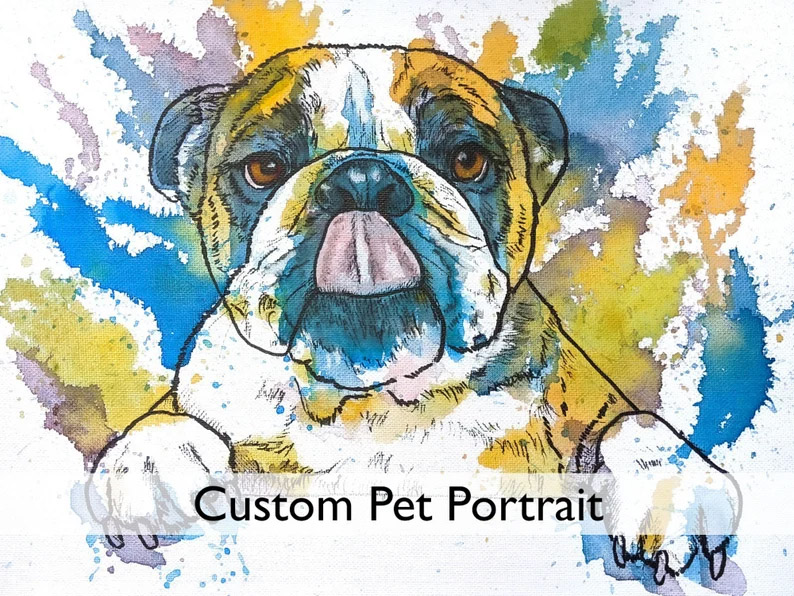
High-contrast color, saturated backgrounds, and strong graphic shapes. This is ideal for pet owners who want energy, humor, and a statement piece.
Painterly Watercolor
Soft edges, expressive brush-like texture, and gentle color transitions. This style often feels emotional, warm, and timeless.
Funny Costume or Royal Portraits
Yes, these are still wildly popular, and yes, they are still hilarious. The best versions work because they combine humor with genuine affection. A corgi in aristocratic clothing should still somehow look exactly like your corgi.
Memorial Portraits
These pieces are often quieter and more reflective. They may include a pet’s name, important dates, softer tones, or a meaningful pose. When done well, memorial pet art is deeply comforting without feeling overly heavy.
Why Colorful Pet Art Works So Well in Real Homes
For a long time, people treated sentimental décor like it had to be hidden in a side room or tucked onto a bookshelf. Not anymore. Today’s homes are warmer, more personal, and less interested in looking like untouched furniture showrooms. People want rooms that tell the truth about who lives there. That includes pets.
A colorful custom pet portrait can anchor a gallery wall, wake up a neutral hallway, add warmth to an office, or bring charm to an entryway. It can be a conversation piece without feeling forced. It can also soften a space. There is something instantly human about walking into a home and seeing a beloved animal displayed with care. It makes the room feel lived in, loved, and real.
And if you are worried that pet art cannot be stylish, let me lovingly disagree. It absolutely can. The trick is intentional design. Choose a style that matches the room. Pick a frame that suits the space. Use color that complements the rest of your décor. Suddenly, your dog is not just on the wall. Your dog is the décor. Frankly, that seems correct.
How to Get Better Results From a Custom Pet Portrait
If you are commissioning personalized pet artwork, a few simple decisions can dramatically improve the final piece.
Pick the Most Expressive Photo, Not Just the Sharpest One
Technical quality matters, but expression matters more. A technically perfect photo with zero personality is less powerful than a warm, clear image that really feels like your pet.
Think About Where the Art Will Live
Wall art for a bright kitchen may need a different style than a bedroom memorial piece. Let the room help guide the mood, colors, and size.
Do Not Be Afraid of Bold Backgrounds
Color is often what transforms a simple portrait into a statement piece. If the rest of your room is fairly neutral, pet art is a great place to have fun.
Ask for Details That Matter
Name, collar, toy, floral accents, multiple pets in one composition, or a specific pose can all help the final art feel more meaningful and less generic.
Print It Well
A beautifully designed portrait deserves quality output. Good materials, clean printing, and thoughtful framing make a major difference in how professional the piece feels.
More Than a Trend: Why People Keep Coming Back to Pet Portrait Art
Custom pet art keeps growing because it solves multiple things at once. It is décor. It is memory. It is gifting. It is self-expression. It is humor. It is comfort. Few products manage all of that without becoming cheesy, but personalized pet portraits often do.
They also work for almost every kind of pet owner. New puppy parent? Great gift. Cat person with excellent taste and zero patience? Also perfect. Family grieving a beloved pet? Incredibly meaningful. Friend who already has every pet accessory known to humankind? Personalized wall art still feels original.
And because artists can work from submitted photos, the process feels accessible. You do not need a formal studio session or a giant budget to start. You just need a photo that captures your animal well and a creative direction that honors who they are. From there, a simple image can become something worthy of a frame, a shelf, or a spot people notice the moment they walk in.
Extra Experiences From This Work: What It Really Feels Like to Turn Pet Photos Into Art
One of the most surprising parts of this work is how emotional it gets, even on ordinary days. I can start the morning opening a photo of a golden retriever with a tennis ball and end the afternoon quietly staring at the face of a senior cat someone loved for seventeen years. The subject changes. The emotional weight changes. But the sense of trust is always there. When someone sends me a photo of their pet, they are not just sending a file. They are handing over a relationship.
I notice that most people apologize for their photos when they first send them. They say things like, “Sorry, this is the best one I have,” or, “He never sits still,” or, “She was hiding under a chair, but her face looks cute here.” I always smile when I read that because imperfect pet photos are often the most revealing. A slightly lopsided grin, a muddy paw, a curious lean toward the camera, or that familiar expression they gave every day at dinner time can tell me more than a polished image ever could. Perfection is nice. Recognition is better.
I have also learned that people usually think they are ordering art, but what they are really ordering is a feeling. Some want joy. Some want comfort. Some want something playful for the living room that makes guests laugh. Some want a portrait after a loss because they are afraid of forgetting the tiny details. The shape of the ears. The softness around the eyes. The look that said, without words, “You are my person.” Those are the commissions that stay with me.
Then there are the funny ones, and I love those too. The dog who looked unintentionally heroic in every photo. The cat who somehow seemed born for jewel tones and dramatic lighting. The bunny whose portrait ended up brighter and bolder than half the abstract art in the owner’s apartment. Personalized pet art has room for sincerity, but it also has room for delight. It reminds people that home does not need to be serious to be beautiful.
Over time, I have come to believe that colorful pet portraits work because they do something photographs and décor do not always do on their own: they interpret love. A snapshot captures a second. Art stretches that second into something bigger. It gives the moment shape, style, emphasis, and permanence. It says, “This mattered. This still matters.” And for pet lovers, that message lands every single time.
That is why I keep returning to this work with the same enthusiasm. Every portrait is different. Every animal has a distinct rhythm. Every client is hoping to see something familiar made new. When it all comes together, the result is more than a nice image. It becomes a bright, personal piece of someone’s story. And honestly, that is a pretty wonderful job.
Conclusion
Turning pet photos into personalized and colorful works of art is not about applying a trendy effect and moving on. It is about translating personality into something visual, lasting, and meaningful. The best custom pet portraits begin with a strong photo, but they become memorable through thoughtful choices in color, style, composition, and presentation. Whether the goal is a bold statement piece, a polished addition to a gallery wall, a heartfelt memorial, or a gift that makes someone laugh and cry in the same thirty seconds, personalized pet art can do the job beautifully.
If you want pet wall art that feels stylish and sincere at the same time, this category is hard to beat. It honors the animals that shape our routines, steal our blankets, photobomb our lives, and somehow become the emotional center of the home. A great portrait does not just show what a pet looked like. It shows what loving that pet felt like. That is what makes it art.