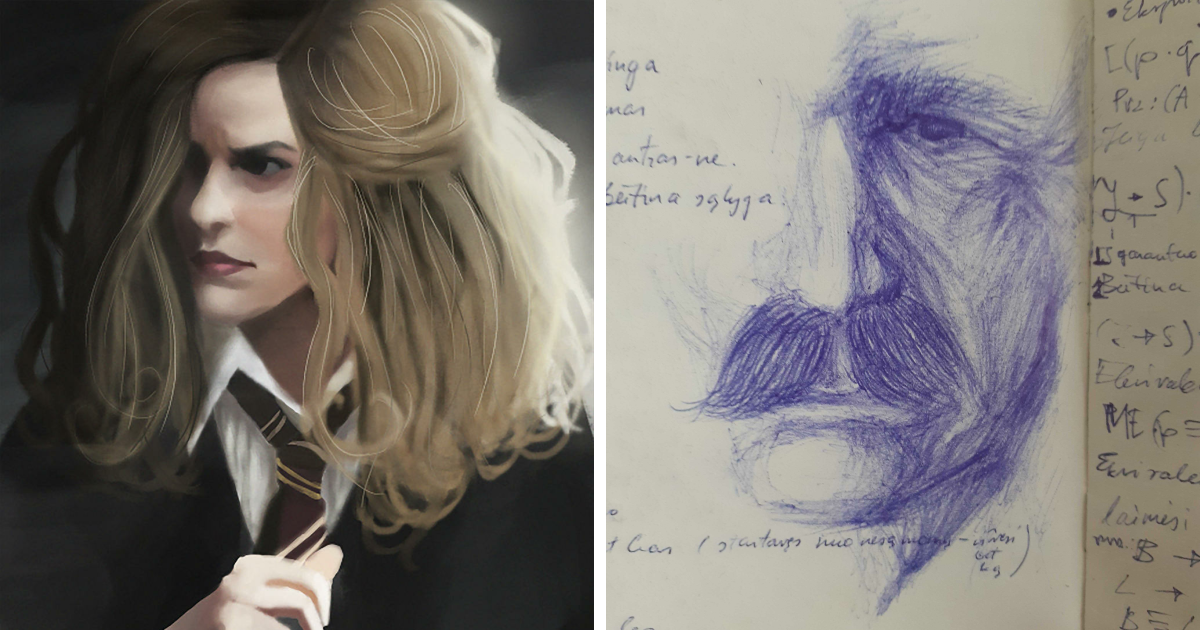
Some drawing prompts arrive quietly. Others kick open the studio door, toss a pencil onto the table, and say, “Okay, genius, make it look real.” “Hey Pandas, Draw Something Realistic” belongs to the second category. It is both a friendly community challenge and a tiny artistic dare: can you take a blank page and create something that looks like it might blink, cast a shadow, reflect light, or roll off the paper if someone bumps the desk?
Realistic drawing has a special kind of magic. It does not need fireworks, dragons, or a raccoon wearing a business suitalthough, frankly, that raccoon deserves a gallery show. A realistic drawing can be as simple as a spoon, a hand, a houseplant, a sneaker, a glass of water, or your sleepy cat judging your life choices from across the room. The challenge is not choosing a fancy subject. The challenge is learning to see what is actually there instead of what your brain assumes is there.
That is why realistic drawing continues to fascinate beginners, hobby artists, professional illustrators, students, and online art communities. It blends observation, patience, proportion, shading, texture, perspective, and a healthy tolerance for erasers. Whether you are sketching with graphite pencils, charcoal, colored pencils, ink, or a digital drawing tablet, the goal is the same: make the viewer believe the object has form, weight, depth, and presence.
What Does “Draw Something Realistic” Really Mean?
To draw something realistic is not necessarily to copy a photograph perfectly. Photorealism is one version of realism, but it is not the only one. Realistic art simply means the subject is convincing. The proportions feel believable. The shadows make sense. The textures suggest the right material. A metal spoon should not look like a banana unless the assignment is “haunted kitchen fruit,” in which case, carry on.
Realism is built on careful visual decisions. Artists study how light hits a form, how edges soften in shadow, how surfaces reflect their environment, and how objects relate to one another in space. A realistic drawing of a face depends on facial structure, value changes, and subtle transitions. A realistic drawing of a tree depends on organic shapes, overlapping branches, bark texture, and natural variation. A realistic drawing of a glass cup depends on transparency, highlights, distortion, and reflected light.
The most important tool is not the pencil. It is the eye. Realistic drawing trains you to observe with unusual honesty. Instead of saying, “An eye is almond-shaped,” you learn to ask, “Where exactly is the eyelid? How dark is the crease? Is the highlight sharp or soft? How much of the iris is hidden?” That shiftfrom naming things to seeing shapes, values, and relationshipsis where realism begins.
Why Realistic Drawing Is So Popular Online
Online art communities love realistic drawing because progress is easy to recognize. A beginner’s first apple may look like a confused potato, but after a few weeks of practicing value, contour, and proportion, the same apple can begin to look round, shiny, and snack-worthy. People enjoy seeing the transformation.
Realistic drawings are also wonderfully shareable. A graphite portrait with lifelike eyes can stop a scrolling thumb. A hyper-detailed drawing of a crumpled soda can can make viewers zoom in and ask, “Wait, is that a photo?” Even simple realistic sketcheskeys, shoes, coffee mugs, flowers, insects, handsinvite admiration because viewers understand the difficulty. Everyone has seen a hand. Everyone also knows hands are apparently designed by nature to humble artists.
The phrase “Hey Pandas” gives the topic a community flavor. It sounds welcoming rather than intimidating. It is not “submit a museum-grade academic study by sunrise.” It is more like, “Show us what you can do, and do not panic if your realistic horse looks emotionally complicated.” That playful tone matters. Realistic art takes discipline, but it grows best when artists feel encouraged to experiment.
The Core Skills Behind Realistic Drawing
Observation: Learning to See Like an Artist
Observation is the foundation of realistic drawing. Many museum and art education resources emphasize drawing from direct observation because it teaches artists to notice relationships: height versus width, light versus dark, near versus far, simple shape versus tiny detail. Instead of drawing a symbol of an object, you draw the object as it appears from your specific viewpoint.
A good exercise is to place a simple object under one light source and draw it for twenty minutes. Choose a mug, an onion, a shell, or a pair of glasses. Do not start with eyelashes, wrinkles, or microscopic reflections. Start with the big shape. Then mark the shadow side, the light side, and the cast shadow. This basic study teaches more about realism than trying to shade every tiny detail immediately.
Proportion: The Art of Measuring Without Looking Like a Wizard
Proportion is the relationship between sizes. If the head is too large for the body, the portrait may drift into cartoon territory. If the handle of a cup is too small, it may look decorative rather than functional. If a dog’s legs are uneven, congratulations, you have drawn a sofa with ears.
Artists often compare one part of the subject to another. How many eye widths fit across the face? How tall is the bottle compared with its width? Where does the elbow fall in relation to the waist? These comparisons prevent the drawing from sliding out of realism before shading even begins.
One practical trick is to lightly block in the subject using simple shapes. A head may begin as an oval. A shoe may start as a wedge. A flower may begin with circles and directional lines. Once the structure is believable, details can be added with more confidence.
Value: The Secret Ingredient That Makes Things Look Three-Dimensional
Value means how light or dark something is. In realistic pencil drawing, value often matters more than line. A sphere becomes round because one side is lighter, one side is darker, and the cast shadow anchors it to the surface. Without value, the sphere is just a circle wearing no emotional depth whatsoever.
Realistic artists pay attention to value ranges: highlights, light tones, midtones, core shadows, reflected light, and cast shadows. The darkest darks and lightest lights create contrast. Smooth transitions can suggest soft skin or polished ceramic. Rougher transitions can suggest stone, bark, fabric, or hair.
A value scale is an excellent training tool. Draw ten small boxes, then shade from white to black in gradual steps. It sounds boring. It is also the artistic equivalent of doing push-ups. Your future realistic drawings will thank you, possibly with dramatic lighting.
Light and Shadow: Where Realism Starts Breathing
Light gives objects form. A realistic drawing becomes stronger when the artist understands where the light source is located. Is it above? To the left? Behind the subject? Is the light hard and direct, or soft and diffused? A desk lamp creates sharper shadows than a cloudy window.
Look for the highlight, the halftone, the core shadow, the reflected light, and the cast shadow. These areas help the viewer understand volume. A cheekbone, a pear, a folded shirt, and a shiny spoon all become more convincing when the lighting pattern is consistent.
This is why many artists prefer drawing with a single light source when practicing realism. Multiple lights can flatten shadows and confuse beginners. One lamp, one object, one pencil, and one determined artist muttering “trust the process” is a classic setup for improvement.
Perspective: Making Space Feel Real
Perspective helps flat drawings create the illusion of depth. In simple terms, objects appear smaller as they move farther away. Parallel lines may seem to meet at vanishing points. A road narrows toward the horizon. A table edge angles away from the viewer. A building follows structural rules unless it is in a dream sequence or a very ambitious sandwich shop.
For realistic drawing, perspective is especially important for rooms, streets, furniture, vehicles, and architecture. Even still life drawings benefit from perspective because ellipsesthe oval shapes seen on cups, bowls, jars, and platesmust follow the viewer’s angle. A poorly drawn ellipse can make a coffee cup look like it is quietly melting.
Beginners should practice one-point perspective first. Draw a horizon line, place a vanishing point, and create boxes that recede into space. Once boxes make sense, everyday objects become easier to construct.
Choosing a Subject for a Realistic Drawing Challenge
The best subject is not always the most complicated one. In fact, beginners often improve faster by choosing ordinary objects with clear forms. A realistic drawing challenge can include:
- A single fruit, such as an apple, orange, pear, or lemon
- A shiny spoon, key, or metal cup
- A houseplant leaf with visible veins
- A sneaker, boot, or folded piece of clothing
- A pet portrait from a clear reference photo
- A human eye, nose, mouth, or hand study
- A glass jar or transparent bottle
- A simple landscape with depth and atmospheric perspective
If the goal is community participation, variety makes the prompt more exciting. Some Pandas may submit delicate graphite portraits. Others may draw realistic food, wildlife, insects, fantasy props, old cameras, messy desks, or dramatic clouds. One person may draw a hyperrealistic marble; another may draw a sandwich so believable it emotionally endangers lunch plans.
Step-by-Step Guide: How to Draw Something Realistic
Step 1: Pick a Clear Reference
Use either a real object in front of you or a high-quality reference photo. Good lighting matters. Avoid blurry images unless your artistic goal is “mysterious potato in fog.” A clear reference helps you see edges, values, textures, and proportions.
Step 2: Break the Subject Into Simple Shapes
Before adding details, simplify the subject. A bird can become an oval body, a smaller head shape, a triangle-like beak, and angled leg lines. A portrait can begin with the skull shape, center line, brow line, nose line, and jaw structure. A car can start with boxes, wheels, and perspective guidelines.
Step 3: Measure the Big Proportions
Compare height to width. Check angles. Look at negative spacethe empty shapes around the object. Negative space is a powerful accuracy tool because it bypasses the brain’s habit of labeling objects. Instead of drawing “a chair,” you draw the shapes between the chair legs. Suddenly, the chair looks less like a crime scene.
Step 4: Place the Main Shadows
Block in the darkest areas lightly. Do not go full thunderstorm immediately. Build the drawing in layers. Mark where the shadows belong and keep the lightest highlights clean. Realism often depends on restraint. The eraser is helpful, but it is not a time machine.
Step 5: Build Values Gradually
Use light pressure first. Add darker layers slowly. Blend only when blending serves the texture. Smooth blending can work beautifully for skin, glass, and polished surfaces, but too much blending can make everything look like plastic. Hatching, cross-hatching, stippling, and controlled graphite layers can create richer surfaces.
Step 6: Refine Edges
Edges are crucial in realistic drawing. Some edges are sharp, such as the rim of a metal object catching light. Others are soft, such as the transition from cheek to shadow. Lost edges occur when two similar values meet and seem to disappear. Realistic drawings use a mix of hard, soft, and lost edges to guide the eye.
Step 7: Add Texture Last
Texture is tempting. Artists love texture. Texture is the glitter of realism: useful in the right amount, chaotic if dumped everywhere. Add pores, hair, fabric threads, bark marks, scratches, or reflections only after the main structure and values are working.
Step 8: Step Back and Check the Whole Drawing
Realistic drawing requires frequent checking. Step back from the paper. Turn the drawing upside down. Look at it in a mirror. Take a photo and view it smaller. These methods reveal proportion errors and value imbalances. Sometimes the problem you could not see from six inches away becomes obvious from six feet away. Art is rude like that, but helpful.
Common Mistakes That Make Realistic Drawings Look “Off”
Outlining Everything Too Heavily
Real life does not have black outlines around every object. Lines exist in drawing, but realism usually depends more on value shifts and edges. Heavy outlines can flatten the subject. Try letting shadows, contrast, and background values define the form instead.
Shading Without a Light Source
If shadows appear randomly, the drawing loses believability. Decide where the light comes from and keep it consistent. The viewer may not consciously notice correct lighting, but they will feel when something is wrong.
Adding Details Too Early
Details cannot save weak structure. A beautifully shaded eye in the wrong place is still in the wrong place. Start large, then move smaller. Think construction first, decoration second.
Using Too Few Values
Many beginner drawings stay in the middle gray zone. They avoid dark darks and bright highlights. The result can look flat. A fuller value range creates depth, drama, and realism. Do not be afraid of contrast, especially in cast shadows and focal points.
Drawing What You Think Instead of What You See
This is the classic realism problem. The brain stores symbols: eyes are football shapes, trees are broccoli clouds, lips are two curved lines, and hands are five-fingered nightmares. Observation breaks those symbols apart and replaces them with actual shapes.
Realistic Drawing Ideas for “Hey Pandas” Posts
If you are joining a community prompt, your drawing does not have to be perfect. It should be honest, interesting, and yours. Here are some ideas that work well for realistic drawing posts:
1. The Everyday Object Challenge
Draw something sitting near you right now: a mug, phone, pencil sharpener, wallet, lamp, or snack wrapper. Ordinary objects are excellent realism practice because they force you to notice shape, shadow, and texture without relying on dramatic subject matter.
2. The Realistic Eye Study
Eyes are popular because they contain strong contrast, reflection, curved forms, lashes, skin folds, and emotional expression. Focus on the sphere of the eyeball, not just the outline of the eye opening. The highlight must match the light source.
3. The Hand Challenge
Hands are difficult, expressive, and extremely educational. Draw your own hand holding an object. Keep the pose simple at first. Study the knuckles, palm planes, fingernail shapes, and shadows between fingers.
4. The Texture Sampler
Divide a page into small boxes and draw different realistic textures: wood grain, denim, glass, metal, skin, fur, water, stone, and crumpled paper. This builds a visual toolbox for future drawings.
5. The Pet Portrait
Pets make wonderful subjects because they have personality, texture, and expressive eyes. Use a clear photo and begin with large shapes. Fur should be drawn in layers, following the direction of growth. Do not draw every hair. Suggest groups of hair through value and edge control.
6. The Shiny Object Test
A spoon, ornament, key, or metal bowl teaches reflections. Shiny objects are not shaded like matte objects. They often contain sharp highlights, dark reflected shapes, and distorted surroundings. They look complicated, but if you draw the abstract shapes you see, realism appears.
Traditional vs. Digital Realistic Drawing
Realistic drawing can happen on paper or screen. Traditional media such as graphite, charcoal, and colored pencil provide tactile feedback. You feel the tooth of the paper, the pressure of the pencil, and the gradual buildup of layers. Mistakes are part of the surface, which can be frustrating but also charming.
Digital drawing offers layers, undo buttons, adjustable brushes, zoom tools, and easy value corrections. It is excellent for experimentation. However, digital tools do not automatically create realism. The same principles apply: proportion, perspective, value, light, edges, and observation. A tablet can help, but it cannot observe for you. Not yet, anyway. Let us not give the robots more ideas.
For online prompts, both traditional and digital realistic drawings can be impressive. The key is transparency. If a challenge asks for original work, artists should avoid tracing, AI-generated images, or heavily assisted tools unless the rules allow them. Community art works best when people share genuine effort.
How to Make Your Realistic Drawing Stand Out
Accuracy is important, but personality makes a drawing memorable. A realistic drawing can still have mood, humor, drama, and style. Consider the composition. Where is the focal point? Is the subject cropped in an interesting way? Is there a strong contrast pattern? Does the background help or distract?
For example, a realistic drawing of a lemon can become more striking if the light creates a dramatic cast shadow. A realistic portrait can feel more alive if the eyes contain crisp highlights and the surrounding edges fade softly. A realistic shoe can tell a story if it is worn, creased, muddy, or placed near a door.
Realism does not mean removing artistic choices. It means making choices that support believability. You can exaggerate contrast slightly, simplify background details, sharpen the focal point, or leave parts unfinished. Many beautiful realistic drawings combine precision with suggestion.
Why Realistic Drawing Builds Confidence
Realistic drawing teaches patience, but it also gives visible rewards. When a flat circle becomes a sphere, the artist feels it. When a portrait finally resembles the reference, the room gets a little brighter. When a viewer says, “I thought that was a photo,” the artist pretends to be humble while secretly floating three inches above the chair.
The process also builds problem-solving skills. Every realistic drawing asks questions. Why does this look flat? Why is the nose too long? Why does the glass look like jelly? The artist learns to diagnose and adjust. Over time, mistakes become information instead of failure.
That is the real benefit of the “Hey Pandas, Draw Something Realistic” idea. It invites people to practice publicly, celebrate progress, and enjoy the strange satisfaction of turning graphite, pixels, or charcoal dust into something believable.
Experiences Related to “Hey Pandas, Draw Something Realistic”
Anyone who has tried to draw something realistic knows the experience comes with a full emotional weather report. At first, there is confidence. You sharpen the pencil. You choose the reference. You tell yourself, “Today I will draw a realistic cup.” Five minutes later, the cup looks like it survived a minor earthquake. This is normal. Realistic drawing often begins with awkward shapes before it becomes convincing.
One of the most useful experiences is learning to slow down. Beginners often rush to the exciting parts: eyelashes, fur, reflections, wood grain, shiny highlights. But realism rewards the boring stage. Measuring the width of the object, checking the tilt of an edge, lightly mapping shadow shapes, and correcting proportions may not feel glamorous, but these steps create the foundation. The final details only look impressive when the structure underneath is solid.
Another common experience is discovering that simple subjects are not actually simple. A plain white egg can teach more about light and shadow than a complicated fantasy castle. A crumpled paper bag can become a masterclass in planes, edges, and value changes. A glass of water can make even confident artists question their life path. The lesson is humbling: realism is not about the fame of the subject. It is about the accuracy of observation.
Many artists also experience the “ugly middle.” This is the stage where the drawing looks unfinished, patchy, and mildly cursed. The proportions may be correct, but the values are not developed. The shadows look dirty. The highlights are missing. The texture has not arrived. This is when beginners often quit. Experienced artists know the ugly middle is part of the process. A realistic drawing frequently looks worse before it looks better. Keep layering, keep comparing, and keep adjusting.
Sharing realistic drawings in a community can be surprisingly motivating. When people post their work, they are not only showing skill; they are showing effort. Comments like “the shading on the apple is great” or “the eyes feel alive” can encourage someone to keep practicing. Even gentle feedback, when asked for, can help artists notice what to improve next. The best online art spaces make room for both admiration and growth.
A realistic drawing challenge also teaches artists to respect their own progress. The first attempt may not look like the reference, but it reveals what to practice. Maybe the proportions need work. Maybe the values are too light. Maybe the texture is overdone. Each drawing becomes a record of learning. Looking back after several weeks or months can be deeply satisfying. The improvement may be obvious: cleaner edges, stronger contrast, better forms, more confident marks.
Finally, there is the joy of surprise. Sometimes a drawing suddenly clicks. A shadow falls into place. A highlight makes the eye wet and glossy. A few carefully placed dark accents turn a flat sketch into a believable object. That moment feels almost magical, even though it is built from practice. It reminds artists why realistic drawing is worth the patience: because making something look real with your own hands is still one of the coolest little miracles available on a blank page.
Conclusion
“Hey Pandas, Draw Something Realistic” is more than a casual art prompt. It is an invitation to observe carefully, practice patiently, and share the results with a community that appreciates effort as much as polish. Realistic drawing asks artists to study proportion, value, light, shadow, texture, perspective, and edges. It can be challenging, yes, but it is also deeply rewarding. You do not need expensive supplies or a dramatic subject. A pencil, a clear reference, and a willingness to look closely can take you surprisingly far.
Whether you draw a portrait, a pet, a spoon, a flower, a hand, or a suspiciously realistic cookie, the goal is progress. Every sketch teaches something. Every mistake points toward the next improvement. And every finished drawing, even the imperfect ones, proves that realism is not a mysterious talent reserved for a chosen few. It is a skill built one observation, one shadow, and one slightly overworked eraser at a time.
Note: This article is written for web publication in standard American English and is based on synthesized, real-world drawing education principles, including observation, proportion, perspective, value, shading, texture, and art practice methods.