There was a time when window scarves got unfairly labeled as the dramatic aunt of home decor: a little fancy, a little extra, and probably carrying fringe. But here is the truth: when styled well, a window scarf can still make a room feel taller, softer, and far more finished. It is one of the easiest ways to dress up a plain window without committing to heavy drapes, complicated hardware, or a budget that makes your wallet file a complaint.
If you have ever stared at a long piece of sheer fabric and thought, “Beautiful… now what exactly do I do with this?” you are in the right place. In this guide, we will break down 3 ways to drape window scarves so they look intentional instead of accidental. You will also get practical tips on fabric choice, curtain rod placement, layering, and the little styling decisions that separate “designer look” from “someone fought a bedsheet and lost.”
Why Window Scarves Still Work
A window scarf is mostly decorative, which is exactly why it is so useful. It can soften hard edges, frame a window without blocking much light, and add movement to a room that feels flat. In spaces where privacy is not the main concern, scarf valances and draped window treatments offer a lighter, airier alternative to full curtains. They also pair beautifully with sheers, blinds, shades, or full-length panels if you want a layered look.
In other words, window scarves are not here to do all the heavy lifting. They are here to flirt with the sunlight, make your ceilings look taller, and quietly convince guests that you absolutely know what you are doing.
Before You Start: Quick Rules for a Better Drape
1. Choose the right fabric
Lightweight materials work best for most scarf valance ideas. Think sheer voile, chiffon, faux silk, gauze, or a soft polyester blend. Stiff fabric rarely gives you that graceful curve you want. If the material looks like it could stand up on its own, it is probably too structured for a soft drape.
2. Hang the rod higher than you think
For most windows, the rod should sit above the frame, not right on top of it. A higher rod makes the room feel taller and gives your draped fabric more space to create elegant lines. This trick works whether your style leans traditional, modern farmhouse, or “I saw this on Pinterest and now I believe in window drama.”
3. Give yourself enough width
Extending hardware beyond the window frame creates a fuller, more polished look. It also helps the scarf frame the window rather than crowd it. Window treatments almost always look more expensive when they are allowed to breathe a little.
4. Decide whether the scarf is the star or the accessory
If you are hanging a window scarf alone, it becomes the visual focal point. If you are layering it over curtains or shades, then it acts more like a finishing touch. Knowing its role helps you choose the right fabric, color, and length.
5. Steam first, style second
Wrinkled fabric can ruin even the prettiest drape. A quick steam or careful pressing helps the folds fall naturally. This is one of those small steps that makes a suspiciously big difference.
Way 1: The Classic Center Swag
If you picture a traditional scarf valance, this is probably the look that pops into your head. The fabric drapes across the top of the window in a soft curve, with the ends hanging down on both sides. It is timeless, elegant, and surprisingly easy to pull off.
Best for
Living rooms, dining rooms, guest rooms, and anywhere you want a polished look without full formal drapery. This style also works well above blinds or shades because it adds softness without interfering with privacy or function.
How to do it
- Install a decorative rod above the window.
- Find the center of your scarf.
- Drape the middle over the rod so the center hangs slightly lower than the sides.
- Adjust both ends until they fall evenly.
- Let the tails hang straight, or angle them slightly outward for a more relaxed look.
Why it works
The center swag creates symmetry, which makes windows look balanced and intentional. It adds visual softness across the top of the frame and draws the eye upward, especially when the rod is mounted high. If your room needs a little grace but not a full theatrical monologue, this is the move.
Pro styling tip
Keep the center dip gentle. If the swag hangs too low, it can cut into the glass area and make the window look shorter. Aim for a soft curve, not a hammock for decorative fabric.
Common mistake to avoid
Using a scarf that is too short. The tails should have enough length to look intentional. When they barely reach the edge of the frame, the effect feels stingy rather than stylish.
Way 2: The Looped Scarf With Side Cascades
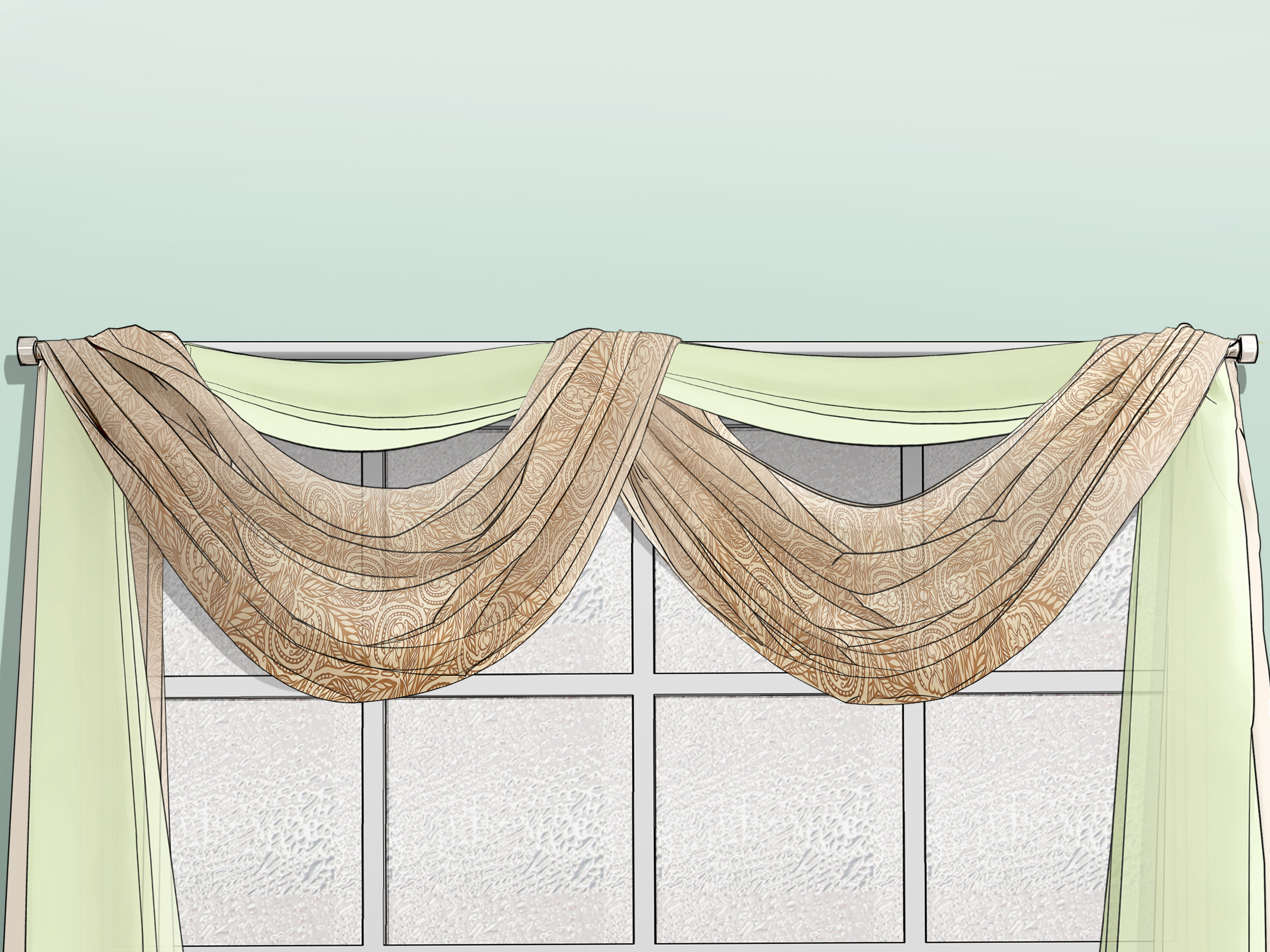
This version is a little dressier and has more movement. Instead of one central swoop, the fabric is looped across the rod or through decorative holders so you get gentle sections across the top and longer cascading tails on the ends. It looks custom, even when your budget says otherwise.
Best for
Formal living rooms, bedrooms, or layered window treatment setups where you want the scarf to act as a decorative topper above curtains. It is also a smart choice for wider windows because multiple loops help fill the space gracefully.
How to do it
- Mount your curtain rod or scarf holders above the window.
- Drape one end of the scarf over the rod, leaving a long tail.
- Twist or gather the fabric loosely, then loop it over the rod again in the middle.
- Create one or two soft loops depending on the window width.
- Let the other end fall to match the first side.
- Adjust the folds so they look soft and even, not like the fabric got stuck halfway through a gymnastics routine.
Why it works
The looped style adds dimension. Instead of reading as one straight horizontal line, the fabric moves across the rod and creates a layered, flowing silhouette. It is especially pretty in sheer or faux silk fabrics that catch light and create a little shimmer without shouting for attention.
Pro styling tip
Pair this style with neutral curtain panels or simple roller shades underneath. The layered look feels rich, but only if the pieces work together. If your panels are busy, your scarf should probably calm down. If your scarf is patterned, let everything else be the supporting cast.
Common mistake to avoid
Making the loops too tight. A window scarf should drape, not cling. Tight loops look stiff and dated, while looser folds feel softer and more current.
Way 3: The Asymmetrical Side Sweep
Now we get to the fun one. The asymmetrical window scarf is modern, casual, and excellent for people who like their decor a little less formal. Instead of centering the fabric, you sweep it from one upper corner across the window, leaving one long dramatic tail on a single side or both tails weighted more heavily to one direction.
Best for
Modern eclectic rooms, boho-inspired spaces, reading nooks, and smaller windows that need personality without a lot of bulk. It is also handy when you want to frame a window without visually boxing it in.
How to do it
- Install a rod or decorative hooks above the window.
- Anchor one end of the scarf higher on one side.
- Sweep the fabric diagonally across the top of the window.
- Let the other end cascade down the opposite side.
- Fluff and arrange the folds until the drape looks effortless in the very suspiciously non-effortless way good design often works.
Why it works
An off-center drape creates movement and keeps the window treatment from feeling overly formal. It is especially effective in casual spaces where you want softness and shape without symmetry. This method also works beautifully with vintage scarves, breezy sheers, or colorful fabrics that deserve some attention.
Pro styling tip
Use this style when the rest of the room is fairly clean-lined. An asymmetrical drape already brings visual energy, so it looks best when it is not competing with ten other loud design choices. Your neon zebra rug may need to sit this one out.
Common mistake to avoid
Letting the angle cut awkwardly across the glass. The line should skim the top area of the window rather than slicing through the middle, unless you intentionally want a dramatic filtered-light effect.
How to Choose the Right Window Scarf
Pick the right length
For a classic look, choose a scarf long enough to create a soft drape and still leave elegant tails. Wider windows usually need more length, especially for looped styles. Too little fabric makes any method look skimpy. A generous scarf gives you room to test shapes and adjust the drop.
Pick the right color
Neutrals are safe and versatile, but a scarf can also be the place where you add contrast, pattern, or shine. In rooms with a lot of solid surfaces, a printed or textured scarf can bring welcome personality. In busy rooms, a single soft tone helps everything breathe.
Pick the right fabric weight
Sheers and semi-sheers create an airy look. Faux silk adds a dressier finish. Cotton blends read more casual. Velvet can be gorgeous, but it often behaves better as full drapery than as a lightweight scarf. In most cases, lighter fabrics drape more beautifully and look less bulky across the top of the window.
Layering Ideas That Make Window Scarves Look Better
If you want your draped window treatments to look more complete, layering is your best friend. Try one of these combinations:
- Window scarf over sheers: Soft, airy, and ideal for living rooms or breakfast nooks.
- Window scarf over blackout curtains: A good mix of style and function for bedrooms.
- Window scarf over Roman shades: Great when you want clean privacy below and softness above.
- Window scarf over blinds: A quick way to warm up practical window coverings that otherwise feel a little office break room.
When layering, keep hardware simple and consistent. The scarf should enhance the setup, not start an argument with it.
Mistakes That Make Window Scarves Look Dated
Window scarves can absolutely look fresh, but a few choices can push them into “renovated in 1997” territory. Here is what to skip:
- Overly heavy fabric that bunches awkwardly
- Tails that are too short to look intentional
- Too many accessories, tassels, and trims all at once
- Mounting the rod too low
- Using a scarf in a room that really needs privacy and light control instead
- Forcing dramatic swags in a room with very modern, minimal architecture
The easiest way to keep the look current is to simplify. Use clean hardware, soft fabric, and one strong draping idea instead of six competing ones.
Real-World Experiences With Draping Window Scarves
One of the most interesting things about styling window scarves is that they almost always look different in a real room than they do in your head. On paper, the idea seems simple: take a long piece of fabric, toss it over a rod, and bask in your own decorating genius. In reality, the first try often looks less “designer showcase” and more “laundry with ambition.” That is completely normal.
In many homes, the biggest surprise is how much rod placement changes the final result. A scarf that feels underwhelming when hung just above the window frame suddenly looks elegant when the rod is moved higher. The room feels taller, the drape gets room to breathe, and the fabric finally starts doing the graceful thing it refused to do five minutes earlier. This is why so many decorators obsess over placement. It is not fussiness. It is geometry with better marketing.
Another common experience is discovering that fabric personality is real. Sheer fabrics usually cooperate. They fall into soft folds, filter light beautifully, and make almost anyone look like they know how to style a room. Stiffer fabrics, on the other hand, can be shockingly stubborn. They puff where you do not want puff, collapse where you hoped for drama, and generally behave like they are being forced into a role they did not audition for. If someone says, “I never liked window scarves,” there is a decent chance they were personally betrayed by bad fabric.
People also tend to learn that wider windows need more generosity than expected. A scarf that seems long enough in the package can suddenly feel comically short once it is draped, looped, and adjusted. That is especially true with the looped cascade style, where extra fabric is what gives the look richness. Without enough length, the design loses that relaxed elegance and starts looking like it is rationing itself.
Layering is another real-life lesson. A scarf by itself can be lovely, but in some rooms it looks unfinished unless there is something beneath it, such as sheers, bamboo shades, or simple panels. This is especially true in larger living rooms where the scale of the wall demands more than a single line of fabric at the top. Once layered, the whole window suddenly makes sense. It gains depth, function, and that hard-to-define polished quality that makes people assume the room came together effortlessly. It did not, of course. There was measuring. Possibly muttering. Maybe one mild crisis involving a steamer.
Finally, there is the emotional side of window scarves, which sounds silly until you see it happen. A soft drape can make a room feel calmer. It takes the edge off blinds, trim, and hard architectural lines. In bright spaces, it can add just enough softness to make the room feel welcoming instead of stark. In cozy rooms, it adds a decorative layer without the heaviness of full drapes. That is why people keep coming back to them. A good window scarf does not just decorate a window. It changes the mood of the entire room, which is a pretty impressive career achievement for one long piece of fabric.
Conclusion
If you have been wondering how to hang a window scarf without making it look fussy, the answer is simpler than it seems: choose light fabric, mount the hardware high, and stick to a draping style that matches your room. The classic center swag gives you symmetry and elegance. The looped side-cascade style adds richness and movement. The asymmetrical side sweep feels relaxed and modern.
In the end, the best window scarf ideas are the ones that feel effortless, even if you had to adjust the folds eight times and bribe yourself with coffee to finish the job. That is not failure. That is decorating. And when the light hits just right and the fabric finally falls the way you hoped, the room looks softer, taller, and far more finished. Not bad for one stylish strip of cloth.