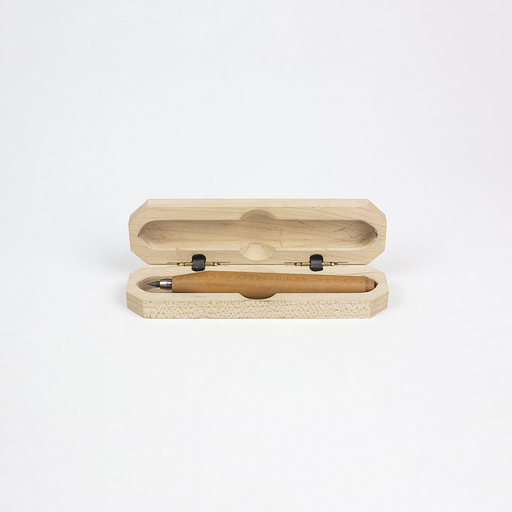
Some pencils are disposable. Some are collectible. And then there’s the Worther Round Wood Pencil (Cherry)a compact,
cherrywood clutch pencil that feels like it belongs in a design studio and a shirt pocket and that one drawer where you keep
“nice things” you swear you’ll use daily.
If you’ve ever snapped a fragile 0.5mm lead while trying to underline something important (like “don’t forget rent”), this pencil’s chunky
graphite is basically a peace treaty. It’s not trying to be a dainty drafting instrument. It’s trying to be the pencil you actually reach for:
warm in the hand, satisfyingly simple, and ready to make dark marks without asking for your life story first.
What It Is (No Marketing Fluff)
The Worther Round Wood Pencil in cherry is a solid-wood clutch pencil made in Germany with a thick 3.15mm soft lead
(often described as ~3mm). Instead of click-advancing tiny leads, you press the top to open a clutch, slide the lead out, and release to lock it in.
That’s it. No gears. No drama. Just a beautifully straightforward mechanism inside a cherrywood barrel.
Quick Specs at a Glance
- Body material: Cherry wood with a lightly protective lacquer finish
- Shape: Round barrel (comfortable, warm grip; desk-roll potential, because physics)
- Lead size: 3.15mm (typically a soft, dark grade like 7B)
- Length: Pocket-friendlyroughly 4.25 inches (varies slightly by listing/box style)
- Mechanism: Clutch/lead holder (press top to release; slide lead; release to hold)
- Packaging: Often a presentation box; some retailers offer upgraded gift boxes
Cherry Wood: The “Feels Expensive” Part That Actually Matters
Cherrywood is one of those materials that doesn’t need to shout. It just ages well and looks better the longer you’re not babying it.
Over time, cherry darkens and develops a richer tone with light exposure and handling. In pencil form, that means your tool slowly becomes
yoursa little patina here, a tiny burnish there, and suddenly it has character instead of fingerprints you’re trying to hide.
Why cherry works so well for a pencil
A wood pencil body isn’t just aesthetic. Wood has a subtle grip and warmth that metal can’t fake. Cherry is known for being stable and workable,
and it tends to feel smooth without feeling slippery. Add a light lacquer finish and you get a surface that resists grime better than raw wood,
but still develops that “well-used” glow instead of looking permanently factory-fresh.
The Round Barrel: Comfort vs. Roll Risk
Round pencils are the couch potatoes of the desk world: super comfortable until they decide to wander off the edge. Ergonomically, the round
barrel is a winespecially if you grip closer to the tip and like a fuller diameter. If you’re the kind of person who gestures with a pencil
while talking, you’ll appreciate how the thicker body keeps your hand relaxed.
The only trade-off is the obvious one: it can roll. If that makes you nervous, the fix is hilariously low-techset it down with the tip pointing
slightly inward on your notebook, or let the pencil live in its box when not in use. (Or embrace the chaos. Some of us enjoy a little desk drama.)
Clutch Pencil 101: How It’s Different From a Regular Mechanical Pencil
Most “mechanical pencils” are lead-dispensing machines designed around thin sticks of graphite. A clutch pencil (also called a lead holder)
works more like a simple collet: press to open, move the lead, release to clamp. The mechanism is sturdy and forgiving, especially with thick leads.
How to advance the lead without overthinking it
- Press the top button to open the clutch.
- Let a few millimeters of lead slide out.
- Release the button to lock the lead.
- Write/sketch/mark things dramatically like you’re in a design documentary.
Because the lead is thick and soft, you don’t need to extend much. A little goes a long wayboth for control and for minimizing breakage if you
press hard or work at an angle.
The 3.15mm 7B Lead: Thick, Soft, and Shamelessly Dark
Here’s where the Worther Round Wood Pencil (Cherry) stops being “cute stationery” and starts being a tool.
A 3.15mm lead is dramatically thicker than the 0.5mm/0.7mm leads most people know. Pair that with a very soft grade like
7B, and you get a line that’s dark, smooth, and expressive.
What “7B” actually means in real life
On the common HB scale, “B” grades are softer and darker as the number goes up. A 7B is far softer and blacker than an HB (your typical “#2 pencil”
neighborhood). That means:
- Darker marks with less pressure (your hand muscles will send a thank-you note)
- More smudge potential (because soft graphite loves to travel)
- Better shading and richer tonal ranges for sketching
- Less crisp micro-detail than harder leadsbecause that’s not the job here
Does it need sharpening?
Often, not in the way you’re thinking. With thick leads, the tip can wear into a natural conical shape as you write. If you want a needle-fine
point for tiny lettering, you can use a lead pointer/sharpener designed for lead holdersbut many users find that for general writing,
sketching, and marking, the natural wear is part of the charm.
What You’ll Use It For (Besides Admiring It)
1) Everyday writing that feels oddly luxurious
This pencil makes even boring tasks feel better. Grocery lists look more confident. Meeting notes look like you meant to attend. The thick lead
glides, and the wood body keeps your grip comfortable over longer writing sessions.
2) Sketching, shading, and expressive linework
A soft 7B-style lead in a thick holder is a dream for quick studies, gesture sketches, and bold shading. You can get chunky marks with the side
of the lead, or rotate slightly for a narrower line. It’s not a technical drafting pencilthink “artist’s helper,” not “engineer’s ruler buddy.”
3) Marking and layout work
Thick clutch-pencil leads are popular for marking tasks because they’re robust and visible. If you do woodworking, studio builds, prop-making, or
any kind of hands-on layout, the line visibility can be a big win compared with faint, hard pencil marks.
4) Mixed-surface mischief
One fun advantage of lead-holder ecosystems: many brands offer colored leads for different surfaces and use cases. Depending on what refills you
have available, you can move beyond graphite into color markinghandy for planning, labeling, or using a lighter/different contrast line.
How to Get the Best Results
Use less lead than you think
Soft, thick lead is strongbut it’s still graphite. Extend only a few millimeters. If you’re shading, keep it short and let the side of the lead do
the work. If you’re writing, extend just enough to maintain a comfortable angle.
Rotate as you write (optional, but satisfying)
With thick leads, rotating the pencil slightly every few lines helps even out wear. It’s a small habit that keeps the point usable longer and
prevents one-sided “chisel tip” surprises.
Control smudging like an adult who has learned lessons
Soft graphite smudgesthis is not a bug, it’s physics. If you’re right-handed, work left to right; if you’re left-handed, you may want a scrap
paper under your palm or a quick-drying spray fixative for sketches. For notebook writing, simply avoid over-shading your margins unless you
enjoy the “mysterious gray thumbprint” look.
Keep the wood happy
The lacquer finish helps protect the cherrywood, but it’s still wood. Avoid soaking it, leaving it in a hot car for days, or storing it in a wet
bag next to a sweating water bottle. Wipe with a soft cloth if it picks up grime. The point is to let it age gracefully, not dramatically.
A Quick Word on Refills (and a Cool Trick)
The beauty of a 3.15mm clutch pencil is that refills are straightforward: you replace the thick lead when it runs down. Many 3.15mm leads are
widely compatible across lead holders that accept 3.15/3.2mm sizes. Some retailers also note that certain Wörther wood models can accept a
ballpoint insert, turning the body into a multi-use writing tool depending on the insert type and fit. If you love clever
modularity, that’s a neat bonus to explore.
Pros and Cons
Pros
- Comfort-first design: thick round barrel + warm wood feel
- Bold, smooth marks: soft 3.15mm lead makes writing and shading effortless
- Simple, durable mechanism: clutch systems are famously low-fuss
- Ages beautifully: cherrywood and light lacquer develop an appealing patina
- Giftable: presentation packaging makes it feel special without being precious
Cons
- It can roll: round barrel means you’ll want a mindful resting habit
- Smudging is real: soft graphite is wonderful… and messy if you’re careless
- Not a micro-detail tool: if you need ultra-fine lines, you’ll prefer harder, thinner leads
- Premium price category: you’re paying for materials, make, and feelnot just “a pencil”
Is It Worth It?
If your idea of a “good pencil” is “whatever was free at the bank,” then nosave your money and keep living your thrilling, paperclip-filled life.
But if you care about the daily feel of writing and you like objects that get better with use, the Worther Round Wood Pencil (Cherry) can absolutely
justify itself.
The value isn’t in a feature checklist. It’s in the small, repeatable moment: you pick it up, it feels warm, it writes dark without effort, and it
doesn’t rattle, squeak, or demand a tiny refill tube every other Tuesday. It’s a “use-me” object, not a “display-me” objectalthough it won’t mind
being admired.
Alternatives (If You Like the Idea but Want a Different Vibe)
- Wörther Hexagonal Wood Pencil: similar wood-and-clutch concept, but with a hex profile for better roll control.
- Wörther Shorty (metal): compact clutch pencil in aluminummore industrial feel, same thick-lead practicality.
- 2.0mm lead holders: great if you want a more “pencil-like” line width with broader hardness options, plus easier fine-point sharpening.
- 5.6mm clutch pencils: if you want even bolder marks for carpentry, layout, or heavy sketching.
FAQ
Is the Worther Round Wood Pencil (Cherry) good for everyday writing?
Yesif you like a darker, softer line and don’t mind a slightly larger barrel. For tiny handwriting or ultra-clean pages, you may prefer a harder lead.
Will the 7B lead smear all over my notebook?
It can, especially if you press hard or drag your palm over fresh writing. Lighter pressure, a scrap paper under your hand, or just giving it a few
seconds before rubbing across it helps a lot.
Do I need a special sharpener?
Not necessarily. Many people let the tip wear naturally into a functional point. If you want a sharper point for detail work, a lead pointer made for
lead holders is the right tool.
Does cherry wood change color over time?
Yescherry typically deepens and warms with age and exposure to light. That’s part of why cherrywood tools and accessories are so beloved: they
develop character instead of looking “old.”
Conclusion
The Worther Round Wood Pencil (Cherry) is proof that a pencil doesn’t need to be complicated to be special. It’s a compact, well-made
clutch pencil that pairs thick, soft lead with a warm cherrywood bodyperfect for anyone who wants writing and sketching to feel a little more
intentional (and a lot more satisfying).
If you want a tool that looks better the more you use it, writes boldly with minimal effort, and makes even mundane notes feel slightly elevated,
this pencil earns its spot on your deskand in your pocket.
Owner-Style Experiences (500+ Words of Real-World Flavor)
Below is a “day-in-the-life” style collection of typical experiences people report with thick-lead wooden clutch pencils like the
Worther Round Wood Pencil (Cherry)the small moments that don’t show up in a spec sheet but absolutely show up in daily use.
The first thing most people notice isn’t the lead sizeit’s the temperature. Metal pencils can feel cold, especially in winter or in heavily
air-conditioned rooms. Cherry wood doesn’t do that. You pick it up and it’s already “friendly.” That sounds silly until you realize how often
you avoid a tool that feels unpleasant. A warm barrel makes you reach for it more, which is the whole point of owning a nice pencil instead of
a sad plastic one that came from a conference tote bag.
Then comes the lead. If you’re used to 0.5mm mechanical pencils, the first stroke feels almost like switching from a bicycle to a small motorcycle.
The line is darker, the glide is smoother, and you don’t have to press like you’re signing a treaty. For journaling, this can be weirdly emotional:
your handwriting looks bolder and more confident, even if your actual life is currently a mess of tabs, reminders, and “I’ll do it later.”
Softer lead makes your notes look deliberate, which sometimes tricks your brain into behaving like a deliberate person.
In creative worksketching, thumbnailing, rough layoutsthe thick lead becomes a speed tool. People often describe moving faster because they stop
fussing with perfect lines. Instead of chasing precision, they block shapes, shade quickly, and refine only where it matters. The pencil encourages
“big thinking” first. It’s common to see users hold it a little farther back and use the side of the lead for wide shading, then shift forward for
more controlled edges. That physical shift in grip becomes a natural workflow: loose, then tight; rough, then refine.
There’s also a quiet satisfaction in the mechanism. Clicky mechanical pencils are fun, but they can feel fussytiny leads, tiny tubes, tiny problems.
A clutch pencil is the opposite. Press, slide, release. People love the sense of control: you decide how much lead is out, and the pencil doesn’t
argue. That control is especially appreciated when marking or labeling objects, because you can extend just enough lead to make a dark mark on a tag
or a piece of wood without the lead snapping at the first sign of confidence.
Over weeks and months, cherrywood changes. The finish subtly burnishes where your fingers naturally rest. The color deepens. The pencil starts to look
“lived in,” like a leather wallet that’s finally stopped trying to be perfect. Many owners enjoy that evolution because it’s the opposite of disposable
culture: the pencil is quietly recording time. It’s also why these pencils often become go-to giftsbecause they feel personal even before they’re used.
The receiver doesn’t just get a tool; they get an object that will become their object.
Finally, there’s the desk ritual factor. People who love this pencil tend to develop tiny habits around it: putting it back in its box at the end of
the day, wiping graphite dust off the tip, keeping a spare tube of 3.15mm lead nearby, or pairing it with a favorite notebook. None of that is required.
But the pencil invites a little carenot because it’s fragile, but because it feels worthy of care. And that’s the sneaky magic: you take better notes,
sketch more often, and enjoy the process more… because your pencil made you want to.