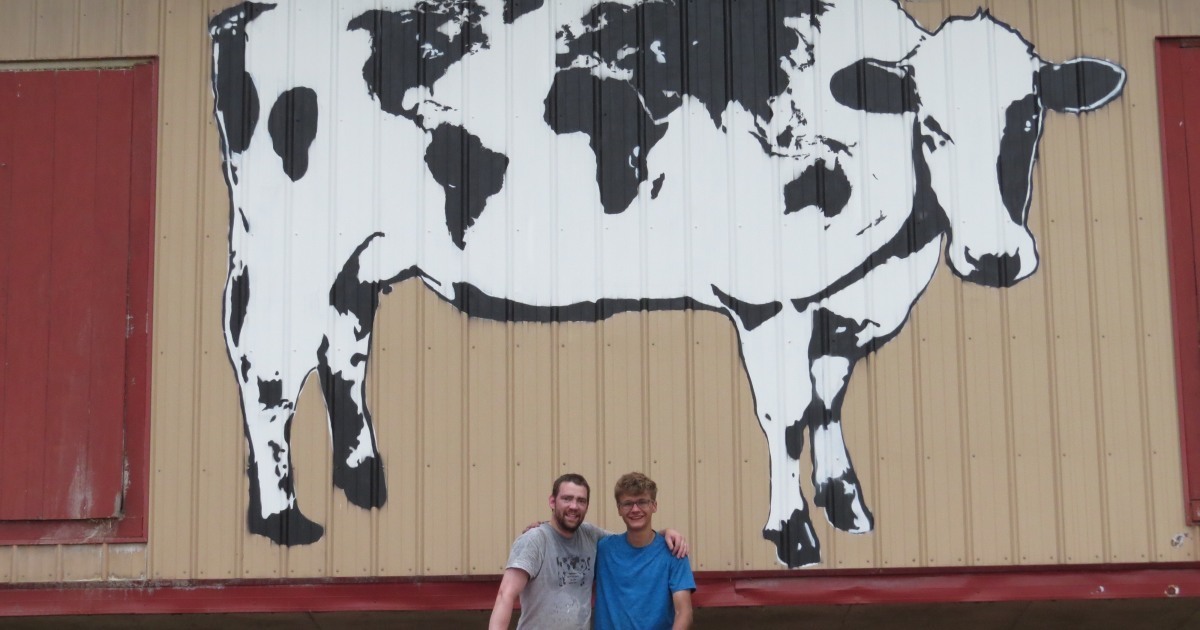
It sounds like the title of a children’s book written by a diplomat with a sense of humor: World Cows Bringing World Peace. You can almost picture it now: a herd of calm-eyed ambassadors strolling into tense negotiations, flicking their tails, chewing thoughtfully, and silently shaming humanity into better behavior. Sadly, cows do not draft peace agreements, chair international summits, or wear little neckties. On the other hand, humans have spent thousands of years building food systems, communities, traditions, economies, and even public celebrations around cattle. That part is very real.
So no, cows are not personally ending wars. But they do something almost as impressive: they create shared routines, shared meals, shared livelihoods, and shared symbols that can make societies more stable, more connected, and a little less eager to throw chairs at each other. From ranches and dairy barns to public art festivals and cultural traditions, cows have a strange talent for bringing people into the same conversation. And in a noisy world, that is not nothing.
This article takes the playful title seriously enough to be useful. If we want to understand how “world cows” might help bring “world peace,” we have to look at what cattle really mean in daily life: food security, trade, work, identity, ritual, art, environmental debates, and human cooperation. Once you do that, the cow starts to look less like a punchline and more like a surprisingly powerful symbol of how peace actually works on the ground.
Why Cows Matter More Than Most People Admit
Cattle are not a niche side character in human history. They have been one of the major animals in the human story for millennia. Domesticated animals changed the way people settled, farmed, traded, and ate. Cattle in particular became deeply tied to agriculture because they offered several things at once: milk, meat, labor, hides, manure, and social value. In plain English, cows were not just livestock. They were infrastructure with eyelashes.
That history still echoes today. In the United States, cattle production remains a major part of agriculture, and the beef and dairy sectors continue to shape rural economies, food supply chains, and land use. Dairy also has an everyday role in nutrition, because milk and other dairy foods provide nutrients people recognize instantly on a label: protein, calcium, vitamin D, potassium, and more. Even people who rarely think about cows are probably still living with the results of cattle agriculture every single day, whether that means a cheeseburger, a yogurt cup, or the local county fair.
There is also a cultural reason cows keep showing up in public life. They are big, recognizable, slightly ridiculous, and oddly comforting. A shark makes headlines. A horse makes poetry. A cow makes people stop, smile, and say, “Well, that is unexpectedly wholesome.” That emotional accessibility matters. Shared symbols that feel familiar can soften social boundaries. Not every bridge is made of policy; some are made of everyday affection.
Cows as a Shared Language of Livelihood
If peace begins with stability, then cows enter the peace conversation through livelihood. Around the world, cattle are often tied to household security. In many pastoral communities, cattle are not simply products to be sold. They can function as savings, status, inheritance, food, and social connection all at once. In some places, cattle exchange is woven into marriage customs, kinship structures, and community obligation. That means cattle are not just animals in a field. They are part of the social wiring.
National Geographic’s educational and cultural reporting on pastoral societies highlights exactly this point. Among the Maasai, for example, cattle have long been central to economic life and identity. In parts of the Sahel, Fulani herders still move livestock across long seasonal routes in search of pasture and water. These systems are old, adaptive, and deeply human. They depend on negotiation, shared access, timing, trust, and knowledge passed across generations. In other words, they depend on forms of cooperation that look a lot like peace in everyday clothes.
When cattle systems work well, they can support families and local exchange. When those systems break down through drought, conflict, bad policy, land pressure, or market shock, the fallout spreads quickly. Food insecurity increases. Competition hardens. Mobility becomes riskier. Local tensions rise. You do not need a political science degree to understand the lesson here: if an animal is tied to your household economy, your culture, and your survival, then protecting that system is part of protecting peace.
That is why cattle are often present in serious conversations about resilience. They sit at the crossroads of land, climate, food, economics, and identity. The humble cow is basically a walking policy memo, just with less punctuation and a stronger opinion about grass.
Can Cows Actually Bring Peace?
Not directly. A cow cannot mediate a border dispute, and if one ever tries, the opening statement will probably be “moo,” which, while emotionally resonant, lacks legal precision. But cows can help create conditions that support peace.
1. They support routine and mutual dependence
Peace is not only the absence of violence. It is also the presence of dependable life: food, work, exchange, caregiving, and confidence that tomorrow will resemble today in a good way. Cattle farming and dairying require routine. Animals must be fed, monitored, moved, milked, treated, and protected. That ongoing labor creates webs of dependence among farmers, veterinarians, transporters, processors, markets, and families. Shared work has a funny way of making social collapse look expensive and cooperation look practical.
2. They create reasons to negotiate
Pastoral life has historically required agreements over grazing, water, timing, and routes. That does not mean conflict disappears. It means communities often need rules, relationships, and local problem-solving to keep life moving. In cattle-based economies, negotiation is not optional decoration. It is survival. That habit of coordination is one of the quiet foundations of peacebuilding.
3. They symbolize home, recovery, and return
One of the clearest examples comes from public radio reporting on South Sudan, where cattle were described not only as economic assets but as central to people’s sense of home, dignity, and the possibility of rebuilding life after violence. In stories like that, cattle are tied to memory, identity, and restoration. Peace is not abstract there. It is the ability to return, to rebuild, to reclaim what makes a community recognizable again.
This is the key idea: cows do not create peace through magic. They contribute through livelihood, continuity, and relationship. They remind us that peace is built from ordinary structures people can count on.
Cows in Art, Festivals, and Public Joy
If livelihoods are one side of the story, public culture is the other. Cows have a rare gift for showing up in art without becoming intimidating. Lions suggest power. Eagles suggest national symbolism. Cows suggest that somebody nearby is probably making pie. That makes them unusually effective as public icons.
Consider CowParade, the public art phenomenon that began in Chicago in 1999 and has since spread to cities around the world. The idea is deliciously simple: life-size cow sculptures are painted by artists and placed across public spaces, turning streets into open-air galleries. In recent years, cities including San Antonio have used CowParade-style events to mix art, tourism, fundraising, and local identity. A painted cow is not a peace treaty, but it does create something peace needs badly: shared public delight.
That matters more than cynical people like to admit. Public art invites strangers into the same civic experience. Families take photos. Kids laugh at a cow painted like a superhero. Local artists get visibility. Businesses benefit from foot traffic. Charities raise money. A city becomes briefly more conversational and less fragmented. It is hard to stay in a permanent culture war when you are standing next to a six-foot fiberglass cow wearing sunflowers.
The cultural affection for cows runs deeper than modern installations. Smithsonian coverage of butter cow traditions at the Iowa State Fair shows how cattle imagery became part of Midwestern public memory. Butter cows are both odd and beloved, which is the perfect recipe for an American institution. They connect agriculture, craftsmanship, nostalgia, and spectacle in a way that makes rural life visible to people who may never step inside a barn. Meanwhile, art collections at the Smithsonian American Art Museum remind us that cows have long appeared in American painting as emblems of landscape, labor, and pastoral calm.
In other words, cows help communities stage a softer version of themselves. They let people celebrate work, place, and local character without needing an argument to do it. That alone makes them unusually peace-friendly creatures.
The Honest Part: Peace Requires Better Cattle Systems
Now for the less decorative truth. If we want cows to contribute to a more peaceful world, we cannot stop at sentiment. Real peace depends on how cattle are raised, managed, and integrated into broader systems. Romance without responsibility is just marketing with hay on it.
Animal welfare matters
The American Veterinary Medical Association is clear that good animal welfare includes disease prevention and treatment, responsible care, proper housing, nutrition, humane handling, and sound management. That is not optional window dressing. A society that treats animal welfare seriously is also practicing discipline, accountability, and care in the food system. Humane treatment is not the entire definition of peace, but cruelty rarely improves any civilization.
Environmental management matters
The cow conversation also has to include climate and land stewardship. The U.S. Environmental Protection Agency notes that livestock contribute methane through normal digestion and manure management. That makes cattle part of environmental debates whether anyone likes it or not. Ignoring the issue helps no one. But there is also practical work underway around methane reduction, manure management, and grazing systems that improve soil health and resilience.
USDA materials on grazing management and climate resilience point to strategies such as rotational grazing and better pasture management that can support soil health, forage productivity, and resilience under changing weather conditions. Peace, in the twenty-first century, has to include environmental realism. A stable society cannot be built on degraded land and permanent denial.
Human health matters too
The “One Health” concept promoted by veterinary and public health communities is useful here. Human health, animal health, and environmental health are connected. That sounds obvious because it is obvious, yet modern life often acts shocked to discover it again. Cattle systems touch all three. Better welfare, smarter land use, safer food systems, and healthier communities are not separate goals. They are one messy, linked project. Peace works the same way.
What World Cows Really Teach Us
So, are world cows bringing world peace? Not in the cinematic sense. No cow is trotting into the United Nations and demanding a ceasefire with soulful eyes and a tiny bell. But in the real sense, yes, cows can help point the way.
They remind us that peace is grounded in ordinary things: enough food, decent work, functioning relationships, respect for living systems, local pride, shared rituals, and spaces where strangers can stand side by side without immediately becoming enemies. Cows sit in the middle of all those things. They are part of economies, family histories, cultural identities, public celebrations, and environmental decisions. They can be symbols of livelihood, recovery, abundance, and care.
That may be why cows keep surviving in the human imagination. They are not flashy. They are not fast. They are not trying to be inspirational influencers. They simply stand there, patient and unimpressed, while humans slowly rediscover the truth that peace is built through maintenance. Feed what sustains you. Protect what is vulnerable. Share what is useful. Do not panic every five minutes. Honestly, that is pretty advanced wisdom for an animal best known for chewing.
If humanity ever does get better at peace, do not be surprised if a cow is somewhere in the background, minding its business and quietly holding the whole metaphor together.
Experiences and Reflections: What “World Cows Bringing World Peace” Feels Like in Real Life
To understand the emotional power of the idea, imagine a series of ordinary scenes. A family walks through a state fair and stops in front of a butter cow, laughing first because it is absurd and then lingering because it connects them to a farming story larger than themselves. A child who has never been near a pasture suddenly asks how milk gets to the store. A grandparent answers. That is not peace with a capital P, but it is a peaceful transfer of attention, curiosity, and memory.
Picture a different scene: a city sidewalk lined with brightly painted cows during a public art event. Office workers take lunch-hour detours. Tourists point cameras. Local artists see their work in daylight instead of behind a gallery wall. Strangers help each other get the best photo angle. For one afternoon, the street becomes less anonymous. People are not bonded forever, of course, but for a moment they share a civic mood that is lighter, friendlier, and more open. That, too, is part of peace.
Then move farther out, to ranchland or dairy country. Morning work starts early. Gates creak. Water tanks are checked. Feed is moved. Weather is watched with the seriousness usually reserved for exam results and playoff games. The work is repetitive, but repetition is exactly what gives it dignity. People cooperate because the animals require consistency. Neighbors trade advice. Veterinarians become trusted figures. Knowledge moves from one generation to the next in gestures as much as words. There is a kind of quiet social glue in that routine. A cow does not care about your online arguments. It still needs care at sunrise. That demand for practical attention can bring human beings back to reality in the best possible way.
There are also harder experiences tied to cattle. Drought changes tempers. Markets squeeze farms. Land use debates become emotional. Environmental concerns are real. Animal welfare questions are real. None of this should be polished into a fairy tale. But even here, cows push people toward the central question: how do we live together responsibly? Farmers, consumers, scientists, veterinarians, regulators, and communities all bring different priorities, and cattle sit right at the intersection. The conversation can be tense, yet it is still a conversation about coexistence, stewardship, and shared consequences. Peace is not the absence of disagreement. It is the ability to keep working through disagreement without burning down the barn, figuratively or otherwise.
That is why the phrase “World Cows Bringing World Peace” actually lands better as experience than slogan. It is in the calm of a pasture, the rhythm of care, the public joy of a ridiculous sculpture, the memory of a fairground, the teamwork of managing land well, and the human instinct to gather around something familiar. Cows do not make people perfect. They do, however, create thousands of moments in which people practice patience, exchange, responsibility, and shared meaning. Stack enough of those moments together, and you start to see how peace is built: not all at once, not by speech alone, but through daily acts of care that make a community more livable.
Conclusion: In the end, cows are less about fantasy and more about function. They help feed people, anchor traditions, inspire art, support livelihoods, and force societies to confront how human well-being, animal welfare, and environmental health fit together. If world peace ever arrives, it will likely come wearing work boots rather than a crown. And somewhere nearby, a cow will probably be chewing slowly, as if to say, “Yes, this took you long enough.”
Note: This article is an original, web-ready synthesis based on real-world reporting and reference materials. Unnecessary citation artifacts and placeholder markup have been removed for publication.