Vintage Japanese woven straw shoes may look simple at first glancejust straw, fiber, knots, and a humble sole. But spend a few minutes with a pair of waraji or straw zori, and you begin to see something bigger: a walking record of Japanese daily life, rural craft, pilgrimage, farming, martial culture, and sustainable design long before “eco-friendly footwear” became a marketing phrase.
These traditional Japanese straw sandals were not made to sit behind glass looking mysterious and important, although many now do exactly that in museums and private collections. They were made to move. They carried travelers along roads, farmers through fields, monks across temple paths, and workers through long days when comfort meant “please do not fall apart before sunset.” In other words, they were practical, lightweight, breathable, and surprisingly clever.
Today, vintage Japanese woven straw shoes attract collectors, costume designers, historians, interior decorators, tea ceremony enthusiasts, and anyone who has ever looked at a handmade object and thought, “How did someone make this much beauty out of grass?” This guide explores their history, types, materials, construction, cultural meaning, collecting tips, and modern styling ideaswithout making the topic feel like a sleepy museum label.
What Are Vintage Japanese Woven Straw Shoes?
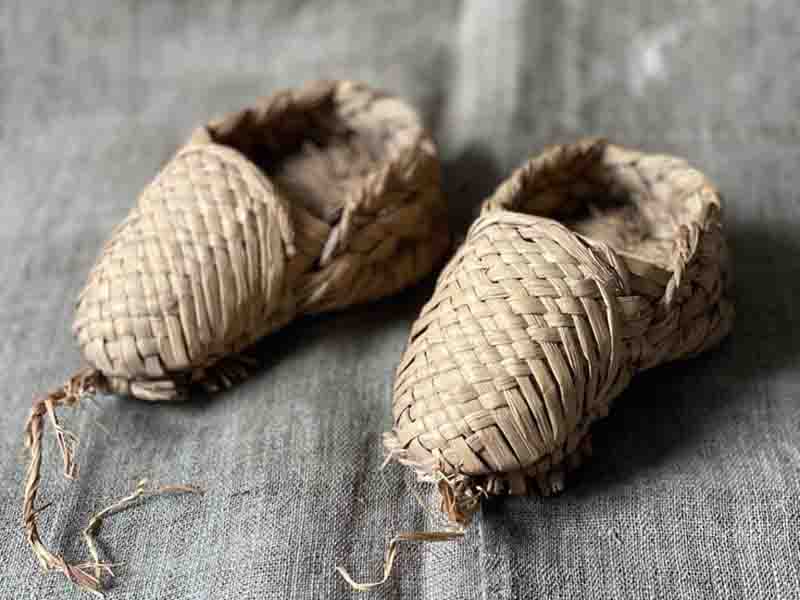
Vintage Japanese woven straw shoes are traditional sandals or shoe-like footwear made from braided, twisted, or plaited natural fibers such as rice straw, barley straw, hemp, cotton cord, or other plant materials. The most commonly discussed forms are waraji and zori, though related footwear includes setta, geta, and regional straw boots.
The phrase “woven straw shoes” is broad. In everyday collecting language, it may refer to flat straw sandals with thong straps, tie-on rope sandals, temple offerings, folk craft examples, or decorative vintage pairs made for display. Some are truly old; others are vintage-style reproductions. That distinction matters if you are buying, appraising, or writing product descriptions.
Waraji vs. Zori: The Quick Difference
Waraji are tie-on straw sandals traditionally secured with cords that wrap around the foot, ankle, or lower leg. They were associated with travel, labor, pilgrims, monks, farmers, and warriors. Waraji often have a rustic, rope-like appearance, and the wearer’s toes may extend slightly beyond the front edge.
Zori are thong-style sandals, usually easier to slip on and off. Traditional straw zori were commonly made with woven soles and fabric or fiber straps. They are closer in shape to what many Americans would recognize as flip-flops, although calling them “ancient flip-flops” is a little like calling a kimono a bathrobe with ambition. Similar silhouette? Maybe. Same cultural weight? Absolutely not.
A Short History of Japanese Straw Footwear
Japanese straw footwear developed from the practical needs of an agrarian society. Rice was central to Japanese agriculture, and rice straw was a valuable byproduct. Rather than waste it, people used straw for ropes, mats, raincoats, baskets, hats, sandals, and ceremonial objects. The humble stalk became a whole hardware store.
Waraji are strongly linked with premodern Japan, especially the Edo period, when long-distance travel, pilgrimage routes, post towns, and rural labor all required affordable footwear. Unlike high-status lacquered sandals or refined footwear for formal dress, straw sandals could be made at home or purchased cheaply. They wore out quickly, but that was part of the system: travelers often carried extra pairs and replaced them along the road.
In cities, wooden geta and more polished zori might appear in daily life, while waraji remained the rugged choice for distance and work. For soldiers, porters, monks, and farmers, footwear had to grip the ground, breathe in humid weather, dry reasonably fast, and cost little enough to replace. Straw answered those needs with quiet brilliance.
Why Straw Was the Perfect Material
Rice straw and barley straw are light, flexible, renewable, and widely available in traditional farming communities. When properly prepared, straw can be twisted into rope, braided into cords, or plaited into soles. A well-made pair of straw sandals feels airy and textured, not polished and sealed like modern factory footwear.
The charm of vintage Japanese woven straw shoes is that the material tells the truth. You can see the maker’s hand, the fiber’s tension, the path of the weave, and sometimes the irregularities that make handmade objects feel alive. A machine-made sneaker hides its construction under foam and branding. A waraji says, “Here is every strand. Judge me openly.” That confidence is admirable.
Common Materials Used
Traditional examples may include rice straw, barley straw, hemp, cotton fabric, twisted textile strips, or mixed plant fibers. Some museum examples list hemp or straw with textile components, showing that Japanese straw footwear was not always made from one material alone. The straps could be cloth, the sole could be straw, and reinforcement could vary depending on region, maker, and purpose.
Collectors should remember that “straw” in a listing may be used loosely. Some vintage pairs are made from plant fiber that is not rice straw. Others may combine straw with cotton, nylon, or later synthetic materials, especially in 20th-century or souvenir examples.
How Waraji Were Made
Traditional waraji construction begins with prepared straw. The straw is cleaned, softened, and twisted into ropes or cords. These strands are then woven into a sole, with loops and tie cords integrated into the structure. The result looks simple only to people who have never tried to make one. Anyone who has attempted basic basket weaving knows that “simple” is often a trap set by skilled craftspeople.
The sole had to balance flexibility and durability. Too loose, and the sandal would collapse. Too tight, and it would become uncomfortable or stiff. The cords had to hold the foot securely without cutting into the skin. In many cases, waraji were worn with tabi, the split-toe socks that allow thong-style or corded footwear to fit properly.
Because waraji were working footwear, beauty came from function. The clean repetition of the weave, the rope texture, and the natural color of straw created a rustic aesthetic that modern collectors now appreciate as wabi-sabi: imperfect, natural, weathered, and quietly expressive.
Cultural Meaning: More Than Old Sandals
Vintage Japanese woven straw shoes are not just accessories. They sit at the crossroads of work, travel, religion, and folk identity. In Buddhist contexts, waraji may be associated with monks and pilgrimage. In temple settings, large straw sandals can symbolize strength, protection, and healthy legs. In rural settings, they reflect the resourcefulness of farming communities.
One of the most famous examples of straw sandal symbolism is the giant owaraji displayed at Sensō-ji in Tokyo. These enormous sandals are associated with protective guardian figures and are believed to ward off evil by suggesting that a mighty being protects the temple. That is a wonderfully dramatic security system: no cameras, no alarms, just giant sandals saying, “You may want to reconsider your life choices.”
Fukushima’s Waraji Festival also keeps the tradition alive through a giant straw sandal, music, dance, and prayers for strong legs and safe walking. The festival shows how an everyday object can become a civic symbol. A sandal that once wore out on muddy roads now parades through town as a cultural hero.
Types of Vintage Japanese Woven Straw Shoes
1. Waraji Sandals
Waraji are the most rugged and historically evocative type. They are usually rope-like, flat, and tied around the foot. Collectors love them because they instantly communicate old Japan, pilgrimage, samurai-era travel, and folk craft. They are also popular for theater, film, cosplay, martial arts displays, and historical reenactment.
2. Wara-Zori
Wara-zori are straw zori sandals with woven soles and thong straps. They are usually easier to display and understand because their shape resembles modern sandals. Some vintage examples have colored textile straps, giving them a warmer domestic feel than rougher travel waraji.
3. Setta-Style Sandals
Setta are a type of Japanese sandal often associated with a flatter, more refined profile. Traditional setta may use leather, bamboo sheath, or other materials, but vintage listings sometimes group straw sandals, zori, and setta together. Buyers should read carefully because not every “straw setta” is technically the same as old rural waraji.
4. Straw Boots and Snow Footwear
In colder regions, Japanese straw footwear could include boot-like forms or protective straw coverings. These were designed for snow, fieldwork, and winter conditions. They are less common in casual online searches but highly interesting from a folk craft perspective.
How to Identify Authentic Vintage Japanese Straw Sandals
Authenticity begins with observation. Look at the weave, fiber, wear patterns, repairs, and straps. Old straw may darken with age, become brittle, or show uneven fading. Handmade soles may have small irregularities. A pair that looks too perfect may be new, decorative, or machine-assisted.
That does not automatically make it bad. Reproductions can be beautiful, wearable, and ethically preferable if you want to try the style without damaging a fragile old object. But if the goal is collecting, words matter. “Vintage,” “antique,” “traditional,” “handmade,” and “Japanese-style” are not interchangeable.
Signs to Check Before Buying
Examine the fiber condition. Dry, cracking straw may be authentic but fragile. Check whether the pair is wearable or display-only. Look for odor, mold, insect damage, broken cords, replaced straps, or overly shiny finishes. Ask for measurements, close-up photos, provenance, and the seller’s source if available.
Also compare the shape. Waraji usually tie on; zori usually slip on. If a listing says “waraji zori geta sandals,” the seller may be keyword-stuffing rather than describing accurately. That is not always malicious, but it means you should slow down before clicking “buy now” with the confidence of a samurai entering battle.
How to Display Vintage Japanese Woven Straw Shoes
Because old straw can be delicate, display is often better than wear. Place vintage sandals on a low shelf, inside a shadow box, or beside Japanese ceramics, bamboo baskets, indigo textiles, tea utensils, or woodblock prints. Their earthy texture pairs beautifully with natural materials.
A single pair of waraji can add depth to a minimalist room. Instead of shouting for attention, they whisper history. They work especially well in interiors inspired by wabi-sabi, Japandi design, rustic farmhouse styling, or museum-like object displays.
Avoid direct sunlight, damp rooms, and heavy handling. Straw can fade, warp, crack, or attract pests. If you must clean them, use a soft brush and a careful hand. Do not soak vintage straw shoes in water unless your goal is to turn a collectible into compost with extra steps.
Can You Wear Vintage Japanese Straw Shoes?
Sometimes, but usually with caution. Many vintage pairs were not preserved for modern pavement, long walks, or daily use. Old straw may snap under pressure. A display pair can look sturdy right up until the moment it chooses betrayal.
If you want to wear traditional Japanese straw sandals, consider buying a modern handmade pair. New waraji or zori can be made for festivals, costume use, martial arts practice, or cultural events. Save antique or fragile examples for display. That way, you honor the craft without accidentally turning history into floor confetti.
Why Collectors Love Them
Collectors are drawn to vintage Japanese woven straw shoes because they are affordable compared with many antiques, visually distinctive, and rich in cultural meaning. They also represent everyday history. Not every collectible has to be a sword, scroll, or porcelain vase. Sometimes the most human object is the one that touched the ground.
There is also a sustainability story. These shoes were made from biodegradable materials, often by hand, using local resources. They remind us that design can be practical, beautiful, and low-waste at the same time. Modern fashion spends millions trying to look natural. Waraji got there centuries ago with straw and patience.
Modern Uses and Styling Ideas
Vintage Japanese straw sandals can be used as wall decor, shelf accents, educational props, photography styling pieces, or cultural collection items. They look especially strong beside antique farm tools, Japanese textiles, bonsai displays, ikebana vessels, or handmade pottery.
For fashion inspiration, designers sometimes reference the shape and texture of straw footwear in modern sandals. The influence appears in rope soles, woven footbeds, natural-fiber straps, and minimalist silhouettes. However, wearing actual vintage examples is less practical than using them as inspiration.
For content creators, product sellers, and bloggers, the best keywords to use naturally include vintage Japanese woven straw shoes, Japanese straw sandals, waraji sandals, straw zori, traditional Japanese footwear, handmade straw shoes, and Japanese folk craft.
Care and Preservation Tips
Store vintage straw shoes in a dry, stable environment. Avoid basements, bathrooms, and overly humid rooms. Use acid-free tissue for support if the straps are weak. Keep them away from pets, especially cats, who may see ancient Japanese folk craft and think, “Finally, an expensive chew toy.”
Do not polish, oil, bleach, or aggressively wash straw footwear. The goal is preservation, not renovation. Aged color and minor wear are part of the object’s story. If a pair is valuable, consult a textile conservator before attempting repair.
Buying Guide: What Makes a Pair Valuable?
Value depends on age, condition, rarity, provenance, craftsmanship, material, and visual appeal. A documented Edo-period or Meiji-period pair is more significant than a recent souvenir pair. A complete pair with original ties is more desirable than a broken single sandal. Unusual regional forms, old labels, museum deaccession records, or family history can increase interest.
Still, the market for vintage Japanese woven straw shoes is niche. Prices vary widely. Some pairs are inexpensive decorative items, while rare examples with strong provenance may appeal to serious collectors. Buy what you understand, and when you do not understand it, ask questions before your wallet starts sprinting.
Experience Section: Living With and Learning From Vintage Japanese Woven Straw Shoes
The most memorable experience with vintage Japanese woven straw shoes often begins when you hold a pair and realize how light they are. Photographs can make waraji look rough and heavy, but in the hand they feel almost airy. The texture is dry, fibrous, and honest. You can follow the path of each strand and imagine the maker tightening the weave, testing the loops, and shaping a sole meant for real movement.
Displaying them at home changes the way people respond to a room. A ceramic vase may earn a polite compliment, but straw sandals invite questions. Guests ask what they are, who wore them, how old they might be, and why the toes sometimes extend beyond the front. Suddenly, a quiet shelf becomes a tiny cultural conversation. That is the beauty of folk objects: they do not need velvet ropes to be interesting.
Collectors often describe a shift in perspective after studying these shoes. Modern footwear is usually about cushioning, branding, and performance technology. Vintage straw footwear is about making the best possible object from what the land provides. It teaches economy. It teaches adaptation. It also teaches humility, because one look at a tightly woven pair makes it clear that “primitive” is the wrong word. The engineering is practical, tested, and intelligent.
For decorators, the experience is visual and tactile. A pair of straw zori placed near a linen wall hanging, a bamboo tray, or a weathered wooden bench can soften a space without making it look staged. Waraji hung vertically in a shadow box can feel sculptural. Their lines are simple, but the woven structure gives them depth. They work best when given breathing room. Crowd them with too many objects, and they disappear. Let them stand alone, and they become a poem made of rope.
For writers and researchers, vintage Japanese woven straw shoes offer a doorway into larger topics: agriculture, pilgrimage, Edo-period roads, Buddhist temple customs, rural winter work, immigrant memory, and sustainable craft. A small pair of sandals can lead to big questions. Who made them? Were they made for sale, travel, ceremony, or display? Did they cross an ocean in a family trunk? Were they worn once, worn out, or never worn at all?
The best experience is not simply owning them. It is learning to look slowly. Notice the knots. Notice whether the straps are cloth, straw, or mixed fiber. Notice the color changes where hands may have tied them or where a foot may have pressed into the sole. These details make the object feel less like “decor” and more like evidence of a human routine.
And perhaps that is why vintage Japanese woven straw shoes remain so appealing. They are humble, but never boring. They are old-fashioned, but surprisingly relevant. In a world full of disposable fashion, they remind us that the simplest materials can carry the longest stories. Not bad for a pair of sandals that started life in a rice field.
Conclusion
Vintage Japanese woven straw shoes are more than rustic footwear. They are artifacts of movement, labor, faith, design, and everyday creativity. Whether you call them waraji, straw zori, wara-zori, or traditional Japanese straw sandals, they reveal how Japanese makers transformed natural fibers into objects that were practical, symbolic, and beautiful.
For collectors, they offer accessible history. For decorators, they bring texture and quiet character. For cultural enthusiasts, they open a path into Japanese folk craft and traditional footwear. And for anyone tired of mass-produced sameness, they are a reminder that good design does not always need foam, logos, or celebrity endorsements. Sometimes it only needs straw, skill, and a long road ahead.