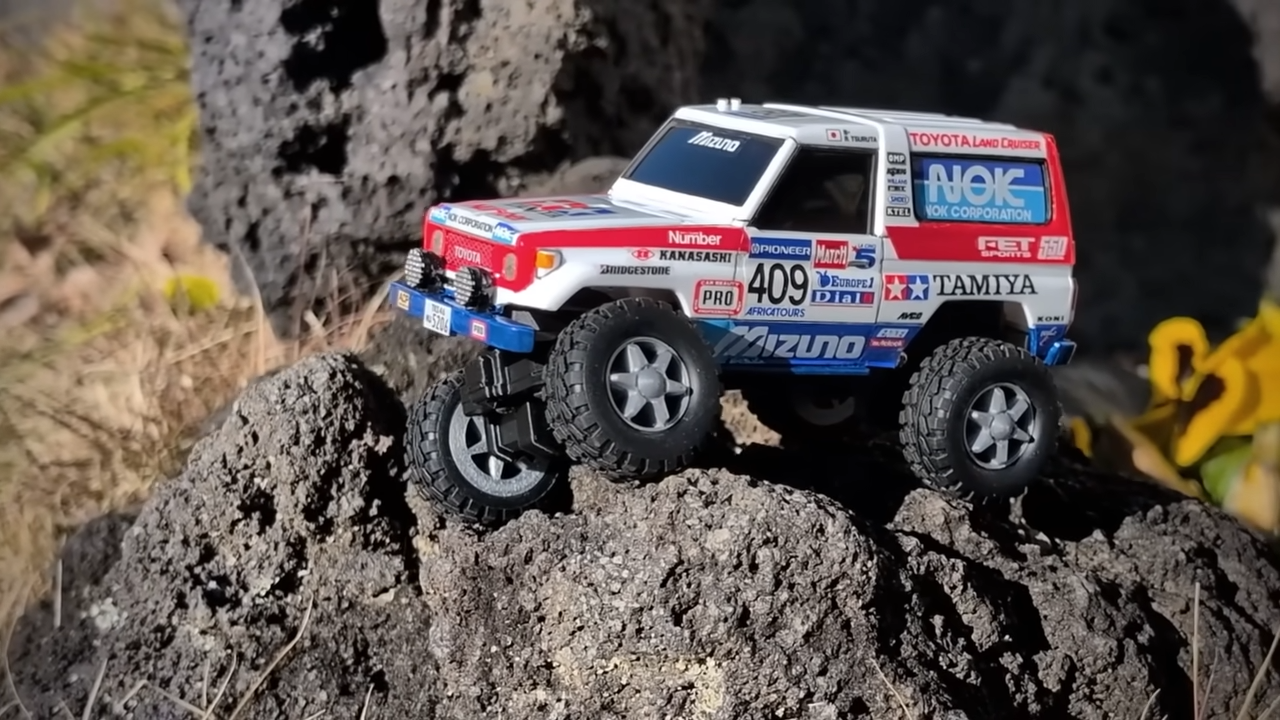
Small cars have a way of making big promises. Four-wheel drive? Sounds unstoppable. Knobby tires? Even better. A cool little off-road stance? Sold. Then reality arrives in the form of gravel, tiny rocks, or one rude crack in the sidewalk, and suddenly the mighty mini machine is hanging a wheel in the air like it just remembered an embarrassing thing from middle school.
That is exactly why the tiny four-wheeler at the center of this story is so interesting. The headline is not really about a toy getting a shiny new part. It is about a simple truth that every off-road builder learns sooner or later: power means very little if your tires are not actually touching the ground. And in a tiny 4WD platform, that lesson becomes painfully obvious, fast.
The chassis upgrade in this build transformed a neat-but-limited little machine into something far more capable on rough terrain. More importantly, it offers a perfect case study in how traction works, why chassis design matters, and why the smartest upgrade is not always a bigger motor or a hotter battery. Sometimes the real hero is a humble piece of plastic that lets the car twist instead of teeter.
Why This Tiny Upgrade Matters More Than It Looks
At first glance, a chassis upgrade on a tiny four-wheeler might sound like deep hobby nerd territory. And yes, it absolutely is. Proudly so. But it also taps into one of the most universal rules in the RC and micro-vehicle world: the best setup is the one that helps the vehicle stay composed when the surface gets ugly.
On smooth ground, a rigid chassis can be perfectly fine. In fact, rigidity often helps efficiency and consistency. But once the surface gets uneven, a stiff little platform starts behaving like a folding chair on a rocky campsite. One tire loses contact, then another gets light, and suddenly “4WD” becomes “2.5WD and a dream.”
That is where the chassis redesign becomes so clever. Instead of trying to bully the terrain with more speed, the upgrade allows the vehicle to articulate. In plain English, it twists just enough to keep more of the tires planted. That means better grip, better climbing, better balance, and fewer moments where the car looks brave but helpless.
From Rigid Toy to Trail-Friendly Machine
The original problem was not power
One of the most useful lessons in this build is that the original vehicle did not really suffer from a horsepower crisis. The drivetrain already worked. The motor already spun the wheels. The issue was mechanical contact with the terrain. The tiny four-wheeler could send power to all four corners, but rough ground exposed a major weakness: the rigid chassis let the wheels lift too easily.
That kind of problem is easy to miss when you are shopping for upgrades. People love dramatic fixes. A stronger motor sounds exciting. Metal gears sound serious. A hotter battery sounds like progress. But if the chassis keeps unloading a wheel every time the surface gets uneven, you are just delivering power to air. Air, unfortunately, remains a terrible traction surface.
The new chassis changes the conversation
The upgraded chassis adds controlled twist into the system. That means when one corner of the vehicle rides up over an obstacle, the rest of the platform can adapt instead of forcing the opposite wheel to lift. It is a simple idea with a big payoff: more wheel contact, more usable traction, and a much more capable little machine.
In micro off-road builds, this is often the difference between “cute desk toy” and “tiny monster that will crawl over your shoe, charger cable, and dignity.” The chassis becomes a traction tool, not just a structure.
Traction Is Basically a Tiny Physics Lecture on Wheels
Traction sounds mysterious until you break it down. Tires grip best when they stay in contact with the surface and carry useful load. That is true for full-size trucks, competitive RC racers, crawlers, and these tiny four-wheelers that look like they should come free with a vending machine snack.
When a chassis is too rigid for the terrain, it reduces contact consistency. As the vehicle crosses bumps, the load shifts awkwardly. One tire might get overloaded while another goes nearly weightless. The result is less total grip and more wasted motion. The vehicle squirms, bounces, spins, or stalls where a better-balanced chassis would keep moving.
This is why hobbyists obsess over ride height, suspension geometry, shock tuning, tire compounds, and weight bias. All of those factors determine how effectively a vehicle can keep its tires working. In a tiny off-road platform with limited suspension, the chassis itself has to do some of that job. If the chassis can flex or pivot in the right way, traction improves without needing a dramatic parts catalog binge.
Keeping all four tires involved
The biggest win from a traction-focused chassis is simple: it keeps more tires doing useful work, more of the time. Off-road driving is rarely about having one heroic tire clawing at the dirt while the others watch. It is about sharing the load. The moment the platform distributes weight and contact more evenly, the whole vehicle feels calmer and more capable.
That is why even serious crawler builders care so much about articulation, front weight bias, and low center of gravity. The exact hardware changes from platform to platform, but the principle never changes: planted tires beat spinning tires.
What RC Builders Already Know About More Grip
Ride height is not just about looks
A slightly taller setup can help a small vehicle clear obstacles, but too much height can also make it tippier. A lower setup can feel planted on flatter surfaces, but it may belly out on rough terrain. The sweet spot depends on what the vehicle is actually driving over. That is why smart builders tune for the terrain instead of chasing a one-size-fits-all setup.
For a tiny four-wheeler like this, the upgraded chassis effectively gives the car a smarter stance. Rather than simply sitting higher and hoping for the best, it adapts to uneven ground. That usually beats a brute-force lift kit approach, especially at small scale.
Tires still do a lot of heavy lifting
Even the best chassis upgrade cannot save the wrong tires. Tread pattern, rubber compound, sidewall behavior, and insert support all affect traction. On loose surfaces, a tread that can bite and clear debris matters. On hard-packed surfaces, a smaller pin pattern or softer compound can be the better move. In high-grip conditions, too much sidewall flex can make handling inconsistent.
In other words, traction is a team sport. The chassis keeps the tires in contact, but the tires still have to do their job once they get there. A great build usually comes from stacking small smart choices instead of expecting one miracle part to fix everything.
Weight bias is sneaky but important
One reason crawler platforms often perform better with more weight toward the front is that the front tires stay loaded when climbing. That same idea matters in miniature builds. If the front end gets too light, the car loses steering precision and climbing confidence. If the whole vehicle is top-heavy, it becomes dramatic in the least helpful way.
A well-designed chassis can improve that balance by placing pivots, mounting points, and structural elements where they help the tires stay engaged. This is one reason 3D-printed experimentation is so appealing: it lets builders change geometry quickly without committing to expensive custom machining.
Why 3D Printing Is Perfect for Tiny Off-Road Experiments
There may be no better playground for 3D printing than the weird and wonderful world of tiny vehicle upgrades. The parts are small, the ideas are easy to prototype, and the results are instantly visible. If a new chassis works, you know right away. If it fails, you are out some plastic and a little pride, not a month’s rent.
That is part of what makes this chassis upgrade so charming. It is not some impossible aerospace-grade project. It is practical, accessible tinkering. The builder identified a specific problem, printed a new solution, reused what still worked, and ended up with a vehicle that performs better in the real world. That is hobby engineering at its best.
It also shows how 3D printing can shine when the stock market for parts is limited. Many tiny platforms do not have endless aftermarket support. If you want a better geometry, a different pivot point, or a more trail-friendly structure, you may have to make it yourself. Fortunately, that is no longer a wild idea. It is increasingly the normal path for enthusiasts who would rather build than complain.
The Bigger Lesson: Speed Is Fun, But Control Wins
One reason this story lands so well is that it goes against the default upgrade instinct. A lot of hobbyists start by chasing speed. That is understandable. Speed is flashy. Speed looks great in videos. Speed also makes a tiny car hit a table leg with the confidence of a startup spending investor money.
But real performance, especially off-road, is about control. Can the vehicle stay composed? Can it transfer power without unloading a tire? Can it crawl over rough surfaces without pitching a dramatic little tantrum? The upgraded chassis answers those questions much better than a pure power mod ever could.
For beginners, that is a useful takeaway. If your small 4WD feels clumsy off-road, do not assume you need more motor. Check how the chassis behaves. Watch which tires lift. Notice whether the vehicle gets hung up because it lacks torque or because it lacks contact. Very often, the fix is not more muscle. It is more mechanical intelligence.
Is This the Future of Tiny Off-Road Builds?
Maybe not the entire future, but it absolutely points in the right direction. Small-scale off-roaders are getting more sophisticated, and builders are becoming more comfortable borrowing ideas from full-size RC crawlers and racers. Low center of gravity layouts, smarter weight placement, tunable articulation, better tire support, and custom printed parts are no longer exotic concepts.
That means the next generation of tiny four-wheelers will probably be judged less by how aggressive they look out of the box and more by how well they actually use the terrain beneath them. A tiny vehicle that can stay planted, climb smoothly, and keep moving over rough surfaces is far more satisfying than one that just looks fast on a shelf.
And honestly, that is part of the joy here. A little machine becomes much more entertaining when it stops pretending and starts performing. The upgraded chassis takes the build from novelty to capability. It turns a tiny four-wheeler into a legitimate example of why thoughtful design beats brute force.
Practical Upgrade Ideas Inspired by This Build
1. Improve articulation before adding power
If your micro 4WD struggles on uneven ground, look at how the chassis moves before upgrading the motor. Better articulation often delivers a bigger real-world gain.
2. Match tires to surface, not to vibes
Chunky tread looks cool, but the best tire is the one that matches your terrain. Hard-packed dirt, slick gravel, carpet, and rocks all reward different tread and compound choices.
3. Watch the weight distribution
If the front lifts too easily or the car loses steering when climbing, the balance may be off. A more forward-biased layout can improve confidence and control.
4. Keep the center of gravity sensible
Ground clearance helps, but top-heavy builds feel clumsy. A low, stable chassis usually performs better than a tall one that looks ready for a monster truck poster.
5. Prototype cheaply and often
That is the beauty of 3D printing. You can test ideas quickly, revise what does not work, and learn faster than you would by waiting for perfect parts to appear online.
Extra Experiences From Driving and Modding Tiny 4WD Builds
The funniest thing about tiny off-roaders is how quickly they trick you into caring way too much. You start with, “I just want a little desk toy.” Then 48 hours later you are on the floor comparing tire behavior on cardboard, tile, carpet, and a suspiciously important-looking hardcover book. Suddenly you have opinions about chassis twist, and your family is concerned.
What makes a traction-focused upgrade so satisfying in practice is that you can feel the improvement almost immediately. Before the chassis change, a little four-wheeler often behaves like it is trying to solve terrain through optimism alone. It charges at an obstacle, unloads a wheel, spins uselessly, and then pauses as if the universe is being unreasonable. After a better chassis goes in, the same obstacle feels smaller. The car settles, keeps more tires planted, and walks through with a lot less drama.
That changes the whole driving experience. Instead of mashing the throttle and hoping for chaos in your favor, you start choosing better lines. You notice how the front tires bite. You can see when the rear follows cleanly instead of hopping sideways. The vehicle feels less like a wind-up gimmick and more like a tiny machine with actual composure. It is still adorable, of course, but now it is adorable with competence, which is a dangerous combination for your spare time.
There is also a huge psychological payoff in solving the right problem. Many hobbyists have had the experience of throwing “performance” parts at a platform and getting only a faster version of the same weakness. More speed just makes the bad behavior happen sooner. More motor just turns wheelspin into a louder event. A smarter chassis, by contrast, feels like progress you can trust. The car does not just move more aggressively. It moves better.
Another underrated part of the experience is how much tiny builds teach you about full-size RC logic. With a small vehicle, every flaw is exaggerated. If the chassis is too rigid, you notice instantly. If the front gets light, climbing suffers immediately. If the tires are wrong for the surface, there is nowhere to hide. That makes micro builds a fantastic training ground for understanding traction, weight transfer, and setup choices without spending a fortune.
And yes, there is something deeply entertaining about watching a little four-wheeler conquer objects that should be ridiculous obstacles. A charging cable becomes a rock garden. A door threshold turns into a hill climb. A pencil on the floor becomes a test of approach angle and mechanical dignity. When the chassis is sorted, these tiny encounters stop being random failures and start becoming repeatable challenges. That makes the whole hobby more addictive in the best possible way.
Perhaps the most enjoyable part is the iterative nature of it all. You change one thing, drive it, and immediately learn something. Add a little more twist, change the tires, shift weight forward, lower the battery, trim a mount, reprint the part, try again. Tiny off-road projects reward curiosity. They invite experimentation without punishing every mistake. That is rare in hobbies, and it is a big reason these builds keep people hooked.
So while the chassis upgrade in this story may look like a small mod, the experience around it is much bigger. It teaches patience, observation, and the value of fixing fundamentals first. It turns a tiny vehicle into a rolling lesson in real traction. And perhaps most importantly, it reminds us that some of the most satisfying engineering wins come from solving humble problems really well. Not every breakthrough needs to be enormous. Sometimes it just needs four tiny tires staying on the ground.
Conclusion
The story behind this tiny four-wheeler is simple, but the lesson is huge: traction starts with contact. The chassis upgrade works not because it is flashy, but because it helps the vehicle keep more tires planted on rough terrain. That one change unlocks more grip, better control, and a much more enjoyable driving experience.
For hobbyists, builders, and curious tinkerers, the takeaway is clear. If a micro off-roader feels awkward, stop staring at the motor for a minute. Look at the chassis. Look at the weight balance. Look at how the tires meet the ground. The smartest upgrade might not be the loudest one. In this case, it is a thoughtful chassis redesign that turns a struggling little machine into a far more capable trail muncher.
And really, that is the beauty of the whole thing. A tiny vehicle, a clever fix, and a big reminder that good engineering is not about adding more. It is about making what you already have work better.