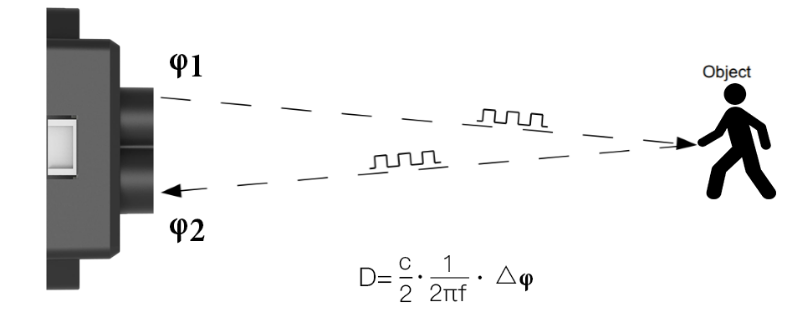
Time-of-flight sensors sound like something a sci-fi mechanic would install in a spaceship right before saying, “Trust me, this thing can dodge asteroids.” In reality, they are much closer to home. They help robot vacuums avoid chair legs, phones sense depth for photography, cars detect obstacles, drones hold altitude, factory machines count objects, and smart devices understand when a hand is waving in front of them like it is trying to summon a very tiny wizard.
A time-of-flight sensor, often shortened to ToF sensor, is a distance measurement sensor that figures out how far away something is by measuring how long light takes to travel to an object and return. That is the core idea. Send out light, wait for the reflection, measure the delay, calculate distance. Simple in theory. In practice, it requires precise electronics, clever optics, fast detectors, signal processing, calibration, and enough engineering patience to make a coffee machine feel emotionally supportive.
This guide explains how time-of-flight sensors work, why they are useful, where they are used, what makes them different from ultrasonic and structured-light systems, and what practical issues designers should expect when working with them.
What Is a Time-of-Flight Sensor?
A time-of-flight sensor is an optical sensing device that measures distance using emitted light. Most modern ToF sensors use infrared light because it is invisible to humans, works well with compact optics, and can be safely controlled for consumer and industrial applications. The sensor emits a beam or pattern of light, the light reflects from a target, and the receiver detects the returning photons.
The sensor then calculates distance based on travel time. Because light moves extremely fast, ToF systems need very precise timing or phase-measurement techniques. Light travels about 299,792,458 meters per second in a vacuum, which means even a tiny timing error can turn into a noticeable distance error. Measuring a few centimeters is not like timing a pizza delivery. You cannot shrug and say, “Close enough, it arrived warm.”
In most devices, the basic distance equation is:
Distance = (Speed of light × Round-trip time) / 2
The division by two is important because the light travels from the sensor to the object and then back again. Forgetting that would be like charging someone for a round-trip flight and only giving them a one-way ticket.
How Time-of-Flight Sensors Work Step by Step
1. The Sensor Emits Light
A ToF system begins with an illumination source. This is usually an infrared LED or a laser diode, often a VCSEL, which stands for vertical-cavity surface-emitting laser. VCSELs are popular because they can switch quickly, produce a narrow wavelength band, and fit into compact systems such as smartphones, robotics modules, and small industrial sensors.
The emitted light may be sent as a short pulse, a repeating pulse train, or a modulated continuous wave. The choice depends on the type of ToF architecture and the application. A tiny proximity sensor in a smart dispenser does not need the same range, power, or depth-map resolution as a LiDAR camera on a robot moving through a warehouse.
2. Light Hits the Target
The light travels through the air and strikes a surface. Some of it is absorbed, some scatters, and some reflects back toward the sensor. This is where real life starts being annoying. A white wall, black fabric, shiny metal, glass, hair, skin, cardboard, and a houseplant leaf all return light differently. ToF sensors are powerful, but they still have to deal with reflectivity, angle, texture, and ambient lighting.
Many modern ToF sensors are designed to be less dependent on object color than simple infrared proximity sensors. However, “less dependent” does not mean “magically immune to physics.” Very dark, transparent, glossy, or angled surfaces can still make measurements harder.
3. The Receiver Detects Returning Photons
On the receiving side, the sensor uses photodiodes, single-photon avalanche diodes, or specialized pixel arrays to detect reflected light. In a simple single-point ToF sensor, the result may be one distance reading. In a 3D ToF camera, many pixels measure distance at once, creating a depth map.
A depth map is like a regular image, but instead of storing color for every pixel, it stores distance. This lets machines understand shape, position, and movement. A robot does not just see “gray blob.” It sees “obstacle at 1.2 meters, suspicious chair leg at 0.7 meters, human foot entering danger zone, abort mission politely.”
4. Electronics Measure Time or Phase
The sensor’s electronics compare the emitted light with the received signal. Depending on the system, it either measures the actual round-trip travel time or calculates distance from a phase shift between outgoing and incoming modulated light.
This is where ToF sensors split into two major categories: direct time-of-flight and indirect time-of-flight.
Direct ToF vs. Indirect ToF
Direct Time-of-Flight Sensors
Direct ToF, or dToF, measures the actual time it takes for light to leave the emitter, hit the target, and return. It often uses short laser pulses and fast detectors. The system records when photons arrive and uses that timing information to estimate distance.
Some advanced direct ToF sensors collect photon arrival data into histograms. Think of a histogram as a scoreboard showing how many photons arrived at different time intervals. The peak in that data often indicates the likely distance to the target. This method is useful because real-world reflections are messy. Instead of trusting one lonely photon like it is giving sworn courtroom testimony, the sensor looks at a group pattern.
Direct ToF is common in LiDAR, multizone ranging sensors, robotics, gesture detection, and compact distance modules. It can offer strong performance, fast response, and good range, especially when paired with sensitive detectors and smart processing.
Indirect Time-of-Flight Sensors
Indirect ToF, or iToF, usually emits modulated light and measures the phase shift between the emitted signal and the reflected signal. Instead of using a stopwatch for a single pulse, it asks, “How far out of sync is the returning wave?” From that phase difference, the system calculates distance.
Indirect ToF is widely used in depth cameras because it can capture an entire scene at once and produce real-time 3D data. It works well for applications such as people tracking, hand gestures, machine vision, augmented reality, and smart appliances.
The tradeoff is that phase-based systems can face ambiguity at longer distances because repeating wave patterns can make different distances look similar. Engineers solve this with multiple modulation frequencies, calibration, filtering, and algorithms that politely wrestle the data until it behaves.
What Parts Are Inside a ToF Sensor System?
A time-of-flight system may look like a tiny black square on a circuit board, but inside the design are several important components working together.
Light Source
The light source is usually an infrared LED or VCSEL. It must emit enough optical power to reach the target and return a measurable signal while staying within eye-safety limits. For consumer electronics, safety is critical because users have a charming habit of putting devices close to their faces.
Optics
Optics control the field of view, focus emitted light, collect returning light, and help block unwanted wavelengths. Lenses, filters, cover glass, and optical alignment all affect accuracy. A cheap cover window or poorly placed plastic housing can create internal reflections, also known as crosstalk. Crosstalk is basically the sensor seeing its own reflection and briefly becoming the narcissist of the electronics world.
Photodetector or Pixel Array
The receiver converts light into electrical signals. Single-point modules may use a small detector array, while 3D ToF cameras use pixel arrays that capture distance across a scene. Some systems use SPADs, which can detect very small amounts of light and are valuable for direct ToF designs.
Timing and Processing Circuitry
Fast timing circuits, analog front ends, digital processors, and firmware turn raw photon data into usable distance measurements. The sensor may also compensate for ambient light, target reflectance, temperature, signal strength, and measurement confidence.
Why Time-of-Flight Sensors Are So Useful
ToF sensors have become popular because they are compact, fast, and versatile. Compared with mechanical switches, they can detect objects without contact. Compared with ultrasonic sensors, they can offer faster response and narrower fields of view. Compared with simple infrared proximity sensors, they can provide actual distance values rather than just “something is nearby, probably.”
They are especially valuable when a machine needs depth information in real time. A robot arm can avoid collisions. A phone can improve portrait mode. A drone can estimate ground distance. A smart trash can can open before you touch it, which is both convenient and oddly judgmental.
Common Applications of Time-of-Flight Sensors
Smartphones and Consumer Devices
ToF sensors help phones and tablets measure depth for autofocus, background blur, face effects, augmented reality, and gesture control. They allow devices to understand not just what is in the image, but how far away it is.
Robotics and Drones
Robots use ToF sensors for obstacle detection, navigation, mapping, cliff detection, and human presence sensing. Drones use them for altitude hold, landing assistance, and object avoidance. In robotics, a reliable distance measurement sensor can be the difference between smooth automation and a robot repeatedly apologizing to a wall.
Industrial Automation
Factories use ToF sensors for object counting, bin level monitoring, conveyor tracking, pallet detection, safety zones, and machine vision. Because they are non-contact sensors, they are useful in systems where mechanical wear or contamination would be a problem.
Automotive Systems
ToF and LiDAR technologies support driver monitoring, gesture interfaces, parking assistance, cabin sensing, and advanced driver assistance systems. Automotive designs require rugged performance across temperature, sunlight, vibration, and long operating lifetimes.
Smart Buildings and People Counting
Multizone ToF sensors can detect presence, movement direction, and occupancy while preserving more privacy than traditional cameras. Instead of recording detailed images of people, the system can work with distance zones and motion patterns.
ToF Sensors vs. Other Distance Sensors
ToF vs. Ultrasonic Sensors
Ultrasonic sensors use sound waves instead of light. They are affordable and useful, but they are generally slower because sound travels much more slowly than light. Ultrasonic sensors also have wider beams and can be affected by soft materials, air movement, and acoustic noise. ToF sensors are often better for compact, fast, and precise optical distance measurement.
ToF vs. Structured Light
Structured-light systems project a known pattern onto a scene and calculate depth by observing how the pattern deforms. They can produce detailed depth maps at short range, but they may struggle in bright light or with certain surfaces. ToF systems measure travel time or phase directly, making them attractive for real-time depth sensing across a range of applications.
ToF vs. Stereo Vision
Stereo vision uses two cameras to estimate depth by comparing image differences, similar to human eyesight. It works well when scenes have texture and good lighting. ToF sensors bring their own light source, so they can work in low-light environments and on surfaces that may not provide enough visual texture for stereo matching.
Limitations and Challenges of ToF Sensors
No sensor is perfect. Time-of-flight sensors are impressive, but they are not immune to the universe’s favorite hobby: making engineers sigh.
Ambient Light
Sunlight contains infrared energy, which can interfere with ToF measurements. Many sensors use optical filters and modulation techniques to separate their own signal from background light, but strong sunlight can still reduce range or accuracy.
Reflective and Transparent Surfaces
Mirrors, glass, glossy plastic, and shiny metal can cause confusing reflections. Transparent materials may let light pass through or reflect from multiple surfaces. This can create multipath interference, where the sensor receives light that has bounced along more than one path.
Multipath Interference
Multipath happens when emitted light reflects off several surfaces before returning. The sensor may receive a blended signal that does not represent one clean distance. Corners, shiny floors, glass doors, and complex indoor scenes can all contribute.
Range and Field of View
Every ToF sensor has limits. Some modules work best from a few centimeters to several meters. Others, such as LiDAR systems, can reach much farther. Field of view also matters. A narrow field can provide focused measurement, while a wide field can monitor larger areas but may reduce detail per zone.
Calibration and Mechanical Design
Good ToF performance depends on calibration, sensor placement, cover glass quality, optical isolation, and firmware settings. A high-quality sensor installed behind a smudged plastic window may perform like a genius trying to read a menu through a shower curtain.
Practical Experience: What Working With ToF Sensors Teaches You
In real projects, time-of-flight sensors teach a lesson that datasheets whisper but prototypes shout: environment matters. On a clean desk, a ToF sensor may behave beautifully. It reports distance to a notebook, a coffee mug, or your hand with cheerful consistency. Then you move it near a sunny window, point it at glossy black plastic, or place it behind a cover glass, and suddenly the readings develop a personality.
One of the first practical habits is checking the target. Matte white cardboard usually returns a strong signal. Dark fabric may reduce signal strength. Glass can produce strange results because the sensor may detect the front surface, the back surface, or a reflection from something beyond it. Shiny metal can send light away from the receiver unless the angle is favorable. This is not a defect; it is optics being optics.
Another lesson is that mounting matters more than beginners expect. A sensor placed too close to a housing wall may suffer from internal reflections. A cover window that looks perfectly clear to human eyes may reflect infrared light back into the receiver. Dust, fingerprints, adhesive residue, and protective films can all reduce accuracy. Many engineers have lost time debugging “bad data” only to discover a forgotten peel-off sticker. It is a humbling experience, and the sticker never apologizes.
Sampling settings also matter. Some ToF modules allow users to adjust timing budget, ranging mode, region of interest, frame rate, and distance mode. A longer timing budget can improve reliability because the sensor collects more signal, but it reduces speed. A faster frame rate can help with motion tracking, but it may increase noise or reduce maximum range. Choosing the right configuration is less about finding the “best” setting and more about matching the sensor to the job.
For robotics, it is wise to treat ToF readings as part of a larger sensing strategy. A single distance value can be useful, but it should not always be trusted blindly. Filtering, averaging, confidence thresholds, and sensor fusion can make the system more robust. For example, a small robot might combine ToF sensors with wheel encoders, bump sensors, and an inertial measurement unit. The ToF sensor gives fast obstacle awareness, while other sensors help confirm motion and position.
In people-counting or gesture applications, multizone ToF sensors are especially interesting. They do not need to capture detailed personal images, yet they can detect movement patterns. That makes them attractive for privacy-conscious smart buildings, kiosks, and appliances. However, placement is critical. Mounting height, angle, walking direction, and field of view determine whether the system sees clean movement or a confusing parade of partial silhouettes.
The best practical advice is simple: test the sensor in the real environment, with real targets, under real lighting. Laboratory numbers are useful, but the real world includes sunlight, dust, glass, black jackets, moving pets, vibration, and users who will absolutely touch the optical window even if you label it “Do Not Touch.” A good ToF design accounts for all of that and still produces stable, useful data.
Final Thoughts
Time-of-flight sensors work by measuring how long light takes to travel to an object and return. That simple idea powers a huge range of modern technologies, from smartphone depth effects to robot navigation, industrial automation, automotive sensing, drones, smart buildings, and LiDAR cameras.
The magic is not just in sending out light. It is in controlling the illumination, detecting weak reflections, filtering noise, compensating for ambient light, handling tricky surfaces, and turning raw optical signals into reliable distance data. Direct ToF and indirect ToF take different routes to the same goal: giving machines a better sense of space.
As devices become smarter, smaller, and more aware of their surroundings, ToF sensors will keep showing up in places where machines need to understand distance without touching anything. They are not perfect, but when designed and used well, they give electronics something close to depth perception. And for a robot trying not to crash into your furniture, that is a very big deal.
Note: This article was written from synthesized technical references, manufacturer documentation, electronics education materials, and practical sensor design knowledge, with all content freshly rewritten for web publication.