Few gardening problems inspire kitchen chemistry quite like a driveway full of weeds. One minute, you are admiring the yard; the next, you are standing beside a gallon jug of vinegar, a box of salt, and a bottle of dish soap as though you are auditioning for a landscaping-themed science show.
Homemade weed killers are popular because they appear inexpensive, familiar, and less intimidating than commercial herbicides. Some DIY treatments really can make young weeds wilt within hours. However, visible browning is not always the same as complete weed control. A plant may look dramatically defeated above ground while its roots quietly prepare a comeback tour.
Before spraying anything from the pantry, it helps to understand how homemade weed killers work, where they make sense, and when their disadvantages outweigh their convenience.
Research support:
What Is a Homemade Weed Killer?
A homemade weed killer is a household mixture or noncommercial treatment used to damage, suppress, or remove unwanted plants. Common options include vinegar, salt, dish soap, boiling water, rubbing alcohol, baking soda, and physical treatments such as smothering weeds beneath cardboard.
Most liquid DIY formulas are contact treatments. They injure the leaves and stems touched by the spray rather than traveling throughout the plant. This distinction matters because contact damage may be enough to kill a tiny annual seedling, but it often leaves the established root system of a perennial weed alive.
Homemade treatments are also generally nonselective. They do not examine a plant, check its résumé, and determine whether it belongs in the garden. Vinegar can burn a dandelion, a petunia, and a patch of lawn with equal enthusiasm.
Research support:
The Pros of Homemade Weed Killers
1. Many ingredients are inexpensive and readily available
White vinegar, table salt, and dish soap may already be sitting beneath the kitchen sink. For a homeowner who needs to treat a few seedlings between patio pavers, using an existing household product can cost less than purchasing a full container of specialty herbicide.
Boiling water is even simpler. It requires no elaborate recipe, although carrying a pot of scalding water across the yard introduces its own memorable risks.
2. Some treatments produce quick visible results
Vinegar contains acetic acid, which damages plant tissue on contact. Applied thoroughly to tender foliage during dry weather, it can cause small weeds to discolor and collapse quickly. The results are satisfying in the same way popping bubble wrap is satisfying: something visibly happens almost immediately.
Research summarized by university extension specialists indicates that acetic acid is most effective against very young weeds with only one or two leaves. Household vinegar is usually about 5 percent acetic acid, while registered horticultural products may contain 20 percent or more.
Research support:
3. Spot treatment can reduce unnecessary spraying
A small spray bottle or foam applicator allows a gardener to target an isolated weed instead of treating an entire area. Careful spot application can be useful along gravel paths, in pavement cracks, or around structures where no desirable plants are growing.
Targeted treatment also encourages the gardener to inspect the problem closely. That can lead to better weed identification, which is important because a shallow-rooted annual requires a different strategy from bindweed, nutsedge, poison ivy, or a woody invasive plant.
4. Homemade methods provide non-spray options
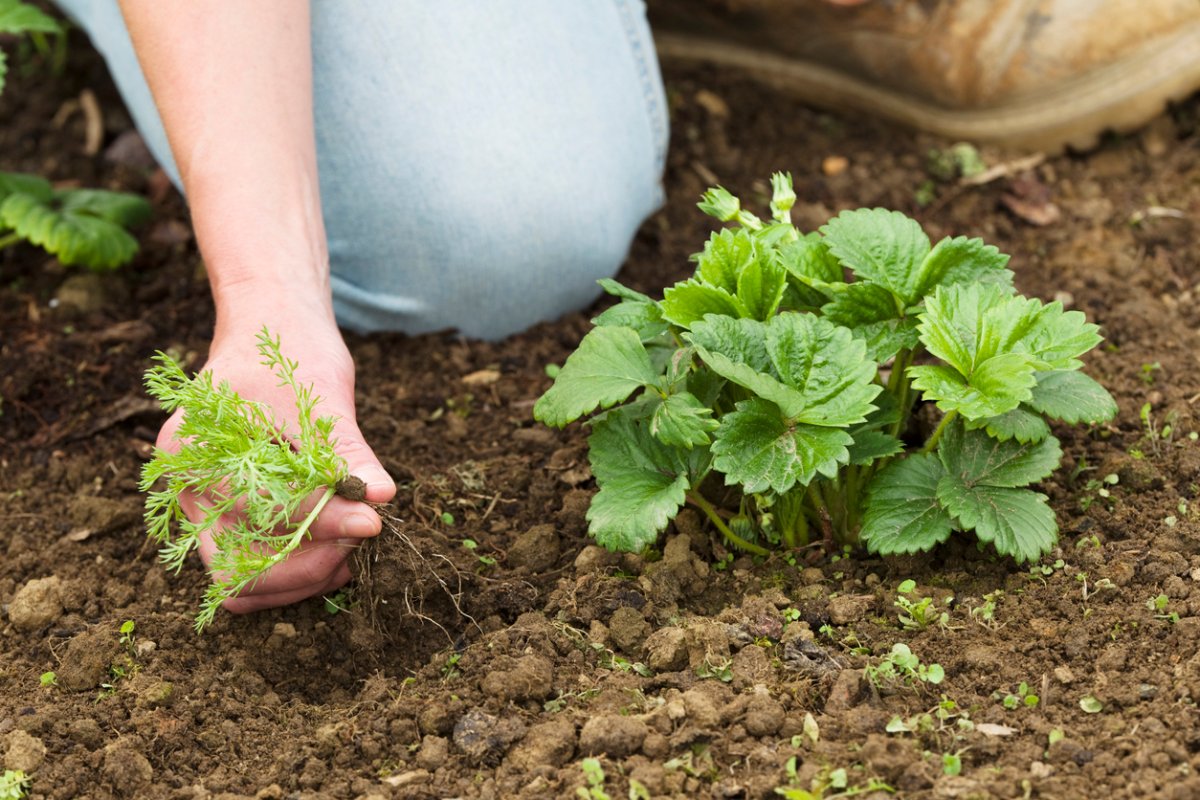
Not every DIY weed-control method involves mixing a bottle of pungent liquid. Mulching, hand-pulling, shallow hoeing, solarization, and covering an unused bed with opaque material can suppress weeds without applying an herbicide.
Organic mulch is especially helpful in planted beds. A layer of clean straw, wood chips, or herbicide-free grass clippings blocks light from reaching weed seedlings while helping the soil retain moisture. Unlike salt, mulch improves the garden instead of turning it into a place where only regret grows.
Research support:
5. Gardeners can control exactly what goes into the treatment
Some homeowners prefer DIY solutions because they want to avoid fragrances, dyes, or particular active ingredients. Mixing a simple treatment provides transparency about the ingredients being used.
However, knowing what is in a mixture does not automatically make it safe. Salt, concentrated vinegar, boiling water, and rubbing alcohol remain capable of harming people, pets, soil, surfaces, and desirable plants.
The Cons of Homemade Weed Killers
1. Household vinegar often burns leaves without killing roots
Ordinary vinegar can injure exposed foliage, but it frequently fails against mature weeds and perennial species with substantial roots, crowns, bulbs, or rhizomes. Dandelions, thistles, bindweed, and similar plants may grow new leaves after the damaged foliage dries.
Repeated spraying may gradually weaken some plants, but it also increases labor and the possibility of damaging surrounding soil or vegetation. A gardener may end up applying the treatment three or four times when one careful session with a weeding fork could have removed the entire root.
Research support:
2. Strong vinegar can cause serious injuries
Horticultural vinegar is not simply salad vinegar with a more confident personality. Products containing 20 percent acetic acid are several times stronger than typical kitchen vinegar and may cause skin burns, severe eye damage, and respiratory irritation.
Registered acetic-acid herbicides often carry prominent hazard statements and personal protective equipment requirements. Gardeners should follow the product label, wear the specified protection, avoid windy conditions, and store concentrated products away from children and pets.
Research support:
3. Salt can damage soil for much longer than expected
Salt pulls moisture from plant tissue and can kill weeds, but it does not politely stop at the edge of the targeted leaf. Sodium can move through soil, injure nearby roots, interfere with plant water uptake, and make an area difficult to replant.
For that reason, salt-based weed killers are a poor choice for lawns, flower beds, vegetable gardens, tree wells, slopes, and areas where runoff can carry the solution toward desirable plants. Even along pavement, repeated applications may allow salty water to reach adjacent soil.
Using salt to eliminate one weed may solve Tuesday’s problem while creating next spring’s mystery patch of dead landscaping.
Research support:
4. Dish soap is not the primary weed-killing ingredient
Dish soap is often added as a surfactant, meaning it helps a liquid spread across and cling to waxy leaves. It may improve coverage, but it does not transform weak vinegar into a systemic herbicide.
Detergents can also damage the protective surfaces of desirable plants. Overspray on nearby foliage may cause spotting, drying, or stress. Use only a minimal amount when a recipe calls for a spreading agent, and never assume that more bubbles mean more weed control.
Research support:
5. DIY recipes lack standardized directions
A registered herbicide label identifies application rates, target weeds, protective equipment, restricted sites, first-aid instructions, and environmental precautions. An internet recipe may simply say, “Mix a glug of this with a handful of that and spray until the weed looks sorry.”
Differences in vinegar concentration, soap formulation, weather, plant maturity, soil type, and application volume can produce very different outcomes. A formula that scorches chickweed in a sunny driveway may barely annoy an established perennial growing in moist soil.
6. Homemade mixtures can harm valuable plants
Most pantry-based sprays are nonselective. Mist carried by wind can spot flowers, burn vegetable leaves, or create brown patches in turf. Roots of shrubs and trees may extend well beyond their visible branches, so repeatedly soaking nearby soil with salt or other harsh ingredients can cause unintended damage.
A cardboard shield, paintbrush, foam applicator, or narrow-stream sprayer can improve precision, but careful application remains essential.
7. “Natural” does not guarantee environmental safety
Vinegar and salt sound less industrial than a commercial herbicide name, but environmental effects depend on concentration, dose, location, and frequency. Repeated applications can change soil conditions, harm microorganisms, injure nearby vegetation, and enter storm drains through runoff.
Likewise, eliminating every flowering plant from a lawn may reduce food available to pollinators. The lowest-impact response is sometimes tolerating a few harmless weeds, mowing before they set seed, or improving lawn density so weeds have less room to establish.
Research support:
Comparing Common Homemade Weed-Control Methods
| Method | Where It May Help | Main Advantage | Main Drawback |
|---|---|---|---|
| Household vinegar | Small, young weeds in pavement cracks | Fast visible foliage damage | Often fails to kill established roots |
| Horticultural vinegar | Targeted treatment where the label permits | Stronger contact action | Can burn skin and seriously injure eyes |
| Salt mixtures | Rare, highly isolated hardscape situations | Inexpensive and damaging to vegetation | May contaminate soil and harm future plants |
| Boiling water | Sidewalk and driveway cracks | No chemical residue | Scald hazard and limited root control |
| Rubbing alcohol spray | Very small, isolated weeds | Dehydrates exposed foliage | Nonselective and potentially flammable |
| Hand-pulling | Lawns, beds, and vegetable gardens | Can remove the entire root | Requires time and physical effort |
| Mulch or cardboard | Garden beds and new planting areas | Suppresses new seedlings | Does not instantly remove established weeds |
When Homemade Weed Killers Make the Most Sense
DIY treatments are best reserved for limited, clearly defined situations. A few tender weeds growing between pavers are reasonable candidates for boiling water or carefully applied vinegar. A lawn full of dandelions, a bed invaded by bindweed, or a large stand of woody vegetation requires a broader management plan.
Before treating, ask four questions:
- Is the weed an annual, biennial, or perennial?
- Is it growing near plants I want to keep?
- Can I remove the root manually?
- Will the treatment affect soil that I plan to use later?
When the weed is mature or capable of regrowing from underground structures, combine methods. Cut or pull as much of the plant as possible, prevent seed production, cover bare soil with mulch, and monitor the area for new shoots.
How to Use a Vinegar-Based Treatment More Safely
- Choose the right target. Focus on small weeds growing away from desirable vegetation.
- Check the weather. Apply during a calm, dry period so wind does not carry droplets and rain does not immediately wash them away.
- Protect nearby plants. Use cardboard as a spray shield or apply the liquid directly with a brush.
- Protect yourself. Wear gloves and eye protection, especially when handling anything stronger than household vinegar.
- Start without salt. Avoid adding salt anywhere near soil that may support plants now or in the future.
- Inspect rather than assume. Recheck the weed after several days and remove surviving roots when possible.
- Label the container. Never store a homemade mixture in a drink bottle or an unlabeled sprayer.
Do not add bleach to a vinegar weed killer. Vinegar is an acid, and combining acids with chlorine bleach can release poisonous chlorine gas. More generally, avoid improvising mixtures from multiple household cleaners.
Research support:
Better Long-Term Strategies for Fewer Weeds
Remove weeds before they produce seeds
A single weed can become a neighborhood association if allowed to flower and scatter seeds. Pulling or cutting weeds early reduces future infestations, even when the entire root cannot be removed immediately.
Keep lawns dense and healthy
Thin turf leaves exposed soil where weed seeds can germinate. Proper mowing height, appropriate watering, overseeding, and soil-based fertilization help grass compete with unwanted plants. Treat the reason the lawn is thin rather than repeatedly punishing the weeds that noticed the vacancy.
Use several inches of clean mulch
A 3- to 4-inch layer of suitable organic mulch can suppress many seedlings in vegetable and ornamental beds. Keep mulch away from plant crowns and tree trunks, and replenish it as it decomposes.
Match the tool to the root
Use a hoe for tiny annual weeds, a narrow weeding fork for taproots, repeated cutting for plants that cannot be pulled safely, and smothering methods for larger unused areas. Difficult invasive weeds may require guidance from a local extension office or a carefully selected, labeled product.
Research support:
Experience Notes: What a Season With Homemade Weed Killers Often Looks Like
The following scenario reflects commonly reported homeowner experiences and the outcomes described by extension specialists rather than a claim of personal field testing.
At the beginning of spring, the homemade approach feels almost unbeatable. A handful of weeds appear in the hottest section of the driveway, and a light coating of household vinegar makes their leaves droop by the afternoon. By the next morning, the weeds are brown and crispy. The process is inexpensive, fast, and oddly entertaining.
Then the differences between weeds begin to show.
The tiny annual seedlings remain dead because they had little stored energy and almost no established root system. A larger dandelion, however, produces fresh leaves from its crown about a week later. The first treatment removed the foliage but left the taproot intact. A second application browns the new leaves, yet another set eventually appears. At that point, using a dandelion fork after rainfall proves quicker than repeatedly spraying the same plant.
Along the patio edge, overspray lands on a strip of turf. The weeds turn brown, but so does the grass. This is the moment many gardeners discover that homemade weed killers are not selective. The spray did exactly what it was capable of doing; it simply did not share the gardener’s opinion about which plants deserved to live.
A salt-and-vinegar mixture may initially appear more powerful. Weeds in a gravel strip collapse, and little grows there for a while. The disadvantage becomes obvious after heavy rain carries some of the dissolved salt toward a nearby border. Leaves on an ornamental plant develop scorched edges, and the soil remains stubbornly unfriendly to replacement plants. Saving a few dollars on weed killer no longer seems impressive once soil repair enters the budget.
Boiling water performs well on another group of weeds growing in sidewalk cracks. It damages the young plants immediately and leaves no salt behind. However, it is inconvenient for weeds far from the kitchen, and pouring it safely requires steady handling, closed shoes, and an empty path. It is useful for ten weeds, less charming for two hundred.
As summer progresses, the most successful approach usually becomes less dramatic and more systematic. Weeds are pulled when the soil is moist. A hoe removes seedlings before their roots become established. Bare spaces receive mulch, and the lawn is managed at an appropriate height so grass can shade the soil. Vinegar remains on the shelf for occasional spot treatment in hardscape cracks rather than serving as the main strategy for the entire property.
The season also teaches an important lesson about expectations. Homemade weed killers are not automatically failures simply because they do not solve every weed problem. They are tools with limited jobs. Household vinegar can be useful against young annual weeds. Boiling water can work in isolated pavement cracks. Mulch can prevent waves of new seedlings. Hand tools can remove roots that contact sprays cannot reach.
Trouble begins when one convenient recipe is expected to work everywhere. A treatment that is acceptable on gravel may be disastrous in a vegetable bed. A mixture strong enough to burn mature weeds may also injure the person applying it. A formula that creates a satisfying patch of brown foliage may have accomplished little below the soil surface.
By fall, the best result is not usually a perfectly weed-free yard. It is a yard with fewer mature weeds, less seed production, healthier planted areas, and a gardener who no longer approaches every green intruder with the same spray bottle. Weed control becomes a routine based on identification, timing, prevention, and selective treatment rather than an escalating pantry experiment.
Research support:
Final Verdict: Are Homemade Weed Killers Worth Using?
Homemade weed killers can be worthwhile for small, young weeds in carefully selected locations. Their strongest advantages are convenience, low initial cost, quick foliage damage, and the ability to treat isolated plants without spraying a large area.
Their disadvantages are equally important. Many recipes do not kill established roots, most are nonselective, concentrated vinegar can cause injuries, and salt may create lasting soil problems. Homemade does not mean harmless, and brown leaves do not always mean a dead weed.
For the most reliable results, treat DIY weed killers as occasional tools rather than complete lawn-and-garden programs. Combine targeted applications with hand removal, proper mowing, shallow cultivation, mulching, and early intervention. The goal is not to win one spectacular battle with a gallon of salad dressing. It is to create conditions in which weeds have fewer opportunities to return.
Note: Always follow local regulations and the label directions on any registered pesticide or horticultural vinegar product. Keep mixtures away from children and pets, protect your skin and eyes, and consult a local cooperative extension service when dealing with invasive, poisonous, or difficult-to-identify plants.