Note: This article is based on public entertainment and legal reporting. Claims about private friendship dynamics, including “ghosting” and “groveling” messages, are presented as reported allegations rather than confirmed facts.
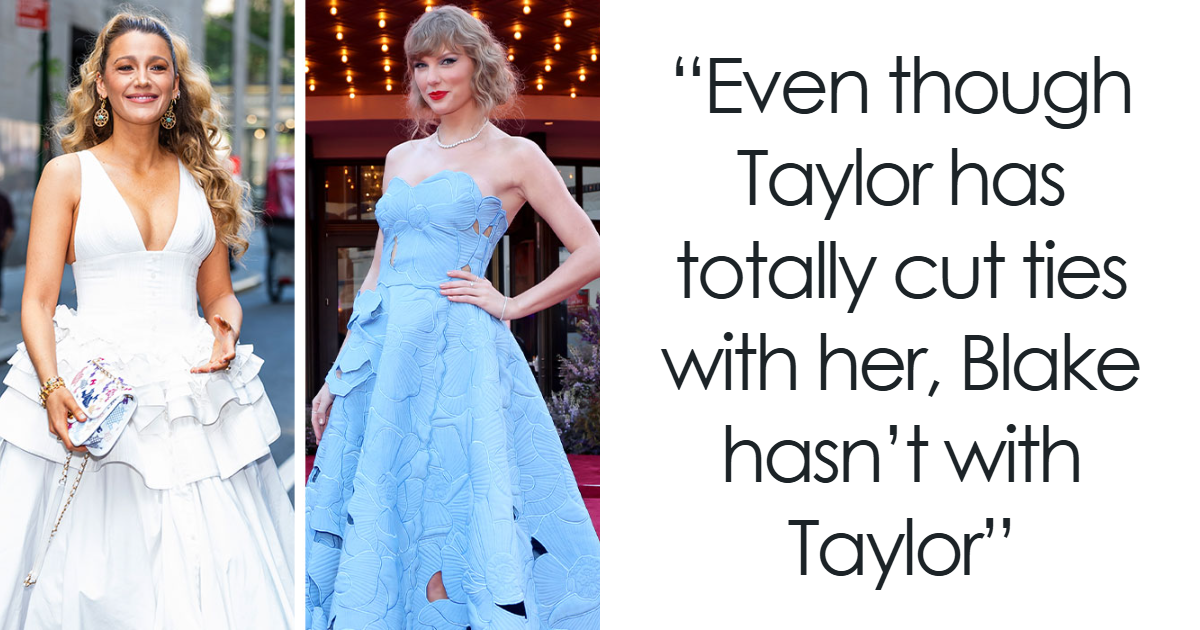
Hollywood friendships are usually served to the public like a luxury brunch board: glossy photos, inside jokes, matching energy, and just enough mystery to make fans feel like unpaid detectives. But when the names are Taylor Swift and Blake Lively, every text bubble, public appearance, and missing Instagram like suddenly becomes a full-time internet investigation. The latest wave of speculation claims Taylor Swift has been ignoring Blake Lively’s attempts to reconnect despite alleged texts, voicemails, and emails described by some outlets as “groveling.” Dramatic? Absolutely. Confirmed by either woman? Not publicly.
The reported tension arrives after a long, messy legal storm surrounding It Ends With Us, the 2024 film starring Blake Lively and Justin Baldoni. The legal dispute pulled in famous names, private communications, public statements, and eventually Taylor Swift’s name, even though her team repeatedly emphasized that her direct connection to the film was limited to licensing the song “My Tears Ricochet.” In other words, Swift may have lent a song, but the internet handed her a subpoena-shaped spotlight and a front-row seat to a celebrity drama she did not appear eager to headline.
So what is really going on between Taylor Swift and Blake Lively? The cleanest answer is also the least clicky: no one outside their circle knows for sure. The more interesting answer is that the public record shows a friendship complicated by legal exposure, media pressure, and private messages becoming public conversation. Whether Swift is truly ghosting Lively or simply creating distance during a chaotic chapter, the story reveals how quickly a celebrity friendship can become a public courtroom of opinion.
The Reported “Ghosting” Claims Explained
The headline-grabbing claim is simple: Blake Lively has allegedly tried to contact Taylor Swift through texts, voicemails, and emails, while Swift has reportedly not responded. Some entertainment coverage framed Lively’s efforts as an attempt to mend a once-close friendship after months of legal and public turbulence. The word “ghosting” does a lot of heavy lifting here. In everyday life, ghosting means disappearing without explanation. In celebrity coverage, it can mean anything from “has not been photographed together recently” to “a source says someone is not picking up the phone.” That is a canyon-sized difference.
The reports suggest Swift felt uncomfortable after being dragged into the It Ends With Us legal fight. That part is easier to understand. Swift is one of the most famous people on Earth, and any mention of her name can turn a legal filing into a pop culture bonfire. Her team publicly pushed back when she was subpoenaed, saying she had no creative role in the movie, did not visit the set, did not make casting decisions, and did not see the film until after release. For a star who carefully manages public narratives, being inserted into another celebrity’s lawsuit is not exactly a friendship bracelet moment.
How the Blake Lively and Justin Baldoni Legal Battle Pulled Taylor Swift Into the Story
The larger backdrop is the dispute between Blake Lively and Justin Baldoni over the making and promotion of It Ends With Us. Lively accused Baldoni of sexual harassment and retaliation; Baldoni denied the allegations and filed a countersuit accusing Lively, Ryan Reynolds, and others of defamation and extortion. The legal fight became one of Hollywood’s most-watched celebrity cases, partly because it mixed serious workplace allegations with A-list proximity, public relations warfare, and leaked or unsealed communications.
Taylor Swift entered the conversation because Baldoni’s side alleged that Lively invoked Swift and Ryan Reynolds as powerful allies during creative disputes over the film. In filings, Lively was said to have referred to Reynolds and Swift as her “dragons,” a Game of Thrones-style metaphor that immediately became irresistible to the internet. It was the kind of phrase that sounds playful in private and radioactive in litigation. Once public, it gave commentators an easy shorthand for the claim that Lively leaned on famous friends while navigating production tensions.
Swift’s team rejected the idea that she belonged at the center of the case. Her spokesperson stressed that her involvement was limited to licensing one song, just as other artists licensed music for the project. Still, once private messages and legal filings began circulating, the line between legal relevance and celebrity spectacle became blurry. Swift did not need to be a party to the lawsuit to become a main character in the public’s version of it.
The Subpoena Drama: Why Swift’s Team Pushed Back
In May 2025, Taylor Swift was subpoenaed in connection with the Lively-Baldoni legal battle. That development instantly escalated the story. A subpoena involving Swift is not just a legal procedural step; it is entertainment media rocket fuel. Her representative responded sharply, arguing that the subpoena appeared designed to use Swift’s fame to generate tabloid attention rather than focus on the core facts of the dispute.
The subpoena was later withdrawn, but the damage to the public narrative had already been done. Swift’s name had appeared in headlines alongside legal allegations, friendship rumors, and speculation about whether she had been pressured to take sides. For a celebrity whose brand depends on intense fan loyalty and highly managed storytelling, that is not a small inconvenience. It is the public relations equivalent of someone spilling red wine on a white carpet and then asking whether you can still host dinner.
This helps explain why reports of distance between Swift and Lively gained traction. If Swift felt used, exposed, or involuntarily pulled into legal chaos, silence would not be surprising. Silence can be a boundary. Silence can also be strategy. And for Swift, silence often speaks louder than a stadium chorus.
Unsealed Texts Added More Fuel
Publicly reported court materials later included alleged text exchanges between Lively and Swift. Some messages suggested warmth and loyalty, while others showed strain, exhaustion, and a friendship affected by months of pressure. In one reported exchange, Lively appeared to worry that she had been too consumed by her own problems. Swift reportedly responded in a way that acknowledged emotional fatigue and a shift in their communication.
That detail matters because it is more nuanced than the simple “Taylor ghosted Blake” headline. Friendships do not usually break in one dramatic movie-scene moment. They fray. One person becomes overwhelmed. Another becomes tired. Messages become longer, colder, more careful. Suddenly the friend who once sent chaotic jokes starts sending paragraphs that read like a corporate apology email. Anyone who has lived through a strained friendship knows that tone can change before the relationship officially does.
The unsealed materials also complicated earlier public statements. While Swift’s team maintained she had no formal creative role in the film, some reported messages appeared to show her offering personal support to Lively during behind-the-scenes tension. Personal support is not the same as producing a movie, but in the court of public opinion, nuance often gets run over by a speeding headline.
Why Fans Are So Invested in Taylor Swift and Blake Lively’s Friendship
Taylor Swift and Blake Lively’s friendship has long fascinated fans because it seemed both glamorous and oddly relatable. Lively appeared in Swift’s social orbit for years. Their families were connected. Swift even used the names of Lively and Ryan Reynolds’ children in her music, which made the friendship feel woven into the mythology of Swift’s art. Fans did not just see two famous women smiling at events. They saw a storyline.
That is why the alleged fallout has attracted so much attention. When celebrity friendships are treated like chapters in a shared universe, any perceived distance becomes a plot twist. No public dinner? Evidence. No birthday post? Evidence. A slightly vague lyric? Obviously evidence, according to the Department of Internet Overanalysis, which never sleeps and apparently runs on espresso and screenshots.
But parasocial investment can distort reality. Fans may feel entitled to answers, but real friendships are not streaming series with weekly episodes. Swift and Lively do not owe the public a reconciliation scene, a breakup statement, or a carefully filtered selfie captioned “all good.” The absence of public warmth may signal a rift. It may also signal privacy. Both can be true enough to keep speculation alive.
Is Taylor Swift Really Ghosting Blake Lively?
The most responsible answer is: reportedly, but not confirmed. Multiple entertainment outlets have claimed Swift is keeping her distance, and some sources have described Lively as eager to repair the relationship. However, neither Swift nor Lively has publicly confirmed that ghosting is happening. That distinction is essential for accuracy, especially because the story involves real people, legal disputes, and reputations.
Still, the reports are believable enough to resonate because the situation contains familiar emotional logic. If a friend’s crisis repeatedly pulls your name into headlines, court filings, and online arguments, you may step back. If your attempts to help become evidence in someone else’s legal story, you may become more cautious. If every private message risks becoming public, you may stop sending private messages. That is not cruelty; that is self-preservation wearing sunglasses.
For Lively, the alleged silence would likely feel painful. Public controversies can shrink a person’s social world very quickly. Friends may become careful. Allies may become quiet. Support may move from loud to private, or disappear altogether. If Lively did reach out repeatedly, as reports claim, that suggests she may have recognized the relationship was damaged and wanted to repair it. Whether Swift is ready for that is another question.
What This Means for Blake Lively’s Public Image
Blake Lively’s image has always blended glamour, humor, and a breezy sense of control. The It Ends With Us dispute disrupted that image. Instead of red carpets and lifestyle-brand polish, the public saw allegations, countersuits, texts, filings, and intense online debate. The reported tension with Swift adds a personal layer to an already complicated reputation moment.
Celebrity image is built on association. Being close to Taylor Swift can project cultural power, loyalty, and relevance. Being rumored to be frozen out by Taylor Swift can have the opposite effect, especially among Swift’s highly engaged fanbase. That does not mean the public should treat Swift as a moral scoreboard. It means pop culture often does exactly that anyway.
If Lively is trying to rebuild public trust after a bruising legal battle, the smartest move may be less about proving she still has famous friends and more about letting the noise cool down. Audiences can forgive messy chapters, but they rarely enjoy feeling managed. A quieter, more grounded return may help more than another round of source-driven friendship updates.
What This Means for Taylor Swift’s Brand
For Taylor Swift, the alleged distance fits a familiar pattern: when controversy becomes too loud, she often lets silence do the talking until she chooses the time, place, and medium. Sometimes that medium is a public statement. Sometimes it is a song. Sometimes it is simply not appearing where people expect her to appear.
Swift’s brand is built on intimacy, but it is also built on control. She shares enough to make fans feel close, but she is careful about who gets access, how narratives form, and when she responds. Being dragged into the Lively-Baldoni dispute challenged that control. Even if she supported Lively privately at one point, the public exposure of alleged messages could reasonably make her more guarded.
That is why the ghosting narrative has staying power. It matches what people already believe about Swift: loyal, but not endlessly available; generous, but strategic; emotionally open in art, but fiercely protective in life. Whether the reports are fully accurate or not, they fit the public’s understanding of how Swift handles messy chapters.
Why “Groveling” Is a Loaded Word
The word “groveling” makes the story feel spicy, but it also deserves scrutiny. It paints Lively as desperate and Swift as powerful, which is exactly the kind of emotional hierarchy celebrity gossip loves. But reaching out to apologize, explain, or repair a friendship is not automatically groveling. In real life, that can be maturity. It only becomes embarrassing when an anonymous source turns it into a headline.
There is also a gendered edge to the language. Famous women’s friendships are often framed as alliances, betrayals, or cold wars. When men stop talking, it is “distance.” When women stop talking, it becomes a feud with emotional weather alerts. The reporting may be entertaining, but readers should be careful not to confuse dramatic wording with verified truth.
Experience-Based Takeaways: When a Friendship Goes Quiet During a Crisis
At the end of all the celebrity sparkle, this story feels familiar because most people have lived through some version of it. Maybe not the part involving federal litigation, global pop stardom, and headlines with enough drama to power a small city. But many people know what it feels like when a friendship changes during a crisis. One person is overwhelmed. The other person is supportive at first, then tired, then distant. Messages that once got instant replies start sitting unanswered. Suddenly you are staring at your phone like it owes you rent.
One common experience is over-communicating when you feel someone pulling away. You send one text, then another to clarify the first text, then a voice note because tone matters, then an email because maybe the voice note was too much. By the end, you have created a multimedia apology package. The intention may be sincere, but the effect can be pressure. When someone asks for space silently, more contact can make them retreat further. That does not mean the person reaching out is wrong; it means anxiety and repair do not always speak the same language.
Another lesson is that friendship boundaries often appear cold from the outside. If Taylor Swift is truly taking distance, people may interpret it as punishment. But boundaries are not always revenge. Sometimes they are a way of saying, “I care, but I cannot be pulled into this anymore.” In ordinary life, that might happen when a friend’s breakup, workplace drama, or family conflict starts consuming every conversation. You may love the person and still need oxygen.
There is also a lesson about privacy. The fastest way to make people stop texting honestly is to make them fear their texts could someday be read by strangers. In the digital age, every message can become a receipt. That reality changes how people communicate, especially public figures. But even for non-celebrities, screenshots can damage trust. A private joke, a frustrated comment, or a messy emotional moment can look very different when removed from context.
Finally, reconciliation requires more than repeated contact. It requires timing, accountability, and a willingness to let the other person decide whether they are ready. If Lively is truly trying to repair the friendship, the most powerful move may not be another message. It may be patience. If Swift is truly hurt or wary, the kindest move may eventually be clarity. Silence can protect, but it can also prolong confusion.
That is why this story, dramatic as it is, connects beyond celebrity gossip. It is about what happens when loyalty meets exhaustion, when private support becomes public evidence, and when a friendship that once looked effortless suddenly requires careful handling. Taylor Swift and Blake Lively may or may not repair what reports say has fractured. But the larger lesson is clear: even glittering friendships need boundaries, trust, and sometimes a very long pause before anyone presses send again.
Conclusion
The claim that Taylor Swift is ghosting Blake Lively despite alleged “groveling” texts, voicemails, and emails remains unconfirmed by the two stars themselves, but it has become a major talking point because it sits at the intersection of celebrity friendship, legal drama, and public fascination. The verified record shows that Swift’s name became tangled in the It Ends With Us dispute, that her team pushed back against attempts to center her in the case, and that reported private messages added complexity to the public understanding of her friendship with Lively.
Whether this is a permanent fallout or a temporary freeze, the situation shows how fame can turn private strain into public entertainment. For Swift, distance may be a boundary. For Lively, outreach may be an attempt at repair. For everyone watching, the smartest approach is to enjoy the pop culture analysis without pretending anonymous-source drama is the same as confirmed truth. In Hollywood, even ghosting comes with lighting, legal context, and a comment section wearing detective glasses.