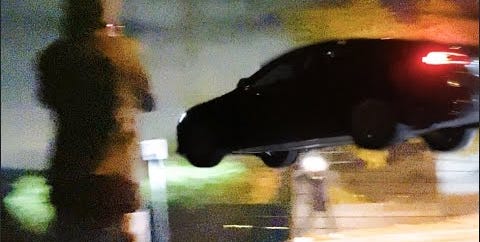
Some car crashes are confusing. Some are scary. And then there are crashes that make an entire neighborhood ask, “Wait… did that Tesla just try to become an airplane?” That was the reaction after a rented Tesla Model S went airborne in Los Angeles’ Echo Park neighborhood, landed with all the grace of a dropped refrigerator, and slammed into parked vehicles and trash cans before the driver fled the scene.
The viral crash, which happened shortly after midnight in March 2022 near Baxter and Alvarado streets, quickly became more than another reckless-driving clip on social media. It turned into a Los Angeles Police Department hit-and-run investigation, a public search for the driver, and a broader debate about stunt culture, influencer behavior, rental cars, and what happens when internet fame meets a very real street with very real residents.
At first glance, the footage looked like a movie stunt. The problem, of course, is that movie stunts usually involve closed sets, trained drivers, permits, safety crews, insurance policies, and people whose job titles include words like “coordinator” and “engineer.” This crash appeared to involve none of that. Instead, a driver reportedly launched a rented 2018 Tesla Model S over one of Los Angeles’ famously steep streets, wrecked property, abandoned the vehicle, and left police and residents dealing with the aftermath.
What Happened in the Echo Park Tesla Jump Crash?
The incident took place in Echo Park, a hilly Los Angeles neighborhood where steep streets can turn ordinary driving into a small physics lesson. Baxter Street is especially well known for its sharp grades. In the viral video, the Tesla speeds toward an intersection, hits the crest of the hill, lifts into the air, and comes crashing down on the other side.
According to police and local reports, the vehicle crashed into two parked cars and several trash cans. Fortunately, no serious injuries were widely reported, but that does not make the crash harmless. Parked cars were damaged, residents were shaken, and the driver allegedly left the scene instead of staying to provide information, check on damage, or speak with authorities.
That last part matters. In California, leaving after a crash involving property damage can become a hit-and-run case. The LAPD treated the incident as a misdemeanor hit-and-run investigation and offered a $1,000 reward for information that could help identify the driver. The reward made one thing clear: police were not treating the viral stunt as “just a video.” They were treating it as a real-world crash with real-world consequences.
Why Police Were Searching for the Driver
Police were searching for the driver because the Tesla was reportedly abandoned after the crash. When a driver leaves the scene, investigators must work backward. They look at rental records, witness accounts, surveillance video, social media posts, and tips from the public. In this case, the investigation was unusual because the crash was filmed from multiple angles and shared widely online.
That created a strange situation. On one hand, the internet made the case visible almost instantly. On the other hand, viral attention can create confusion. People speculate. Names circulate. Influencers post, delete, joke, deny, or take credit. A police investigation needs evidence, not just the loudest comment section on the internet.
Reports later said LAPD received numerous tips pointing to social media personality Dominykas Zeglaitis, also known online as Durte Dom, as a person of interest. Some reports noted that Zeglaitis appeared to claim or joke about involvement in social posts. However, a person of interest is not the same as a person proven responsible. The important distinction is simple: online claims may help investigators, but they do not replace an official finding.
The Tesla Was Reportedly a Rental Vehicle
One of the most eyebrow-raising details is that the Tesla was reportedly rented. That adds another layer to the story. A rented performance car can be tempting for someone chasing thrills, attention, or video content. But a rental agreement is not a license to turn a public road into a launch ramp.
Rental vehicles are often traceable through contracts, identification, payment records, GPS data, and insurance documents. That can help investigators determine who rented the car and who may have had access to it at the time of the crash. It can also lead to financial consequences. Damage to a high-end electric vehicle, damaged parked cars, towing, storage, insurance disputes, and possible civil claims can turn one reckless stunt into a very expensive life lesson.
There is also a public safety issue. Electric vehicles like the Tesla Model S are known for strong acceleration. That performance can be useful when used responsibly, but it can become dangerous when combined with speed, hills, spectators, and a driver trying to impress a camera. Cars are not content props. They are heavy machines, and physics does not care how many followers someone has.
Why the Video Went Viral So Fast
The video spread quickly because it had every ingredient the internet loves: speed, danger, a luxury car, a dramatic landing, multiple camera angles, and a scene that looked almost too wild to be real. But that is also the trap. Viral clips compress reality into a few seconds of spectacle. Viewers see the jump, gasp, laugh, replay it, and move on. Residents do not get to move on so quickly.
For the people who live on that street, the crash was not entertainment. It was broken property, noise in the middle of the night, a safety scare, and a reminder that online stunt culture can spill directly into residential neighborhoods. One damaged vehicle owner, Jordan Hook, became part of the public story after his parked car was struck. Reports described local frustration that someone could turn a quiet street into a viral stage and then leave others to clean up the mess.
The internet rewards attention. Neighborhoods reward responsibility. Those two systems do not always get along.
Social Media Stunt Culture and the Race for Attention
The Echo Park Tesla crash became a symbol of a larger problem: stunt content designed for clicks. Social platforms can make risky behavior look profitable, glamorous, or funny. A dramatic video can generate millions of views, and views can become money, followers, sponsorship interest, or temporary fame. That creates a dangerous incentive for people who think, “What can I do that nobody else has done?”
The answer should not be “launch a car through a public intersection.” Yet that is exactly the kind of thinking that can happen when attention becomes the goal and consequences become background noise.
Responsible automotive content exists. Track days, closed-course testing, professional stunt driving, motorsports events, and safety demonstrations can all be exciting without endangering random people. The problem begins when creators treat public roads as filming locations without permission, planning, or concern for anyone outside the frame.
Why Public-Road Stunts Are So Dangerous
A car jump on a public street is not just “reckless” in a general sense. It is dangerous for several specific reasons.
1. The Driver Loses Control in the Air
Once a car leaves the ground, steering and braking are basically useless until the tires touch pavement again. The driver may feel in control before the jump, but in the air, the car is a very expensive projectile. When it lands, suspension, tires, wheels, steering components, airbags, and battery systems can all be stressed or damaged.
2. Public Streets Are Uncontrolled Environments
A professional stunt team controls the area. A public street does not. A pedestrian could step into the road. A rideshare driver could turn the corner. A cyclist could appear. A resident could be unloading groceries. A parked car could have someone inside. The driver cannot guarantee that the road will stay empty simply because a camera is rolling.
3. Spectators Can Become Victims
Videos of the Tesla crash showed people nearby recording the stunt. That is another concern. Spectators often stand too close because the risk does not feel real until something goes wrong. A car that lands badly can slide, spin, shed debris, or strike objects that then hit people.
4. Property Damage Is Not a Small Thing
Some viewers dismiss property damage because “nobody got hurt.” But damaged cars can mean missed work, insurance deductibles, transportation problems, stress, and weeks of paperwork for innocent owners. A parked car is not a disposable background object. It is often someone’s way to get to work, take kids to school, or handle daily life.
Could the Driver Face Legal and Financial Consequences?
Yes. Depending on the evidence and final findings, a driver in a case like this could face hit-and-run allegations, reckless driving allegations, traffic citations, civil claims, rental-company penalties, and insurance complications. Even when a case is classified as a misdemeanor, the financial fallout can be serious.
There may also be civil liability. If a driver damages another person’s vehicle or property, the affected owner may seek compensation. Insurance may cover some costs, but insurance companies can deny claims or pursue reimbursement if intentional reckless conduct is involved. Rental companies can also pursue costs for damage, loss of use, administrative fees, and other expenses under the rental agreement.
In plain English: one “cool” video can become a stack of bills tall enough to need its own ZIP code.
What This Crash Says About Tesla, Speed, and Responsibility
The Tesla brand became part of the headline because the vehicle was a Tesla Model S, but the core issue was not “Tesla bad” or “electric cars dangerous.” The problem was reckless human behavior. A powerful vehicle, whether electric, gasoline, hybrid, luxury, old, new, borrowed, or rented, can become dangerous when used irresponsibly.
That said, high-performance electric vehicles can make bad decisions happen faster. Instant torque and quick acceleration are exciting features, but they require judgment. Drivers who are not used to that power may underestimate how quickly they can reach unsafe speeds. Add a steep hill and a desire to go viral, and the result can be exactly what Echo Park saw: a dramatic launch, a brutal landing, and a police investigation.
Lessons for Drivers: Don’t Let the Internet Hold the Steering Wheel
The biggest lesson is simple: never drive for the camera. Drive for the road. Drive for the people around you. Drive like the consequences are real, because they are.
If you want to make exciting car content, use safe and legal spaces. Find a track. Work with professionals. Get permits. Keep spectators away from danger zones. Use proper equipment. Understand insurance. Plan emergency response. The difference between a professional stunt and a reckless stunt is not just skill; it is preparation.
Drivers should also remember that fleeing a crash almost always makes things worse. If you are involved in a collision, stop, check for injuries, call authorities if needed, exchange information, document the scene, and cooperate. Panic is understandable. Running away is a decision that can turn a bad moment into a legal problem.
Lessons for Viewers: Viral Does Not Mean Harmless
Viewers have power too. Every share, like, repost, and comment teaches platforms what kind of content gets attention. When dangerous stunt videos are rewarded with engagement, more people may try to copy them. That does not mean viewers are responsible for a driver’s choices, but it does mean we should think carefully about what we amplify.
There is a difference between reporting on a dangerous incident and celebrating it. A responsible response says, “This was wild, but it was also reckless and harmful.” An irresponsible response says, “Do it again, but bigger.” The first response helps create accountability. The second helps create the next crash.
Experiences and Reflections Related to the Echo Park Tesla Crash
Anyone who has lived near a busy street, a hill, or a popular “photo spot” knows how quickly a neighborhood can become an unofficial stage. One night it is quiet. The next night, cars are revving, phones are out, and someone is treating the block like a movie set without asking the people who actually live there. The Echo Park Tesla crash feels familiar because it reflects a modern experience many communities share: public spaces being turned into content locations.
Imagine being a resident near Baxter Street that night. You hear tires, shouting, maybe laughter, then a crash loud enough to make everyone freeze. You step outside and see damaged cars, trash cans scattered, people filming, and the vehicle that caused it all sitting wrecked. The person responsible is gone. Now your evening is not about sleep. It is about police reports, insurance calls, towing, repair estimates, and wondering whether this will happen again next weekend.
For the owner of a damaged parked car, the experience is even more personal. A parked vehicle is innocent. It did not cut anyone off. It did not join a race. It did not volunteer to be part of a stunt video. Yet it becomes the thing that absorbs the impact. That owner may have to find another way to get to work, pay a deductible, wait for repairs, or fight with insurance. The viral audience gets a few seconds of shock. The owner gets weeks of inconvenience.
There is also the experience of watching social media turn damage into entertainment. A crash like this can generate jokes, memes, slow-motion edits, reaction videos, and debates about who was behind the wheel. Some of that attention can help police by surfacing tips. But it can also feel cruel to the people affected. When your property is damaged, it is strange to see strangers online treating the event like a video game clip.
For responsible car enthusiasts, the incident is frustrating in another way. Most people who love cars do not want public roads used like stunt courses. They know the difference between spirited appreciation and reckless behavior. They go to tracks, meets, shows, and legal driving events because they care about the machines and the community. A crash like the Echo Park Tesla jump makes all car culture look bad, even though most enthusiasts would never support launching a rented sedan through a residential intersection.
The experience also offers a reminder for parents, young drivers, and creators. A phone camera can make risky behavior feel less serious, as if recording something turns it into entertainment instead of evidence. But a camera does not reduce danger. It records it. In many cases, it also helps prove what happened. That is the irony of modern stunt culture: the same video created for fame can become the video investigators use to build a case.
The Echo Park Tesla crash should not be remembered only as “that crazy flying Tesla video.” It should be remembered as a case study in how quickly a search for attention can create damage, legal exposure, public anger, and lasting consequences. The street was real. The cars were real. The residents were real. The bills were real. And the lesson is real too: if a stunt needs a public road, unsuspecting neighbors, and a getaway plan, it is not content. It is a problem.
Conclusion
The story of police searching for the driver who jumped and wrecked a Tesla is more than a viral crash clip. It is a warning about reckless driving, social media incentives, rental-car abuse, and the real people left behind when online stunts go wrong. The Echo Park crash showed how quickly performance, ego, and internet attention can combine into a dangerous situation.
The most important takeaway is simple: public roads are not stunt sets. A powerful car can be fun, but fun ends where danger to others begins. Whether the vehicle is a Tesla, a muscle car, a pickup, or a scooter with delusions of grandeur, the responsibility belongs to the person controlling it. And if something goes wrong, staying at the scene is not just the right thing to doit may be the difference between a bad accident and a criminal investigation.
Note: This article is based on reported information from U.S. news coverage and police statements about the 2022 Echo Park Tesla crash. Any person described as a “person of interest” should not be treated as legally responsible unless officially confirmed by authorities or a court.