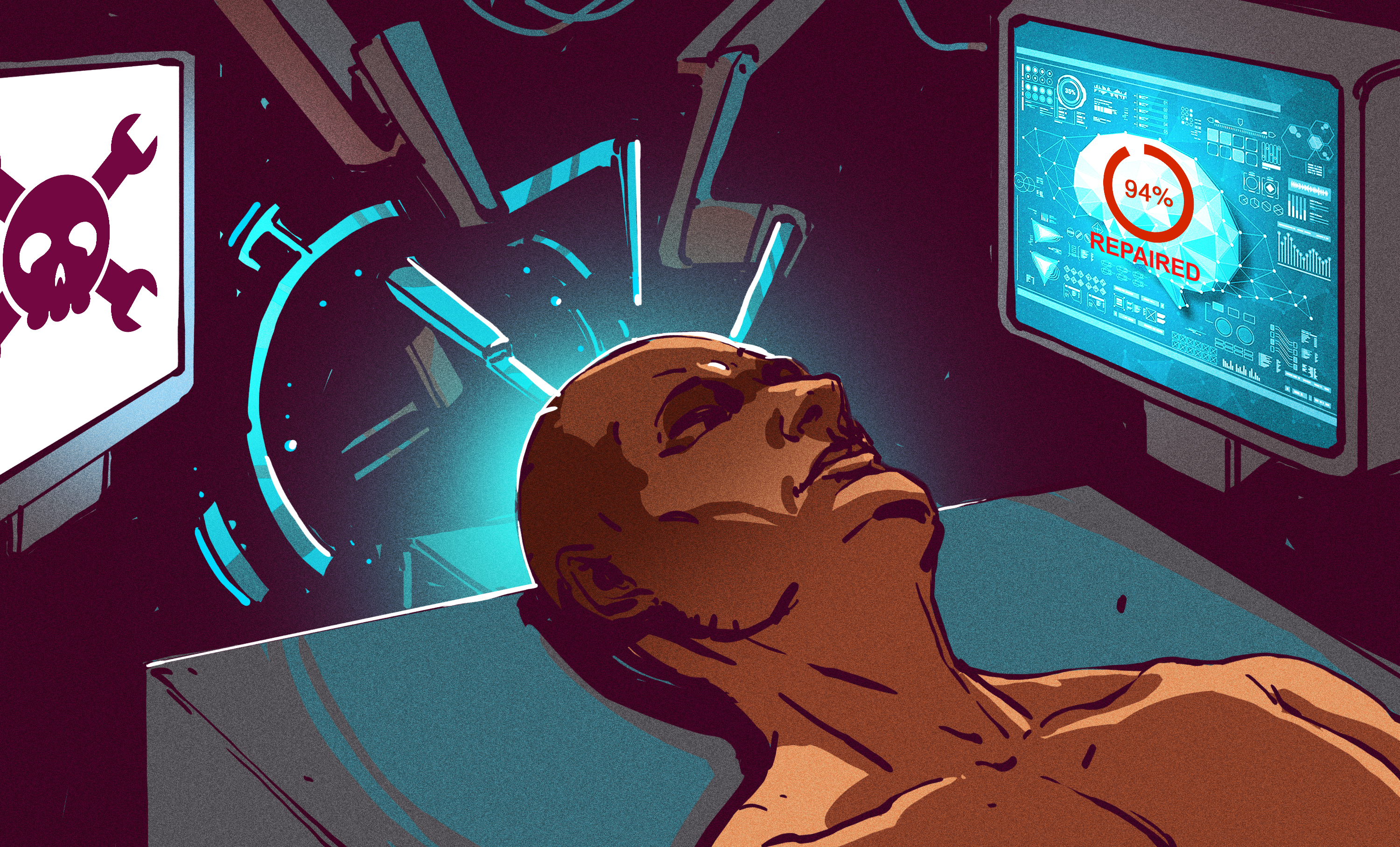
For decades, the phrase “brain electrode” sounded like something that required a shaved head, a dramatic operating room, and a surgeon with the calm hands of a concert pianist. Traditional brain-computer interface technology often meant opening the skull to place sensors directly on or inside the brain. Effective? Potentially. Casual? Absolutely not.
Stentrodes are trying to change that story. A stentrode is a tiny stent-like device fitted with electrodes that can be delivered through the blood vessels, rather than through open brain surgery. In simple terms, doctors thread it through the vascular systemmost famously through the jugular veinuntil it reaches a blood vessel near the motor cortex, the part of the brain involved in planning movement. From there, the device can detect neural signals and help translate intended movement into digital commands.
That may sound like science fiction wearing a lab coat, but the technology is already being tested in people with severe paralysis, including patients with amyotrophic lateral sclerosis, also known as ALS. The goal is not to create mind-reading superheroes. The goal is much more practical and human: helping people control computers, send messages, use smart devices, and communicate when their muscles no longer cooperate.
What Is a Stentrode?
A stentrode combines two ideas: a vascular stent and a brain electrode array. A stent is a small expandable mesh tube commonly used in blood vessels. Electrodes are sensors that can detect electrical activity. Put them together, and you get a device that can sit inside a blood vessel near the brain and listen for patterns of neural activity without penetrating brain tissue.
The best-known stentrode system is being developed by Synchron, a neurotechnology company working on an endovascular brain-computer interface, or BCI. The device is designed to capture signals related to motor intent. That means when a person thinks about making a movementsuch as clicking, selecting, or navigatingthose brain signals may be decoded into commands for a computer or digital device.
Think of it as a translator between the brain and technology. The brain says, “I would like to click that button.” The stentrode detects the neural activity. Software interprets the signal. The computer performs the action. Nobody needs to wiggle a finger, tap a screen, or argue with a tiny laptop trackpad that clearly has personal issues.
How Stentrodes Are Inserted Without Open-Brain Surgery
The defining advantage of the stentrode is its delivery method. Instead of opening the skull, physicians use an endovascular procedure. “Endovascular” simply means “inside the blood vessels.” This approach is already familiar in modern medicine, especially in procedures involving strokes, aneurysms, heart disease, and vascular repair.
During implantation, a catheter is guided through the venous system toward a blood vessel near the motor cortex. Once positioned, the stentrode expands against the vessel wall, where its electrodes can record brain signals from nearby neural tissue. The device connects to other implanted components that transmit data to external systems, allowing the user’s brain activity to become digital input.
This approach does not mean the procedure is “minor” in the casual sense. It is still a specialized medical procedure involving major blood vessels, advanced imaging, clinical monitoring, and highly trained teams. But compared with open-brain surgery, the endovascular path may reduce some risks associated with cutting through the skull or placing electrodes directly into brain tissue.
Why the Motor Cortex Matters
The motor cortex is a key region for brain-computer interfaces because it helps plan and initiate voluntary movement. For people with paralysis, the brain may still generate signals related to movement even when the body cannot carry them out. In other words, the command center may still be sending messages, but the delivery truck is stuck in traffic forever.
BCI systems attempt to capture those signals and reroute them around the damaged pathway. If the body cannot respond, a computer can. This is why stentrodes are being studied for people with severe motor impairment. A person may not be able to move their hands, but they may still be able to generate motor intent signals that software can learn to interpret.
What Patients May Be Able to Do With a Stentrode
The early goal of stentrode-based BCI technology is digital control. That includes actions such as selecting items on a screen, sending texts, writing emails, browsing the internet, operating communication software, and controlling certain connected devices.
For someone without paralysis, clicking a button is so ordinary that it barely deserves a thought. For someone with advanced ALS or another severe motor condition, a reliable digital click can be life-changing. It can mean writing a message, joining a video call, managing daily choices, or communicating without waiting for another person to interpret eye movements or facial expressions.
Early studies and patient reports suggest that users can learn to generate consistent signals for digital tasks. The system may not turn someone into a high-speed typist overnight, and it is not magic. Training, calibration, fatigue, disease progression, software design, and personal variation all matter. Still, the possibility of restoring even limited independent control is a major step forward.
Stentrodes vs. Traditional Brain Implants
Traditional implanted BCIs often use electrodes placed directly on the surface of the brain or inserted into brain tissue. These approaches can provide very detailed neural recordings, but they usually require more invasive neurosurgery. That can make them harder to scale for large numbers of patients, especially people who are already medically fragile.
Stentrodes take a different trade-off. Because they sit inside a blood vessel, they may record signals with less detail than electrodes placed directly into the brain. However, the less invasive delivery route could make the technology more practical for clinical use if safety and effectiveness continue to hold up in larger studies.
That trade-off is important. In medicine, the “best” technology is not always the one with the fanciest signal. It is the one that balances benefit, safety, reliability, cost, training burden, and patient quality of life. A device that is easier to implant and good enough for useful communication may be more valuable than a more powerful device that only a small number of patients can safely receive.
Clinical Research: What We Know So Far
Stentrode research is still developing, but several milestones have already attracted attention. Early human studies explored whether an endovascular BCI could be implanted safely and whether people with paralysis could use it to control digital devices. Published clinical research has reported that the system was able to record neural signals from a blood vessel and support computer control in participants with severe paralysis.
The COMMAND study in the United States was designed as an early feasibility study to evaluate safety and performance in people with severe motor impairment. It focused on whether the device could be deployed accurately, whether it could record usable signals, and whether participants could perform digital tasks through thought-driven control.
These studies are not the same as full commercial approval. Early feasibility trials are designed to answer foundational questions: Can the device be implanted? Is it reasonably safe in a small group? Does it appear to work well enough to justify larger trials? The encouraging answer so far is “yes, maybeand keep testing.” Science rarely enters a room wearing a cape. It usually arrives holding a clipboard and asking for more data.
The FDA Pathway and Why It Matters
In the United States, implantable brain-computer interfaces are regulated medical devices. That means they must go through careful review before they can be marketed widely. Synchron’s stentrode technology has received FDA Breakthrough Device designation, which is intended to help speed the development and review of promising technologies for serious conditions. The U.S. COMMAND study also moved forward under FDA investigational oversight.
This regulatory pathway matters because brain implants involve high stakes. Patients and families need more than exciting headlines. They need evidence about safety, infection risk, blood vessel effects, signal stability, device durability, training requirements, long-term support, and what happens if the system fails or needs revision.
A responsible future for stentrodes depends on careful trials, transparent reporting, and realistic patient expectations. “Thought-controlled computer use” is a thrilling phrase. It is also a medical technology that must prove itself in the real world, not just in polished demo videos with dramatic background music.
Potential Benefits of Stentrode Technology
Less Invasive Access to the Brain
The biggest benefit is the endovascular route. By using blood vessels as a pathway, stentrodes may avoid some of the risks and barriers associated with open-brain surgery. This could be especially important for people with ALS, spinal cord injury, stroke-related paralysis, or other severe neurological conditions.
Restoring Digital Independence
Modern life runs through screens. Banking, healthcare appointments, family chats, entertainment, home controls, and basic communication often require digital access. A stentrode-based BCI could help users regain a degree of independence in these everyday tasks.
Scalability for Clinical Use
If the procedure can be performed by trained neurointerventional teams using familiar vascular techniques, it may be easier to scale than approaches requiring highly invasive neurosurgery. That does not mean it will be simple or cheap, but it may make broader clinical adoption more realistic.
Fully Implanted Design
A fully implanted system can reduce some of the practical problems associated with external wires or skull-mounted connectors. For patients and caregivers, fewer external components may mean easier daily use, lower infection concerns, and a more normal routine.
Challenges and Limitations
Stentrodes are promising, but they are not a finished miracle product. One challenge is signal quality. Because the electrodes sit inside a blood vessel rather than directly in brain tissue, the recorded signals may be less precise than those captured by more invasive implants. The system must rely heavily on smart decoding software to turn those signals into useful commands.
Another challenge is training. Users may need time to learn how to control the system consistently. The software also needs to learn the user. This relationship between human and machine is less like flipping a switch and more like teaching a very patient robot what your intentions look like electrically.
There are also medical questions. Long-term implantation inside blood vessels raises issues such as clotting, vessel response, device stability, and compatibility with medications. Researchers must continue studying how the device performs over years, not just months.
Finally, access will matter. Even if stentrodes prove safe and effective, patients will still face questions about cost, insurance coverage, clinical availability, rehabilitation support, technical updates, and caregiver training. A BCI that works in a trial must also work in a living room at 9:37 p.m. when the Wi-Fi is acting like a moody raccoon.
How Stentrodes Compare With Neuralink and Other BCIs
Stentrodes are often compared with Neuralink because both aim to create implantable brain-computer interfaces. But the approaches are different. Neuralink’s system uses electrodes implanted directly into the brain by a surgical robot. Synchron’s stentrode uses the blood vessels to reach a location near the motor cortex.
The difference is not simply “one is better.” It is a design philosophy. More invasive implants may capture richer signals, potentially supporting more complex control. Less invasive implants may offer a more acceptable safety profile and a more scalable procedure. The future may include both approaches, serving different patients and goals.
There are also noninvasive BCIs, such as EEG caps, which record brain activity from outside the skull. These are safer and easier to use but usually provide weaker signals. Stentrodes sit in the middle: more powerful than external sensors in some ways, but less invasive than open-brain implants.
Privacy, Ethics, and the “Brain Data” Question
Any technology that records brain signals raises ethical questions. What data is collected? Who owns it? How is it stored? Can it be shared? Could it be used for advertising, insurance decisions, employment screening, or other purposes far beyond medical care?
Today’s stentrode systems are focused on helping people with severe paralysis control digital devices. They are not reading private thoughts like a movie villain with venture funding. Still, neural data deserves strong protection. Even if current systems decode simple intentions, future systems may become more powerful. The rules should mature before the technology becomes ordinary.
Patients need clear consent, transparent data policies, cybersecurity protections, and the right to understand how their brain-derived signals are used. A helpful BCI should give people more control over their lives, not turn their nervous system into another subscription service with confusing terms and conditions.
The Future of Stentrodes
The next stage for stentrode technology will depend on larger trials, longer follow-up, and improved software. Researchers will need to show that the system can work reliably across more patients, more conditions, and more real-world environments.
Future versions may become faster, more wireless, easier to train, and better integrated with smartphones, computers, home assistants, wheelchairs, robotic arms, or communication platforms. Artificial intelligence may also improve decoding, helping systems adapt to each user’s changing neural signals over time.
For patients with progressive diseases such as ALS, adaptability is critical. A system that works well in the first year must remain useful as physical abilities change. The most meaningful BCI will not be the flashiest device; it will be the one that still helps on a difficult Tuesday afternoon when the user simply wants to say, “I’m here.”
Experience-Based Insights: What Living With Stentrode Technology Might Feel Like
Imagine the experience from the patient’s side. You are not shopping for a futuristic gadget because you want to play chess with your refrigerator. You are considering a brain-computer interface because communication has become exhausting, slow, or nearly impossible. Every message requires help. Every small task depends on someone else being available. Independence has been reduced to tiny windows of opportunity.
In that context, a stentrode is not just a device. It is a possible doorway back into daily life. The first experience would likely be medical: screening, imaging, consent discussions, surgical planning, and conversations about risk. The patient and family would need to understand that this is not a guaranteed cure. It will not restore muscle movement. It will not reverse ALS or repair a spinal cord injury. Its promise is narrower but still powerful: creating a digital pathway from intention to action.
After implantation, the experience would shift from medicine to training. The user may need to practice producing reliable mental commands. At first, this could feel strange. Most of us do not spend our day thinking, “Now I shall generate a clean neural click.” We just move. For someone using a BCI, the brain must learn a new kind of interface. The software must learn the user’s patterns too. Progress may come in small victories: a successful click, a selected letter, a completed phrase, a message sent without assistance.
Those small victories can carry enormous emotional weight. Sending a text independently may sound ordinary, but ordinary is exactly the point. Disability often steals the casual parts of life before the dramatic ones. The ability to choose music, answer a message, open an app, or participate in a family chat can restore a sense of presence. It says: I am not only being cared for; I am still acting, choosing, and responding.
Caregivers would also feel the impact. A reliable BCI could reduce some communication bottlenecks and give families a new way to connect. However, it may also introduce new responsibilities: charging equipment, updating software, troubleshooting connections, attending follow-ups, and helping with calibration. The dream version of assistive technology is invisible and effortless. The real version usually comes with manuals, appointments, and at least one moment when someone says, “Did we try restarting it?”
The emotional experience would likely be mixed. Hope, frustration, excitement, fatigue, and patience may all show up before lunch. Some days, the system might feel empowering. Other days, it might feel slow or mentally tiring. That does not make it a failure. It makes it a human technology being used in human circumstances.
For clinicians, the experience may be equally transformative. Neurologists, neurosurgeons, rehabilitation specialists, engineers, speech-language pathologists, and caregivers all become part of the same ecosystem. The stentrode is not merely implanted and forgotten. It requires a support network. The best outcomes will likely come from teams that treat the BCI not as a gadget, but as a long-term assistive communication tool.
For the public, the most important experience may be adjusting expectations. Stentrodes are not about downloading kung fu into the brain or turning people into cyborg celebrities. They are about restoring practical control in situations where the body has stopped obeying the mind. That is less flashy than science fiction, but far more meaningful.
The most realistic way to understand stentrodes is this: they are an early but serious attempt to make brain-computer interfaces safer, more usable, and more clinically accessible. They do not remove every risk. They do not solve every problem. But they may offer a path between external assistive tools and highly invasive brain implants. For people who have lost the ability to move or speak, that path could be life-changing.
Conclusion
Stentrodes represent one of the most interesting directions in brain-computer interface technology because they approach the brain through the body’s existing vascular highways. Instead of opening the skull, doctors can use an endovascular route to place electrodes near the motor cortex, where they may detect signals related to movement intention.
The result is a less invasive implant strategy with the potential to help people with severe paralysis control computers, communicate digitally, and regain pieces of independence that many of us take for granted. The science is still young, and larger studies are needed before stentrodes become widely available. But the early results are strong enough to make researchers, clinicians, patients, and technology watchers pay attention.
If traditional brain implants are the bold, high-risk mountain climb of neurotechnology, stentrodes may be the clever tunnel through the mountain. Not effortless. Not risk-free. But possibly more practical for the people who need it most.
Editor’s note: This article is for educational and informational purposes only. Stentrode technology remains a specialized medical technology under clinical investigation and should not be interpreted as personal medical advice.