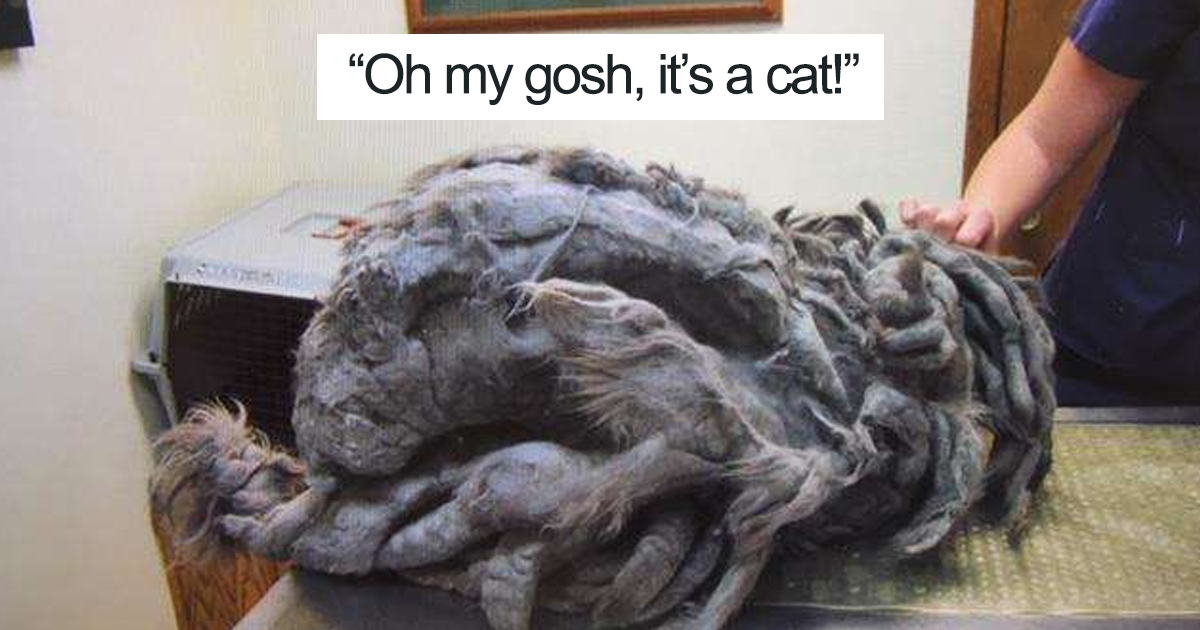
Some rescue stories begin with a bark, a meow, or a pair of frightened eyes peeking out from a cardboard box. This one began with a carrier left outside an animal shelter overnight and a mystery so tangled that even experienced shelter staff could not immediately tell what kind of animal was inside. At Douglas County Animal Care & Services in Gardnerville, Nevada, workers arrived one morning to find a creature buried beneath a heavy, filthy mass of matted fur. It looked less like a cat and more like a forgotten mop that had survived a tornado, a dust storm, and possibly a very bad hair decade.
But under all that painful matting was not a hopeless case. Under it was a living, breathing cat who had been waiting, perhaps for years, for someone to notice that he was still there. After emergency veterinary care and a careful shave, the shelter staff discovered a handsome senior cat with a sweet nature, a new name, and a second chance. They called him Bob Marley, a cheeky nod to the dreadlock-like mats that had once trapped his body. Thankfully, Bob’s “reggae era” ended in the best possible way: with relief, recovery, and eventually a loving home.
This matted cat rescue story is heartbreaking, yes, but it is also a reminder of what shelters, veterinarians, groomers, and compassionate adopters do every day. They look past the mess. They see the animal. And sometimes, after the clippers stop buzzing, a true beauty steps out.
The Overnight Discovery That Shocked Shelter Staff
Animal shelters are used to surprises. Kittens appear in laundry baskets. Dogs arrive wearing sweaters they clearly did not choose. Occasionally, a rabbit shows up with the confidence of a tiny landlord. Still, the carrier left outside the Nevada shelter was unusual. The animal inside was so densely covered in tangled fur that staff first suspected it might be a small dog. Cats are famous for grooming themselves, after all. A healthy cat can spend a generous portion of the day washing, smoothing, and reorganizing its coat with the seriousness of a tiny spa manager.
When staff opened the carrier, they realized the animal was a cat in terrible condition. His fur was not simply messy. It had hardened into thick, dirty, restrictive mats that wrapped around his body and made normal movement nearly impossible. Matted cat fur is more than a cosmetic problem. Severe matting can pull tightly against the skin, trap moisture and waste, hide wounds, restrict movement, and cause real pain. In Bob Marley’s case, the mats had become a prison.
The shelter team acted quickly. Instead of tugging, cutting blindly, or trying to brush through mats that were far beyond at-home grooming, they got him professional help. A veterinarian sedated him so the heavy fur could be removed safely. By the time the shave was finished, roughly 4.5 pounds of matted hair had been taken off his body. That is not a typo. Four and a half pounds. For perspective, that is about the weight of a small laptop, a large bag of sugar, or one extremely judgmental loaf of bread.
Why Matted Fur Is So Dangerous For Cats
Many people hear the word “grooming” and think of beauty. Fluffy tails, shiny coats, maybe a cat looking offended after a bath it never requested. But grooming is health care. For cats, especially long-haired, senior, overweight, or ill cats, regular coat maintenance can prevent pain and detect problems early.
Severe cat matting often starts small. A loose patch of undercoat gets caught in the topcoat. Dirt or oil makes the hair cling together. Friction under the legs, around the collar, behind the ears, or near the hips turns a tiny tangle into a tight knot. If the cat is older, arthritic, overweight, or sick, self-grooming may become difficult. Over time, mats tighten. They can pull on delicate skin every time the cat moves. They can block airflow, trap bacteria, and make it impossible for owners or caregivers to see sores, parasites, infections, or injuries beneath the coat.
That is why serious mats should not be attacked with kitchen scissors. Cat skin is thin, flexible, and easy to cut, especially when pulled upward by a mat. A well-meaning owner can accidentally injure a cat while trying to help. Small tangles may be handled gently with a comb, patience, and treats, but extensive matting calls for a veterinarian or professional groomer. In severe cases, sedation is the safest and kindest option. The goal is not a stylish haircut. The goal is pain relief.
Meet Bob Marley: The Cat Beneath The Coat
Once the matted shell was removed, Bob Marley could finally move. Shelter staff noticed a change almost immediately. The cat who had arrived trapped inside his own fur began walking around and looking curious about his surroundings. It was as though someone had taken off a heavy backpack he had been wearing for far too long.
But the shave revealed another issue: Bob was severely overweight. Reports placed him at more than 22 pounds, which meant he was carrying extra body weight in addition to the pounds of matted hair. Obesity in cats can contribute to joint strain, reduced mobility, difficulty grooming, diabetes risk, skin problems, and lower quality of life. It can also become a cycle. A cat gains weight, grooming becomes harder, mats form, movement becomes painful, exercise decreases, and weight increases again. It is the feline version of a bad group project where every problem invites another problem.
Still, Bob had something powerful on his side: he was now visible. His needs could be assessed. His pain could be addressed. His weight could be managed gradually. His personality could be allowed to emerge. After years of neglect, the real cat was finally seen.
Why Abandoning A Pet After Hours Is Risky
Leaving an animal outside a shelter may look, to some people, like a desperate attempt to get help. In certain cases, panic, poverty, illness, housing insecurity, or lack of knowledge can push people into poor decisions. But anonymous after-hours abandonment is dangerous for animals and difficult for shelters. Staff may not know the animal’s medical history, age, diet, temperament, medications, vaccination status, or whether other animals in the same home are also suffering.
A carrier left outdoors can expose a pet to heat, cold, predators, stress, and delayed care. If the shelter is closed for hours, a sick or injured animal may wait far too long. Responsible surrender is always the safer choice. Most animal shelters and humane societies encourage people who can no longer care for a pet to call ahead, schedule an appointment, ask about rehoming help, or request pet-retention resources such as food assistance, low-cost veterinary care, behavioral support, or temporary foster options.
There should be compassion for people in crisis, but compassion should not erase responsibility. A cat is not a broken toaster to be left by the door with a sticky note. A living animal needs information, handling, and immediate safety. Bob Marley was lucky that shelter staff found him, recognized the emergency, and moved quickly.
The Role Of Shelters In Transformations Like This
Animal shelters often get praised for adoption photos: the happy family, the bow tie, the dog grinning like he just won a lifetime supply of tennis balls. But the most important work usually happens before the happy photo. It happens during intake exams, emergency grooming, vaccinations, parasite treatment, behavior assessments, cleaning, feeding, comforting, and the quiet moments when a scared animal learns that hands can be gentle.
In a case like Bob’s, the shelter’s job was not only to make him look better. It was to stabilize him, document his condition, work with veterinary professionals, monitor his recovery, and find a home prepared for his long-term needs. A cat coming out of neglect may need a slow weight-loss plan, regular brushing, patience with handling, and follow-up veterinary visits. The transformation is not a single shave. It is a process.
That process is also emotional for staff. Seeing an animal in such terrible condition can be infuriating. Yet shelter workers cannot run on anger alone. They have to turn that emotion into action: clean the carrier, call the vet, trim the nails, schedule the exam, update the adoption profile, answer the phone, and do it again tomorrow. Rescue work is love with paperwork, disinfectant, and occasional scratches.
How Cat Owners Can Prevent Matted Fur
Most cats do not end up like Bob Marley, but his story offers practical lessons for every cat owner. Prevention is much easier than emergency dematting. Long-haired cats may need daily brushing, while short-haired cats often benefit from weekly grooming. Senior cats, overweight cats, and cats with arthritis or dental pain may need more help because they cannot twist, reach, or groom as efficiently as they once did.
Check The High-Risk Areas
Mats commonly form behind the ears, under the front legs, along the belly, around the collar area, near the tail, and between the back legs. These areas experience friction and can be harder for cats to groom. A quick daily check can catch tangles before they become painful.
Use The Right Tools
A soft slicker brush, stainless-steel comb, or rubber grooming brush can help remove loose hair. The best tool depends on coat type, so ask a veterinarian or groomer for guidance. The wrong tool, used too aggressively, can make grooming feel like a medieval negotiation, and your cat will remember. Cats are furry historians.
Never Yank Or Cut Tight Mats
If a mat is tight, close to the skin, painful, or widespread, stop and call a professional. Pulling hurts. Cutting can cause accidental wounds. Professional groomers and veterinarians have clippers, handling skills, and medical support if the skin underneath is irritated or infected.
Watch For Grooming Changes
If a cat suddenly stops grooming, starts overgrooming, develops bald patches, smells unusual, or resists being touched, something may be wrong. Pain, obesity, dental disease, arthritis, parasites, stress, and illness can all affect grooming. A messy coat may be the first visible sign of an invisible problem.
Adoption: Seeing Beauty Beyond The Before Photo
The most moving part of Bob Marley’s story is not only the dramatic shave. It is what happened afterward. Once he was cleaned up and medically assessed, he became adoptable. His story spread, and people saw not a ruined cat, but a survivor. He had been hidden by neglect, not defined by it.
That matters because many shelter animals arrive with bad photos, rough coats, missing fur, cloudy eyes, nervous behavior, or medical needs. They may not look like the polished pets in commercials. Some need dental work. Some need weight management. Some need time to learn that a couch is not a trap and a food bowl will be refilled. But animals are not before-and-after products. They are individuals. A “before” photo is just one chapter, not the whole book.
Adopters who choose overlooked pets often say the reward is enormous. A rescued cat may blossom slowly: first eating in front of you, then sleeping nearby, then head-butting your hand as if to say, “Fine, human, you may serve me.” These small milestones are not small at all. They are proof of trust returning.
Experience Section: What This Story Teaches Anyone Who Loves Animals
Anyone who has spent time around rescue animals knows that transformation rarely looks like magic at first. It looks like laundry. It looks like disinfecting a crate at 7 a.m. It looks like a volunteer sitting quietly beside a nervous cat who has no interest in being inspirational today, thank you very much. Stories like Bob Marley’s become popular because the visual change is dramatic, but the deeper experience is quieter: consistent care changes lives.
One lesson from a matted cat rescue is that neglect can hide in plain sight. A long-haired cat may look “fluffy” from across the room, but under that coat there may be knots, sore skin, fleas, waste, or wounds. Owners may not notice at first, especially if the cat avoids touch. That is why routine handling matters. Gently petting, brushing, checking ears, lifting paws, and feeling along the body are not just bonding moments. They are health checks disguised as affection. Your cat may act like you are a personal assistant with poor boundaries, but the habit can reveal problems early.
Another experience many rescuers share is that animals often show relief before they show affection. A cat freed from mats may not immediately curl up and purr like a movie star in a redemption montage. He may hide. He may sleep. He may eat, drink, and stare at everyone with the suspicion of a retired detective. That is normal. Recovery takes time. Comfort comes in layers: pain relief first, safety next, trust later. People who adopt neglected cats should celebrate practical progress. A clean coat, a steady appetite, a successful vet visit, a few steps toward a toythese are victories.
Bob’s story also reminds us that humor can live beside heartbreak. Naming a dreadlocked cat Bob Marley is funny, and that little bit of humor helps people connect. But the joke works because the rescue ended with care, not cruelty. In animal welfare, lightness can make difficult stories bearable, as long as the animal’s suffering is never treated as entertainment. The point is not to laugh at the cat. The point is to cheer for the cat who survived the worst haircut situation imaginable and came out looking like a dignified gentleman in a fresh suit.
Finally, this story teaches that beauty in rescue is not about perfection. It is about recognition. Someone looked at a filthy, immobile, matted animal and said, “There is a cat in there, and he matters.” That simple decision changed everything. Whether you donate towels, foster kittens, adopt a senior cat, schedule a grooming appointment, or call a shelter instead of abandoning an animal, you become part of that same decision. You choose to see the life beneath the mess.
Conclusion: A True Beauty Was There All Along
Bob Marley’s rescue is unforgettable because the contrast is so extreme: a cat left overnight in terrible condition, trapped in pounds of matted fur, then revealed as a handsome, sweet senior with years of life still ahead of him. But the real beauty was not created by shaving him. It was uncovered. The clippers removed the evidence of neglect; they did not create his worth.
For pet owners, the lesson is clear: grooming is not optional decoration, especially for long-haired, older, overweight, or medically fragile cats. For shelters, Bob’s story shows the life-saving importance of quick intake care and veterinary partnerships. For adopters, it is a reminder to look twice at the animals who arrive rough around the edges. And for everyone else, it is a gentle nudge to support the people who do this work every day.
Some cats arrive looking like royalty. Others arrive looking like a haunted carpet sample. Both deserve kindness. Sometimes, all it takes to reveal a true beauty is skill, patience, and someone willing to say, “You are safe now.”
Note: This article is based on publicly reported details of Bob Marley’s rescue and widely accepted animal welfare guidance on cat grooming, shelter surrender, pet obesity, and responsible adoption.