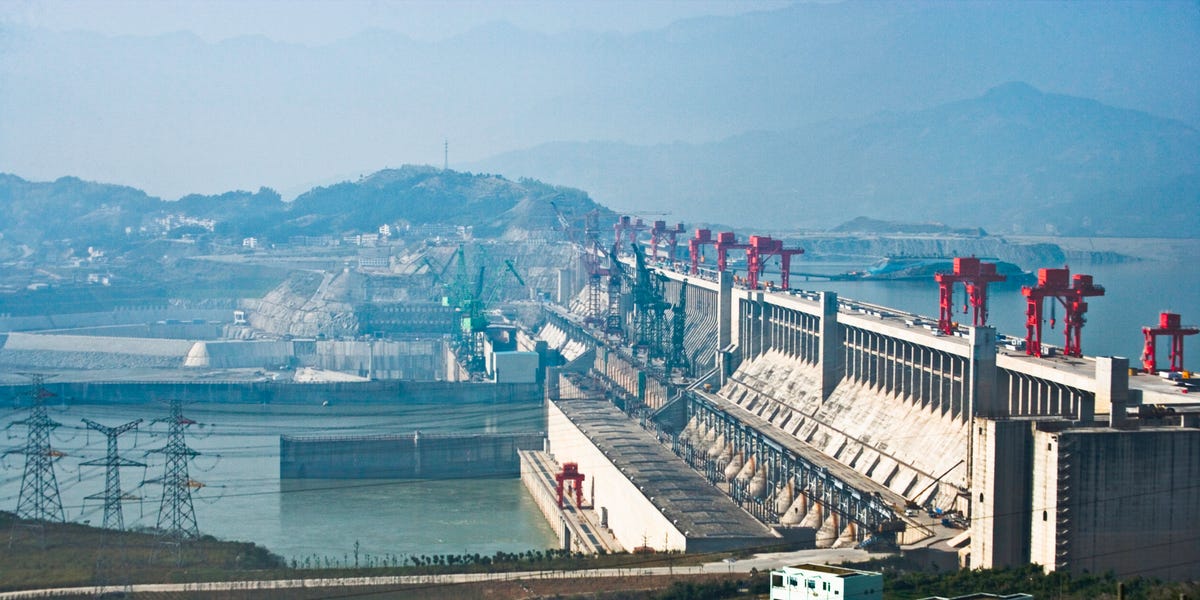
Somewhere on the high, windswept edge of the Tibetan Plateau, the future of construction is not wearing a hard hat, asking where the coffee truck is, or arguing with a tape measure. It is running on sensors, algorithms, autonomous trucks, unmanned rollers, and a very big idea: what if a dam could be built almost like a 3D-printed object?
That is the headline-grabbing promise behind China’s Yangqu Hydropower Station project in Qinghai Province. Early reports described it as a 590-foot-scale dam being “3D printed” by artificial intelligence and robotic construction equipment. The phrase sounds like science fiction, and yes, it is slightly more complicated than a gigantic printer going “brrrr” over a river valley. But the core idea is real: China has been applying additive manufacturing logic to massive infrastructure, using digital design, automated scheduling, and autonomous machines to build the dam layer by layer.
In plain English, China is not dragging a desktop 3D printer into the mountains and hoping it survives the weather. Instead, engineers are treating the construction site like a huge, coordinated printing bed. Materials are transported, spread, compacted, inspected, and adjusted in successive layers. Artificial intelligence helps coordinate the workflow. Construction robots and unmanned machinery perform many tasks that would traditionally require large crews working in difficult, risky conditions.
The result is one of the most fascinating infrastructure stories of the decade. It blends hydropower, robotics, artificial intelligence, construction automation, and large-scale 3D printing into one very ambitious experiment. Whether you see it as a clean-energy breakthrough, a robotics milestone, or the moment construction equipment started quietly auditioning for our jobs, the project deserves attention.
What Does It Mean That China Is 3D Printing a Dam?
When most people hear “3D printing,” they imagine a machine creating a plastic toy, a dental model, or maybe a small concrete house by extruding material from a nozzle. The Yangqu project uses the term differently. It borrows the logic of additive manufacturing, where a digital model is divided into layers and built up step by step.
For a dam, those “layers” are not thin ribbons of plastic. They are construction layers made from rock, fill material, concrete-facing systems, and compacted surfaces. The process relies on a digital construction model that tells machines what to do, where to go, how much material to place, and how each layer should be compacted. Think of it as 3D printing at civil-engineering scale, except the printer is not one machine. It is an orchestra of autonomous equipment, and the conductor is software.
This is why the project is so important. It suggests that “3D printing” in infrastructure may not always look like a nozzle drawing walls. In large projects, it may look like intelligent paving, robotic filling, sensor-guided compaction, digital twins, automated route planning, and real-time quality control.
The Yangqu Hydropower Project: The Basics
The Yangqu Hydropower Station is located on the upper reaches of the Yellow River in Qinghai Province, a region known for harsh terrain, high elevation, and major renewable energy potential. The station has been reported with a total installed capacity of 1.2 gigawatts, using three 400-megawatt turbine generator units. Its expected annual generation is roughly 4.7 billion kilowatt-hours, enough to serve well over a million average households depending on consumption assumptions.
The project is part of China’s broader push to build large clean-energy bases in western regions and transmit power to demand centers farther east. In that sense, Yangqu is not just a dam. It is a piece of a much larger energy puzzle involving hydropower, wind, solar, ultra-high-voltage transmission, and grid balancing.
By late 2024, official reports indicated that Yangqu had reached full-capacity power generation after its final unit completed testing and connected to the grid. That timing matters because the project was originally discussed internationally not only as a futuristic construction experiment, but also as a real power asset intended to support China’s energy system.
How the Robotic Dam-Building System Works
The simplified version is this: engineers create a digital model of the dam, then divide that model into many construction layers. A central scheduling system calculates the materials, routes, tasks, and equipment movements needed for each layer. From there, autonomous or semi-autonomous machines carry out the plan.
1. Digital Design Becomes Construction Instructions
Every 3D-printed object begins as a model. In traditional 3D printing, software slices the model into horizontal layers. For Yangqu-style dam construction, the same concept is applied to an enormous civil structure. The system breaks the dam into manageable layers and generates instructions for how each layer should be built.
This is the brainy part of the project. The digital system must account for topography, material properties, equipment capacity, compaction requirements, transport routes, and sequencing. If ordinary 3D printing is like making lasagna with software, dam-scale printing is like making lasagna while the kitchen is a mountain valley and every noodle weighs several tons.
2. Autonomous Trucks Move Materials
Unmanned trucks can transport construction materials around the site. These vehicles follow planned routes, delivering fill or other materials where the next layer is scheduled to be built. In a remote, high-altitude location, reducing manual driving can improve safety and consistency.
That does not mean humans disappear from the project entirely. Large infrastructure still requires engineers, supervisors, inspectors, maintenance crews, safety specialists, and operators. But the goal is to reduce the number of people doing repetitive, dangerous, and physically exhausting tasks on the active construction face.
3. Bulldozers, Pavers, and Rollers Create Layers
Once materials arrive, unmanned bulldozers and pavers spread them into the correct shape and thickness. Then rollers compact the layer to meet engineering requirements. Sensors can help measure compaction quality, position, vibration, and surface conditions.
This is where the “printed” idea becomes easiest to understand. Each new layer is placed and compacted over the previous one, gradually building up the body of the dam. It is additive, repetitive, digitally guided, and quality-controlled. It is not a printer in the household sense, but it is very much printing in the construction-automation sense.
Why Build a Dam This Way?
China’s experiment with 3D-printed dam construction is not just about showing off. Although, let’s be honest, a robot-built dam is a fairly strong entry in the international “look what our engineers can do” contest. The method has practical goals.
Safer Construction in Difficult Conditions
Dam construction can be dangerous. Workers deal with heavy machinery, unstable terrain, harsh weather, dust, noise, and long shifts. On the Tibetan Plateau and in Qinghai’s high-altitude environment, cold, oxygen levels, and remoteness add more challenges. Automation can move people away from the riskiest zones.
More Consistent Quality Control
In large fill structures, consistency matters. If one layer is poorly compacted, too wet, too dry, too thick, or badly placed, it can affect performance. Robotic systems guided by sensors may help standardize layer placement and compaction. Machines do not get tired, skip steps, or decide that “close enough” is an engineering philosophy.
Faster and More Predictable Scheduling
Large infrastructure projects often suffer from delays, labor bottlenecks, weather interruptions, coordination problems, and logistical surprises. A digital scheduling system can help coordinate fleets of equipment more efficiently. In theory, the more accurately each step is planned and monitored, the easier it becomes to control time and cost.
Lower Labor Intensity
Automation is especially attractive in projects where the work is repetitive and physically demanding. Moving, spreading, compacting, and inspecting layer after layer is exactly the kind of work machines can assist with. Human experts can then focus on planning, monitoring, troubleshooting, safety, and engineering judgment.
Is This Really 3D Printing or Just Clever Marketing?
It is fair to ask whether “3D printed dam” is a little too catchy. The answer is: yes, but not entirely wrong. If someone imagines a single printer head extruding a dam in one continuous motion, that is not accurate. If someone understands 3D printing as a digital, additive, layer-by-layer manufacturing process, then the description makes more sense.
The Yangqu approach is better described as large-scale additive construction using AI-controlled robotic equipment. That phrase is less likely to go viral because it sounds like a committee meeting at an engineering conference. Still, it is more precise.
The real breakthrough is not the label. It is the system. A dam is being treated as a digitally managed, layered manufacturing process rather than only a conventional construction project. The site becomes a factory. The machines become the print head. The terrain becomes the print bed. The software becomes the foreman, minus the clipboard and sunburn.
Why Hydropower Still Matters in the Clean Energy Era
Hydropower sometimes gets less attention than solar panels, wind turbines, electric vehicles, and battery storage. That is partly because dams feel old-school. They belong to the age of concrete megaprojects, not sleek apps and rooftop panels. But hydropower remains one of the most important sources of dispatchable renewable electricity in the world.
Unlike solar and wind, hydropower can often be adjusted to help balance the grid. When electricity demand rises, water can be released through turbines. When demand falls, output can be reduced. This flexibility is valuable in power systems that are adding more variable renewable energy.
China has invested heavily in hydropower because its geography offers major river systems and elevation changes, especially in western regions. Projects like Yangqu are part of a broader strategy to develop clean-energy resources where they are abundant and transmit electricity to industrial and urban centers where demand is high.
Of course, hydropower is not automatically perfect. Dams can affect ecosystems, sediment flows, fish habitats, local communities, and downstream water users. Any serious discussion of dam building must include environmental and social impacts. A robot-built dam is still a dam. The robots do not magically make river ecology shrug and say, “No worries.”
The Big Engineering Questions
China’s 3D-printed dam concept raises exciting possibilities, but it also raises serious engineering questions. Large infrastructure must work safely for decades. It must survive floods, freeze-thaw cycles, settlement, seepage, earthquakes, temperature changes, and the slow, patient bullying of water.
Can Robotic Compaction Match or Improve Human-Supervised Work?
Compaction is crucial in rock-fill and earth-fill dam construction. Robotic rollers equipped with sensors may improve consistency, but the system must prove that it can meet strict standards across varied materials and weather conditions. A dam does not care how futuristic the construction method is. It cares whether every layer performs.
How Is Quality Verified?
Large-scale construction 3D printing needs reliable inspection methods. Engineers need data on density, moisture, placement accuracy, layer bonding, deformation, and long-term durability. Sensors can help, but data must be validated. The future of construction automation depends not only on robots doing the work, but on trustworthy systems proving the work was done correctly.
What Happens When Machines Fail?
Autonomous construction equipment still needs maintenance, calibration, software reliability, and human oversight. Harsh environments can challenge sensors, batteries, hydraulics, communications, and navigation. The dream is automation. The reality is that mud, ice, dust, and vibration remain undefeated villains in many construction stories.
What This Means for the Future of Construction
If China’s experiment succeeds and the lessons are widely adopted, the future of infrastructure may look very different. Roads, levees, embankments, mine structures, seawalls, rail beds, and airport foundations could all benefit from digitally guided, layer-by-layer construction.
In the United States and other countries, construction 3D printing has already gained attention for housing, bridges, specialty structures, military applications, and disaster-response construction. However, the industry still faces challenges involving codes, standards, reinforcement methods, material testing, liability, and long-term durability.
The Yangqu project expands the conversation. It asks whether additive construction can move beyond houses and small structures into the world of megaprojects. That is a big leap. Printing a wall is impressive. Coordinating a robotic fleet to help build a hydropower dam is a different species of ambition.
Benefits and Risks of AI-Built Infrastructure
The benefits are easy to see. AI-assisted construction can reduce dangerous manual labor, improve scheduling, use materials more efficiently, create detailed digital records, and make large projects more predictable. It can also help countries build infrastructure in remote areas where labor logistics are difficult.
The risks are just as real. Overreliance on automation can create blind spots. Software errors, sensor failures, poor data, or weak oversight can become expensive problems. Cybersecurity also matters when digital systems control equipment on critical infrastructure sites. A hacked email is annoying. A hacked construction fleet is the sort of thing that makes engineers stare silently into the distance.
There is also a workforce question. Automation can reduce dangerous work, but it can also change the labor market. Future construction workers may need more skills in robotics maintenance, data analysis, machine control, surveying technology, and digital project management. The hard hat is not disappearing. It is getting a software update.
Experience-Based Reflections: What the Yangqu Story Teaches Us
The most useful way to understand China’s 3D-printed dam is not to ask, “Is this a real printer?” The better question is, “What construction problems is this trying to solve?” From that angle, the project becomes less of a gimmick and more of a preview of how future building sites may operate.
Anyone who has watched a major construction project knows that the hardest part is rarely one dramatic task. It is coordination. Materials arrive late. Machines wait for instructions. Crews wait for machines. Weather changes the plan. Measurements need checking. One small error creates a chain reaction. On a dam, those problems become massive because everything is heavy, expensive, and difficult to redo.
The Yangqu approach treats coordination as the main battlefield. Instead of relying only on manual scheduling and human operators, it uses a digital model to organize work in layers. That matters because infrastructure is becoming too complex for old habits alone. A spreadsheet and a radio can still help, but they are not enough when a project involves autonomous trucks, GPS-guided equipment, sensor feedback, real-time inspection, and energy-system deadlines.
The second lesson is that automation works best when it supports human expertise rather than pretending humans are unnecessary. The phrase “zero human labor” makes a great headline, but real-world infrastructure still depends on people. Engineers define the design. Technicians maintain the machines. Safety teams monitor risks. Managers make judgment calls. Inspectors verify quality. Automation changes where humans stand in the process. It does not remove responsibility.
The third lesson is that construction 3D printing is not one technology. It is a family of methods. A printed house, a robotic bridge, and a digitally layered dam may all fall under the same broad umbrella, but they require different materials, standards, machines, and inspection systems. That is why standards will be so important. The industry cannot simply say, “The robot did it, so it must be accurate.” It needs proof, testing, documentation, and repeatable methods.
The fourth lesson is humility. Dams are unforgiving structures. They hold back water, and water is patient, heavy, and not impressed by press releases. Every futuristic project must eventually answer traditional engineering questions: Is it stable? Is it durable? Is it safe? Can it be maintained? What are the environmental effects? What happens in extreme conditions? The technology may be new, but the responsibilities are ancient.
Finally, Yangqu shows that the future of infrastructure will probably be hybrid. It will combine old materials with new intelligence, concrete with code, rollers with sensors, and civil engineering with robotics. The most exciting part is not that China may have “printed” a dam. It is that the construction site itself is becoming programmable. That shift could reshape how the world builds roads, reservoirs, flood defenses, railways, ports, and energy systems.
Conclusion
China’s 3D-printed dam story is more than a flashy technology headline. It is a glimpse into a future where megaprojects are designed digitally, built layer by layer, monitored by sensors, and executed by fleets of smart machines. The Yangqu Hydropower Station shows how artificial intelligence, robotics, additive construction, and clean-energy infrastructure can intersect in one ambitious project.
The phrase “3D printing a dam” may sound like a cartoonishly large gadget at work, but the reality is more interesting. It is about turning a construction site into a coordinated manufacturing system. It is about using automation to improve safety, consistency, and efficiency. It is also about asking hard questions concerning quality control, environmental impact, labor, cybersecurity, and long-term performance.
If this model proves reliable, it could influence the way future infrastructure is built around the world. Tomorrow’s dams, roads, levees, and energy projects may not be built only with bigger machines. They may be built with smarter systems. And somewhere, a very tired construction supervisor may finally get to say, “Let the robots handle that layer.”