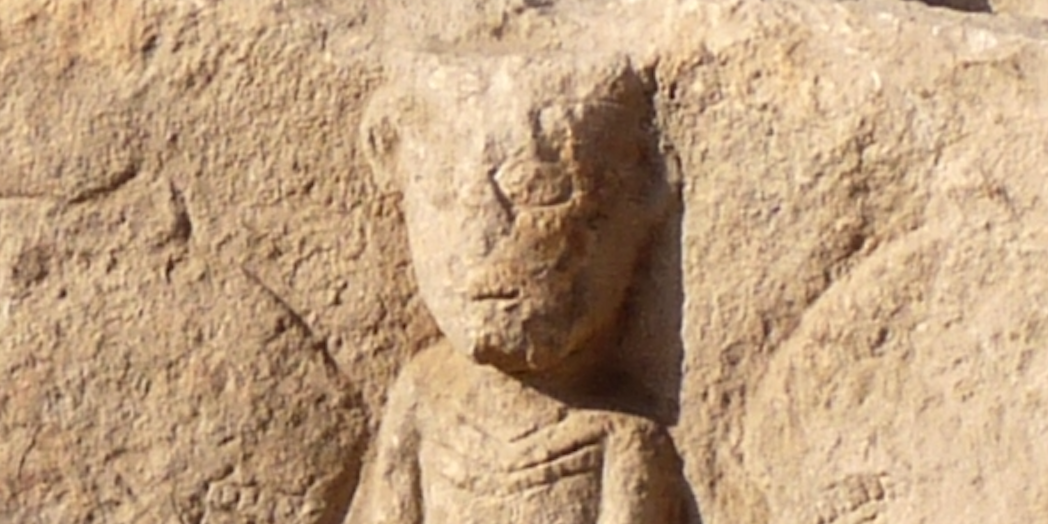
Archaeology is usually a slow, careful business: brushes, measuring tapes, soil samples, and plenty of patient squinting. Then, every so often, the ground offers up something so strange that even the calmest scientist must blink twice. That is exactly the reaction many readers had when reports surfaced about a Neolithic human statue from Sayburç in southeastern Türkiye: a haunting figure with visible ribs and a mouth that appears to be stitched shut.
The discovery sounds like it escaped from a horror movie trailer, but it belongs to something far more interesting: the deep human past. The figure was uncovered in the Taş Tepeler, or “Stone Mounds,” region, a network of ancient sites that includes famous names such as Göbekli Tepe, Karahantepe, Sefertepe, and Sayburç. These places are rewriting what we know about early settled life, ritual behavior, symbolic art, and how people understood death thousands of years before writing, cities, or convenient coffee breaks.
What Was Actually Found at Sayburç?
The object at the center of the story is a human-like Neolithic statue discovered at Sayburç, a site in Şanlıurfa Province. The figure stands out because its face appears intentionally altered: the mouth is shown as closed or stitched, while the ribs are emphasized in a way that suggests death, bodily exposure, or ritual meaning. Researchers have described it as one of the most striking recent finds from the region, not because it is “spooky” in a cheap Halloween sense, but because it may reveal how early communities thought about mortality.
The phrase “mouth stitched closed” is powerful because the mouth is not just a body part. It is speech, breath, identity, eating, singing, warning, laughing, and complaining about the weather. Closing it permanently can symbolize silence, death, restraint, or the separation of the living from the dead. In a world without writing, symbols like this mattered. Stone had to speak when people could not leave written explanations.
That is the tricky part: the statue comes from a time before local written records. Archaeologists cannot simply open a Neolithic instruction manual titled So You Have Found a Creepy Ribbed Ancestor Statue. They must interpret the find through context: where it was discovered, what was found nearby, how it compares to other sculptures, and what burial traditions are known from related sites.
Why the Taş Tepeler Region Matters
Taş Tepeler is one of the most important archaeological landscapes in the world. It sits in southeastern Türkiye, near the upper reaches of Mesopotamia, where early humans were experimenting with permanent settlement, food production, communal architecture, and symbolic systems. The region includes several Pre-Pottery Neolithic sites dating roughly 11,000 to 12,000 years ago, a period when people were still closely tied to hunting and gathering but were also building large structures and developing complex social practices.
Göbekli Tepe, the best-known site in the region, shocked scholars because it showed that hunter-gatherer groups could organize massive building projects. Its T-shaped limestone pillars, animal reliefs, and communal enclosures suggested that ritual and social gathering may have played a central role in the shift toward settled life. In other words, people may not have settled down simply because they farmed. They may also have settled down because they wanted to gather, build, remember, perform, and believe together.
Sayburç adds another chapter to that story. Earlier research at the site revealed carved reliefs that appear to form one of the oldest known narrative scenes in the Near East. These images show humans and animals in a carefully arranged composition, suggesting that Neolithic people were not merely decorating stone. They were telling stories. And apparently, they were telling stories with enough drama to make modern viewers lean forward.
The Stitched Mouth: A Symbol of Death?
The most common interpretation of the Sayburç figure is that the stitched mouth may represent the silence of death. This does not mean archaeologists have solved the mystery completely. Prehistoric symbolism is rarely a neat crossword puzzle. Still, the combination of a closed mouth, pronounced ribs, and possible funerary context makes the death-related interpretation persuasive.
Think about how modern cultures treat silence around death. We lower our voices at funerals. We speak of “rest.” We use phrases such as “passed away,” softening the harshness of the final event. The Sayburç figure may show that ancient people also used symbolic language to process death. Instead of writing an elegy, they carved a body. Instead of saying “the dead no longer speak,” they sealed the mouth in stone.
The statue may represent an ancestor, a deceased community member, a ritual figure, or a symbolic being connected to the boundary between life and death. It could have been displayed during ceremonies, placed near a communal building, or used in rituals that helped the living relate to the dead. Archaeologists are careful not to overstate the meaning, which is good. The past is mysterious enough without adding fake certainty and a dramatic thunderclap.
Death Rituals Before Cemeteries Looked Like Cemeteries
One reason the Sayburç statue matters is that Neolithic death practices in this region were complex. At several sites, researchers have found evidence that bodies and bones were treated in ways that go beyond simple burial. In some early communities, the dead may have been buried, revisited, separated, displayed, or reburied. Skulls in particular seem to have carried special meaning.
At Göbekli Tepe, modified human skull fragments showed cut marks, carved grooves, and evidence of deliberate post-mortem treatment. Some researchers have suggested that skulls may have been displayed, suspended, or used in ancestor-related rituals. That does not mean every skull was treated the same way, and it certainly does not mean the community was “primitive.” Quite the opposite: these practices point to a sophisticated symbolic world where identity continued after death.
The Sayburç statue fits into this wider pattern. It suggests that death was not hidden away as a purely private matter. It may have been part of public memory, ritual performance, and community identity. The dead might have remained socially present, not as ghosts rattling chains, but as ancestors, symbols, warnings, or participants in the emotional life of the group.
A Public Building and a Private Feeling
Another important detail is the statue’s relationship to architecture. Reports from the 2025 field season at Sayburç describe a monumental public building with platforms and a central location at the mound. The stitched-mouth figure was found near a damaged area close to this large structure, suggesting that it may have been connected to communal activity.
This matters because architecture tells us how people used space. A small figurine found in a home may speak to household rituals or private belief. A statue associated with a public building may point to shared ceremonies, group identity, or collective memory. When early communities built special structures, carved figures, and placed symbols in meaningful locations, they were organizing not only stone but also social life.
Imagine entering a circular or semi-circular building lit by fire, with carved pillars, animal images, and a human figure whose mouth was sealed. That setting would have made an impression. No projector, no microphone, no fog machinejust stone, shadow, and the emotional force of a community confronting life and death together. Honestly, modern theater has worked with less.
Why the Figure Looks So Unsettling
The Sayburç statue feels eerie to modern viewers because it combines several visual signals we instinctively associate with mortality: exposed ribs, a rigid face, and a sealed mouth. The human brain is exceptionally good at reading faces. We search for emotion in eyes, lips, cheeks, and posture. When something looks human but not quite alive, it falls into that uncomfortable zone where curiosity and unease shake hands.
But the unsettling effect may be part of the point. Neolithic artists were not making cute shelf decor. They were producing objects with emotional power. Across the Taş Tepeler region, human and animal images appear in ways that suggest danger, transformation, memory, and ritual drama. Foxes, boars, birds, snakes, and human figures were not random doodles. They belonged to a symbolic vocabulary shared by communities that were building new ways of living together.
The stitched mouth may have worked as a visual command: look, remember, be silent, respect, fear, or understand. We cannot know which message was intended, but we can recognize that the figure was designed to communicate something serious.
How This Changes Our View of Early Humans
For a long time, popular history told a simple story: first people farmed, then they settled, then they built temples, then they developed complex beliefs. Sites such as Göbekli Tepe, Karahantepe, and Sayburç complicate that tidy timeline. They suggest that ritual, art, performance, and shared memory were already powerful forces during the transition from mobile hunter-gatherer life to settled communities.
The people who made the stitched-mouth figure were not waiting for “civilization” to arrive. They were already organizing labor, shaping stone, creating symbols, gathering in special buildings, and asking enormous questions. What happens after death? Who belongs to the community? How should the living remember the dead? What stories hold a group together?
These are not simple questions, and the answers were not simple either. The statue is spooky because it touches something ancient and familiar at the same time. We still struggle to speak about death. We still build monuments. We still preserve photographs, visit graves, light candles, and tell stories about those who are gone. The tools have changed; the emotional math has not.
Sayburç and the Birth of Storytelling in Stone
Sayburç is especially exciting because of its earlier reliefs, which appear to show a connected scene rather than isolated symbols. In the relief panel, human and animal figures are arranged in a way that suggests narrative. This is significant because storytelling is one of the foundations of culture. Stories teach rules, preserve memory, explain danger, entertain children, and make adults pretend they are not scared during ceremonies.
The stitched-mouth statue may belong to this broader world of visual storytelling. It may not tell a story in the same way as the reliefs, but it creates a character. A silent figure. A dead figure. A remembered figure. A warning figure. A symbol that would have meant more to those who saw it in its original setting than it can ever mean to us behind a screen.
That gap between ancient meaning and modern interpretation is part of what makes archaeology fascinating. We are close enough to recognize a human face, yet far enough away that the message remains partly locked. The mouth is stitched closed, and in a sense, so is the full explanation.
What Scientists Still Do Not Know
Despite the excitement, many questions remain unanswered. Was the figure male, female, ancestral, supernatural, or symbolic rather than personal? Was it connected to burial, memorial ceremonies, public gatherings, or household belief? Did the stitched mouth represent silence, death, protection, punishment, or transformation? Was the figure created by one artist, a workshop tradition, or a ritual specialist?
Archaeologists will look for clues in the statue’s material, carving style, location, associated objects, and comparison with nearby sites. They may study wear marks, breakage patterns, residue, spatial layout, and the surrounding architecture. Every detail matters. A statue found in a trash deposit tells a different story from a statue deliberately placed near a platform. A broken object may be damaged by timeor ritually “killed.” Context is the difference between evidence and guesswork wearing a fancy hat.
Future excavations at Sayburç may reveal more statues, burials, architectural features, or symbolic objects. Each discovery will either support current interpretations or politely shove them into the academic recycling bin. That is how science works: carefully, slowly, and with fewer movie-style eureka moments than we might like.
Why Readers Are So Drawn to This Discovery
The headline works because it combines science, mystery, and a visual hook. A stitched-mouth figure is instantly memorable. But the deeper reason people care is that the discovery feels personal. It is not just a stone object. It is a reminder that humans 12,000 years ago were emotionally complex. They mourned. They imagined. They feared. They gathered. They made art that still has the power to disturb us.
Modern readers often picture the Stone Age as a rough survival story: find food, avoid predators, repeat. The Sayburç figure adds depth to that picture. It shows people investing time and skill into symbols that were not directly about calories. That means they had social worlds, spiritual concerns, artistic choices, and shared meanings. They were not background characters in the prologue of civilization. They were fully human.
Experiences Related to the Topic: Meeting the Silent Figure in the Imagination
Standing before an ancient figure like the stitched-mouth statue, even through photographs or museum displays, creates a strange emotional experience. At first, curiosity takes over. You look at the face, the ribs, the closed mouth, and the careful carving. Then the mood changes. The object stops feeling like “an artifact” and starts feeling like a message from someone who cannot answer follow-up questions. It is like receiving a letter from 10,000 years ago with the most important sentence missing.
Anyone who has visited an archaeological museum knows this feeling. You walk past pottery, tools, beads, and fragments, and suddenly one object holds you in place. It may be a small figurine, a skull, a carved animal, or a worn handprint in clay. The label gives you dates and material, but the real experience happens in the imagination. You picture the maker’s hands. You wonder whether the object was treasured, feared, used in ceremony, hidden, broken, or buried on purpose.
The Sayburç figure intensifies that experience because the stitched mouth feels almost theatrical. It invites silence from the viewer. You do not need to be an archaeologist to understand that the closed mouth means something. It may not mean exactly what we think, but it refuses to be ignored. In that sense, the statue succeeds as art. It crosses time without a translator.
There is also a humbling experience in realizing how modern our ancient ancestors can feel. We may live with smartphones, electric lights, and refrigerators that make suspicious noises at 2 a.m., but we still respond to faces. We still create memorials. We still use symbols when ordinary language fails. A stitched mouth carved in stone reminds us that grief has always needed form. Sometimes grief becomes a song. Sometimes it becomes a grave marker. Sometimes, apparently, it becomes a silent figure with ribs showing.
For writers, artists, teachers, and history lovers, this discovery offers a powerful lesson: mystery is not the enemy of knowledge. Mystery is often the doorway. The Sayburç statue does not give us a complete answer, but it gives us better questions. What did early communities believe about the dead? How did public rituals shape social bonds? Why did some images need to be unsettling? What stories were told in buildings where stone figures watched the living gather?
That is the experience this topic leaves behind: a mixture of wonder, discomfort, and respect. The stitched-mouth figure may look spooky, but it is not merely scary. It is intimate. It shows that ancient people were thinking about the same final silence that still waits for every human life. The mouth is closed, yet the statue continues to speak through archaeology, art, and imagination. Not bad for someone who has been silent for roughly twelve millennia.
Conclusion: A Spooky Figure, a Serious Discovery
The Sayburç stitched-mouth statue is more than an eerie archaeological headline. It is a rare glimpse into the symbolic world of Neolithic communities in southeastern Türkiye. Its sealed mouth, emphasized ribs, and possible connection to public ritual spaces suggest that early humans had complex ways of thinking about death, memory, and identity. The discovery also strengthens the importance of the Taş Tepeler region, where sites such as Göbekli Tepe, Karahantepe, Sefertepe, and Sayburç continue to challenge old assumptions about the rise of settled life and social complexity.
In the end, the figure’s silence is exactly what makes it so powerful. We cannot hear the beliefs of the people who carved it, but we can see that they cared deeply about the boundary between the living and the dead. The mouth may be stitched closed, but the story is still opening.
Note: This article is based on current archaeological reporting and publicly available research about Sayburç, Taş Tepeler, Göbekli Tepe, Karahantepe, Neolithic ritual practices, and early symbolic art.