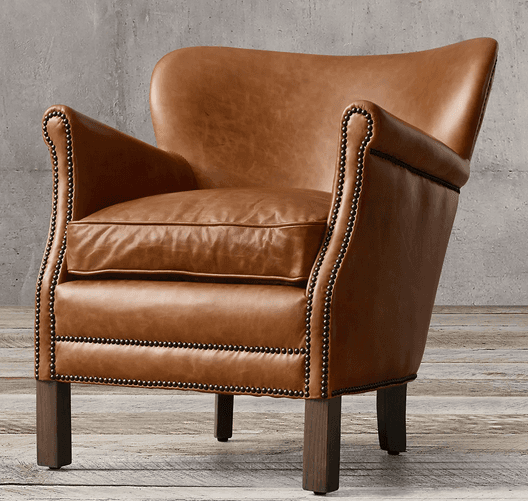
A professor’s leather chair with nailheads is not just a chair. It is a mood, a posture, and possibly the only piece of furniture in the room that looks like it has read more books than you have. With its rolled arms, deep leather seat, structured back, and metallic nailhead trim, this classic armchair brings together old-school scholarship and modern comfort. It belongs beside a bookcase, across from a fireplace, in a home office, or in any corner where coffee, reading glasses, and big thoughts gather.
The appeal of this chair comes from contrast. Leather feels warm, rugged, and lived-in. Nailheads add sparkle and precision. The professor-style silhouette suggests tradition without requiring the owner to grade papers or quote Aristotle at dinner. When chosen well, this type of leather accent chair becomes a long-term investment piece: durable enough for daily use, handsome enough for guests, and comfortable enough to make “just five more pages” turn into an accidental two-hour reading session.
What Is a Professor’s Leather Chair With Nailheads?
A professor’s leather chair typically refers to a traditional leather armchair inspired by library, study, club, and old academic office furniture. It often features a high or medium back, rounded arms, substantial seat cushions, dark wood legs, and decorative nailhead trim along the arms, base, or back. The style overlaps with classic club chairs, Chesterfield chairs, wingback chairs, and roll-arm leather chairs, but the “professor” label gives it a scholarly personality. Think less “waiting room chair” and more “I own a fountain pen and know where the good biscuits are hidden.”
Nailhead trim is one of the chair’s signature details. These small metal studs are usually placed in a neat row along the chair’s edges. Historically, nailheads helped secure upholstery to a wooden frame. Today, they are mostly decorative, although they still create the satisfying impression that the chair was assembled by someone who owned a serious toolbox and strong opinions about craftsmanship.
Why This Chair Still Works in Modern Homes
Trends come and go, but leather chairs with nailheads continue to survive every design cycle because they are versatile. They can look formal in a library, relaxed in a den, dramatic in a dark-painted office, or surprisingly fresh next to modern furniture. A brown leather chair can soften a white room. A black leather chair can sharpen a neutral space. A caramel leather chair can warm up gray walls faster than a good cup of coffee warms up a Monday morning.
The key is balance. A professor’s leather chair is visually weighty, so it performs best when paired with lighter textures and thoughtful accessories. Try a linen pillow, a wool throw, a brass floor lamp, a walnut side table, or a patterned rug. The chair should feel intentional, not like it escaped from a private university and is hiding in your living room.
Leather Quality: What to Look For
Full-Grain and Top-Grain Leather
When shopping for a professor’s leather chair with nailheads, leather quality matters. Full-grain leather keeps the natural grain of the hide and develops a rich patina over time. Top-grain leather is also high quality, but the surface may be lightly corrected for a smoother, more uniform appearance. Both can be excellent choices for furniture, especially if you want a chair that ages beautifully rather than looking tired after a few seasons.
Semi-Aniline Leather
Semi-aniline leather is a popular option for upscale chairs because it keeps much of the natural character of leather while adding a light protective coating. That coating helps with everyday wear, which is useful if the chair will be used for reading, working, or hosting guests who believe snacks are a contact sport.
Bonded Leather and Faux Leather
Bonded leather and faux leather may cost less, but they usually do not age like genuine full-grain or top-grain leather. They can be practical for budget-conscious spaces, rental homes, or low-use rooms, but buyers should understand the tradeoff. A real leather professor chair is often chosen for longevity, character, and that unmistakable leather feel. A cheaper imitation may look good online but disappoint in person, much like ordering a “large” coffee and receiving a cup that looks emotionally unavailable.
The Role of Nailhead Trim
Nailhead trim can completely change the character of a leather chair. Antique brass nailheads create a warm, traditional look. Nickel nailheads feel cleaner and slightly more contemporary. Bronze or dark metal nailheads offer a quieter, moodier effect. The spacing and size of the nailheads also matter. Larger studs feel bold and rustic; smaller studs feel refined and tailored.
For a professor-style chair, nailheads usually work best when they follow the natural lines of the furniture. They may trace the arms, outline the back, run along the apron, or frame the outer edges. Too few nailheads can feel timid; too many can make the chair look like it is wearing jewelry to breakfast. The goal is polish, not percussion section.
Comfort and Ergonomics: Beautiful Should Not Mean Backbreaking
A leather chair can be handsome and still fail the comfort test. Before buying, consider seat height, seat depth, back support, cushion firmness, and arm position. If the chair will be used for reading or conversation, a deep seat and supportive back can be wonderful. If it will be used at a desk, pay closer attention to posture. Your feet should rest flat on the floor or on a footrest, your shoulders should stay relaxed, and the arms should support you without forcing your elbows upward.
Many professor-style chairs are not task chairs, so they may not offer adjustable height, swivel functions, or lumbar settings. That does not mean they are bad chairs. It simply means they should be matched to the right purpose. Use one for reading, writing by hand, relaxing, guest seating, or a statement office corner. For eight-hour computer workdays, consider adding a lumbar cushion or choosing a more ergonomic chair for the desk itself.
Best Rooms for a Professor’s Leather Chair
Home Office
In a home office, a professor’s leather chair with nailheads creates authority without shouting. Place it opposite the desk for client conversations, near a bookcase for reading, or beside a small table for reviewing documents. Add a floor lamp and the room instantly says, “Important ideas happen here,” even if the most important idea today is remembering where you put your charger.
Reading Nook
This chair was born for a reading nook. Pair it with a warm lamp, a soft throw, and a small table large enough for a book and a mug. Add a footstool if you want maximum comfort. The result is a personal retreat that encourages slower evenings, deeper reading, and fewer doom-scrolling sessions.
Living Room
In a living room, the chair works beautifully as an accent piece. It can sit across from a sofa, beside a fireplace, or angled toward a coffee table. If your sofa is fabric, a leather chair adds texture and contrast. If your sofa is also leather, vary the tones so the room does not look like a furniture showroom with commitment issues.
Bedroom or Guest Room
A leather nailhead chair in a bedroom creates a boutique-hotel feeling. It offers a place to read, put on shoes, or toss tomorrow’s outfit in a way that looks almost intentional. Choose a slightly smaller profile if the room is compact, and make sure there is enough walking space around the chair.
How to Style It Without Making the Room Feel Heavy
Because leather has visual weight, styling should add contrast. Light walls, woven baskets, pale curtains, greenery, or a textured rug can keep the space from feeling dark. If the leather is deep brown or black, add cream, ivory, sage, denim blue, rust, or brass accents. If the chair is tan or cognac, pair it with charcoal, navy, forest green, or warm white.
Books are a natural companion, but do not overdo the academic theme. One globe is charming. Three globes and a fake diploma might make the room feel like a stage set for a mystery podcast. Keep accessories personal: a ceramic lamp, framed art, a side table, a blanket, and maybe one excellent plant that can tolerate your level of responsibility.
Choosing the Right Size
Measure before you buy. A professor’s leather chair often has generous proportions, and those rolled arms can take up more room than expected. Check overall width, depth, back height, seat height, and arm height. Also measure doorways, stairwells, elevators, and hallway turns. Nothing ruins furniture excitement faster than discovering your new chair cannot enter the room without a small engineering committee.
For small spaces, choose a chair with slimmer arms, exposed legs, or a slightly lower back. Exposed legs create visual breathing room because more floor is visible. For larger rooms, a wider chair with a plush seat and bold nailheads can anchor a corner beautifully.
Care and Maintenance
Leather is durable, but it is not invincible. Dust it weekly with a soft cloth, vacuum seams and crevices with a brush attachment, and blot spills immediately. Avoid harsh cleaners such as bleach, ammonia, alcohol-based sprays, and general household cleaners. Use products designed specifically for leather, and always test in a hidden area first.
Keep the chair away from direct sunlight when possible. Sun can fade and dry leather over time. Also avoid placing it too close to heating vents or radiators. Leather likes a stable environment. It does not enjoy being toasted like bread.
Conditioning may be useful depending on the leather type and manufacturer recommendations. Some protected leathers require less conditioning, while more natural leathers may benefit from occasional care. The safest rule is simple: follow the maker’s instructions, clean gently, and treat leather like a long-term relationship rather than a weekend rental.
Common Buying Mistakes
Buying Only for Looks
A chair can look magnificent and still feel like a punishment device. Sit in it if possible. If shopping online, read measurements carefully and compare them with a chair you already find comfortable.
Ignoring Leather Type
Not all leather behaves the same. Natural leather may show markings and develop patina. Protected leather may resist stains better. Faux leather may be easier on the budget but less graceful with age. Choose based on lifestyle, not just color.
Forgetting the Room’s Style
A professor’s leather chair with nailheads is strong enough to influence the entire room. Make sure it complements your existing furniture. It does not need to match everything, but it should have at least one visual connection: wood tone, metal finish, color palette, or overall mood.
Experience Notes: Living With a Professor’s Leather Chair With Nailheads
The experience of owning a professor’s leather chair with nailheads is different from owning a casual fabric armchair. Fabric chairs often blend into a room. This chair announces itself politely, removes its hat, and takes a seat by the fire. It becomes a destination. People notice it. Guests tend to touch the leather, admire the nailheads, and ask where it came from. Pets may also admire it, though their appreciation should be monitored with the seriousness of airport security.
In daily life, the best part is the way the chair develops character. A quality leather chair does not need to remain perfect to remain beautiful. Small creases, gentle color changes, and softening cushions can make it feel more personal over time. It begins as furniture and slowly becomes part of the household rhythm. Morning coffee tastes better in it. Evening reading feels more ceremonial. Even checking email feels slightly more dignified, as if your inbox should address you as “Professor.”
The nailheads also add more than decoration. They create a visual outline that makes the chair look finished from multiple angles. This is especially helpful if the chair floats in a room rather than sitting against a wall. A leather chair with plain edges can sometimes look bulky, but nailhead trim breaks up the mass and highlights the craftsmanship. It is a small detail with a big effect, like cufflinks on a good suit.
Comfort depends heavily on proportion. A deep professor chair feels luxurious for lounging, but shorter users may want a footstool or lumbar pillow. Taller users may appreciate the generous seat depth and broad arms. The chair works best when it supports a relaxed position: book in hand, shoulders down, feet grounded or stretched out. For long computer sessions, it may need help from a cushion or a better desk setup. In other words, let the chair be a reading throne, not necessarily a spreadsheet marathon machine.
From a decorating perspective, the chair is surprisingly forgiving. It can make a plain corner feel designed, give a new home a sense of history, or add warmth to a modern apartment. The trick is to let it breathe. Do not crowd it with too many heavy pieces. Give it good lighting, one practical side table, and a few softer textures nearby. The result is a chair that feels both impressive and welcoming. It says, “Come sit down,” not “Please submit your thesis by Friday.”
Overall, a professor’s leather chair with nailheads is for people who want furniture with presence. It is not the shy chair at the party. It is the one telling a great story in the corner, probably beside a lamp, definitely looking better with age.
Conclusion
A professor’s leather chair with nailheads remains popular because it offers the rare combination of comfort, character, and timeless style. It can anchor a reading nook, elevate a home office, soften a living room, or add a refined touch to a bedroom. The best versions use quality leather, supportive construction, balanced proportions, and nailhead trim that enhances rather than overwhelms the design.
Choose the chair with your lifestyle in mind. Think about leather type, room size, comfort needs, color palette, and maintenance. When selected thoughtfully, this classic leather nailhead chair can become more than seating. It can become the favorite spot in the house: the place where books are finished, ideas are formed, and coffee mugs mysteriously multiply.
Note: This article is written in original American English and synthesized from real furniture, leather-care, design, and ergonomic guidance. Source links and citation markers were intentionally omitted from the body for clean web publishing.