Poison hemlock poisoning sounds like something lifted from an ancient history class, probably right after the part where Socrates had an extremely bad beverage experience. Unfortunately, poison hemlock is not just a dusty footnote from Greece. It is a real, highly toxic plant that grows across much of the United States, often in places people walk past every day: roadsides, ditches, fence lines, fields, trails, creek banks, vacant lots, and the occasional backyard where nature has decided to be dramatic.
The tricky part is that poison hemlock, known scientifically as Conium maculatum, belongs to the carrot family. That means it can resemble harmless-looking plants such as wild carrot, parsley, fennel, chervil, or Queen Anne’s lace. In other words, it dresses like dinner but behaves like a villain. This is why accidental poisoning can happen when people forage, when children or pets explore plants, or when livestock graze in contaminated areas.
This guide explains what poison hemlock is, how poisoning happens, what symptoms may look like, when to seek emergency help, and how to reduce risk around the home, garden, pasture, or trail. It is written for everyday readers, not botanists with magnifying glasses clipped to their hiking hats.
What Is Poison Hemlock?
Poison hemlock is a toxic biennial weed in the Apiaceae family, the same plant family that includes carrots, celery, parsley, dill, and fennel. Unlike its more kitchen-friendly relatives, every part of poison hemlock can be dangerous when ingested: leaves, stems, roots, flowers, seeds, and fruit. The plant contains toxic alkaloids, including coniine and related compounds, which can interfere with the nervous system and muscles that control breathing.
As a biennial, poison hemlock usually spends its first year as a low-growing rosette of lacy leaves. In the second year, it shoots upward, develops tall hollow stems, produces clusters of small white flowers, forms seeds, and then dies. That plant life cycle may sound tidy, but the seed bank it leaves behind can keep the problem popping up like a botanical rerun.
Poison hemlock is considered invasive in many areas. It thrives in disturbed soil and moist places, including drainage ditches, roadsides, pastures, meadows, field edges, stream banks, and neglected garden corners. Once established, it can form dense patches that crowd out other plants and increase exposure risk for people, pets, and livestock.
Why Poison Hemlock Poisoning Is So Dangerous
The main danger of poison hemlock poisoning is its effect on the neuromuscular system. In plain English, the plant’s toxins can disrupt communication between nerves and muscles. In mild exposures, symptoms may involve nausea, sweating, trembling, weakness, confusion, or a fast heartbeat. In severe exposures, muscle paralysis and breathing failure can occur. That is the moment when “wait and watch” becomes a very bad strategy.
There is no specific antidote for poison hemlock poisoning. Medical care focuses on supportive treatment, such as monitoring breathing, heart rhythm, blood pressure, hydration, and complications. In serious cases, a person may need hospital care and breathing support. The good news is that prompt medical treatment can make a major difference. The bad news is that delaying care gives the toxin a head start, and toxins are not known for being polite.
How Poison Hemlock Exposure Happens
Accidental ingestion
The most serious poison hemlock exposures usually happen when someone eats part of the plant. This can occur when poison hemlock is mistaken for wild carrot, wild parsley, celery-like plants, anise, or other edible-looking members of the carrot family. Foragers are at special risk because many plants in this family look similar unless you know exactly what you are seeing.
A simple rule belongs on the refrigerator, the garden shed, and possibly your forehead during foraging season: never eat a wild plant unless you are completely certain of its identity. “Pretty sure” is not good enough when the plant in question can affect breathing.
Skin and mucous membrane contact
Poison hemlock is not the same as poison ivy. Most severe poisoning comes from ingestion, not casual brushing against the plant. However, sap can irritate the skin in some people, and exposure through cuts, eyes, nose, or mouth may increase risk. Handling unknown plants barehanded is never a great idea, especially when the plant has a résumé that includes “historically used as an execution poison.”
Smoke inhalation
Burning poison hemlock is unsafe. Smoke from burning poisonous plants can irritate the lungs and may carry harmful plant compounds. If poison hemlock is growing on a property, it should not be burned in a brush pile, fire pit, or “let’s just get rid of this fast” weekend cleanup project. Fast is good for internet speed, not toxic plant disposal.
Livestock and pet exposure
Poison hemlock is also dangerous to animals. Livestock may eat it when pasture is sparse, when it is mixed into hay, or when young plants appear before other forage. Cattle, horses, sheep, goats, pigs, and other animals may be affected. Pets are generally less likely to eat large amounts of it, but curious dogs can chew strange plants because dogs are lovable creatures with questionable snack judgment.
Poison Hemlock Symptoms: What to Watch For
Symptoms of poison hemlock poisoning can appear quickly after ingestion, sometimes within minutes. The exact timing and severity depend on the amount, plant part, person’s size, and individual response. Any suspected ingestion deserves urgent medical guidance.
Possible early symptoms
- Nausea or vomiting
- Stomach discomfort
- Excessive salivation or dry mouth
- Sweating
- Restlessness, anxiety, or confusion
- Dilated pupils
- Trembling or muscle twitching
- Weakness or poor coordination
- Fast heartbeat or blood pressure changes
Possible severe symptoms
- Increasing muscle weakness
- Trouble walking or standing
- Difficulty breathing
- Slow heart rate or low blood pressure
- Severe drowsiness or loss of alertness
- Muscle breakdown and kidney complications in serious cases
- Respiratory failure
Because symptoms can escalate quickly, do not try to treat poison hemlock poisoning at home. Do not induce vomiting unless a poison specialist or emergency professional specifically tells you to do so. Do not rely on internet remedies, herbal fixes, milk, charcoal from the grill, or advice from someone named “PlantGuy1974” in a comment section.
What to Do If Poison Hemlock Poisoning Is Suspected
If someone may have eaten poison hemlock, treat it as a medical emergency. Call 911, go to the nearest emergency room, or contact Poison Control at 1-800-222-1222. Poison Control is available 24 hours a day in the United States and can give expert guidance based on the person’s age, symptoms, possible amount eaten, and timing.
If it can be done safely, take clear photos of the plant from a distance, including the leaves, stems, flowers, and where it was growing. Do not bring loose plant material into the car or hospital unless emergency professionals specifically request it and you can contain it safely. A photo is usually much less messy and much less “why is there a toxic salad in the cup holder?”
If sap touched the skin, wash the area thoroughly with soap and water. Remove contaminated clothing and wash it separately. If sap got into the eyes, rinse with clean running water and seek medical advice. If smoke was inhaled and breathing feels difficult, seek emergency care immediately.
How to Identify Poison Hemlock
Correct identification matters, but poison hemlock is not a plant to play guessing games with. It has several key features that can help distinguish it from common look-alikes.
Common identification clues
- Height: Mature second-year plants often grow several feet tall and may reach impressive heights in good conditions.
- Stems: Smooth, hollow, ridged stems often show purple spots, streaks, or blotches.
- Leaves: Leaves are fern-like, lacy, shiny green, and divided into many small segments.
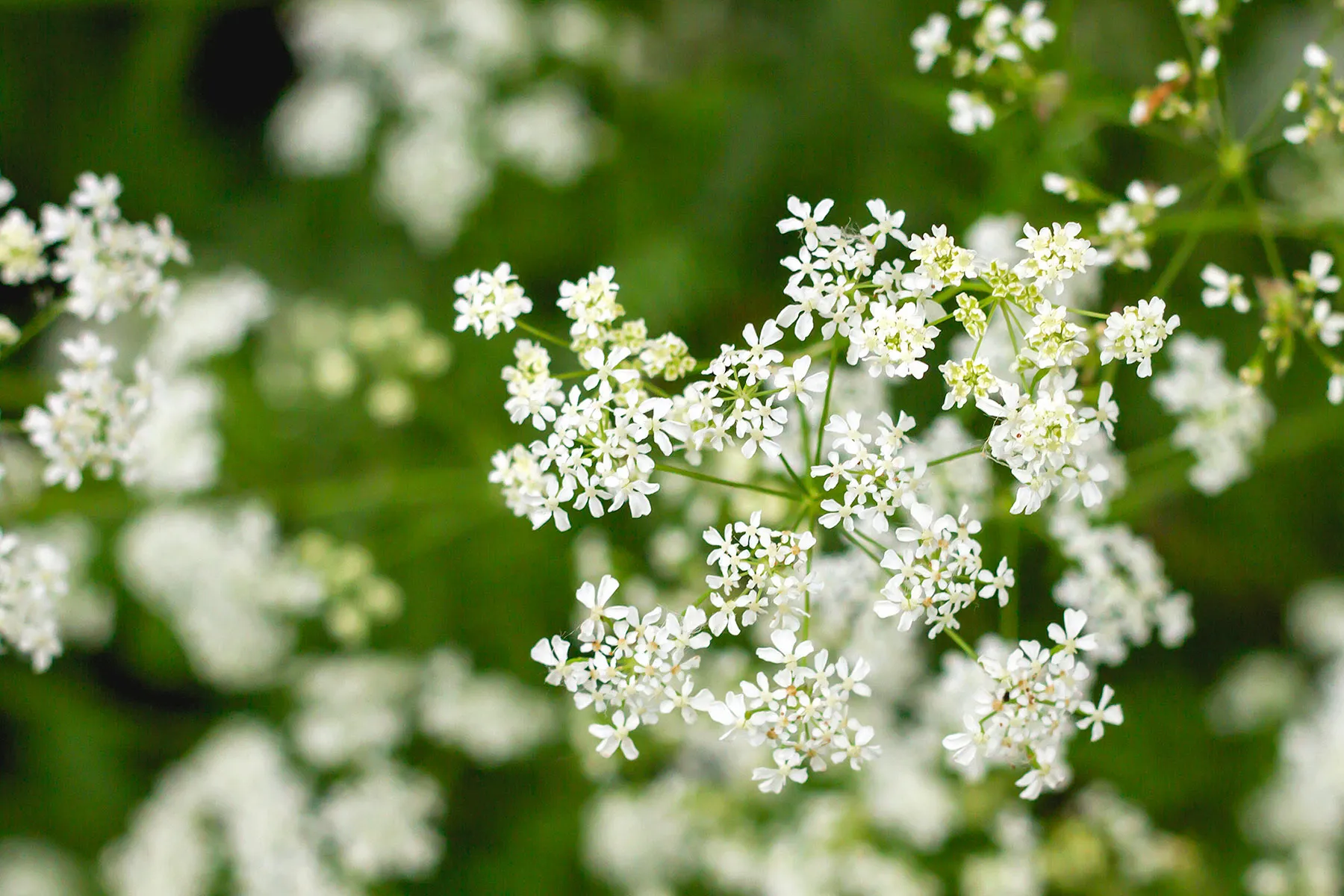
- Flowers: Small white flowers grow in umbrella-shaped clusters called umbels.
- Odor: Crushed leaves and stems may produce a musty, unpleasant smell.
- Growth habit: First-year plants form a low rosette; second-year plants bolt upward and flower.
The purple-blotched, smooth, hollow stem is one of the most helpful warning signs. However, never rely on one feature alone. Many carrot-family plants have white umbrella-like flowers and lacy leaves. Some are edible, some are irritating, and some are extremely toxic. This is the plant kingdom’s version of a bad group project.
Poison Hemlock vs. Queen Anne’s Lace, Wild Parsnip, and Water Hemlock
Poison hemlock is often confused with Queen Anne’s lace, also called wild carrot. Queen Anne’s lace typically has hairy stems, a more delicate growth habit, and often a small dark flower in the center of the white flower cluster. Poison hemlock tends to have smooth stems with purple blotches and can grow much taller.
Wild parsnip is another look-alike from the carrot family, but it usually produces yellow flowers rather than white ones. Its sap can cause severe skin reactions when exposed to sunlight. Giant hogweed, another relative, is much larger and can cause serious skin and eye injuries. Water hemlock is a different plant from poison hemlock, but it is also extremely dangerous and often grows in wet areas.
The takeaway is simple: if you are not absolutely sure, do not touch, harvest, taste, feed, compost, burn, or mow without guidance. Contact a local extension office, state agriculture department, invasive plant program, or qualified land management professional for help with identification and control.
Where Poison Hemlock Grows
Poison hemlock is widely established in the United States. It favors moist soil and disturbed places but can appear in many settings. You may find it along roads, trails, railroad edges, drainage areas, creeks, ditches, fence rows, pastures, field margins, parks, and neglected urban lots. It often becomes more noticeable in late spring and early summer when tall stems and white flowers appear.
Because the plant spreads by seed, management often requires repeated monitoring. Removing the visible plant once does not always solve the problem. Seeds may remain in the soil and sprout later, which is nature’s way of saying, “Surprise, I made backups.”
Prevention: How to Reduce Risk
The best treatment for poison hemlock poisoning is prevention. Around the home, teach children not to taste wild plants, even if they look like carrots or herbs. Keep pets away from suspicious weeds. Avoid foraging from roadsides, ditches, parks, and disturbed areas unless you have expert-level identification skills. If you keep livestock, inspect pastures regularly and watch for toxic weeds before forage becomes limited.
For homeowners, the safest approach is to identify poison hemlock early, avoid bare-skin contact, prevent seed production, and ask local experts about proper removal. Do not burn it. Do not toss it where animals can reach it. Do not assume dried plant material is harmless. When in doubt, call your county extension office or local invasive plant authority.
Outdoor workers, landscapers, road crews, park employees, and volunteers should receive training on poisonous plant identification and exposure prevention. Long sleeves, long pants, gloves, eye protection, and careful tool cleaning can reduce contact risk. Anyone cutting or clearing thick vegetation should know that white umbrella flowers are not automatically innocent.
Diagnosis and Treatment in Medical Settings
Doctors usually diagnose poison hemlock poisoning based on the exposure history, symptoms, and plant identification. There is no quick routine test that magically announces, “Yes, it was poison hemlock.” That is why timing, photos, and details matter. Medical teams may monitor breathing, heart rhythm, oxygen levels, blood pressure, kidney function, and muscle injury markers.
Treatment is supportive. Depending on the situation, care may include oxygen, intravenous fluids, medications for symptoms, observation, and breathing support in severe cases. Early medical care is essential because breathing difficulty can develop rapidly. A person who looks “not too bad” soon after exposure may still need urgent evaluation.
Common Myths About Poison Hemlock
Myth 1: “If it smells like parsley, it is safe.”
Nope. Smell is not a safety test. Poison hemlock leaves can look parsley-like, but the plant is toxic. Your nose is useful, but it is not a certified toxicology lab.
Myth 2: “Only the root is poisonous.”
False. All parts of poison hemlock should be treated as toxic. Seeds, leaves, stems, flowers, roots, and fruit can all pose a risk when ingested.
Myth 3: “Dry poison hemlock is harmless.”
Drying may change plant chemistry over time, but dried material can still be dangerous, especially in hay or plant debris accessible to animals. Do not treat dried poison hemlock as safe.
Myth 4: “I can remove it by burning it.”
Do not burn poison hemlock. Smoke exposure can create respiratory risk, and burning toxic plants is generally a poor disposal strategy.
Myth 5: “Plant apps are enough.”
Plant identification apps can be helpful, but they are not perfect. If the plant may be poison hemlock, confirm with a local extension office, agriculture department, or trained expert before taking action.
Experiences and Real-Life Lessons About Poison Hemlock Poisoning
One of the most useful ways to understand poison hemlock risk is to picture ordinary situations where it quietly causes trouble. Imagine a homeowner cleaning up a back fence line in late spring. The plants are tall, green, and topped with white flowers. They look almost decorative, like wildflowers that wandered in without paying rent. The homeowner trims them with a string trimmer, then notices a musty smell and later wonders whether the “pretty weeds” were safe. That is a classic poison hemlock lesson: do not wait until after cutting to identify unknown plants.
Another common scenario involves foraging. Someone sees lacy leaves and thinks they have found wild carrot or parsley. The plant seems familiar because the carrot family has many edible members. But poison hemlock’s danger comes from that exact resemblance. It does not look like a cartoon skull-and-crossbones plant. It looks green, leafy, and almost useful. Foragers should treat every carrot-family plant with extra caution because small visual differences can separate dinner from an emergency room visit.
Families with children learn a different lesson. Kids explore the world with their hands, pockets, and occasionally mouths. A hollow plant stem can look like a flute, straw, telescope, wand, or sword, depending on the child’s imagination level. Poison hemlock stems should never be used for play. Teaching children “never taste wild plants” is important, but it also helps to teach “do not use unknown stems or leaves as toys.” Nature is wonderful, but not every plant wants to be in the arts-and-crafts program.
Pet owners may notice suspicious weeds only after a dog has been sniffing, chewing, or digging near them. Most dogs are not planning a salad course, but curiosity can still create risk. If a pet may have eaten poison hemlock, the safest move is to contact a veterinarian or animal poison-control resource immediately. Waiting for obvious symptoms can cost valuable time.
Farmers and horse owners often think about poison hemlock in terms of pasture and hay. The plant may appear when pasture conditions are poor, along fence lines, or in neglected areas. Livestock may avoid it when better forage is available, but hungry animals do not always make wise menu choices. Poison hemlock mixed into hay can also be a concern. Regular pasture walks, early weed identification, and local extension guidance are practical habits that can prevent serious animal poisoning.
Gardeners and volunteers doing habitat cleanup face another lesson: removal is not just about pulling a weed. It is about timing, protection, disposal, and follow-up. A patch that flowers and sets seed can return the next year, and the next, like a streaming service that keeps renewing itself. Reporting infestations where recommended, taking photos, and asking local experts can help prevent spread while keeping people safe.
The biggest real-world lesson is humility. Poison hemlock reminds us that “natural” does not always mean “safe,” and “familiar-looking” does not always mean “edible.” A smart response is not panic; it is respect. Learn the warning signs, avoid handling unknown plants, keep children and animals away, and treat suspected ingestion as urgent. That calm, practical approach is far better than botanical bravery.
Conclusion
Poison hemlock poisoning is rare compared with everyday health problems, but it is serious enough to deserve attention. The plant is widespread, highly toxic, and easy to mistake for edible or harmless members of the carrot family. Its toxins can affect the nervous system, weaken muscles, and interfere with breathing. There is no specific antidote, so quick emergency care matters.
The safest plan is straightforward: do not eat unknown wild plants, do not burn poison hemlock, keep children and animals away from suspicious weeds, and seek expert help for identification and control. If exposure may have happened, call 911 or Poison Control at 1-800-222-1222. Poison hemlock may have ancient history behind it, but your response should be modern, calm, and fast.