Peel and stick wallpaper is the home-decor version of putting on a fantastic jacket: it can change the whole mood without asking you to renovate your life, hire three contractors, or explain to your landlord why the dining room suddenly looks like a botanical greenhouse. Removable wallpaper has become a favorite for renters, busy homeowners, design lovers, dorm dwellers, and anyone who wants a bold room refresh without the drama of paste, buckets, and long-term commitment.
The best part? Peel and stick wallpaper is no longer limited to basic stripes or suspiciously shiny faux brick. Today’s options include elegant grasscloth looks, charming florals, moody murals, modern geometrics, vintage toile, playful kids’ prints, marble effects, tropical leaves, subtle linen textures, and designs that look far more expensive than they are. Used thoughtfully, self-adhesive wallpaper can turn a plain wall, tired shelf, boring staircase, or forgotten nook into a design moment that says, “Yes, I have taste,” even if your laundry chair says otherwise.
Below are inspiring peel and stick wallpaper ideas, practical design tips, and real-world experience to help you choose the right pattern, apply it smoothly, and avoid the tiny heartbreak of bubbles, crooked seams, and regret.
Why Peel and Stick Wallpaper Is So Popular
Traditional wallpaper can be gorgeous, but it often comes with paste, professional installation, long drying time, and a removal process that makes people question their life choices. Peel and stick wallpaper offers a more flexible alternative. You simply peel off the backing, apply the adhesive side to a clean surface, smooth it down, and reposition carefully as needed.
For renters, it is especially appealing because many removable wallpaper products are designed to come off without permanent damage when installed and removed correctly. For homeowners, it is a low-pressure way to test color, pattern, and personality before committing to a full room renovation. For impatient decoratorsno judgment, we are among friendsit delivers visual impact fast.
Best Peel and Stick Wallpaper Ideas for Every Room
The smartest peel and stick wallpaper ideas are not always the biggest ones. Sometimes a small accent creates more style than covering every surface like a Victorian mansion with Wi-Fi. The key is choosing the right location, scale, and pattern for your space.
1. Create a Statement Accent Wall
An accent wall is the classic peel and stick wallpaper project for a reason. It adds drama without overwhelming the room or draining your weekend. Try a large floral behind a bed, a moody botanical print behind a sofa, a geometric pattern in a home office, or a soft watercolor mural in a reading corner.
For small rooms, choose patterns with breathing room. Oversized prints can actually make a room feel more intentional, while tiny busy patterns may create visual clutter. In larger spaces, darker colors or high-contrast designs can anchor the room and make furniture look more connected.
2. Dress Up an Entryway
Your entryway is the opening scene of your home. It deserves better than a pile of shoes and one mysterious umbrella. Peel and stick wallpaper can give a foyer or hallway personality in a single afternoon. A graphic print creates energy, while faux grasscloth adds texture and polish.
Pair the wallpaper with a slim console table, mirror, hooks, or a small bench. This turns a pass-through area into a styled space, even if the dog leash is still doing its best to ruin the photo.
3. Add Charm to a Powder Room
Powder rooms are perfect for bold wallpaper because they are small, separate, and naturally suited to a little drama. Try palm leaves, vintage florals, abstract waves, chinoiserie-inspired prints, or dark botanical patterns. Since guests spend only a short time there, you can be braver than you might be in a living room.
One caution: peel and stick wallpaper generally performs best in areas with controlled moisture. A powder room is usually safer than a full bathroom with daily steam from showers. Always check the manufacturer’s instructions before installing removable wallpaper in humid spaces.
4. Turn the Ceiling into the “Fifth Wall”
The ceiling is often ignored, which is rude, considering it is always there. Peel and stick wallpaper on a ceiling can make a bedroom, nursery, dining nook, or hallway feel custom and creative. Star patterns, clouds, subtle metallics, or soft botanicals work beautifully overhead.
This project takes patience and preferably two people. Gravity is not your assistant. Use a smoothing tool, work slowly, and avoid overly stretchy material that may pull out of alignment.
5. Make Built-In Shelves Look Custom
Wallpapering the back of bookcases, cabinets, or open shelving is one of the easiest ways to add color without covering a whole wall. It creates depth behind books, ceramics, baskets, and framed photos. A small-scale pattern is usually best here because shelves already contain many visual details.
For a polished look, choose wallpaper that repeats one color already found in the room. For example, a blue-and-cream print can connect navy pillows, white walls, and brass accents without trying too hard.
6. Refresh Furniture with Removable Wallpaper
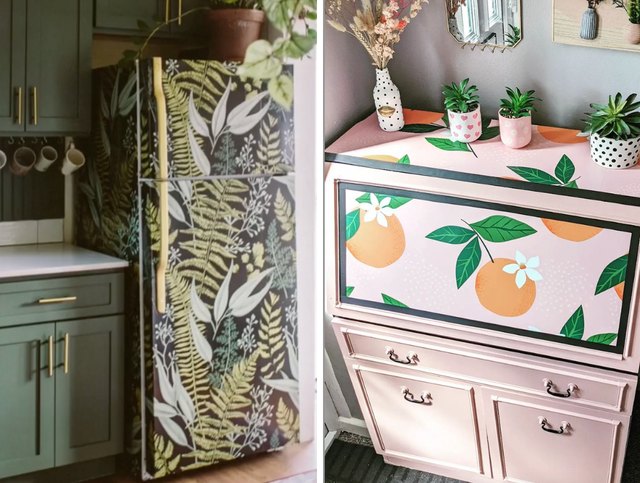
Peel and stick wallpaper can rescue furniture that is technically functional but emotionally boring. Use it on drawer fronts, cabinet doors, tabletops under glass, the sides of a dresser, or the back panel of a desk. This is a smart way to use leftover wallpaper from a larger project.
Try faux cane, linen texture, marble, terrazzo, or vintage floral patterns. Just make sure the surface is clean, smooth, and dry. If the furniture has heavy texture, peeling veneer, or glossy residue, the wallpaper may not stick well.
7. Upgrade a Rental Kitchen Backsplash
A removable wallpaper backsplash can brighten a rental kitchen without replacing tile. Faux tile, marble, terrazzo, and patterned designs work well behind counters where water exposure is limited. For areas near sinks or stoves, choose washable, heat-conscious products and follow safety guidance from the brand.
Peel and stick wallpaper is not the same as ceramic tile, so treat it kindly. Wipe gently, avoid soaking it, and do not expect it to survive like stone in a cooking zone that regularly resembles a pasta-sauce weather event.
8. Give a Laundry Room Some Personality
Laundry rooms are often where design dreams go to fold towels. But a cheerful peel and stick wallpaper can make the space feel less like a chore cave. Consider stripes, lemons, gingham, soft florals, or playful patterns that make sorting socks slightly less tragic.
Because laundry rooms may have moderate humidity, choose a product suitable for the area and apply it to a clean, dry wall. A wallpapered wall behind open shelving or above a folding counter can make the room feel intentional instead of purely practical.
9. Add a Headboard Effect Without Buying a Headboard
If your bedroom needs a focal point, use peel and stick wallpaper behind the bed to create a faux headboard effect. Frame the wallpaper in a rectangle, arch, or full-width panel. This works especially well in apartments, guest rooms, and small bedrooms where bulky furniture would crowd the space.
Patterns that work beautifully include linen textures, soft murals, Art Deco fans, botanical vines, and simple geometric shapes. Add two wall sconces or matching bedside lamps, and suddenly the bed looks styled instead of simply “placed there.”
10. Use Wallpaper Inside Closets and Pantry Spaces
Closets, pantries, and linen cabinets are wonderful places to have fun with pattern. You see the design when you open the door, but it does not have to coordinate perfectly with the whole house. Try a cheerful print inside a coat closet, a cafe-style stripe in a pantry, or a delicate floral in a linen cabinet.
This is also a beginner-friendly project because small imperfections are less noticeable. The closet will not judge your first seam. It has seen your winter scarves.
How to Choose the Right Peel and Stick Wallpaper
Choosing removable wallpaper is not just about falling in love with a pattern online at midnight. Although, yes, that is how many design stories begin. The right choice depends on room size, lighting, wall condition, color palette, and how long you plan to keep it up.
Think About Scale
Large-scale patterns feel bold and modern. They are great for accent walls, bedrooms, dining rooms, and powder rooms. Small-scale prints feel cozy and detailed, making them useful for shelves, closets, furniture, and narrow walls.
Check the Finish
A matte finish usually looks more elevated than a shiny finish. Glossy wallpaper can sometimes look temporary, especially in bright light. Textured or fabric-like finishes, such as faux grasscloth or linen effects, can make peel and stick wallpaper feel more expensive.
Order a Sample First
Always order a sample if possible. Colors shift depending on natural light, artificial lighting, wall color, and surrounding furniture. A print that looks calm online may arrive with the visual volume of a marching band. Tape the sample to your wall and observe it morning, afternoon, and evening.
Match the Mood of the Room
For bedrooms, choose soothing colors or patterns with movement rather than chaos. For offices, try structured designs that energize without distracting. For kids’ rooms, removable wallpaper is perfect because tastes change faster than snack preferences. For living rooms, choose a pattern that complements the furniture rather than fighting it for custody of everyone’s attention.
Installation Tips for a Smooth, Professional Look
The secret to peel and stick wallpaper success is preparation. The second secret is patience. The third secret is not starting at 11 p.m. while saying, “This will be quick.” Famous last words.
Prepare the Wall Properly
Peel and stick wallpaper works best on smooth, clean, dry surfaces. Dust, grease, old adhesive, and textured paint can prevent proper adhesion. Wipe walls with a mild cleaner, let them dry completely, and repair holes or rough spots before applying wallpaper.
Avoid Fresh Paint
Freshly painted walls need time to cure before wallpaper is applied. If the paint is too new, removable wallpaper may pull it up during removal. Waiting several weeks is often recommended, but always check the wallpaper brand’s instructions.
Use a Level, Not Your Optimism
Walls, ceilings, and corners are often not perfectly straight, even in homes that look innocent. Draw a vertical guide line using a level before applying the first panel. If the first strip is crooked, every strip after it will join the rebellion.
Peel Slowly and Smooth as You Go
Do not remove the entire backing at once. Peel a small section, position the top, then slowly pull the backing down while smoothing the wallpaper with a plastic smoother or soft cloth. Work from the center outward to push away air bubbles.
Trim Carefully
Use a sharp craft knife for edges around baseboards, outlets, window trim, and ceilings. A dull blade can tear the paper. Turn off power before working around outlet covers, and remove covers for a cleaner finish.
Common Mistakes to Avoid
Peel and stick wallpaper is friendly, but it is not magic. Avoid these common mistakes if you want your project to look polished.
Installing on Heavy Texture
Orange peel, knockdown, brick, rough plaster, and bumpy walls can cause poor adhesion and visible lumps. Some products may work on lightly textured surfaces, but smooth walls usually produce the best result.
Choosing a Pattern Without Measuring
Pattern repeat matters. If you forget to account for matching the design from panel to panel, you may run short. Measure the wall carefully and buy extra. Having one more roll is much better than discovering your accent wall has a dramatic missing stripe.
Ignoring Room Conditions
Heat, humidity, and moisture can affect adhesive. Full bathrooms, steamy laundry areas, and walls near heat sources may not be ideal unless the product is made for those conditions.
Ripping It Off Too Fast
Removal should be slow and gentle. Pulling too quickly can damage paint or drywall. Applying low heat with a hair dryer can help soften adhesive, especially at corners and seams.
Peel and Stick Wallpaper Experiences: What Real Projects Teach You
After working through enough peel and stick wallpaper projects, you learn that the product itself is only half the story. The other half is the wall, the room, the lighting, and your willingness to slow down when the panel starts drifting sideways like it has weekend plans.
One of the most useful lessons is that small projects build confidence. A full living room wall can feel intimidating for a beginner, but lining the back of a bookshelf or covering a closet wall is manageable. These mini projects teach you how the material behaves, how much pressure to apply, and how to correct bubbles without panic. Once you understand the rhythm, a bigger wall feels much less scary.
Another experience-based tip: darker patterns are more forgiving than pale patterns in high-traffic areas. A soft white wallpaper with tiny details may look beautiful in photos, but it can show scuffs, fingerprints, and uneven seams more easily. In entryways, mudrooms, kids’ spaces, or behind dining benches, medium-tone prints, textured designs, or patterns with movement tend to be more practical.
Lighting also changes everything. A wallpaper that looks subtle in a sample book may appear much bolder under bright afternoon sun. On the other hand, a moody print may look rich and elegant in a room with warm lamps. Before covering a wall, tape the sample up for a few days. Walk past it. Ignore it. Notice it again. If you still like it after seeing it during breakfast, homework, dinner, and your late-night snack investigation, it is probably a good choice.
Seams deserve special attention. Many people focus on the center of the panel, but the edges decide whether the final result looks professional. Take time to line up the pattern repeat, smooth from the center toward the seam, and avoid stretching the wallpaper. Stretching may seem helpful in the moment, but it can cause panels to shrink back later, leaving tiny gaps that will haunt you every time you turn on the lamp.
It is also wise to choose patterns based on your furniture, not just your mood. A dramatic floral may be stunning, but if your sofa, rug, curtains, and art are already competing like reality-show contestants, the room may feel chaotic. Peel and stick wallpaper works best when it joins the design conversation instead of shouting over everyone. Pull one or two colors from your existing decor and choose a wallpaper that repeats them.
Finally, remember that removable wallpaper is supposed to be fun. It is not a legal contract. It is a design experiment with adhesive backing. Start with a thoughtful plan, prepare the surface, order samples, and give yourself permission to try something with personality. A powder room can be tropical. A closet can have stripes. A laundry room can wear lemons. Your home does not have to be beige unless beige truly makes your heart sing.
Conclusion
Peel and stick wallpaper is one of the easiest ways to refresh a room without major renovation. Whether you use it for an accent wall, ceiling, backsplash, bookcase, closet, furniture makeover, or tiny hallway that has been quietly begging for attention, removable wallpaper can add color, texture, and personality with less commitment than traditional wallpaper.
The best results come from choosing the right pattern, preparing the surface carefully, measuring accurately, and installing slowly. Think of peel and stick wallpaper as a design shortcut, not a careless shortcut. When done well, it can look stylish, custom, and surprisingly polished. When done in a rush on a dusty textured wall, it may become a cautionary tale with bubbles.
So order samples, test your lighting, choose a pattern that makes the room feel more like you, and start with a project that matches your confidence level. Your walls are ready for a glow-up. They have been standing there patiently for years.