Choosing a mandoline slicer sounds simple until you discover there are handheld models, V-blade models, French-style stainless steel workhorses, Japanese slicers, “safe slice” chute designs, julienne attachments, waffle blades, thickness dials, food holders, and enough sharp edges to make a carrot rethink its life choices. That is where Mandoline Select comes in: not just as a phrase, but as a smart way to pick the right kitchen mandoline for the way you actually cook.
A good mandoline slicer can turn potatoes into paper-thin chips, cucumbers into spa-worthy rounds, cabbage into slaw-ready ribbons, and zucchini into elegant slices so even a Tuesday dinner looks like it hired a food stylist. A bad one, on the other hand, lives in the back of a drawer beside the mystery whisk and the lemon zester you bought during your “homemade everything” era.
This guide explains how to select a mandoline slicer that is safe, practical, sharp, easy to clean, and worth keeping on the counter. We will cover blade styles, safety features, thickness settings, best uses, cleaning habits, and real-world experiences so you can choose confidently instead of panic-buying the first shiny vegetable slicer with five attachments and the emotional energy of a small hardware store.
Note: A mandoline is a precision kitchen tool with very sharp blades. Always follow the manufacturer’s instructions, use the food holder or pusher, and consider cut-resistant gloves for extra protection.
What Is a Mandoline Slicer?
A mandoline slicer is a kitchen tool designed to cut fruits and vegetables into uniform slices. Unlike a knife, which depends heavily on your hand skills, mood, and caffeine level, a mandoline uses a fixed blade and a flat platform to create consistent cuts. The result is faster prep and more even cooking.
Uniform slices matter more than many home cooks realize. Potatoes cut to the same thickness bake evenly in gratins. Cucumbers shaved thinly absorb dressing better. Onions sliced consistently caramelize more predictably. Apples sliced evenly dry better for chips or layer neatly into tarts. In other words, a mandoline slicer does not just make food look pretty; it helps food cook and taste better.
Why “Mandoline Select” Matters Before You Buy
The best mandoline slicer is not always the most expensive one. It is the one that matches your cooking habits. A professional chef slicing cases of vegetables may love a minimalist Japanese mandoline with a razor-sharp blade. A busy home cook may prefer a V-blade mandoline with clear thickness settings and onboard blade storage. A beginner may feel more comfortable with a safe mandoline slicer that uses a chute and pusher to keep hands away from the blade.
Before choosing, ask yourself a few honest kitchen questions. Do you mostly slice potatoes and cucumbers? Do you want julienne cuts for carrots and zucchini? Are you comfortable handling removable blades? Do you have limited storage? Do you cook for one person, a family, or a crowd? Your answers will point you toward the right model faster than a flashy product photo ever could.
Main Types of Mandoline Slicers
Handheld Mandoline Slicers
Handheld mandolines are compact, lightweight, and usually affordable. They are excellent for quick jobs such as slicing radishes, cucumbers, onions, apples, and small potatoes. Many have a simple thickness adjustment and a nonslip base or hook that rests over a bowl.
The advantage is convenience. You can pull one out, slice a cucumber directly over a salad bowl, rinse it, and move on with your life. The downside is that smaller handheld slicers may feel less stable with large or dense produce. They also tend to offer fewer cutting styles than full-size models.
V-Blade Mandoline Slicers
A V-blade mandoline uses two angled blades that meet in a V shape. This design helps guide food toward the cutting edge and can make slicing smoother, especially with soft-skinned produce like tomatoes or firm vegetables like potatoes. Many popular home mandolines use this design because it balances versatility, stability, and ease of use.
V-blade mandolines often include multiple thickness settings, julienne blades, crinkle blades, and food holders. They are a strong choice for home cooks who want one tool for salads, fries, gratins, slaws, pickles, and decorative cuts.
Japanese Mandoline Slicers
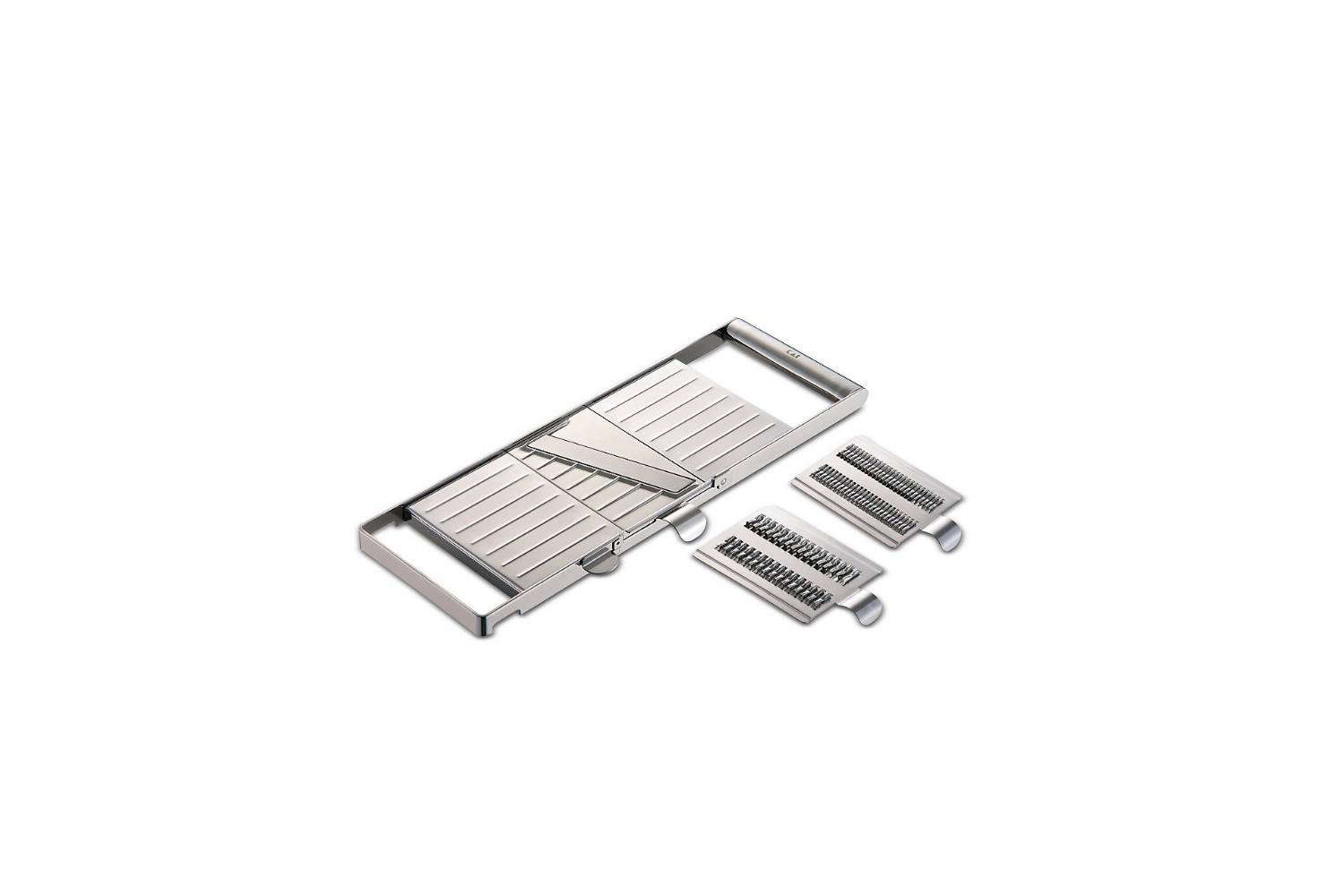
Japanese mandoline slicers are known for sharp blades, lightweight bodies, and precise slicing. They are often loved by chefs because they are fast, simple, and highly effective. Many models use an adjustable screw or knob to change slice thickness and may include interchangeable julienne blades.
These slicers are excellent for paper-thin vegetables, shaved fennel, daikon, carrots, zucchini, and garnishes. However, they can feel less beginner-friendly because the design is often minimal, and the blade is extremely sharp. This is not a tool for distracted cooking while telling a dramatic story about your day.
French-Style Mandolines
French-style mandolines are often larger, heavier, and more professional in appearance. They may use a straight diagonal blade and include folding legs, metal construction, and multiple cutting options. These models can be durable and versatile, but they may also be bulky and more complicated to clean or adjust.
If you prepare large quantities of vegetables or enjoy classic culinary tools, a French-style mandoline can be appealing. If your kitchen drawer already struggles to close because of three spatulas, a melon baller, and something you cannot identify, a smaller model may be more realistic.
Safe Slice Mandolines
Safe slice mandolines use a chute, pusher, or enclosed design to keep hands away from the blade during slicing. Many models also include a container to catch the cut food. These are especially attractive for beginners, families, and anyone who finds traditional mandolines intimidating.
The trade-off is that chute-style slicers may require ingredients to be cut into smaller pieces before slicing. They can also have more parts to clean. Still, for many home cooks, the extra safety and confidence are worth it.
Key Features to Look For in a Mandoline Select Guide
Adjustable Thickness Settings
Thickness control is one of the most important features. A good adjustable mandoline slicer should let you move from very thin slices to thicker cuts without confusion. Thin slices are great for chips, salads, pickles, and garnishes. Medium slices work well for gratins, sautés, and roasted vegetables. Thicker settings are useful for fries, vegetable bakes, and sturdy cuts that need more bite.
Look for clear markings. A dial, knob, or lever should feel secure and easy to understand. If changing thickness feels like solving a tiny kitchen escape room, you will probably avoid using the tool.
Blade Sharpness and Blade Shape
A sharp blade is safer and more effective than a dull one because it slices cleanly with less pressure. Stainless steel blades are common and durable. Ceramic blades can stay sharp for a long time but may be more brittle. V-blades are versatile. Straight blades can be excellent for firm produce. Diagonal blades often create smooth cutting action.
For most home cooks, a sharp stainless steel V-blade mandoline offers the best mix of performance and ease. For experienced cooks who want ultra-thin slices, a Japanese-style slicer may be the better pick.
Safety Guard, Food Holder, and Pusher
Safety features are not decorative extras. They are the difference between confident slicing and holding a potato like it owes you money. A food holder should grip the ingredient securely and keep your fingers away from the blade. A pusher should move produce smoothly through a chute. Cut-resistant gloves add another layer of protection, especially when slicing small or slippery ingredients.
The safest mandoline slicer is the one you will actually use correctly. If the guard is awkward, users tend to abandon it. That is why comfort and grip matter as much as the presence of a safety accessory.
Stability on the Counter
A mandoline should stay put. Look for nonslip feet, a sturdy stand, a bowl hook, or suction cups. If the slicer wobbles, slicing becomes harder and less safe. Full-size models with fold-out legs can be stable, but they should lock firmly. Handheld models should have a comfortable handle and a base that can rest securely against a board or bowl.
Cutting Options
Some mandolines only slice. Others include julienne, matchstick, crinkle, waffle, and dice options. More options sound exciting, but only if you will use them. A simple slicer may be perfect for salads and chips. A multi-function vegetable slicer may be better if you make stir-fries, fries, slaws, and decorative platters.
A useful rule: choose enough features for your cooking style, not enough features to impress your kitchen cabinet.
Cleaning and Storage
Mandolines should be cleaned carefully because food can cling near the blade. Some bodies are dishwasher-safe, but blades often last longer when hand-washed and dried immediately. A cleaning brush is helpful for removing bits of carrot, potato starch, or onion without putting fingers near sharp edges.
Storage matters too. Models with blade guards, onboard blade storage, folding legs, and locking mechanisms are easier to keep safely. Loose blades rolling around in a drawer are not a personality trait; they are a problem.
What Can You Make With a Mandoline Slicer?
A mandoline slicer shines in recipes where consistency matters. For potato gratin, it creates even slices that layer neatly and cook at the same rate. For homemade chips, it cuts potatoes or sweet potatoes thinly enough to crisp. For coleslaw, it shreds cabbage quickly and evenly. For cucumber salad, it produces thin rounds that soak up vinegar, herbs, and seasoning beautifully.
You can also use a mandoline for shaved Brussels sprouts, onion rings, apple tarts, zucchini ribbons, beet chips, carrot matchsticks, fennel salad, radish garnishes, eggplant slices, and quick pickles. Once you start using it, you may begin looking at vegetables differently. A zucchini is no longer just a zucchini; it is a stack of possibilities wearing a green jacket.
How to Use a Mandoline Safely
Start by placing the mandoline on a stable, dry surface. Set the thickness before you begin slicing. Attach the food holder or place the ingredient in the chute, depending on your model. Use steady, even pressure and do not rush. When the ingredient becomes too small to hold securely, stop slicing. The tiny leftover piece is not worth a dramatic kitchen incident.
For round produce like potatoes, apples, onions, and beets, cut a flat side first so the food sits securely. For long vegetables like zucchini or cucumbers, trim the ends and slice with smooth strokes. For slippery foods, use the guard from the beginning, not only when things start feeling risky.
Clean the mandoline immediately after use, especially after starchy vegetables. Use a brush or rinse from the back side of the blade when possible. Dry the blade before storing to reduce spotting and preserve sharpness.
Common Mistakes When Choosing a Mandoline
Buying Too Many Features
A mandoline with thirty cutting options may sound wonderful, but more parts can mean more cleaning, more storage, and more confusion. If you only want thin cucumber slices and potato gratin, a simple adjustable mandoline may be better than a gadget with the emotional complexity of a spaceship dashboard.
Ignoring the Food Holder
Many shoppers focus on blade sharpness but ignore the guard. That is a mistake. A secure food holder makes slicing safer and more comfortable. If the holder feels flimsy or does not grip well, the mandoline may be less pleasant to use.
Choosing Size Without Thinking About Produce
A narrow slicer may work for cucumbers and carrots but struggle with large potatoes, cabbage wedges, eggplants, or wide onions. If you often cook with big vegetables, choose a wider platform. If you mostly prepare small salads, a compact handheld slicer may be enough.
Forgetting Storage Space
Large mandolines can be powerful, but they need room. If storage is limited, look for folding legs, compact design, blade guards, and onboard storage. A tool that is hard to store becomes a tool that is hard to love.
Best Mandoline Select Recommendations by Cooking Style
For Beginners
Choose a safe mandoline slicer with a chute, pusher, nonslip base, and clear thickness settings. Beginners benefit from designs that keep hands away from exposed blades. A container that catches slices is also helpful because it keeps the workspace tidy.
For Everyday Home Cooking
A V-blade adjustable mandoline slicer is a practical all-around choice. Look for four to seven thickness settings, a reliable food holder, nonslip feet, and interchangeable blades for julienne or crinkle cuts. This type works well for potatoes, cucumbers, onions, carrots, apples, and zucchini.
For Small Kitchens
A handheld mandoline or compact adjustable slicer is ideal. It should have a comfortable handle, a stable base, and simple thickness control. You may give up some cutting options, but you gain speed, convenience, and easy storage.
For Serious Cooks
A Japanese mandoline or sturdy professional model offers precision and speed. These are great for shaved vegetables, fine garnishes, restaurant-style plating, and high-volume prep. Pair one with cut-resistant gloves and a careful cleaning routine.
Real-World Buying Checklist
Before buying, check the following: Does it have adjustable thickness? Does the food holder grip securely? Is the blade sharp and replaceable? Are the feet nonslip? Are the settings easy to understand? Can you clean it without touching the blade? Does it store safely? Is it wide enough for the vegetables you use most often?
If the answer is yes to most of those questions, you are probably looking at a mandoline slicer that deserves a spot in your kitchen. If the product looks impressive but makes you nervous before you even open the box, keep looking. Confidence matters.
Experiences Related to Mandoline Select
The first time many people use a mandoline, they have the same reaction: “Where has this been all my life?” The second reaction is usually: “Wow, that blade is not playing around.” That mix of excitement and respect is exactly how a mandoline should be treated. It is not scary when used properly, but it does demand attention.
In everyday cooking, the biggest benefit is speed. Making a cucumber salad by knife can be relaxing if you have time, good lighting, and a podcast. But when dinner is late and everyone is circling the kitchen like friendly wolves, a mandoline turns five minutes of chopping into thirty seconds of slicing. The pieces look clean, the texture is consistent, and the salad feels more intentional.
Potatoes are where the mandoline really earns applause. For scalloped potatoes or gratin, even slices are essential. If some pieces are thick and others are thin, the dish cooks unevenly. With a mandoline, the layers stack neatly, the sauce spreads better, and the finished dish has that creamy, fork-tender texture people pretend they casually achieved. No one needs to know the slicer did the heavy lifting.
Another excellent experience is using a mandoline for onions. Thin onions cook faster and blend more smoothly into sandwiches, burgers, salads, and stir-fries. A sharp slicer creates clean cuts instead of crushed edges, which helps the onion keep better texture. The only downside is that onions still make you cry, because apparently kitchen tools can do many things but cannot heal emotional vegetable drama.
A mandoline also changes how you think about healthy cooking. Vegetables become easier to prepare, which means they appear more often. Shaved fennel with lemon, thin carrots for slaw, zucchini ribbons for quick sautés, radishes for tacos, and cabbage for crunchy bowls suddenly feel simple. When prep is fast, cooking fresh food feels less like a project and more like a normal part of the day.
The most important lesson from real use is this: the guard is not optional. Many cooks start confidently and think they will use the holder only near the end. That is a bad habit. Use the food holder early. Wear a cut-resistant glove if you have one. Stop before the last tiny piece. A small leftover nub of potato is not a personal failure; it is the price of keeping dinner peaceful.
Cleaning habits also matter. The best routine is to rinse the mandoline right after use, before starch or vegetable juices dry. Use a brush, clean from the safer side of the blade, and dry everything before storage. If your slicer has removable blades, store them in their case or onboard compartment. A clean, safely stored mandoline is more likely to be used again.
After several uses, most home cooks discover their favorite setting. Maybe it is ultra-thin for chips, medium for cucumbers, or thicker for roasted vegetables. That familiarity is where the tool becomes truly useful. You stop treating it like a gadget and start treating it like a reliable prep partner. The best Mandoline Select choice is not the fanciest slicer on the shelf; it is the one that makes your regular meals faster, cleaner, and a little more fun.
Conclusion
A mandoline slicer is one of the most useful kitchen tools for anyone who loves crisp salads, even potato layers, quick pickles, homemade chips, beautiful garnishes, or faster vegetable prep. The right Mandoline Select decision depends on your cooking style, comfort level, storage space, and safety needs.
For most home cooks, an adjustable V-blade mandoline offers the best balance of versatility, performance, and ease. Beginners may prefer a safe slice model with a chute and pusher. Serious cooks may enjoy the precision of a Japanese mandoline. Small kitchens may benefit from a compact handheld slicer. Whatever you choose, prioritize sharp blades, stable design, clear thickness settings, and dependable safety features.
The mandoline is not just a shortcut. It is a consistency machine. It makes vegetables easier to prep, recipes easier to repeat, and meals look more polished with less effort. Treat it with respect, use the guard, clean it carefully, and it may become one of the few kitchen gadgets that actually earns its drawer space.