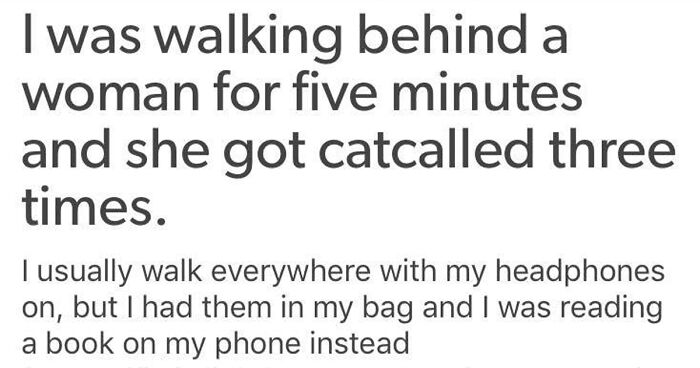
A man walking behind a woman for only a few minutes saw something many women describe as painfully ordinary: she was catcalled again and again before she could even get where she was going. The moment could have disappeared into the usual city soundtrack of engines, footsteps, and people pretending not to notice. Instead, Rafi D’Angelo, a Harlem-based writer and commentator behind “So Let’s Talk About,” posted his reaction onlineand the internet did what the internet does best: turned one small sidewalk moment into a giant public debate.
The viral story struck a nerve because it was simple. No dramatic setup. No courtroom speech. No celebrity scandal. Just a man noticing what women have been saying for years: catcalling is not charming, not romantic, and not a quirky urban greeting card from a stranger with poor volume control. It is unwanted attention, and it changes how people move through public spaces.
At the center of the conversation was a question that still matters: what should men do when they witness street harassment? Should they confront the harasser? Should they check on the person being targeted? Should they stay quiet to avoid escalating the situation? The answer is not always one-size-fits-all, but D’Angelo’s post opened the door to a more useful conversation than the old “take it as a compliment” routine. Spoiler: nobody needs a compliment that makes them calculate the nearest exit.
What Happened In The Viral Catcalling Story?
According to the viral account, D’Angelo was walking in the same direction as a woman when he heard her being catcalled several times in roughly five minutes. The speed of it was the part that made people pause. Three incidents in five minutes is not “one awkward guy having a bad flirting strategy.” It is a pattern. It shows how repetitive and exhausting public harassment can be.
His main takeaway was directed at men: just let women go where they are going. That sentence sounds almost too basic, like “do not put cereal in your gas tank,” yet the fact that it went viral proves how badly the message is still needed. Many women responded with recognition, saying the situation sounded familiar. Some men responded with surprise. Others debated whether a bystander should step in immediately or avoid making things worse.
D’Angelo later explained that bystander action requires awareness of the situation. Calling out friends is different from confronting a stranger who may already be acting aggressively. With friends, there is a relationship and a chance of being heard. With strangers, direct confrontation can sometimes escalate tension. That nuance made the post more than a viral rant. It became a practical discussion about safety, responsibility, and social pressure.
What Is Catcalling, Really?
Catcalling usually refers to unwanted public remarks, whistles, gestures, or comments aimed at someone, often with sexual or gender-based intent. It can happen on sidewalks, in parking lots, on public transit, outside schools, near workplaces, at parks, and yes, even while someone is just trying to buy coffee and emotionally prepare for Monday.
The problem is not only the words. It is the power dynamic behind them. A catcall forces someone to react, even if that reaction is internal. The person targeted may ignore it, speed up, change routes, call a friend, pretend to text, cross the street, or scan the environment for danger. That mental checklist is invisible to many observers, but it is very real to the person experiencing it.
This is why catcalling is not the same as a polite compliment. A compliment respects boundaries. Catcalling demands attention. A compliment can be declined without fear. Catcalling often comes with uncertainty: Will he follow me? Will he get angry if I ignore him? Is anyone nearby paying attention? That difference is the whole plot.
Why The Story Went Viral
1. It Confirmed What Many Women Already Know
For many women, the viral post did not reveal a new problem. It simply showed a man noticing it. That matters because women’s accounts of street harassment are often minimized. They are told they are overreacting, misreading intentions, or failing to appreciate “attention.” D’Angelo’s reaction worked like a public receipt: here is someone outside the experience saying, yes, this happens, and yes, it is unacceptable.
2. It Made Men Part Of The Conversation
Street harassment is often framed as a women’s issue because women are frequently the targets. But preventing it cannot be women’s responsibility alone. Men are often present when harassment happens. Men are also more likely to be listened to by other men who dismiss women’s objections. That is unfair, but it is also reality. When men use that social access responsibly, they can help change the culture around public harassment.
3. It Raised The Bystander Question
The post also went viral because people disagreed about what D’Angelo should have done in the moment. Some argued that silence protects harassers. Others said direct confrontation can put the targeted person at greater risk. Both concerns are valid. The better answer is not “always confront” or “never intervene.” The better answer is to intervene thoughtfully.
Why Catcalling Is Not A Compliment
One of the most persistent myths about catcalling is that it should be flattering. This argument usually comes from people who imagine street harassment as a single movie-style moment: someone says “you look nice,” everyone smiles, birds sing, and the credits roll. Real life is not that tidy.
In real life, the person being targeted did not ask to be evaluated. They may be commuting, exercising, shopping, walking to class, heading home from work, or simply existing in public. Catcalling turns an ordinary moment into a performance where the target is expected to manage someone else’s reaction. Ignoring the comment may be seen as rude. Responding may invite more attention. Objecting may escalate the situation. That is not a compliment; that is a trap with sound effects.
The emotional impact can include anxiety, anger, embarrassment, and hypervigilance. Some people change what they wear, where they walk, what time they travel, or whether they go out alone. The real cost is not measured only in a few seconds of discomfort. It is measured in reduced freedom.
The Role Of Social Media In Making Catcalling Visible
Social media has become one of the main places where street harassment stories gain public attention. A post can travel quickly because it gives people language for something they may have experienced but never fully explained. The same platforms that spread awareness can also bring backlash, dismissal, and harassment. That is the internet: half public square, half raccoon in a keyboard factory.
Still, viral stories can matter. They turn private frustration into public conversation. They help people compare experiences. They pressure communities to define unacceptable behavior more clearly. They also reveal how many people still misunderstand the issue. When a story about catcalling goes viral, the comment section often becomes a messy classroom where some people are learning empathy and others are loudly failing the group project.
What Bystanders Can Do When They Witness Catcalling
The safest response depends on the situation, the environment, and what the person being targeted appears to need. A bystander should not center themselves as the hero. The goal is not to win a sidewalk debate. The goal is to reduce harm.
Use Distraction
Distraction can be useful because it interrupts the harassment without directly challenging the harasser. A bystander might ask the targeted person for directions, pretend to recognize them, walk nearby, or create a harmless interruption. The point is to shift attention and give the person a chance to move away.
Delegate Help
If the situation feels unsafe, a bystander can ask others nearby to help. In a store, that might mean alerting an employee. On public transit, it might mean notifying transit staff. At an event, it might mean contacting security. Delegation is especially helpful when direct confrontation could escalate the situation.
Check In Afterward
Sometimes the best support happens after the moment passes. A simple, calm check-in can help: “Are you okay?” or “Do you want me to walk nearby for a minute?” The key is to give the person control. Do not demand details. Do not insist on action. Do not turn their bad moment into your TED Talk.
Call Out Friends
If your friend catcalls someone, that is the moment to speak up. You already have social access. You can say, “That is not okay,” or “Leave her alone.” Calling out friends may feel awkward, but awkwardness is not an emergency. A person being harassed should not have to absorb the discomfort so everyone else can keep pretending nothing happened.
Why Men’s Reactions Matter
D’Angelo’s post went viral partly because it showed a man processing the issue in real time. Men’s reactions matter not because men deserve applause for noticing basic respect, but because male bystanders can influence other men. When men say, “This is not normal,” it can interrupt the peer approval that sometimes fuels harassment.
Catcalling is often performed for an audience. Sometimes that audience is the target. Sometimes it is other men nearby. If the social reward disappears, the behavior loses some of its power. That is why silence from male friends can feel like permission, while a calm correction can reset the room.
This does not mean every man should charge into every situation like a discount superhero. It means men should build the habit of noticing, supporting, and challenging harmful behavior where they can do so safely. Respect is not a grand gesture. It is a daily practice.
The Bigger Issue: Public Space Should Belong To Everyone
Street harassment is about more than rude comments. It is about who feels free to move through public spaces without being monitored, evaluated, or intimidated. Sidewalks, buses, parks, and train platforms should not feel like stages where strangers can shout reviews at people’s bodies.
When someone is repeatedly catcalled, the message is not “you are attractive.” The message is “your comfort matters less than my desire to comment.” That is why the issue connects to broader conversations about gender, safety, and equality. A person should not need a male companion, a fake phone call, baggy clothing, headphones, or a carefully planned escape route to walk down the street in peace.
Specific Examples Of Better Responses
Imagine a woman walking past a group of men outside a convenience store. One of them starts making loud comments. A bystander nearby does not need to shout back. He can step slightly closer to the woman, ask, “Do you know which way the bus stop is?” and walk in the same direction for a few seconds if she seems comfortable. That tiny interruption can break the moment.
Now imagine the harasser is a friend. This is where directness matters. A simple “Don’t do that” can be more effective than a long speech. If the friend laughs it off, repeat the boundary: “No, seriously. Leave people alone.” The goal is not to win an argument. The goal is to make harassment socially costly.
Another example: a woman is followed after ignoring a catcall. A bystander can enter a nearby business and tell staff what is happening, or ask the woman if she wants help. The important part is asking rather than assuming. Some people may want support. Others may want space. Respecting that choice is part of being helpful.
What The Viral Story Teaches Us
The viral catcalling story teaches a lesson that should be obvious but apparently needs a billboard: public attention is not automatically welcome. The fact that a comment is loud does not make it harmless. The fact that the speaker thinks it is playful does not erase the impact. Intent is not a magic eraser.
It also teaches that witnessing matters. Many people do not understand street harassment until they see it happen repeatedly in a short period. That is frustrating for those who have been describing it for years, but it can also be a turning point. Once someone notices the pattern, they can no longer honestly call it rare.
The most useful takeaway is not that one viral post solved anything. It did not. The useful takeaway is that a small observation can push a larger conversation forward. One man saw a woman get harassed multiple times in minutes, said something online, and reminded thousands of people that “normal” does not mean acceptable.
Additional Experiences And Reflections Related To The Viral Catcalling Story
Many people who read stories like D’Angelo’s immediately think of their own version of the same scene. It might be a woman walking to work and hearing a comment from a car window before 9 a.m., which is far too early for both harassment and human conversation in general. It might be a student crossing a parking lot while pretending not to hear a group of strangers calling after her. It might be a jogger who changes her route because one street has become “that street.” These experiences may look small from the outside, but they pile up.
One common experience is the instant calculation that happens after a catcall. The person targeted may ask themselves: Do I ignore it? Do I look angry? Is he alone? Are there people nearby? Can I get inside quickly? Should I call someone? That mental process can happen in seconds. To an observer, nothing dramatic may appear to happen. The person simply keeps walking. But inside, their nervous system may be working overtime, like a laptop with 47 tabs open and one of them playing mystery music.
Another common experience is the pressure to act “normal” afterward. People often keep walking, keep smiling, or keep shopping because public life does not stop for discomfort. That does not mean the incident did not matter. It means many people have learned to manage harassment quietly because reacting can feel risky or exhausting. This is one reason viral posts are powerful: they interrupt the silence and say, “Actually, that thing everyone keeps brushing off is not okay.”
For men who witness catcalling, the experience can be uncomfortable in a different way. Some are shocked by how casual it is. Others realize they have been present before but did not recognize what was happening. Some feel guilty for not stepping in. That guilt can be useful only if it turns into better behavior. The goal is not for men to spiral into dramatic self-blame. The goal is for them to become more aware, more responsible, and more willing to challenge disrespect among peers.
There are also experiences where bystanders help in quiet, effective ways. A stranger may walk beside someone until the harasser leaves. A cashier may let a person wait inside until they feel safe. A friend may tell another friend, “That was creepy. Don’t do it again.” These moments rarely go viral, but they matter. Culture changes through repeated small corrections, not only through massive online debates.
Parents, teachers, coaches, and older siblings also play a role. Young people learn early what kind of attention is considered funny, bold, or acceptable. When adults laugh off harassment as harmless flirting, they teach that discomfort is negotiable. When they explain consent, respect, and boundaries clearly, they give young people better social tools than “yell at strangers and hope romance happens.” Let us be honest: that strategy has never deserved a marketing department.
The viral story also reminds us that women should not have to provide endless evidence before being believed. A man witnessing three catcalls in five minutes should not be required for people to take the issue seriously. Still, when such stories travel widely, they can help people who were previously dismissive understand the frequency and emotional weight of street harassment. The best response is to listen, learn, and change behaviornot demand a documentary crew for every sidewalk.
Conclusion: A Viral Moment With A Simple Message
The story of a man reacting to a woman being catcalled multiple times in just five minutes went viral because it exposed a familiar truth in a way many people could not ignore. Catcalling is not harmless attention. It is unwanted public pressure that can make ordinary movement feel stressful, unsafe, and unfair.
Rafi D’Angelo’s response resonated because it moved the conversation toward responsibility. Men can challenge friends. Bystanders can intervene thoughtfully. Communities can stop treating street harassment as background noise. And everyone can understand that public space should not come with a soundtrack of unsolicited commentary.
The most powerful lesson is also the simplest: let people go where they are going. No performance. No shouting. No sidewalk audition for “America’s Least Wanted Flirt.” Just basic respect, delivered daily, until it becomes normal.