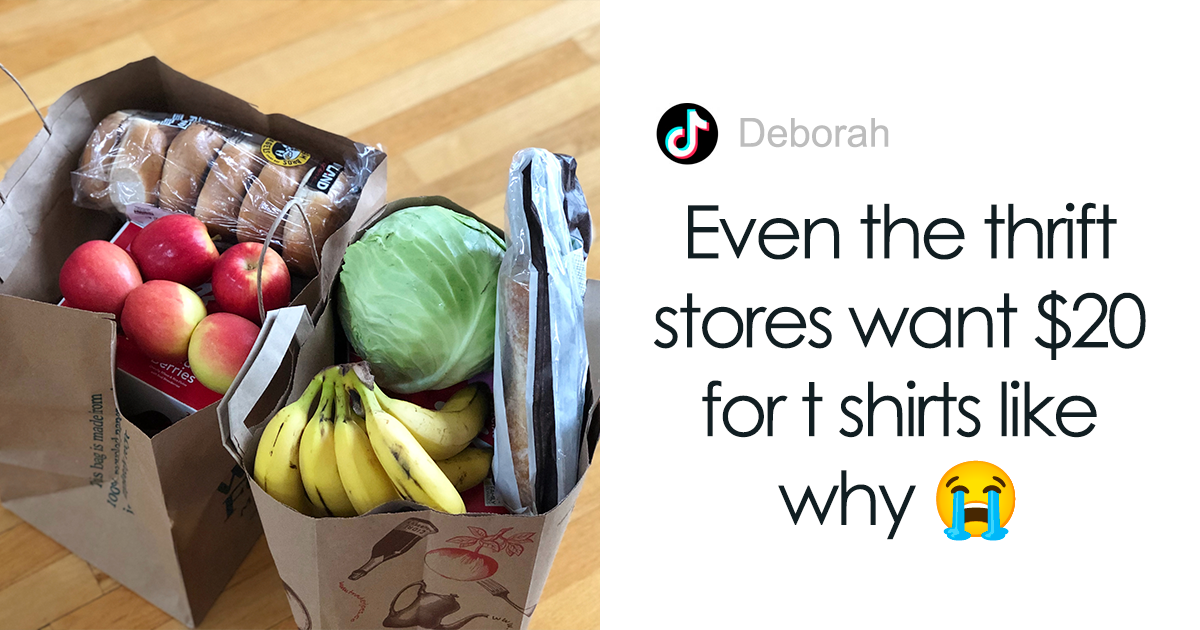
Every few months, the internet collectively points at one person and says, “Yes. That. Exactly.” This time, it was a man who went viral after making a painfully simple point: his budgeting habits are not the problem. Things just cost too much.
The message hit people like a grocery receipt printed on emotionally unstable paper. It was not a luxury rant. It was not someone demanding champagne on a coupon budget. It was the everyday frustration of paying bills, buying food, covering transportation, maybe trying to enjoy one small treat, and then being told by strangers online that the real issue is probably coffee, streaming subscriptions, or an avocado that has somehow become the villain of modern economics.
The viral statement resonated because millions of Americans recognize the feeling. They are not throwing money into a volcano. They are watching rent, groceries, utilities, gas, healthcare, insurance, and basic services climb faster than their paychecks. Budgeting can help, of course. A budget is useful. But a budget is not a magic wand. You cannot spreadsheet your way out of a $1,900 rent payment when your income was built for a 2016 economy and your bills are acting like they have a private jet to maintain.
Why This Viral Budgeting Debate Struck a Nerve
The core idea behind the viral moment is brutally relatable: many people are already doing the “right” things. They pay bills first. They compare prices. They delay purchases. They cook at home more often. They use apps, coupons, cash-back tools, budget templates, and mental math so intense it deserves college credit.
And still, the money disappears.
That is why the phrase “things cost too much” spread so quickly. It captured the emotional difference between being financially careless and being financially squeezed. Those are not the same thing. A person who blows half a paycheck on designer sneakers every Friday may need different advice than someone choosing between groceries, car insurance, and a medical copay. Yet online money advice often treats both people as if they simply need a better printable planner.
The viral man’s point was not that budgeting is useless. It was that budgeting has limits. A budget can tell you where your money goes. It cannot force landlords, supermarkets, insurance companies, or energy providers to lower prices. It cannot make wages rise overnight. It cannot turn a $200 grocery cart into a $90 grocery cart unless you remove, well, the groceries.
The Cost-of-Living Problem Is Bigger Than One Person’s Wallet
Recent U.S. inflation data helps explain why so many people feel like they are losing a game they did not agree to play. Consumer prices are still higher than many households are comfortable with, and even when inflation slows, that does not mean prices return to the good old days. It usually means prices are rising more slowly. In other words, the financial treadmill is still moving; it just stopped sprinting like it was late for a flight.
Food remains a daily reminder. Grocery prices have risen over the past year, and restaurant prices have climbed even faster. That matters because food is not optional. People can skip a new phone. They cannot skip dinner indefinitely, although many have tried the ancient American survival method known as “sleeping instead.”
Housing is another major pressure point. For renters, the problem is especially sharp. Harvard housing research has shown that many working-age renters struggle to afford basic needs after rent is paid. That means the problem is not just that rent is high. It is that rent leaves too little room for everything else: transportation, healthcare, childcare, taxes, insurance, groceries, and the occasional human desire to buy shampoo without holding a committee meeting.
Wages have improved in some areas, but for many households, wage growth has not created the feeling of real breathing room. When pay rises by a few percent but rent, food, gas, insurance, and debt payments all take a bite, the raise can feel less like progress and more like a coupon for a store that just doubled its prices.
Budgeting Helps, But It Cannot Fix Structural Affordability
There is a difference between personal finance and personal blame. Personal finance says, “Let’s understand your income, spending, debt, savings, and goals.” Personal blame says, “You are broke because you bought a latte in 2021 and society has never recovered.”
Good budgeting can absolutely help people make better decisions. It can reveal unused subscriptions, impulse purchases, expensive habits, and patterns that quietly drain money. A household budget can also reduce stress because it gives every dollar a job before that dollar wanders off and starts a new life at Target.
But budgeting is not an income replacement plan. It cannot solve underpaid work, unaffordable rent, high medical costs, childcare expenses, or the rising price of basic goods. When people say, “I do not need another budgeting lecture; I need prices to go down or pay to go up,” they are often expressing the gap between financial literacy and financial reality.
The “Just Cut Back” Advice Has a Math Problem
One reason the viral post connected with so many people is that “just cut back” advice often ignores scale. Cutting a $12 subscription may help. Cooking at home may help. Buying generic brands may help. But if rent increased by $300, car insurance increased by $60, groceries increased by $150, and student loan or credit card payments are eating the rest, canceling one streaming service is not a rescue plan. It is a decorative Band-Aid on a leaking roof.
This does not mean small savings are worthless. Small savings matter, especially when money is tight. But pretending small savings can always solve large affordability gaps is where people get frustrated. It starts to sound less like advice and more like a polite way of saying, “Have you considered needing less food?”
Why People Feel Tired of Being Told to Budget Better
Many Americans are not allergic to budgeting. They are tired of being treated as if their financial stress is a moral failure. The viral reaction shows that people want more honest conversations about money. They want personal responsibility, yes, but they also want reality included in the group chat.
There is a reason trends like “loud budgeting” became popular. People are openly saying no to plans they cannot afford, skipping expensive social events, admitting money limits, and rejecting the pressure to pretend everything is fine. In a culture where people often perform success online, saying “that does not fit my budget” can feel surprisingly rebellious. It is not glamorous, but neither is paying $18 for a sad airport sandwich, and somehow society survived that.
The viral man’s message fits into that larger cultural shift. People are becoming more comfortable saying the quiet part out loud: they are not failing because they cannot budget; they are struggling because the cost of living has become unreasonable for ordinary incomes.
The Psychology of Rising Prices
Inflation is not just a number in an economic report. It changes how people feel. When prices rise repeatedly, every purchase becomes a tiny negotiation with anxiety. A grocery trip becomes a strategy session. A utility bill becomes a plot twist. Filling the gas tank feels like buying a minor appliance.
This emotional fatigue matters. When people feel like their careful choices do not produce results, they can become discouraged. They may stop tracking expenses because the numbers feel depressing. They may rely more on credit cards because the month is longer than the paycheck. They may delay medical care, avoid car repairs, or skip social activities, not because they are irresponsible, but because their budget has no extra oxygen.
That is why the viral statement felt so validating. It gave people permission to say, “Maybe I am not bad with money. Maybe the math is bad.”
Where Budgeting Still Matters
To be fair, budgeting is not the enemy. A good budget can be empowering when it is realistic. The problem is the fantasy budget: the one that assumes humans never get sick, cars never break, friends never have birthdays, kids never need shoes, and dinner can always be assembled from rice, optimism, and one onion.
A useful budget should reflect real life. It should include essentials, savings when possible, debt payments, irregular expenses, and a small amount of joy. Yes, joy. A budget with no room for joy is not a budget; it is a financial punishment program wearing a spreadsheet costume.
A Better Way to Think About Budgeting
Instead of asking, “Why can’t I budget better?” people may need to ask three clearer questions:
- Are my fixed costs too high compared with my income?
- Are my wages keeping up with the real cost of living?
- Which expenses are within my control, and which are not?
This approach separates behavior from environment. Maybe there are habits to improve. Maybe there are subscriptions to cancel or meals to plan. But maybe the bigger issue is that rent eats too much income, wages are stagnant, and essential prices are climbing. Both things can be true. Adults are allowed to hold two ideas at once, even before coffee.
Specific Examples: When Budgeting Is Not Enough
Consider a person earning $3,600 per month after taxes. If rent is $1,600, that leaves $2,000. Add $400 for groceries, $250 for car insurance, $200 for gas, $150 for utilities, $100 for phone and internet, $300 for student loans or credit card payments, and $200 for health costs or prescriptions. Suddenly, only a small amount remains for clothing, emergencies, savings, family obligations, and basic fun.
In that situation, telling someone to “budget better” may technically be true but practically incomplete. They may already be budgeting. The issue is that their budget is trapped in a room with rising prices and no windows.
Another example: a renter whose lease renews with a $250 monthly increase would need to cut $250 elsewhere just to stay in the same financial position. That could mean canceling several subscriptions, eating cheaper meals, driving less, and skipping social plans. But if every essential category also rises, the cuts become harder. Eventually, the problem is not discipline. It is capacity.
What the Viral Moment Says About Work and Pay
The statement “prices need to go down or pay needs to go up” is not complicated. It is the basic affordability equation. If the cost of necessities rises and income does not keep pace, households lose ground. That is true whether someone uses a budgeting app, a notebook, a whiteboard, or the back of a receipt found in the car.
Many workers are not asking for luxury. They want rent they can afford, groceries that do not require a motivational speech, healthcare that does not feel like a surprise invoice ambush, and enough leftover money to save. That is not extravagance. That is stability.
The viral reaction also shows a growing impatience with advice that focuses only on individual sacrifice. People are willing to be responsible. They are less willing to pretend that responsibility alone can overpower every economic force around them.
How to Talk About Money Without Blaming People
A healthier money conversation starts with honesty. Some people do overspend. Some people avoid looking at their accounts until their bank app starts giving haunted-house energy. Some people need better habits. But many people are financially stressed because their essential expenses are too high relative to their income.
Good advice should not shame people. It should help them see options. That might include negotiating bills, looking for higher-paying work, sharing housing costs, building emergency savings gradually, using community resources, refinancing debt when appropriate, or changing spending patterns. But the advice should also acknowledge when the numbers are genuinely tight.
Money shame rarely improves money behavior. It usually makes people avoid the topic. And avoidance is expensive. The goal should be clarity, not guilt.
What Readers Can Take Away
The viral man did not become relatable because he discovered a secret economic theory. He became relatable because he said something obvious that many people were tired of softening: life is expensive, and not every financial struggle is caused by bad budgeting.
The best takeaway is balanced. Budgeting matters. Personal choices matter. But prices, wages, rent, interest rates, debt, and essential costs matter too. If your budget feels impossible, it may not mean you are lazy, careless, or doomed. It may mean the structure of your expenses needs serious attention, and the broader economy is putting pressure on ordinary households.
In other words, yes, track your spending. But also do not let anyone convince you that a coupon and a positive attitude can single-handedly defeat a cost-of-living crisis.
Experiences Related to the Viral “Things Cost Too Much” Debate
Anyone who has managed a household budget in the last few years probably has a personal version of this story. It usually begins with confidence. You open your banking app, create categories, set spending limits, and tell yourself this is the month everything becomes elegant and organized. You are not merely budgeting; you are becoming the kind of person who says “financial wellness” without laughing.
Then real life arrives wearing muddy boots.
The grocery bill is higher than expected. The car needs a repair. The electric bill jumps because the weather has apparently joined a premium subscription service. A friend invites you to dinner, and suddenly you are calculating whether friendship is cheaper before or after appetizers. You try to be reasonable. You buy store brands. You skip delivery. You meal prep. You become emotionally attached to leftovers. Still, the money feels tight.
This is the experience that made the viral statement so powerful. Many people are not refusing to budget. They are budgeting constantly, even when they do not call it that. They are standing in store aisles comparing unit prices. They are delaying dental appointments. They are checking gas prices before choosing a route. They are deciding whether a birthday gift can be thoughtful, affordable, and not look like it was purchased during a panic sprint through a pharmacy.
There is also the social side. Saying “I cannot afford that” can be uncomfortable. People do not always want to explain why brunch, concert tickets, a weekend trip, or even a casual dinner is outside the budget. That is why louder, more honest money conversations matter. When one person admits that things are too expensive, others feel less alone. The silence breaks, and suddenly everyone realizes they have been privately fighting the same math monster.
One common experience is the “responsible splurge.” You do everything right for weeks, then buy one small treat: a coffee, a movie ticket, a takeout meal, a pair of shoes that are not actively falling apart. Then someone online suggests this is why people are broke. That criticism misses the point. A small treat is not usually what destroys a budget. The bigger forces are fixed costs and essentials: rent, insurance, utilities, groceries, transportation, healthcare, childcare, and debt payments.
Another familiar experience is the raise that disappears. You get a pay increase and feel hopeful for about twelve minutes. Then rent renews higher, groceries cost more, insurance adjusts, and suddenly the raise is gone before you even had the chance to act financially smug. This is why many workers say they do not feel better off even when their income technically increased.
The lesson is not to abandon budgeting. The lesson is to stop treating budgeting as proof that every problem is personal. A budget is a flashlight. It helps you see the room. But if the room is flooding, the flashlight is not the solution. You still need the water to stop rising.
That is the deeper truth behind the viral moment. People want practical tools, but they also want honesty. They want to be responsible without being blamed for economic conditions they did not create. They want enough income to meet normal expenses without turning every purchase into a courtroom drama. Most of all, they want a life where working, planning, and making decent choices actually leads somewhere stable.
And honestly, that should not be a controversial request.
Conclusion
The man who went viral for saying things cost too much gave voice to a widespread frustration: budgeting is useful, but it is not a cure for every affordability problem. When wages, rent, groceries, energy, insurance, and debt all compete for the same paycheck, households can feel squeezed even when they are careful.
The smartest conversation is not “budgeting versus higher pay.” It is both. People deserve tools that help them manage money wisely, and they also deserve an economy where basic needs do not feel like luxury purchases. Until then, the internet will keep rallying behind anyone brave enough to say the obvious: sometimes the budget is not broken. Sometimes the prices are.