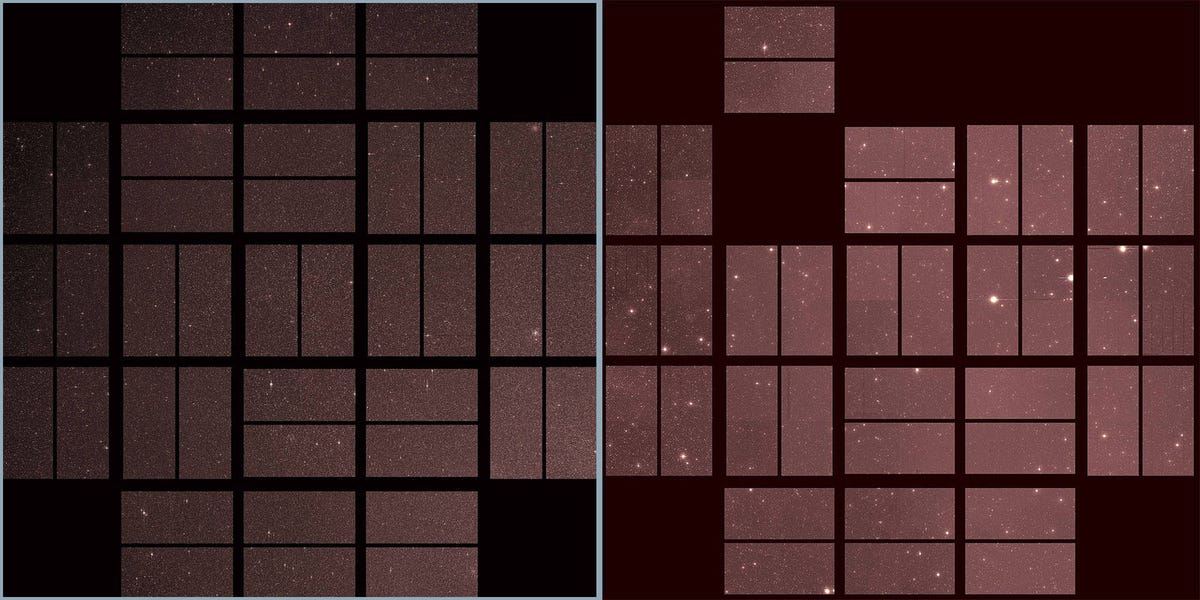
The phrase “Kepler Space Telescope Last Light” sounds almost poetic, as if NASA’s legendary planet hunter dimmed its lamp, took one final look at the stars, and quietly clocked out after a very long night shift. In a way, that is exactly what happened. On September 25, 2018, NASA’s Kepler Space Telescope captured its final full-field image of the sky before fuel depletion ended its work. That image, later known as Kepler’s “last light,” was more than a farewell snapshot. It was the closing frame of one of the most successful planet-hunting missions in human history.
Kepler did not merely find a few interesting worlds. It changed the way we understand the Milky Way. Before Kepler, scientists knew exoplanets existed, but the big question remained: Were they rare cosmic oddballs or common neighbors hiding in plain sight? Kepler answered with a galactic megaphone: planets are everywhere. Rocky planets, gas giants, super-Earths, mini-Neptunes, worlds orbiting close to their stars, worlds in multi-planet systems, and even planets that made astronomers rethink what “normal” means in space.
Kepler’s last light is powerful because it represents both an ending and a beginning. The telescope ran out of fuel, but the data it collected continues to feed scientific discovery. Like a teacher who retires but leaves behind excellent notes, Kepler stepped away while its lessons kept expanding across astronomy classrooms, research labs, and late-night internet rabbit holes everywhere.
What Was Kepler’s “Last Light”?
In astronomy, “first light” usually refers to the first image or observation made by a telescope after it becomes operational. “Last light,” by contrast, is the final meaningful observation before a telescope stops collecting data. For Kepler, last light refers to the final record of its full field of view, captured on September 25, 2018, before the spacecraft permanently ended its planet-hunting mission.
The image shows a star-filled region of the sky, dense with possibility. To a casual viewer, it may look like a glittery black canvas sprinkled with cosmic sugar. To astronomers, it is a data-rich farewell card from a machine that spent nearly a decade watching stars with extraordinary patience. Kepler’s job was not to take dramatic, wallpaper-worthy pictures like the Hubble Space Telescope. Kepler was a photometer, a precision brightness-measuring instrument. Its superpower was noticing when a star dimmed by a tiny amount, possibly because a planet had passed in front of it.
That tiny dip in starlight is called a transit. Imagine trying to spot a mosquito crossing in front of a stadium floodlight from miles away. Now make the mosquito a planet, the floodlight a star, and the distance hundreds or thousands of light-years. That was Kepler’s daily routine. No cape, no dramatic music, just relentless measurement.
A Brief History of the Kepler Space Telescope
NASA launched the Kepler Space Telescope on March 6, 2009, with one grand scientific mission: determine how common Earth-size planets are around other stars, especially planets orbiting in the habitable zone where liquid water could potentially exist. The spacecraft was named after Johannes Kepler, the German astronomer and mathematician whose laws of planetary motion helped explain how planets orbit stars.
Kepler was designed to stare at a single patch of the Milky Way near the constellations Cygnus and Lyra. Unlike telescopes that hop from target to target, Kepler was more of a cosmic security camera. It watched the same star field continuously, tracking the brightness of more than 150,000 stars during its prime mission. Over its full lifetime, including the extended K2 mission, it observed more than half a million stars.
First Light: The Beginning of the Hunt
Kepler’s first light image was taken on April 8, 2009, shortly after the spacecraft’s dust cover was removed. That first image revealed a vast field of stars, many of which would become targets in the search for exoplanets. At the time, scientists knew they had a powerful tool, but even optimistic researchers could not fully predict how dramatically Kepler would reshape astronomy.
The early mission was beautifully simple in concept: watch stars, measure brightness, look for repeating dips, and confirm whether those dips came from orbiting planets. Of course, “simple” in space science means thousands of engineers, scientists, calibration steps, software pipelines, and enough coffee to fill a small crater on the Moon.
How Kepler Found Planets
Kepler used the transit method to detect exoplanets. When a planet crosses in front of its host star from our point of view, the star’s brightness drops slightly. If that dip repeats on a regular schedule, scientists can infer that a planet may be orbiting the star.
For example, if a star dims every ten days by the same amount, it may suggest a planet with a ten-day orbit. The size of the dip helps estimate the planet’s diameter, while the timing helps determine its orbital period. Follow-up observations and statistical analysis then help confirm whether the signal is truly a planet or something else, such as an eclipsing binary star.
Kepler’s work required extreme precision. The brightness changes caused by Earth-size planets can be very small. Yet Kepler measured them well enough to build a revolutionary catalog of planetary candidates and confirmed worlds. This made it possible for scientists to move beyond asking, “Do planets exist elsewhere?” and start asking, “What kinds of planets are most common?”
Why Kepler’s Discoveries Were So Important
Kepler’s greatest legacy is not just the number of planets it found, though that number is impressive. During its mission, Kepler contributed to the discovery of more than 2,600 confirmed exoplanets. Its deeper achievement was statistical. Kepler showed that planets are not rare. In fact, planets may outnumber stars in the Milky Way.
That single idea is enormous. Look up at the night sky, pick a star, and Kepler’s legacy whispers: there may be planets there. Maybe one. Maybe several. Maybe a compact system packed so tightly that it makes our solar system look like it enjoys extra elbow room.
Kepler Expanded the Planetary Zoo
Before Kepler, many known exoplanets were hot Jupiters, giant planets orbiting very close to their stars. These were easier to detect because they produced large, frequent signals. Kepler revealed a much richer population. It found planets smaller than Neptune, rocky worlds, planets in multi-planet systems, and planets with sizes unlike anything in our solar system.
One of Kepler’s most interesting contributions was the discovery that “super-Earths” and “mini-Neptunes” are common. These planets are larger than Earth but smaller than Neptune. Our own solar system does not have one, which is mildly rude of it, considering how common they seem to be elsewhere.
Kepler Helped Redefine Habitability
Kepler also helped scientists identify planets in or near the habitable zone, the region around a star where temperatures might allow liquid water on a planet’s surface. A planet in the habitable zone is not automatically a second Earth. It may have a crushing atmosphere, no atmosphere, extreme radiation, or surface conditions that would make a beach vacation deeply unpleasant. Still, habitable-zone discoveries gave scientists better targets for future research.
The K2 Mission: Kepler’s Second Act
In 2013, Kepler suffered a major mechanical problem when it lost the second of its four reaction wheels. These wheels helped the spacecraft point precisely. The original mission required three working wheels, so the failure ended Kepler’s ability to maintain its original long-term stare at one fixed field of stars.
For many missions, that might have been the end. But the Kepler team found a clever workaround. By balancing pressure from sunlight with the two remaining reaction wheels, they created a new observing strategy called K2, sometimes referred to as Kepler’s “Second Light.” Instead of staring at the original field, Kepler observed different fields along the plane of Earth’s orbit around the Sun.
K2 extended the spacecraft’s scientific life and opened new opportunities. It studied exoplanets, star clusters, supernovae, young stars, and other astrophysical targets. It was an elegant example of NASA engineering: when the spacecraft gave them lemons, they made precision photometry lemonade.
Why Kepler Ran Out of Fuel
Kepler did not fail because its camera suddenly stopped caring about planets. The spacecraft ran out of the fuel needed to point itself accurately and send data back to Earth. Spacecraft need fuel for orientation and communication maneuvers, even when they are not zooming around like science-fiction ships.
By 2018, NASA knew Kepler’s fuel was nearly gone. The team carefully managed the remaining supply, placing the spacecraft in low-fuel modes at times to preserve its ability to transmit valuable data. Eventually, the fuel was exhausted, and NASA announced Kepler’s retirement on October 30, 2018. The spacecraft was left in a safe orbit around the Sun, away from Earth.
That ending may sound quiet, but it was fitting. Kepler was never flashy. It did not land on Mars, skim Saturn’s rings, or send back close-ups of icy moons. It watched. It measured. It waited. Then it changed the universe we thought we knew.
The Meaning Behind Kepler’s Final Image
Kepler’s last light image is meaningful because it captures the telescope doing what it did best: looking into a crowded star field and treating every point of light as a possible solar system. The image includes black gaps caused by earlier camera module failures, but those gaps did not erase the broader achievement. In fact, they make the image feel more human. It is imperfect, patched by time, and still beautiful.
That final image reminds us that exploration does not always end with fireworks. Sometimes it ends with a data file, a final transmission, and a team of scientists staring at a screen with pride, sadness, and probably a few snacks nearby.
Kepler’s Last Light and the Future of Exoplanet Science
Kepler’s mission ended, but its influence continues through later telescopes and observatories. NASA’s Transiting Exoplanet Survey Satellite, known as TESS, now searches for planets around bright nearby stars. The James Webb Space Telescope can study some exoplanet atmospheres, helping scientists investigate what those worlds may be made of. Future missions will build on the foundation Kepler created.
Kepler gave scientists the big-picture statistics. TESS and other missions help identify closer targets. Webb and future observatories can examine atmospheres and search for chemical clues. In that sense, Kepler was not the final chapter. It was the mapmaker that helped everyone else know where to look.
Lessons from Kepler’s Last Light
1. Small Signals Can Reveal Huge Truths
Kepler’s discoveries came from tiny changes in brightness. The lesson is almost philosophical: pay attention to small patterns. A fraction of a percent of dimming can reveal a planet. A repeated signal can reveal an orbit. A quiet dataset can rewrite astronomy.
2. Good Science Requires Patience
Kepler succeeded because it watched long enough to see patterns repeat. Some planets take days to orbit their stars; others take months or years. Without patience, many signals would remain invisible. In an age of instant notifications and microwaved everything, Kepler was a reminder that the universe does not rush for our convenience.
3. Engineering Creativity Extends Discovery
The K2 mission proved that a damaged spacecraft can still do outstanding science. Instead of giving up after the reaction wheel failures, engineers redesigned the mission around what Kepler could still do. That flexibility turned a setback into years of additional discovery.
Experience Section: Reflecting on Kepler Space Telescope Last Light
Thinking about Kepler Space Telescope Last Light feels different from reading a standard mission summary. It is not just a technical milestone; it feels like watching the final page of a very patient diary. Kepler spent years staring into a patch of sky that most people would never notice. It did not chase spectacle. It did not swing dramatically from one galaxy to another. It committed to one job with almost comic seriousness: watch the stars and do not blink.
That is what makes its last light so emotionally effective. The final image is not a glamorous portrait of a nearby planet or a colorful nebula. It is a field of stars, quiet and crowded, the kind of image that asks you to slow down. At first glance, it may not scream for attention. But once you understand what Kepler was looking for, the picture changes. Every dot becomes a question. Does that star have planets? Are any rocky? Could one have an atmosphere? Could one have oceans? Could one have sunsets that no human eye has ever seen?
For writers, educators, and space enthusiasts, Kepler’s last light offers a useful way to explain science as a human story. The mission had a beginning, a challenge, a comeback, and an ending. First light introduced the telescope’s field of view. The reaction wheel failures created a crisis. The K2 mission became the comeback arc. Last light gave the story a quiet final scene. Honestly, if Hollywood made this into a movie, the telescope would probably get a dramatic soundtrack and a loyal robot sidekick. NASA did not need that. The real story was already good.
One experience that stands out when learning about Kepler is realizing how much discovery can come from indirect evidence. Kepler usually did not “see” planets directly. It detected their shadows in starlight. That idea is fascinating because it shows how science often works like detective work. You do not always catch the culprit standing under a spotlight. Sometimes you find footprints, patterns, timing, and tiny clues. Kepler turned those clues into a planetary census.
Kepler’s last light also encourages a more personal kind of reflection. The spacecraft ended because it ran out of fuel, not because it ran out of questions. That is oddly comforting and frustrating at the same time. The universe still had more to show. Kepler simply could no longer keep pointing and communicating. In human terms, it had done all it could with the tools it had. There is a lesson there about effort, limits, and legacy. A mission can end while its impact keeps growing.
For students discovering astronomy, Kepler’s story is especially powerful. It proves that space exploration is not only about astronauts, rockets, and dramatic launches. Sometimes the hero is a telescope quietly orbiting the Sun, gathering brightness measurements with monk-like discipline. It also shows that data can be beautiful. Not beautiful in the obvious “giant nebula poster” way, but beautiful because of what it reveals. A spreadsheet of stellar brightness can contain hidden planets. A tiny dip in light can point to a world larger than Earth. A final image can summarize nearly ten years of scientific courage.
From a web publishing perspective, the topic “Kepler Space Telescope Last Light” works well because it blends emotion, science, history, and visual curiosity. Readers may arrive looking for the final image, but they stay for the bigger story: how Kepler showed that planets are common, how it survived mechanical trouble, and how its final observation became a symbolic goodbye. It is a rare space topic that can satisfy both the fact-hungry reader and the person who simply loves the romance of exploration.
The best way to experience Kepler’s last light is to imagine the telescope’s whole life compressed into that final frame. There is the optimism of launch in 2009. There is the first light image, full of promise. There are years of discoveries that made headlines and filled scientific journals. There is the mechanical trouble that could have ended everything too soon. There is the K2 mission, proving that creativity can squeeze more science from a wounded spacecraft. And finally, there is the last light: a star field that looks ordinary until you understand that it is a goodbye from one of humanity’s greatest planet hunters.
Conclusion: Kepler’s Light Still Travels
The Kepler Space Telescope Last Light image marked the end of a historic mission, but it did not mark the end of Kepler’s importance. Kepler transformed exoplanet science by proving that planets are common throughout the Milky Way. It discovered thousands of worlds, inspired new missions, expanded our understanding of planetary systems, and gave humanity a more exciting view of the night sky.
Kepler’s final image is not just a farewell. It is a reminder that exploration often works quietly before it changes everything loudly. The telescope watched stars with extraordinary precision, found planets by their shadows, and helped answer one of humanity’s oldest questions: Are there other worlds out there? Thanks to Kepler, the answer is not just yes. It is yes, and more than we once dared to imagine.