“`
J.K. Rowling has never been shy about entering a cultural debate with the subtlety of a fireworks display in a quiet library. But after the U.K. Supreme Court issued a major ruling on the legal meaning of “woman” under the Equality Act 2010, the Harry Potter author’s celebratory cigar post triggered a fresh round of backlashthis time from one of the actors connected to the wizarding world she created.
The headline moment was simple, symbolic, and instantly combustible: Rowling appeared to celebrate the ruling with a cigar and a message echoing the famous A-Team catchphrase, “I love it when a plan comes together.” To supporters, it was a victory lap for women’s sex-based rights. To critics, it looked like a billionaire author celebrating a decision many transgender people and LGBTQ+ advocates saw as frightening and exclusionary.
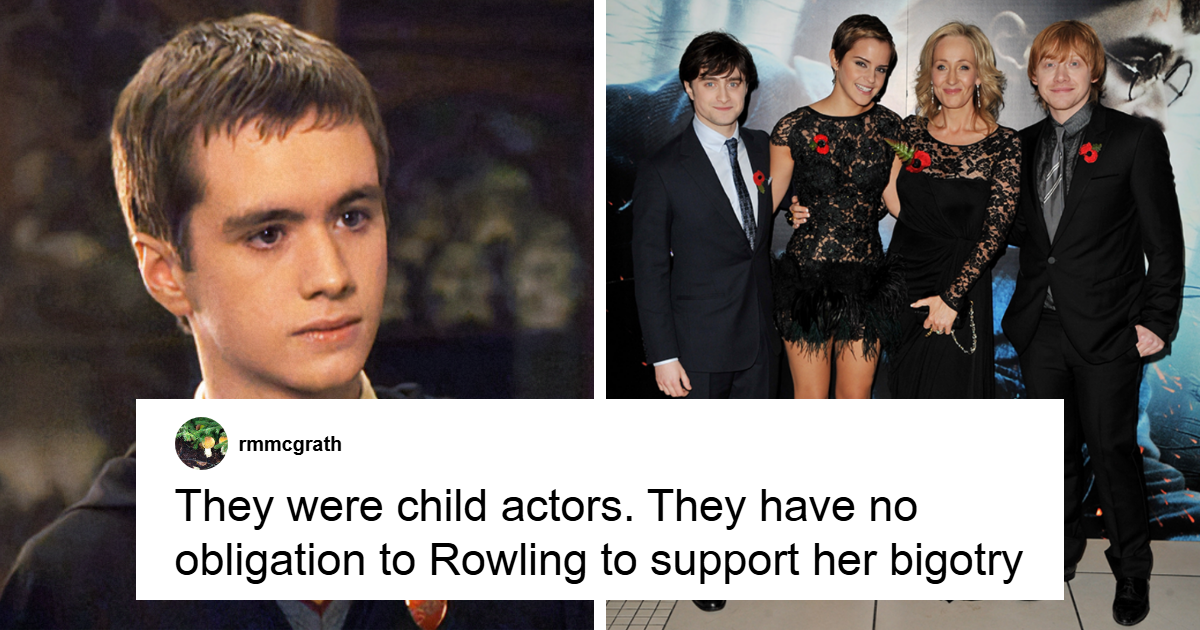
Among the critics was Sean Biggerstaff, known to Harry Potter fans as Oliver Wood, the Gryffindor Quidditch captain who could probably explain broom strategy with more calm than the internet explains gender law. Biggerstaff publicly condemned Rowling’s stance, describing her views as bigoted and pushing back against the way she marked the ruling online. His response became part of a wider wave of celebrity criticism involving actors, fans, activists, and industry figures debating what happens when a beloved fantasy franchise becomes attached to a very real political fight.
What Was the U.K. Supreme Court Ruling About?
On April 16, 2025, the U.K. Supreme Court ruled unanimously that, for the purposes of the Equality Act 2010, the terms “woman,” “man,” and “sex” refer to biological sex. The case, For Women Scotland Ltd v The Scottish Ministers, centered on whether transgender women with Gender Recognition Certificates could be counted as women under Scottish public board representation rules.
The court’s decision was celebrated by gender-critical groups who argue that single-sex spaces, services, sports, and legal protections require a definition based on biological sex. However, transgender rights organizations warned that the ruling could increase exclusion and uncertainty for trans people in daily life, especially around bathrooms, hospital wards, shelters, workplaces, and public services.
Importantly, the ruling did not erase all legal protections for transgender people. The Equality Act still protects people from discrimination based on gender reassignment. But the decision changed how sex-based language should be interpreted in certain legal contexts, creating a sharp divide between those who see it as “clarity” and those who see it as a step backward for trans rights.
How J.K. Rowling Celebrated the Decision
Rowling has long been one of the most visible public supporters of gender-critical activism. She has argued that women’s rights depend on maintaining legal distinctions based on biological sex, especially in areas involving privacy, safety, and female-only services. Her critics, including LGBTQ+ organizations and many former fans, argue that her comments and campaigns contribute to hostility toward transgender people.
After the ruling, Rowling praised the women behind the legal challenge and posted celebratory messages on social media. The cigar image became the viral spark. It was not just the cigar, of course. It was the mood of triumph. In online culture, tone is gasoline, and this post arrived holding a match.
For Rowling’s supporters, the post was an unapologetic celebration of a legal victory after years of controversy. For critics, it felt like a powerful public figure turning a vulnerable community’s fear into a punchline. That contrast explains why the story moved so quickly from legal news to entertainment headlines.
Sean Biggerstaff Calls Out Rowling
Sean Biggerstaff, who played Oliver Wood in the early Harry Potter films, became one of the franchise-linked figures to criticize Rowling after the ruling. Biggerstaff reportedly called Rowling an “obsessed billionaire” and criticized her views as bigoted. He also engaged with online comparisons between Rowling’s cigar imagery and the kind of macho internet branding associated with figures such as Andrew Tate.
The criticism mattered because it came from inside the extended Harry Potter universe. Biggerstaff was not one of the three central stars, but Oliver Wood remains a memorable character for fans. In a franchise built around loyalty, bravery, and standing up to power, even a supporting actor’s public disagreement with the author carries symbolic weight.
It also reinforced a pattern: actors connected to Harry Potter have repeatedly distanced themselves from Rowling’s views on transgender issues. Daniel Radcliffe, Emma Watson, Rupert Grint, Bonnie Wright, Katie Leung, Eddie Redmayne, and others have previously expressed support for trans people or criticized anti-trans rhetoric. The wizarding family reunion, in other words, has become complicated. Someone forgot to cast a spell that prevents awkward public statements.
Why This Became Bigger Than One Social Media Post
The Rowling cigar controversy is not only about one author, one actor, or one court ruling. It is about the collision of fandom, law, celebrity influence, and identity. When a public figure with Rowling’s reach comments on transgender rights, the reaction is never small. She is not merely a novelist with opinions; she is the creator of one of the most commercially successful fictional worlds in modern history.
For many readers, Harry Potter was a story about outsiders finding friendship, courage, and a home. That is why the conflict feels personal. Fans who grew up seeing themselves in misfit characters now feel forced to separate the emotional meaning of the books from the politics of the author. Some can do that easily. Others cannot. Many are somewhere in the messy middle, clutching a childhood paperback and asking why growing up had to come with so much homework.
The cigar image intensified the debate because it looked celebratory rather than reflective. Legal rulings can be debated seriously. Civil rights questions deserve careful discussion. But when the tone becomes triumphant, especially around a decision affecting a minority group, people read the message emotionally as well as politically.
Celebrity Reactions and the Wider Industry Response
Rowling’s celebration drew criticism beyond the Harry Potter cast. Nicola Coughlan, known for Bridgerton and Derry Girls, condemned the ruling and Rowling’s response, later helping raise money for a U.K. trans charity. Other entertainment figures, including actors and writers, signed open letters supporting trans, non-binary, and intersex communities after the decision.
More than 400 actors and entertainment professionals reportedly signed a letter calling on the industry to show stronger support for trans rights. The timing was especially sensitive because HBO’s new Harry Potter television series was already under public scrutiny. Rowling remains involved as an executive producer, which means the franchise’s future is still tied to the debate around her views.
That creates a difficult situation for studios, actors, fans, and marketers. The Harry Potter brand is still enormously valuable. It sells books, games, theme park tickets, stage productions, merchandise, and streaming dreams. But it now also carries a reputational challenge that cannot be solved by simply waving a wand and shouting “Brandus Repairus.”
Rowling’s Supporters See a Women’s Rights Victory
To understand why the controversy remains so heated, it is necessary to recognize that Rowling’s supporters do not see her position as hateful. Many argue that she is defending women’s rights, especially in prisons, shelters, sports, medical settings, and other sex-separated spaces. They believe the U.K. Supreme Court ruling protects legal clarity and prevents policies from becoming unworkable.
Groups such as For Women Scotland have argued that sex-based rights cannot function if “sex” is interpreted to include gender identity in every context. Rowling has repeatedly said she supports the rights of trans people to live free from discrimination, while also rejecting policies she believes undermine protections for biological women.
This is the central conflict: one side frames the issue as protecting women’s safety and sex-based law; the other frames it as excluding transgender people from dignity, recognition, and equal participation in public life. Both sides use the language of rights. That is why the debate is so emotionally loaded and politically persistent.
Critics Say the Celebration Was Cruel
For critics, the problem was not only Rowling’s legal position but the style of the celebration. A cigar post after a ruling that worried many trans people felt, to them, less like sober legal commentary and more like a victory dance. That is why Biggerstaff’s comments resonated with many online users: he gave voice to people who felt the celebration crossed a moral line.
Trans rights advocates argue that public figures should consider the real-world effects of their language. Transgender people already face discrimination, harassment, family rejection, and political targeting. When a globally famous author treats a ruling affecting them as a moment for champagne and cigars, critics say it deepens the feeling that their fears are being dismissed.
In internet terms, the optics were rough. A cigar is not just a cigar when it appears in a culture-war victory post. It becomes a symbol, a meme, a provocation, and a thousand-comment argument before lunch.
The Harry Potter Cast Divide
The divide between Rowling and several Harry Potter actors has been developing for years. In 2020, Daniel Radcliffe published a statement through The Trevor Project affirming support for transgender people and acknowledging that some fans felt hurt by Rowling’s comments. Emma Watson and Rupert Grint also voiced support for trans people. Their responses made clear that admiration for Rowling’s creative work did not require agreement with her public views.
That distinction has become essential to the modern Harry Potter fandom. Some fans continue to love the books while rejecting Rowling’s politics. Others boycott new projects connected to her. Some defend Rowling strongly. And some simply want to enjoy a story about magic schools without needing a law degree, a media studies seminar, and a crisis-management consultant.
Sean Biggerstaff’s criticism fits into this longer history. It is not an isolated celebrity jab. It is part of an ongoing public rupture between Rowling and parts of the community that helped bring her fictional world to life on screen.
What This Means for the New Harry Potter Series
The upcoming HBO Harry Potter series faces a difficult road. On one hand, the franchise remains beloved, and a full television adaptation gives producers room to explore the books in greater depth. On the other hand, Rowling’s involvement means the show will launch under a cloud of debate, no matter how excellent the casting, writing, music, or robe budget may be.
For younger audiences, social values often influence entertainment choices. Some viewers may refuse to watch because Rowling profits from or is attached to the project. Others may watch while separating art from artist. Still others may tune in because controversy sometimes works like a neon sign: not always flattering, but hard to ignore.
The studio’s challenge is not only creative; it is ethical and commercial. How does a company promote a franchise about love, courage, and acceptance while its creator is at the center of a debate many people experience as deeply painful? That question will not disappear by premiere night.
Analysis: Why the Cigar Moment Went Viral
The cigar post went viral because it compressed a complicated legal issue into one instantly readable image. People may not read a 100-page judgment. They will, however, understand a famous person celebrating with a cigar. Visual symbolism travels faster than legal nuance.
That is the modern celebrity-news machine in action. A court ruling becomes a post. A post becomes a headline. A headline becomes a reaction. A reaction becomes another headline. By the end of the cycle, everyone is arguing about the symbol, the law, the actor, the author, and whether childhood nostalgia can survive adult politics.
Rowling’s supporters saw confidence. Critics saw cruelty. Biggerstaff saw enough to speak out. And the internet saw content. Lots and lots of content.
Experiences and Lessons From the Rowling Controversy
For many fans, the experience of watching the Rowling controversy unfold has been strangely intimate. It is not like disagreeing with a random politician or a distant commentator. Rowling’s work lived on bedroom shelves, in school backpacks, at midnight book releases, in Halloween costumes, and in family movie nights. When someone connected to those memories becomes the center of a painful public debate, the reaction is not purely intellectual. It feels personal, almost like finding out your favorite teacher has been arguing loudly at the town meeting.
One common experience is the split between nostalgia and conscience. A fan may still remember the comfort of reading about Hogwarts during a lonely year, while also feeling uncomfortable supporting new projects that financially benefit Rowling. That tension does not have a neat answer. Some people donate to LGBTQ+ charities when they revisit the books. Some buy secondhand copies. Some stop engaging entirely. Others continue as before, arguing that stories belong to readers once they are released into the world. The range of responses shows how complicated fandom can become when art and public ethics collide.
Another experience is conversational fatigue. Families, classrooms, friend groups, and online communities have had versions of the same debate: Can you separate the art from the artist? Does buying a ticket equal endorsement? Are celebrities responsible for the social impact of their opinions? These questions can become exhausting because they rarely end with everyone nodding politely and passing pumpkin juice. More often, they reveal deeper differences in values, identity, and trust.
For transgender fans, the experience can be especially heavy. Many grew up loving a story about chosen family, hidden identity, and finding courage in hostile environments. Seeing the author associated with policies or statements they view as harmful can feel like being pushed out of a place that once felt safe. That emotional reality is why celebrity reactions matter. When actors like Sean Biggerstaff, Daniel Radcliffe, Emma Watson, Rupert Grint, or Nicola Coughlan speak in support of trans people, some fans experience it as a small but meaningful reminder that the fictional world they loved does not belong only to its creator.
There is also a lesson for public figures: tone matters. A legal argument can be serious, even difficult, without becoming celebratory at the expense of people who feel afraid. Social media rewards sharpness, mockery, and victory poses, but public trust often depends on empathy. A cigar may be intended as a joke or a triumphant reference, yet symbols do not stay under the control of the person who posts them. Once online, they become public property, interpreted by millions of people with different wounds, loyalties, and memories.
The larger experience is this: culture is no longer separate from politics, if it ever was. Fans are not just consumers. They are participants, critics, organizers, defenders, and sometimes mourners of the things they used to love simply. The Rowling debate shows that beloved stories can survive controversy, but they do not remain unchanged by it. Hogwarts may still be fictional, but the arguments around it are very real.
Conclusion
J.K. Rowling’s cigar celebration after the U.K. Supreme Court trans ruling became a flashpoint because it joined law, celebrity, fandom, and identity in one highly shareable image. Sean Biggerstaff’s criticism added another chapter to the ongoing split between Rowling and several actors connected to the world of Harry Potter. The debate is not fading because it touches questions that matter deeply: women’s rights, transgender dignity, free expression, corporate responsibility, and whether audiences can separate beloved art from the public actions of its creator.
In the end, the controversy is bigger than a cigar. It is about what symbols communicate, how power speaks, and why stories that once united millions can become battlegrounds when the real world comes knocking at the castle gates.
Note: This article is written as news analysis based on public reporting and official summaries. It is not legal advice. The article avoids direct source links in the body for clean web publication.