“`
There are moments when “hacking” is not about hoodies, glowing keyboards, or typing dramatic nonsense while a progress bar saves the world. Sometimes hacking means staring at a locked door, a rigid system, and a problem that absolutely refuses to care about your feelings. That is where the strange, serious, and surprisingly human story of prison locksmithing begins.
Prison locksmithing sits at the intersection of security, maintenance, engineering, ethics, and pressure. In a correctional facility, a lock is not just a piece of metal. It is a boundary, a safety device, a fire-response concern, a key-control responsibility, and occasionally the star of a very tense historical drama. Unlike ordinary locksmithing, where the worst-case scenario might be a frustrated homeowner in slippers, detention locksmithing involves people’s lives, institutional trust, legal obligations, and systems designed to survive constant use and abuse.
The phrase “Hacking When It Counts: Prison Locksmithing” brings two worlds together: the creative problem-solving mindset of hacking and the unforgiving reality of prison security. This article explores prison locksmithing from a responsible, high-level perspective: what it is, why it matters, what makes detention locks different, and why the most famous prison locksmithing stories are less about tricks and more about observation, patience, risk, and systems thinking.
What Is Prison Locksmithing?
Prison locksmithing is the specialized work of maintaining, repairing, inspecting, and managing locks, keys, doors, gates, control systems, and related security hardware inside correctional facilities. It is a professional discipline, not a movie montage. A prison locksmith may work with mechanical locks, electric locks, pneumatic systems, key cabinets, padlocks, handcuff keys, cell-door mechanisms, sally ports, secure storage areas, and access-control devices.
In many facilities, the locksmith role is tied closely to maintenance and custody operations. That means the locksmith is not simply “the person with the key machine.” They may be responsible for records, inspections, emergency repairs, preventive maintenance, inventories, and the secure handling of sensitive hardware. In correctional settings, documentation is not paperwork for paperwork’s sake. It is a security tool. A missing key, a worn latch, or a poorly recorded repair can become a major institutional risk.
Why Correctional Locks Are Different
A normal commercial lock is designed for offices, schools, homes, or storefronts. A prison lock is designed for a much harsher universe. It must handle repeated use, tampering attempts, impact, environmental stress, and the daily reality of being part of a controlled movement system. A cell door may open and close thousands of times over its service life. A corridor gate may be tied into electronic controls. A detention door may need to resist force while still allowing staff to respond quickly during an emergency.
That is why correctional facilities often use detention-grade hardware: reinforced doors, heavy-duty hinges, protected keyways, controlled cylinders, tamper-resistant fasteners, secure panels, and remote release systems. These components are not glamorous, but neither is flossingand both prevent disasters when done correctly.
Security Must Balance Life Safety
One of the biggest misconceptions about prison locks is that “more locked” always means “more secure.” In reality, correctional design must balance security with life safety. In a fire, medical emergency, riot, evacuation, or power failure, staff need reliable ways to control doors, move people, isolate danger, and provide rescue access. A lock that cannot be opened when it must be opened is not a security feature. It is a crisis wearing a metal face.
This is why detention hardware is often evaluated not only for strength, but also for reliability, fire-related performance, operational control, and compatibility with facility procedures. Good prison locksmithing is not about making doors impossible to open. It is about making sure the right people can open the right doors at the right timeand that the wrong people cannot.
The Hacker Mindset in a Prison Locksmith’s World
At its best, hacking is not criminal behavior. It is creative systems analysis. It asks: How does this work? What assumptions does it rely on? Where can it fail? What happens when humans interact with it under stress? Prison locksmithing requires that same mindset, but with professional boundaries and serious ethical responsibilities.
A responsible correctional locksmith must think like a defender. They look for wear patterns, weak procedures, poor key accountability, outdated hardware, blind spots in workflow, and the little “we’ve always done it this way” habits that can quietly become security vulnerabilities. In prison locksmithing, the most dangerous weakness is not always a dramatic mechanical flaw. Sometimes it is a clipboard no one checks, a key ring passed from hand to hand, or a door that “mostly latches” until the day it does not.
The Tim Jenkin Story: Ingenuity Under Apartheid
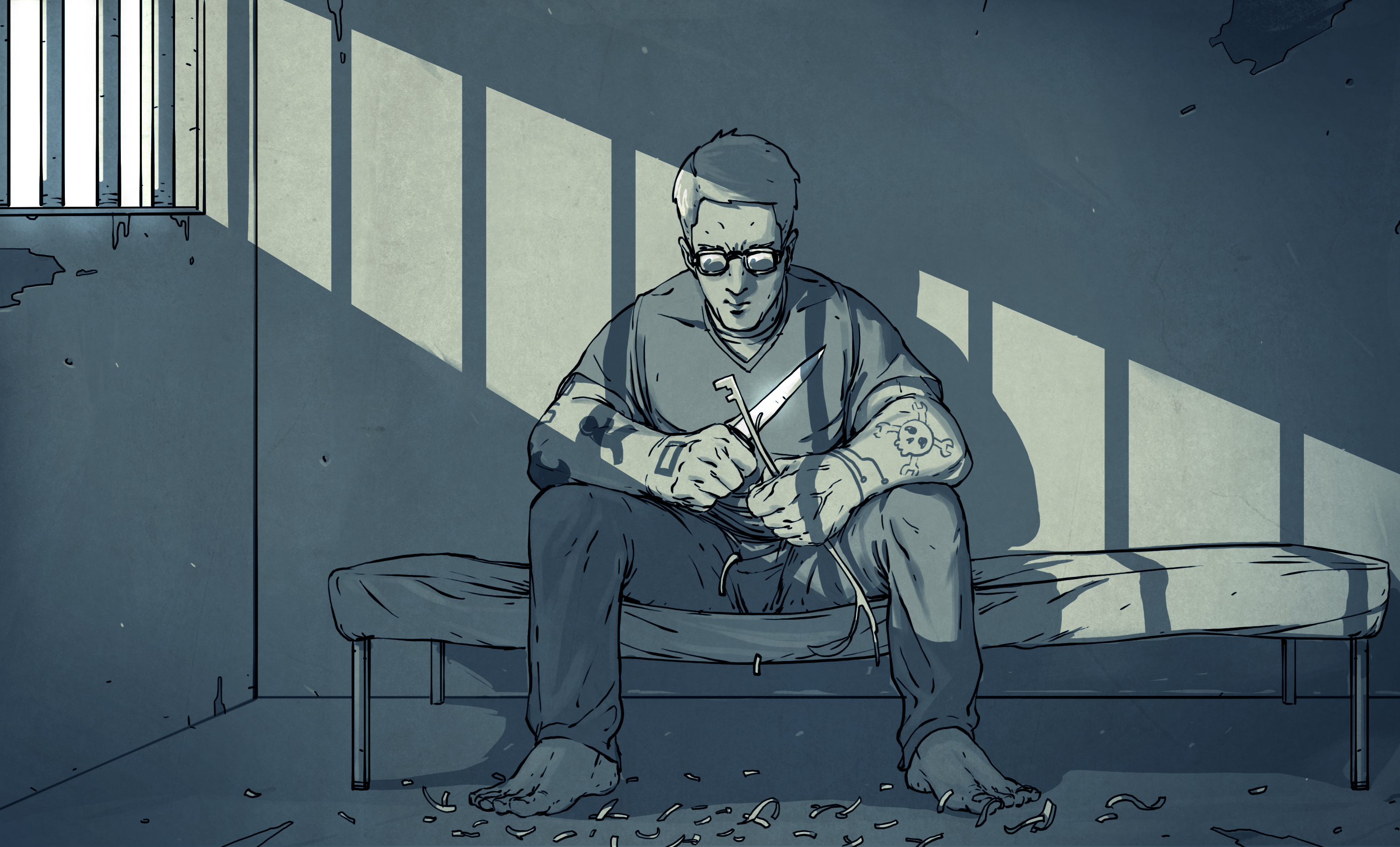
No discussion of prison locksmithing and hacking would be complete without mentioning Tim Jenkin, Stephen Lee, and Alex Moumbaris. In 1979, these anti-apartheid activists escaped from Pretoria Central Prison in South Africa after months of planning. Their story became famous because it involved intense observation, handmade keys, courage, and a political context far larger than a locked door.
Jenkin and Lee had been imprisoned for anti-apartheid activities, including distributing banned political material. Inside prison, Jenkin began studying the physical environment and the routines around him. The escape was not a spontaneous “aha!” moment. It was a long exercise in patience, memory, improvisation, and nerve. The story is often framed as lockpicking, but its deeper lesson is systems thinking under pressure.
For readers, the responsible takeaway is not “how to copy a key.” The lesson is that security is never only hardware. Security includes people, routines, assumptions, inspections, training, architecture, and institutional culture. A system can be made from steel and still be vulnerable if it depends on predictable human behavior. That is the kind of insight modern security professionals study carefullynot to romanticize escape, but to build safer, more resilient systems.
Key Control: The Boring Thing That Saves Everyone
In correctional facilities, key control is a big deal. Actually, “big deal” is too small a phrase. It is the oxygen of physical security. Key control includes how keys are issued, stored, tracked, returned, audited, labeled, replaced, and restricted. If keys are the skeleton key to movement in a facility, key control is the skeleton’s spine.
A strong key-control program usually includes strict authorization rules, secure storage, written logs, inventory checks, restricted keyways, tamper-resistant key rings, and clear procedures for lost or compromised keys. Modern systems may use electronic key cabinets that record who removed a key, when it was removed, and whether it was returned on time. This reduces casual key sharing and creates accountability.
The best prison locksmiths understand that a key is not just an object. It is a permission token. Every permission token needs a policy, a record, and a consequence if mishandled. Without that discipline, even expensive detention hardware can be undermined by human convenience.
Maintenance Is Security, Not Housekeeping
One of the most overlooked parts of prison locksmithing is preventive maintenance. Doors must align. Latches must engage. locks must operate smoothly. Electric strikes, control panels, hinges, closers, and mechanical linkages must be tested. Small problems matter because correctional facilities are high-use environments. A loose component today can become a failed door tomorrow.
This is where prison locksmithing becomes less cinematic but more important. Nobody makes a summer blockbuster about lubrication schedules and inventory records. Still, those details can prevent assaults, escapes, delays during emergencies, and expensive facility-wide repairs. The humble maintenance checklist may not look heroic, but it often does more good than any last-minute act of genius.
Detention Hardware and the Reality of Abuse
Correctional hardware has to endure more than normal wear. Doors may be kicked, slammed, blocked, jammed, or subjected to improvised pressure. Locks may face repeated attempts at manipulation or obstruction. This is why detention-grade locks and door assemblies are tested against harsh conditions. The purpose is not to create magical indestructible objectsthose do not existbut to provide predictable levels of performance under realistic institutional stress.
Good detention hardware is designed as part of a system. A strong lock on a weak door is like putting a bank vault handle on a cardboard box. The door, frame, hinge, lock pocket, control wiring, fasteners, glazing, and surrounding wall must work together. Prison locksmithing often requires seeing the whole assembly, not just the shiny rectangle where the key goes.
Mechanical, Electronic, and Hybrid Systems
Modern correctional facilities may use a combination of mechanical locks, electronic locks, computerized control panels, intercoms, cameras, alarm monitoring, biometric devices, and key-management systems. That creates both advantages and challenges. Electronic systems can improve monitoring and controlled movement, but they also require power, maintenance, cybersecurity awareness, and backup procedures.
Mechanical systems remain important because they are durable, understandable, and often essential during failures. A smart facility does not treat technology as a magic wand. It designs layers: mechanical reliability, electronic accountability, staff training, emergency procedures, and clear authority. When those layers work together, security improves. When they conflict, everyone gets a headacheand not the cute kind solved by coffee.
The Ethics of Prison Locksmithing
Prison locksmithing has an ethical dimension that cannot be ignored. The same knowledge that helps a professional repair and secure a lock could be dangerous if misused. That is why responsible locksmiths avoid sharing sensitive operational details, follow strict authorization rules, and treat key codes, lock configurations, and facility layouts as confidential information.
In this field, curiosity must be paired with restraint. A good prison locksmith asks hard questions, tests systems through approved channels, and reports weaknesses properly. They do not show off vulnerabilities, trade restricted information casually, or treat security as a puzzle game. The stakes are too high. Staff safety, incarcerated people’s safety, public safety, and legal responsibility all depend on trust.
Human Factors: The Lock Is Only Part of the Door
Prison security often fails at the human layer before it fails at the mechanical layer. People get tired. Routines become automatic. A door that should be checked is assumed to be secure. A key cabinet is opened in a rush. A temporary workaround becomes permanent because “we’ll fix it next week.” In an ordinary office, this might produce annoyance. In a correctional facility, it can produce danger.
That is why prison locksmithing overlaps with training and culture. Staff need to know how locks should feel when they operate correctly, how to report problems, why key procedures matter, and why no one should normalize a malfunction. The best security culture treats small irregularities as useful signals. A sticky lock is not just sticky. It is a message from the building saying, “Please pay attention before I become expensive and dramatic.”
Lessons from Prison Locksmithing for Everyday Security
Most readers will never work in a correctional facility, but the lessons of prison locksmithing apply widely. First, security is a system, not a product. Buying a better lock is useful only if the door, frame, key policy, user behavior, and maintenance plan support it. Second, accountability matters. If no one knows who has access, then no one truly controls access. Third, routine inspection is not optional. Mechanical things age, and they rarely send calendar invites before failing.
Finally, creativity cuts both ways. The same inventive mindset that helps defenders improve security can help attackers probe it. That is why ethical boundaries matter. The responsible hacker and the responsible locksmith share a principle: understand deeply, act lawfully, and leave the system safer than you found it.
Prison Locksmithing as a Career Skill
Professional correctional locksmithing requires mechanical skill, patience, discretion, recordkeeping, and the ability to work under pressure. It is not a job for someone who loses keys in the couch cushions twice a week. A prison locksmith may need to diagnose a malfunction quickly while custody staff are waiting, maintain accurate inventories, coordinate with security supervisors, and follow procedures that leave little room for improvisational chaos.
The role also demands humility. Locksmiths in high-security environments must understand that they are part of a larger team. Custody officers, facility managers, fire-safety personnel, administrators, and maintenance staff all depend on each other. The locksmith’s work may be hidden behind doors and panels, but when it is done well, the entire institution functions more safely.
Experience Notes: What Prison Locksmithing Teaches About Pressure, Patience, and Practical Genius
Experiences related to prison locksmithing often share one theme: small details become enormous under pressure. Imagine being responsible for a door that hundreds of people rely on every day. It has to lock when security requires it, open when authorized staff need movement, and release under emergency procedures. That is not just hardware. That is trust bolted into a frame.
One practical lesson is that good security work rewards patience more than bravado. The amateur wants the exciting moment: the dramatic fix, the clever bypass, the satisfying click. The professional cares about the quiet work before the problem becomes visible. They inspect. They document. They ask why a latch is wearing unevenly. They notice that a staff member has developed a workaround. They wonder whether a key ring is too broadly authorized. They understand that the most important repair may happen weeks before anyone realizes a crisis was avoided.
Another experience-based lesson is that prisons are built environments full of competing needs. A door may separate housing units, protect staff, restrict movement, support fire containment, and serve as part of an evacuation route. A locksmith working in that environment must resist simple thinking. “Make it stronger” is not always the right answer. Sometimes the right answer is “make it reliable,” “make it auditable,” “make it easier for staff to verify,” or “replace the procedure that keeps causing the same failure.”
Prison locksmithing also teaches respect for human routines. Many security problems are not created by villains with master plans. They are created by ordinary fatigue, rushed shift changes, vague responsibility, or old habits. A key that is supposed to be returned “soon” becomes a missing key. A door that needs adjustment becomes “that annoying door.” A control-panel alert becomes background noise. Experienced locksmiths and security managers learn to treat these soft signals seriously. They know that systems fail gradually, then suddenly.
There is also a surprising amount of creativity in responsible locksmithing. Professionals often need to solve problems with limited access, strict rules, and minimal disruption. They may need to repair a mechanism without compromising security, replace hardware while maintaining custody control, or coordinate work during narrow operational windows. That is hacking in the cleanest sense: understanding constraints and finding a safe, lawful, effective solution.
The Tim Jenkin story adds a powerful historical layer to the topic. It shows that physical security is never merely physical. Observation, timing, social patterns, architecture, and political conditions all matter. Yet modern readers should handle that story carefully. Its value is not as a how-to tale. Its value is as a reminder that systems are human-made, human-operated, and therefore must be continuously examined. A prison locksmith who studies such stories responsibly comes away with better questions: What assumptions are we making? What procedures depend too much on habit? What would happen if one layer failed? Who would notice first?
In the end, the deepest experience prison locksmithing offers is not about locks. It is about responsibility. Every secure door represents a promise: to staff, to incarcerated people, to the public, and to the law. The locksmith’s job is to help that promise hold. No spotlight, no cape, no dramatic soundtrackjust skill, judgment, and a stubborn commitment to making sure the right things open and the wrong things do not.
Conclusion
Hacking When It Counts: Prison Locksmithing is more than a catchy phrase. It is a lens for understanding how creativity, discipline, and responsibility meet in high-stakes environments. Prison locks are not ordinary locks, and prison locksmiths are not ordinary tradespeople. They work inside systems where every detail matters, from key-control logs to door alignment, from life-safety rules to emergency access.
The best prison locksmithing is defensive, ethical, and deeply practical. It recognizes that security is never one object. It is a living system made from hardware, policy, training, maintenance, and human judgment. Whether we look at historic prison escapes, modern detention standards, or everyday maintenance routines, the lesson is clear: when hacking truly counts, the goal is not to break the system. The goal is to understand it well enough to make it safer.