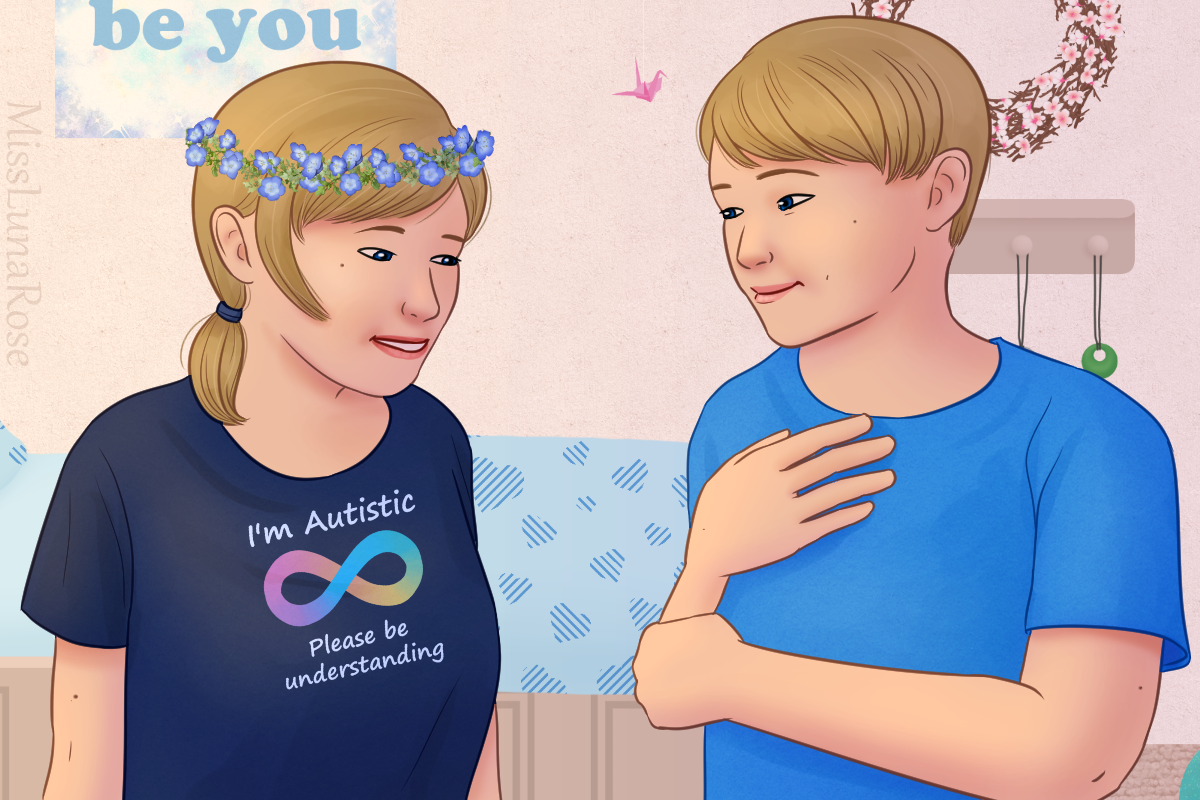
Autistic body language can be beautifully expressive, quietly subtle, wonderfully direct, or completely different from what many people expect. The tricky part is that many non-autistic people are trained to treat eye contact, facial expressions, gestures, posture, and tone of voice as if they come with universal subtitles. Spoiler alert: they do not. Reading autistic body language is less like decoding a secret message and more like learning another person’s communication style with patience, curiosity, and respect.
Autism spectrum disorder affects social communication, interaction, sensory processing, learning, movement, and behavior in different ways. Some autistic people avoid eye contact because it feels overwhelming. Some use repetitive movements, often called stimming, to regulate emotions or sensory input. Some speak with a flat tone while feeling very enthusiastic inside. Others may smile, gesture, and chat easily, yet still experience major social fatigue afterward. In other words, autistic communication is not “wrong body language.” It is body language that may not follow the standard social script.
This guide explains how to interpret autistic body language in 14 practical steps. The goal is not to “fix” autistic expression or force someone to look, sit, move, or speak like everyone else. The goal is mutual understanding. Think of it as upgrading your social Wi-Fi: fewer dropped signals, less buffering, and fewer awkward moments where everyone silently wonders whether a thumbs-up was enough.
Why Autistic Body Language Can Be Misunderstood
Many social rules are built around neurotypical expectations: look people in the eye, smile when happy, sit still when listening, nod to show attention, use a “friendly” tone, and respond quickly. Autistic people may communicate differently because of sensory sensitivities, anxiety, motor differences, processing time, masking, or simply personal preference. For example, an autistic person may look away in order to listen better, not because they are ignoring you. They may rock or flap their hands because they are excited, not because something is wrong.
One of the most important rules is this: never interpret a single cue in isolation. Crossed arms, quietness, limited eye contact, or a neutral facial expression can mean many things. Context, environment, relationship, sensory load, and the person’s own communication patterns matter more than any one gesture.
How to Interpret Autistic Body Language: 14 Steps
1. Start With Respect, Not Assumptions
The first step is simple but powerful: assume the autistic person is communicating, even if their body language does not look familiar to you. Avoid jumping to labels like rude, bored, dramatic, cold, childish, or defiant. Those labels often say more about the observer’s expectations than the autistic person’s intent.
Instead, approach their communication with curiosity. You might think, “This person is looking away while I talk. Maybe that helps them concentrate.” That single shift can prevent a lot of unnecessary misunderstanding.
2. Learn Their Personal Baseline
Body language is personal. One autistic person may flap their hands when joyful, another may go completely still. One may speak softly when comfortable, while another gets louder with excitement. The best way to interpret autistic body language is to learn the individual’s baseline.
Notice what they look like when relaxed, interested, tired, overwhelmed, amused, or upset. Over time, patterns become clearer. For example, if someone usually rocks gently while listening, rocking is probably not a crisis signal. If they suddenly stop moving, become silent, and cover their ears, that change may be more meaningful.
3. Do Not Treat Lack of Eye Contact as Lack of Attention
Eye contact is one of the most misunderstood parts of autistic body language. Some autistic people find direct eye contact distracting, uncomfortable, or even physically intense. Looking away may help them process spoken words more effectively.
Instead of demanding eye contact, look for other signs of engagement. Are they answering accurately? Are they turning their body toward you? Are they using an AAC device, typing, nodding, repeating key words, or asking follow-up questions? Attention does not always live in the eyeballs. Sometimes it is sitting politely in the corner, avoiding fluorescent lights.
4. Understand Stimming as Communication and Regulation
Stimming refers to repetitive movements, sounds, or actions such as hand-flapping, rocking, pacing, tapping, humming, spinning objects, repeating phrases, or rubbing textures. Many autistic people stim to regulate sensory input, express emotion, focus, calm anxiety, or release excitement.
Rather than asking, “How do I stop this?” ask, “What might this be doing for them?” A child flapping near a birthday cake may be thrilled. An adult rubbing their sleeve during a meeting may be self-soothing. A teen pacing before school may be managing stress. If the stim is safe and not harming anyone, acceptance is usually better than correction.
5. Read Facial Expressions Carefully
Some autistic people have facial expressions that do not match what others expect. They may have a neutral face when happy, smile when nervous, laugh when overwhelmed, or show a delayed reaction after processing information. This does not mean their feelings are fake or absent.
When in doubt, use respectful words. You can say, “I’m not sure how you’re feeling about this. Do you want to tell me?” That is far better than declaring, “You look fine,” when they are actually one loud noise away from turning into human static.
6. Pay Attention to Sensory Clues
Sensory overload can strongly affect autistic body language. Bright lights, crowded rooms, strong smells, scratchy clothing, background music, or overlapping conversations can make communication harder. Signs of sensory stress may include covering ears, squinting, freezing, pacing, withdrawing, becoming irritable, speaking less, or seeking deep pressure.
If body language suddenly changes, check the environment. The problem may not be the conversation. It may be the buzzing light, the perfume cloud, the chair texture, or the restaurant volume that sounds like 47 forks arguing in a metal bucket.
7. Notice Shutdown and Meltdown Signals
A shutdown may look like silence, stillness, difficulty speaking, avoiding movement, or seeming “far away.” A meltdown may involve crying, yelling, escaping, repetitive movements, or intense distress. Both can happen when demands exceed a person’s coping capacity.
These are not tantrums or attention-seeking performances. They are signs of overload. Helpful responses include reducing sensory input, lowering your voice, giving space, offering simple choices, and avoiding rapid-fire questions. During intense distress, body language is often saying, “My system is overloaded,” not “I want to make your afternoon complicated.”
8. Respect Personal Space and Touch Preferences
Autistic people may have strong preferences about physical distance and touch. Some enjoy hugs, deep pressure, hand-holding, or leaning against trusted people. Others dislike unexpected touch or need more personal space than average. Both are valid.
Always ask before touching, especially during stress. “Would a hug help, or would space be better?” is a respectful question. For children, teach relatives and friends that affection should not be forced. Grandma can survive without a mandatory hug; consent is not a seasonal decoration.
9. Watch for Processing Time
Autistic body language may include pauses, delayed responses, looking away, repeating the question, or seeming frozen while the person processes information. This does not automatically mean confusion, disrespect, or unwillingness.
Give extra time after asking a question. Avoid stacking more questions on top of the first one. A good rule is to ask, wait, and let silence do its job. Silence is not an empty room; sometimes it is a loading screen.
10. Listen to Tone Without Overvaluing It
Some autistic people speak in a monotone, use an unusually formal style, talk loudly without realizing it, or sound blunt when they are simply being direct. Others may use animated voices, scripts, accents, or phrases from favorite media. Tone can provide clues, but it can also mislead.
Focus on the actual words and the person’s known communication style. “I do not want to do that” may sound blunt, but it is also clear. Clear communication should not be punished just because it forgot to wear a decorative bow.
11. Understand Masking and Social Fatigue
Many autistic people learn to mask, meaning they consciously imitate neurotypical body language to avoid judgment. This might include forcing eye contact, suppressing stims, smiling at expected moments, copying gestures, or rehearsing facial expressions. Masking can help someone navigate social situations, but it can also be exhausting.
If an autistic person seems “fine” in public and then becomes quiet, irritable, or drained afterward, they may be recovering from heavy social effort. Do not assume public composure means the situation was easy. A phone at 2% battery may still show a bright screen.
12. Use Direct, Kind Questions
The most reliable way to interpret autistic body language is often to ask. Use direct and nonjudgmental questions such as, “Do you want a break?” “Is this room too loud?” “Are you interested in this topic?” or “Would you rather text about it?”
Avoid vague questions like “What’s wrong with you?” or “Why are you acting like that?” Those can sound accusatory. A better approach is: “I noticed you got quiet. Do you need space, help, or more time?” This gives options without turning the person into a mystery novel.
13. Accept Alternative Communication
Not all communication is spoken. Some autistic people use typing, texting, sign language, picture boards, gestures, AAC devices, writing, scripts, echolalia, or body movements. A nonspeaking person is not a non-thinking person. A person who communicates differently still deserves to be heard.
If someone uses AAC or written communication, be patient. Do not rush, interrupt, or speak over them. Communication access is not a bonus feature; it is the main app.
14. Confirm Meaning Instead of Guessing
The final step is to confirm your interpretation. You can say, “I may be reading this wrong, but it seems like you might need a break. Is that right?” This gives the autistic person room to correct you.
Confirmation matters because autistic body language is diverse. A stim can mean joy, stress, focus, boredom, or sensory regulation depending on the person and moment. A quiet face can hide excitement. A loud voice can signal enthusiasm, not anger. Good interpretation is a conversation, not a courtroom verdict.
Common Autistic Body Language Cues and What They May Mean
Looking Away
Looking away may mean the person is listening, thinking, reducing sensory input, or avoiding uncomfortable eye contact. It does not automatically mean dishonesty or disinterest.
Rocking, Flapping, or Pacing
These movements may show excitement, anxiety, concentration, or sensory regulation. The key is whether the person seems comfortable, distressed, or suddenly different from their usual pattern.
Flat Facial Expression
A neutral expression may not reflect neutral emotion. Some autistic people show emotion less visibly or differently. Ask rather than assume.
Covering Ears or Eyes
This often points to sensory overload. Lower noise, dim lights if possible, and reduce demands.
Moving Away
Stepping back, leaving a group, hiding under a hoodie, or going to another room may signal a need for space, quiet, safety, or decompression.
What Not to Do When Reading Autistic Body Language
Do not force eye contact. Do not grab someone’s hands to stop harmless stimming. Do not shame unusual posture, movement, tone, or facial expressions. Do not assume that an autistic person is rude because their communication style is direct. Most importantly, do not treat body language as more truthful than the person’s own words.
For example, if an autistic person says, “I am listening,” believe them, even if they are looking at the floor. If they say, “I need to leave,” take that seriously, even if they are not crying. If they say, “I am excited,” do not argue because their face looks calm. People are the experts on their own internal experience.
How Parents, Teachers, Friends, and Coworkers Can Respond Better
For parents, the best response begins with observing patterns and supporting communication rather than suppressing differences. Teach children emotional vocabulary, offer sensory tools, respect breaks, and celebrate safe stims. For teachers, clear instructions, predictable routines, visual supports, and quiet spaces can reduce misunderstandings. For friends, direct communication helps: say what you mean, explain sarcasm, and ask about preferences. For coworkers, avoid judging professionalism by eye contact or small talk. Someone can be brilliant at their job while having the conversational body language of a thoughtful houseplant in fluorescent lighting.
Across all relationships, the same principle applies: make communication easier, not more performative. The goal is not to make autistic people appear less autistic. The goal is to build a shared language where everyone can participate with less stress.
Personal Experiences and Real-Life Examples Related to Interpreting Autistic Body Language
Imagine a parent watching their autistic child at a family party. The child is sitting under the dining table, rolling a toy car back and forth. An uncle says, “He’s being antisocial.” But the parent notices something different: the room is loud, the lights are bright, and several relatives keep trying to hug the child without warning. The car is not a rejection of family love. It is a tiny four-wheeled coping strategy. When the parent offers noise-reducing headphones and a quiet corner, the child later returns and shows a cousin the car. The body language was not saying, “I hate everyone.” It was saying, “This environment is too much.”
Now picture a workplace meeting. An autistic employee looks down at their notebook during the entire discussion. A manager might assume they are disengaged. But when asked for input, the employee summarizes the problem perfectly and offers three practical solutions. Their body language did not match the manager’s expectation of attention, but their understanding was excellent. A better manager learns to measure participation by contribution, not by eye contact stamina.
In another example, a teenager paces while talking about a favorite video game. To someone unfamiliar with autistic movement, the pacing may look nervous or disruptive. But for the teen, movement helps organize thoughts and release excitement. If an adult says, “Stop pacing and talk normally,” the teen may lose the thread of the conversation. If the adult says, “You can walk while you tell me,” the teen may communicate more freely. The difference is not complicated. One response blocks communication; the other opens the door and politely holds it.
A common experience among autistic adults is being told they look angry when they are simply thinking. One person may have a serious resting face while planning dinner, reviewing an email, or deciding whether the hum of the refrigerator has always been that loud. When people repeatedly misread this expression, the autistic person may feel pressured to perform friendliness all day. That performance can be tiring. Friends and coworkers can help by asking directly instead of assuming: “You seem quiet today. Are you okay, or just focused?” This gives the person a chance to answer without being accused of emotional crimes they did not commit.
Another real-life situation involves dating or friendship. Suppose an autistic person does not flirt through typical body language. They may not hold eye contact, lean in, or use playful teasing. Instead, they may show interest by sharing detailed information, sending useful links, remembering small facts, or making time for regular conversation. To someone expecting movie-style chemistry, this might seem confusing. But affection can look like, “I researched the best route for your trip because you said traffic stresses you out.” Honestly, that is romance with a spreadsheet, and it deserves respect.
Caregivers of nonspeaking autistic people often learn to read small signals: a shift in posture, reaching toward a device, pushing away a plate, humming in a certain rhythm, or moving closer to a trusted person. These signals are not “less than” speech. They are part of a communication system. The respectful response is to support more access, not to dismiss the message because it arrives without spoken words.
These examples show why interpreting autistic body language requires humility. You will not always get it right. Nobody gets social communication right all the time; humanity has group texts to prove this. But when you slow down, ask clearly, respect differences, and learn the individual’s patterns, you create safer and more accurate communication. That is the heart of understanding autistic body language: not decoding people from the outside, but meeting them halfway.
Conclusion
Interpreting autistic body language is not about memorizing a rigid dictionary of gestures. It is about understanding that autistic people may communicate attention, emotion, stress, joy, and boundaries in ways that differ from neurotypical expectations. Eye contact may be uncomfortable. Stimming may be regulation. Silence may be processing. A neutral face may hide deep feeling. A direct sentence may be honesty, not rudeness.
The best approach is respectful observation plus direct communication. Learn the person’s baseline, consider sensory factors, avoid forcing “normal” body language, and ask kind questions when you are unsure. When we stop treating autistic body language as a problem to correct, we become better listeners, better friends, better teachers, better coworkers, and better humans. Not perfect humans, of course. But definitely upgraded ones.
Note: This article is for educational and communication-support purposes only. It should not be used to diagnose autism or replace guidance from qualified healthcare, educational, or mental health professionals.