Most machining sounds like a wrestling match between metal and tool steel: cutters bite, chips fly, coolant splashes, and somewhere in the background a machinist listens carefully for the terrifying sound of “that was expensive.” But the idea behind Machining With Electricity Hack Chat is wonderfully different. Instead of forcing a sharp tool into hard metal, electrical machining removes material with controlled sparks, electrochemical reactions, or both. It is metalworking with a lightning bug’s personality and a surgeon’s ambition.
The Hackaday-style fascination with this topic makes perfect sense. Electrical discharge machining, commonly called EDM, and electrochemical machining, or ECM, sit at the intersection of manufacturing, electronics, chemistry, CNC control, and brave garage experimentation. These processes are not just industrial magic tricks. They are real, proven methods used for making dies, molds, aerospace parts, medical components, tiny holes in hard steel, and complex shapes that would make an end mill file a complaint with human resources.
This article explores what the Machining With Electricity Hack Chat concept teaches makers, engineers, students, and curious readers about EDM, ECM, desktop experimentation, safety, tooling, and the future of non-contact machining.
What Does “Machining With Electricity” Actually Mean?
Machining with electricity refers to material removal processes where electrical energy does the cutting instead of traditional mechanical force. In conventional milling, turning, or drilling, a tool physically contacts the workpiece and shears away material. In electrical machining, the tool may never touch the part at all.
That single detail changes everything. No contact means far less cutting force. Less cutting force means delicate parts, hardened materials, and intricate geometries become more realistic. A small electrode can shape a hard steel cavity. A fine wire can slice through tough alloys. A controlled electrochemical reaction can dissolve metal into a precise form without creating a burr-covered crime scene.
The two star players in this world are electrical discharge machining and electrochemical machining. EDM uses sparks to erode conductive material. ECM uses electrochemical dissolution, almost like reverse plating, to remove metal atom by atom. Both are non-traditional machining methods, and both are especially interesting to the maker community because they hint at a future where a modest desktop machine might perform jobs once reserved for industrial shops.
Why the Hack Chat Topic Matters
The phrase Machining With Electricity Hack Chat captures more than a technical discussion. It represents a broader maker question: can advanced manufacturing be made understandable, affordable, and hackable?
Hack Chats are community conversations where builders, engineers, and experimenters ask direct questions of people working in specialized fields. In the machining-with-electricity context, the discussion naturally centers on EDM, ECM, desktop EDM systems, electrodes, dielectric fluids, power supplies, motion control, and the practical headaches that appear when theory leaves the whiteboard and enters the garage.
That is the fun part. EDM sounds simple if described in one sentence: use controlled sparks to remove metal. Then reality walks in wearing safety glasses and carrying a bucket labeled “problems.” You need accurate motion, controlled discharge energy, a stable gap, proper flushing, safe electrical design, electrode planning, debris removal, and enough patience to avoid turning your workpiece into abstract art.
EDM: The Art of Cutting Metal With Sparks
Electrical discharge machining is a thermal erosion process. A tool electrode and a conductive workpiece are separated by a tiny gap and immersed in a dielectric fluid. When voltage builds high enough, a spark jumps the gap. That spark creates intense localized heat, melting or vaporizing microscopic particles of metal. The dielectric fluid cools the zone and flushes away debris.
The result is not one dramatic lightning bolt but thousands of tiny controlled discharges. Imagine a very disciplined storm cloud that has agreed to follow G-code. Each spark removes a small amount of material, and together they create a cavity, slot, hole, or cut.
Common Types of EDM
Sinker EDM, also called ram EDM or die-sinking EDM, uses a shaped electrode, often made from graphite or copper. The electrode is the negative form of the desired cavity. It is slowly advanced into the workpiece while sparks erode the metal into shape. This method is widely used for mold cavities, dies, sharp internal corners, and complex features that normal cutting tools cannot easily reach.
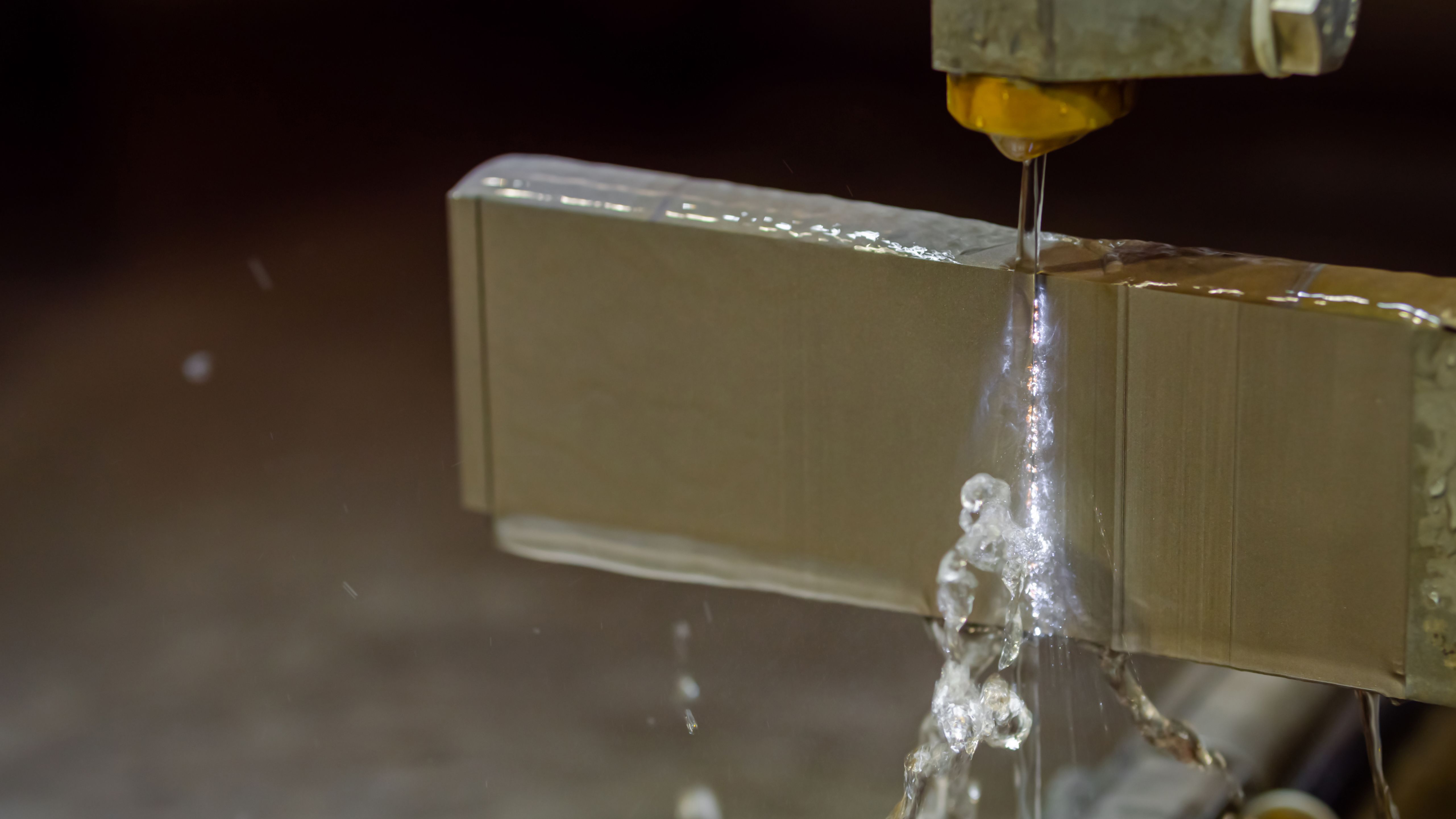
Wire EDM uses a thin electrically charged wire as the electrode. The wire moves continuously from a spool, passing through the workpiece like a spark-powered bandsaw. It is especially useful for cutting profiles, dies, punches, gears, precision plates, and parts requiring narrow kerfs. The wire does not actually rub against the metal; it erodes the path through controlled discharge.
Hole drilling EDM uses tubular electrodes to make small, deep holes. This is useful in turbine blades, hardened tooling, and applications where a conventional drill would wander, break, or send a resignation letter.
ECM: The Smoother, Stranger Cousin
Electrochemical machining works differently from EDM. Instead of using sparks and heat, ECM removes metal through electrochemical dissolution. The workpiece acts as the anode, the tool acts as the cathode, and an electrolyte flows through the gap. With the right electrical current and fluid flow, metal dissolves from the workpiece in a controlled way.
ECM has major advantages. It can machine hard materials without tool wear, avoid heat-affected zones, and produce very smooth surfaces. That makes it attractive for aerospace, energy, medical, and high-volume precision manufacturing. But it is technically demanding. Electrolyte chemistry, flow control, tool design, waste handling, and process stability all matter. In other words, ECM is not “just add salt water and vibes.”
EDM vs. ECM: Same Electricity, Different Personality
EDM and ECM both machine metal without traditional cutting force, but their personalities differ. EDM is more approachable for hobbyists because it can be built around controlled sparks, electrodes, a dielectric, and relatively understandable motion control. It is slower and can leave a recast layer or rougher surface, but it is practical for small-scale experimentation.
ECM can be faster and smoother, and it does not consume the tool in the same way EDM consumes electrodes. However, ECM requires careful management of electrolyte flow, chemistry, current density, and environmental concerns. For a production company, that complexity can be worth it. For a home shop, it may feel like adopting a dragon and then realizing the dragon also needs plumbing.
Why Makers Are Excited About Desktop EDM
The maker community loves desktop EDM because it suggests a powerful idea: maybe a repurposed CNC router, 3D printer frame, or custom motion platform can become a machine that cuts metal without needing heavy cutting forces. Since EDM is non-contact, the machine frame does not need to resist the same loads as a mill chewing through steel.
That does not mean desktop EDM is easy. It only means the hard problems move somewhere else. Instead of spindle rigidity and cutter chatter, builders must think about spark control, electrode wear, dielectric filtering, flushing, fire risk, electrical isolation, corrosion, and software that can maintain the spark gap without crashing the electrode into the work.
For hobbyists, this is exactly the kind of challenge that becomes irresistible. It combines electronics, firmware, machining, fluid handling, and a dash of “please do not let the magic smoke become actual smoke.”
Key Components in an EDM Setup
1. Power Supply
The power supply controls the energy delivered into the spark gap. EDM generally uses pulsed electrical discharges rather than continuous uncontrolled arcing. Pulse duration, frequency, voltage, current, and duty cycle influence cutting speed, surface finish, electrode wear, and process stability.
2. Electrode
The electrode may be graphite, copper, brass, tungsten, or another conductive material depending on the application. In sinker EDM, the electrode shape matters because it defines the cavity. In wire EDM, the wire is continuously refreshed, which helps manage wear.
3. Dielectric Fluid
The dielectric fluid is not just a puddle with ambition. It insulates until a discharge occurs, cools the cut, and flushes away particles. Wire EDM commonly uses deionized water, while sinker EDM often uses hydrocarbon or specialized dielectric oils. Bad flushing can lead to unstable cutting, poor finish, wire breakage, or accidental “modern sculpture.”
4. Motion Control
EDM depends on maintaining a small, controlled gap between electrode and workpiece. CNC control, servo feedback, stepper motors, and careful programming all matter. In wire EDM, the wire path must be coordinated with tension, feed, and dielectric flow. In sinker EDM, the electrode advances as material is removed.
5. Filtration and Debris Management
EDM creates tiny particles of eroded metal. If those particles remain in the gap, they can cause short circuits, unstable arcs, and ugly surface results. Filtration, flushing pressure, tank design, and fluid maintenance are therefore central to good performance.
What Can EDM Machine?
EDM can machine electrically conductive materials, including hardened tool steel, titanium, carbide, copper, brass, heat-treated alloys, and high-temperature materials. Hardness is not the limiting factor in the same way it is for conventional machining. Conductivity is the price of admission.
That makes EDM valuable when a part is too hard, too delicate, too detailed, or too geometrically annoying for ordinary cutters. It is used for injection mold tooling, stamping dies, extrusion dies, medical components, aerospace hardware, broken tap removal, micro holes, and precision slots.
However, EDM is not the best answer for every job. It is generally slower than chip-making processes, requires conductive workpieces, and needs careful setup. If a simple aluminum bracket can be milled in five minutes, EDM is not automatically the hero. It is the specialist you call when the ordinary tools start sweating.
Advantages of Electrical Machining
The biggest advantage is non-contact material removal. Because there is no conventional cutting force, EDM can create fragile features, thin walls, fine slots, sharp corners, and intricate details. Burr formation is reduced, and hard materials can be shaped after heat treatment.
Another advantage is repeatability. Industrial EDM machines can run long programs with consistent results, especially when electrode wear, wire feed, dielectric quality, and machine calibration are properly controlled. Wire EDM can also stack thin parts for production, creating multiple identical profiles in one operation.
For product designers, EDM expands what is manufacturable. Internal corners no longer need to match the radius of a spinning end mill. Hardened parts can be finished after heat treatment. Tiny holes can be drilled into materials that would punish conventional tooling.
Limitations and Safety Concerns
Electrical machining deserves respect. EDM uses high voltage, flammable or irritating fluids may be involved, and smoke or mist can irritate eyes and lungs. Poor dielectric fluid levels can increase fire risk. Electrical isolation, ventilation, fire safety, and personal protective equipment are not optional decorative accessories.
There are also process limitations. EDM can leave a recast layer and heat-affected zone. Surface integrity may matter in fatigue-critical parts. Electrode wear changes dimensions and must be compensated. Wire EDM cuts a kerf slightly larger than the wire diameter. ECM introduces chemical handling and waste treatment concerns. None of these issues make the processes bad; they simply remind us that “advanced manufacturing” is another phrase for “details matter.”
Specific Example: Cutting a Hardened Tool Steel Profile
Imagine a shop needs a small punch made from hardened tool steel. Milling it after hardening would be difficult, and cutting sharp internal details with a rotating cutter may be impossible. Wire EDM can solve the problem by threading a thin wire through a starter hole and following a programmed profile. The machine controls the spark gap, deionized water flushes away debris, and the wire continuously refreshes as it cuts.
The final part can have tight geometry, clean edges, and fine detail. The process may not be fast compared with rough milling soft metal, but it can achieve shapes that would otherwise require multiple operations or compromise the design.
What the Hack Chat Spirit Teaches
The best lesson from the Machining With Electricity Hack Chat idea is that manufacturing innovation often begins with curiosity. Industrial EDM and ECM are sophisticated, but their underlying concepts can still be discussed, tested, and explored by independent builders.
That does not mean every garage should immediately build a spark erosion machine. It means the boundary between professional manufacturing and maker experimentation is more porous than people assume. A curious person can learn about electrodes, dielectric fluids, pulsed power, CNC motion, and electrochemistry, then build small experiments that reveal how the process behaves.
Hack Chat culture is valuable because it lets experts explain the “why” behind the machine. Why does flushing matter so much? Why does wire break? Why do electrodes wear? Why is ECM smoother but harder? Why can a non-contact process still produce dimensional errors? These questions are where real understanding begins.
Experience Notes: Practical Lessons From Machining With Electricity
When people first encounter EDM, they often underestimate the importance of the gap. In ordinary machining, contact is expected. In EDM, contact is failure. The electrode must stay close enough for sparks to jump but not so close that it shorts. That tiny controlled separation is the heart of the process. It is also why motion control and feedback matter so much.
A practical beginner’s lesson is that debris behaves like a mischievous gremlin. The sparks may be doing the cutting, but the removed particles must leave the gap quickly. If they remain, they change the electrical behavior of the cut. The result may be unstable arcing, poor surface finish, slower progress, or broken wire. Good flushing is not an upgrade; it is survival.
Another experience-based lesson is that electrode planning deserves more attention than beginners expect. In sinker EDM, the electrode is a consumable tool with geometry, wear, and cost. Graphite may be easier to machine into complex shapes, while copper offers different performance characteristics. The electrode must often be made before the EDM job can begin, which adds lead time. That surprises people who imagine EDM as a universal “press button, receive perfect cavity” machine.
For desktop EDM builders, the most tempting shortcut is using an existing 3D printer or lightweight CNC frame. This can work for experiments because EDM does not generate large cutting forces. But the machine still needs stable alignment, electrical isolation, fluid containment, and predictable Z-axis response. A wobbly frame may not snap an end mill, but it can still ruin the spark gap. Precision remains precision, even when the tool is electricity.
Safety is the lesson nobody should learn the dramatic way. EDM involves electricity, fluids, heat, fumes, and sometimes flammable materials. A serious setup needs grounding, fusing, emergency stops, ventilation, fire awareness, and a sensible enclosure. The goal is to remove metal, not eyebrows.
One useful mental model is to treat EDM as a conversation between four systems: power, motion, fluid, and material. The power supply asks, “Can I spark?” The motion system asks, “Am I at the right distance?” The fluid system asks, “Can I remove heat and debris?” The material answers, “Here is how I melt, vaporize, conduct, and behave.” A successful EDM cut happens when all four agree. A failed cut happens when one of them starts shouting.
ECM teaches a slightly different lesson. Because it is electrochemical rather than spark-based, the quality of the electrolyte flow and tool design becomes even more important. It can create beautiful surfaces and avoid thermal damage, but it demands a deeper understanding of chemistry and process control. For hobbyists, ECM is fascinating; for industry, it can be extremely powerful when properly engineered.
The most inspiring experience connected to machining with electricity is the realization that metal removal does not have to be violent. A mill attacks. A lathe peels. A grinder abrades. EDM whispers with sparks. ECM persuades atoms to leave. That shift in perspective changes how designers think about manufacturability. Instead of asking only, “Can a cutter reach this?” they can ask, “Can energy be controlled here?”
That is why the Machining With Electricity Hack Chat topic continues to resonate. It is technical enough for engineers, weird enough for makers, practical enough for manufacturers, and dramatic enough for anyone who enjoys the phrase “controlled lightning.” It reminds us that the future of machining may not always be louder, heavier, or sharper. Sometimes it may be quieter, cleaner, more precise, and powered by a spark that knows exactly where to land.
Conclusion
Machining With Electricity Hack Chat is more than a catchy title. It is a doorway into one of the most fascinating corners of modern manufacturing. EDM and ECM show how electricity can shape conductive materials without brute cutting force, opening possibilities for hard alloys, complex geometry, delicate features, and desktop experimentation.
For industrial users, electrical machining is a proven solution for high-value parts, dies, molds, aerospace components, medical devices, and precision tooling. For makers, it is a challenging but exciting frontier where electronics, CNC motion, fluid systems, and machining knowledge all collide. The sparks may be tiny, but the ideas are huge.