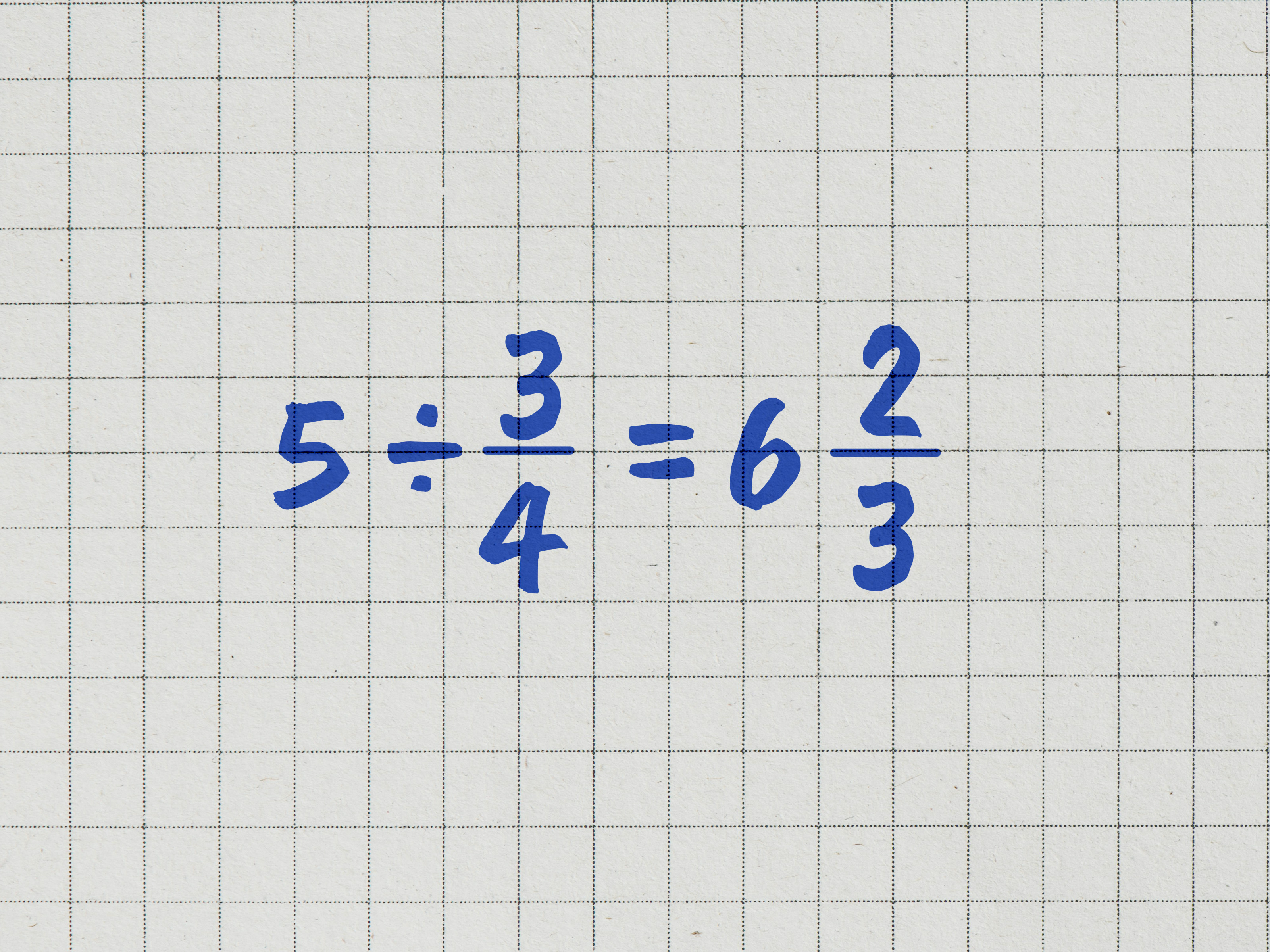
Dividing whole numbers by fractions sounds like the kind of math topic that might arrive wearing a tiny villain cape. A whole number looks friendly enough: 2, 5, 12, 48. A fraction looks harmless too: 1/2, 3/4, 2/5. But put them together in a division problem like 6 ÷ 3/4, and suddenly everyone in the room is looking for a snack, a pencil, or a polite excuse to leave.
Good news: learning how to divide whole numbers by fractions is much easier than it first appears. The main idea is simple: when you divide by a fraction, multiply by its reciprocal. In everyday classroom language, many teachers say, “keep, change, flip.” Keep the whole number, change division to multiplication, and flip the fraction. It is short, catchy, and slightly more useful than most things that rhyme.
This guide explains the rule, why it works, how to solve sample problems, how to check your answers, and how to avoid the most common mistakes. By the end, whole number divided by fraction problems should feel less like a mystery and more like a recipe: follow the steps, simplify when needed, and do not panic when the numerator and denominator start switching seats.
What Does It Mean to Divide a Whole Number by a Fraction?
Division asks, “How many groups of this size fit into that amount?” When you solve 8 ÷ 2, you are asking how many groups of 2 fit into 8. The answer is 4 because four groups of 2 make 8.
Now try 8 ÷ 1/2. This asks, “How many halves fit into 8 wholes?” Since each whole contains 2 halves, 8 wholes contain 16 halves. So:
8 ÷ 1/2 = 16
This is the part that surprises many learners. Dividing by a fraction can make the answer bigger. That feels odd at first because division often makes numbers smaller when we divide by whole numbers greater than 1. But a fraction like 1/2 is smaller than 1, so you are counting smaller pieces. Smaller pieces fit more times.
The Golden Rule: Multiply by the Reciprocal
The fastest reliable method for dividing whole numbers by fractions is:
- Write the whole number as a fraction over 1.
- Keep the first number.
- Change division to multiplication.
- Flip the second fraction to get its reciprocal.
- Multiply across.
- Simplify the answer if needed.
For example:
6 ÷ 3/4
Write 6 as 6/1. Then flip 3/4 to get 4/3.
6/1 × 4/3 = 24/3 = 8
So:
6 ÷ 3/4 = 8
What Is a Reciprocal?
A reciprocal is a number flipped upside down. The reciprocal of 2/3 is 3/2. The reciprocal of 5/8 is 8/5. A whole number has a reciprocal too. Since 7 can be written as 7/1, its reciprocal is 1/7.
Here are a few quick examples:
- The reciprocal of 1/4 is 4/1, or simply 4.
- The reciprocal of 3/5 is 5/3.
- The reciprocal of 9/10 is 10/9.
- The reciprocal of 12 is 1/12.
The reason reciprocals matter is that a number multiplied by its reciprocal equals 1. That little fact is the engine under the hood of fraction division. It is not magic. It is just math wearing a magician’s hat.
How to Divide Whole Numbers by Fractions Step by Step
Step 1: Turn the Whole Number Into a Fraction
Any whole number can be written over 1. This does not change its value.
5 = 5/1
12 = 12/1
This step helps because fraction multiplication works neatly when both numbers are written as fractions.
Step 2: Change Division to Multiplication
Instead of dividing by the original fraction, multiply by its reciprocal.
5 ÷ 2/3 becomes 5/1 × 3/2.
Step 3: Flip the Divisor
The divisor is the number you are dividing by. In 5 ÷ 2/3, the divisor is 2/3. Flip it to get 3/2.
Step 4: Multiply Numerators and Denominators
Multiply the top numbers. Then multiply the bottom numbers.
5/1 × 3/2 = 15/2
Step 5: Simplify or Convert to a Mixed Number
15/2 is an improper fraction. As a mixed number, it is:
7 1/2
So:
5 ÷ 2/3 = 7 1/2
Sample Problem 1: Divide by a Unit Fraction
Problem: 4 ÷ 1/3
Step 1: Write 4 as 4/1.
Step 2: Flip 1/3 to get 3/1.
Step 3: Multiply.
4/1 × 3/1 = 12/1 = 12
Answer: 12
Meaning: There are 12 one-third pieces in 4 wholes. Picture four pizzas. If each pizza is cut into thirds, you have 12 slices. Whether anyone shares those slices is a separate moral question.
Sample Problem 2: Divide by a Non-Unit Fraction
Problem: 9 ÷ 3/4
Write 9 as 9/1. Flip 3/4 to get 4/3.
9/1 × 4/3 = 36/3 = 12
Answer: 12
Check: If 12 groups each contain 3/4, then:
12 × 3/4 = 36/4 = 9
The check works, so the answer is correct.
Sample Problem 3: Answer as a Mixed Number
Problem: 7 ÷ 2/5
Write 7 as 7/1. Flip 2/5 to get 5/2.
7/1 × 5/2 = 35/2
Convert 35/2 to a mixed number:
35 ÷ 2 = 17 remainder 1
35/2 = 17 1/2
Answer: 17 1/2
This means there are seventeen and one-half groups of size 2/5 in 7 wholes.
Sample Problem 4: Simplify Before Multiplying
Problem: 10 ÷ 5/6
Write the problem as multiplication by the reciprocal:
10/1 × 6/5
You could multiply first:
10 × 6 = 60
1 × 5 = 5
60/5 = 12
Or you could simplify before multiplying. Since 10 and 5 share a factor of 5:
10/5 = 2
Then:
2 × 6 = 12
Answer: 12
Simplifying early is like cleaning as you cook. You can wait until the end, but future you will be happier if you handle it now.
Sample Problem 5: Word Problem With Measurement
Problem: Maya has 6 yards of ribbon. Each bow takes 3/4 yard of ribbon. How many bows can she make?
This is a division problem because we want to know how many groups of 3/4 fit into 6.
6 ÷ 3/4
Use the reciprocal:
6/1 × 4/3 = 24/3 = 8
Answer: Maya can make 8 bows.
To check, multiply 8 bows by 3/4 yard each:
8 × 3/4 = 24/4 = 6
The answer fits the story.
Why Does Dividing by a Fraction Make the Answer Bigger?
When the fraction is less than 1, you are asking how many small parts fit into a larger amount. Smaller pieces fit more times. That is why 3 ÷ 1/2 = 6, not 1 1/2.
Think of measuring cups. If you have 3 cups of flour and scoop it using a 1/2-cup scoop, you can fill the scoop 6 times. If you use a 1/3-cup scoop, you can fill it 9 times. The smaller the scoop, the more scoops you get. Math and baking finally agree on something.
Dividing Whole Numbers by Unit Fractions
A unit fraction has 1 as the numerator, such as 1/2, 1/5, or 1/8. These problems are often the easiest because the reciprocal becomes a whole number.
Examples:
- 3 ÷ 1/2 = 3 × 2 = 6
- 5 ÷ 1/4 = 5 × 4 = 20
- 8 ÷ 1/10 = 8 × 10 = 80
Shortcut: When dividing a whole number by a unit fraction, multiply the whole number by the denominator.
n ÷ 1/d = n × d
So 7 ÷ 1/6 = 7 × 6 = 42.
Dividing Whole Numbers by Non-Unit Fractions
A non-unit fraction has a numerator other than 1, such as 2/3, 3/5, or 5/8. The same reciprocal method works.
Examples:
- 6 ÷ 2/3 = 6/1 × 3/2 = 18/2 = 9
- 12 ÷ 3/5 = 12/1 × 5/3 = 60/3 = 20
- 4 ÷ 5/6 = 4/1 × 6/5 = 24/5 = 4 4/5
The method does not change. Keep the whole number, change division to multiplication, flip the fraction, multiply, and simplify.
How to Check Your Answer
The best way to check a division answer is to use multiplication. If:
whole number ÷ fraction = quotient
Then:
quotient × fraction = whole number
Example:
8 ÷ 2/5 = 20
Check:
20 × 2/5 = 40/5 = 8
Because the multiplication brings us back to 8, the answer is correct.
Common Mistakes to Avoid
Mistake 1: Flipping the Wrong Number
Only flip the number after the division sign. In 6 ÷ 2/3, flip 2/3, not 6. The correct setup is:
6/1 × 3/2
Mistake 2: Forgetting to Change Division to Multiplication
Do not flip the fraction and leave the division sign. The operation changes too. Division by a fraction becomes multiplication by the reciprocal.
Mistake 3: Not Simplifying
An answer like 24/6 is not wrong if the value is correct, but it is unfinished. Simplify it to 4. In many classrooms, “simplest form” is part of the answer, not a bonus round.
Mistake 4: Assuming Division Always Makes Numbers Smaller
When you divide by a fraction less than 1, the answer often gets bigger. Remember: you are counting how many small pieces fit into the whole amount.
Practice Problems With Answers
Try these before looking at the answers. No peeking. The fractions can tell.
Problem Set
- 5 ÷ 1/2
- 8 ÷ 1/4
- 6 ÷ 2/3
- 10 ÷ 5/8
- 3 ÷ 3/5
- 12 ÷ 4/7
- 9 ÷ 6/10
- 2 ÷ 5/6
Answer Key
- 5 ÷ 1/2 = 5 × 2 = 10
- 8 ÷ 1/4 = 8 × 4 = 32
- 6 ÷ 2/3 = 6/1 × 3/2 = 18/2 = 9
- 10 ÷ 5/8 = 10/1 × 8/5 = 80/5 = 16
- 3 ÷ 3/5 = 3/1 × 5/3 = 15/3 = 5
- 12 ÷ 4/7 = 12/1 × 7/4 = 84/4 = 21
- 9 ÷ 6/10 = 9/1 × 10/6 = 90/6 = 15
- 2 ÷ 5/6 = 2/1 × 6/5 = 12/5 = 2 2/5
Real-Life Examples of Dividing Whole Numbers by Fractions
Fraction division appears in more places than worksheets. It shows up in cooking, building, sewing, sports, gardening, and shopping. If you have a total amount and want to know how many fractional-size parts fit into it, you are dividing a whole number by a fraction.
Cooking Example
You have 4 cups of rice. Each serving uses 2/3 cup. How many servings can you make?
4 ÷ 2/3 = 4/1 × 3/2 = 12/2 = 6
You can make 6 servings.
Woodworking Example
A board is 10 feet long. Each shelf needs 5/6 foot. How many shelves can be cut?
10 ÷ 5/6 = 10/1 × 6/5 = 60/5 = 12
You can cut 12 shelves, assuming the saw blade does not steal too much wood like a tiny lumber goblin.
Fitness Example
A walking trail is 3 miles long. One lap around a small loop is 3/4 mile. How many loops equal 3 miles?
3 ÷ 3/4 = 3/1 × 4/3 = 12/3 = 4
Four loops equal 3 miles.
Experience-Based Tips for Learning This Topic
One of the best experiences related to learning how to divide whole numbers by fractions is realizing that the rule makes more sense when you connect it to real objects. Many students first memorize “keep, change, flip” and can solve a few problems quickly, but then they freeze when a word problem appears. The solution is to slow down and ask, “What am I counting?” If the problem says 5 yards of fabric are cut into 1/2-yard pieces, you are counting half-yard pieces. That mental picture makes 5 ÷ 1/2 = 10 feel obvious instead of random.
Another helpful experience is drawing models. A number line works especially well. For 3 ÷ 1/4, draw a line from 0 to 3 and divide each whole into fourths. You will see 12 quarter-size jumps. That picture explains why the answer is 12. After a few visual examples, the reciprocal rule stops feeling like a strange trick and starts feeling like a shortcut based on something real.
Students also benefit from checking answers out loud. Suppose the problem is 8 ÷ 2/3 = 12. Say, “Twelve groups of two-thirds equals eight.” Then check: 12 × 2/3 = 24/3 = 8. This habit catches mistakes fast. If the check does not return the original whole number, something went sideways. Maybe the wrong number was flipped. Maybe the answer was not simplified. Maybe the pencil was emotionally unavailable. Either way, the check helps.
In tutoring sessions, a common turning point happens when learners understand that division by a small number can produce a larger answer. For example, 2 ÷ 1/8 = 16. At first, 16 may seem too large. But if two candy bars are divided into eighths, there are 16 eighth-size pieces. The answer is not huge; the pieces are tiny. This is the heart of the concept.
A practical study routine is to practice in three rounds. First, solve unit fraction problems such as 6 ÷ 1/3 and 9 ÷ 1/5. Second, move to non-unit fractions such as 6 ÷ 2/3 and 10 ÷ 3/4. Third, solve word problems involving recipes, distance, ribbon, paint, or measurement. This progression builds confidence without throwing every fraction dragon into the room at once.
Finally, do not rush simplification. Many errors happen after the hard part is already finished. If you get 45/6, reduce it to 15/2 or write it as 7 1/2, depending on what the problem asks for. A clean final answer shows that you understand both the process and the result. Fraction division is not about speed. It is about clear steps, good habits, and remembering that flipping the divisor is allowed, but flipping the desk is not recommended.
Conclusion
Dividing whole numbers by fractions becomes simple once you understand the pattern: write the whole number as a fraction, change division to multiplication, flip the divisor, multiply, and simplify. The reciprocal method works for unit fractions, non-unit fractions, sample problems, and real-life situations involving measuring, cooking, cutting, and sharing.
The key is not just memorizing “keep, change, flip.” The key is understanding what the problem asks: how many fractional parts fit into the whole number? Once that question clicks, the math becomes much friendlier. And unlike some houseplants, this skill actually gets stronger when you practice it.