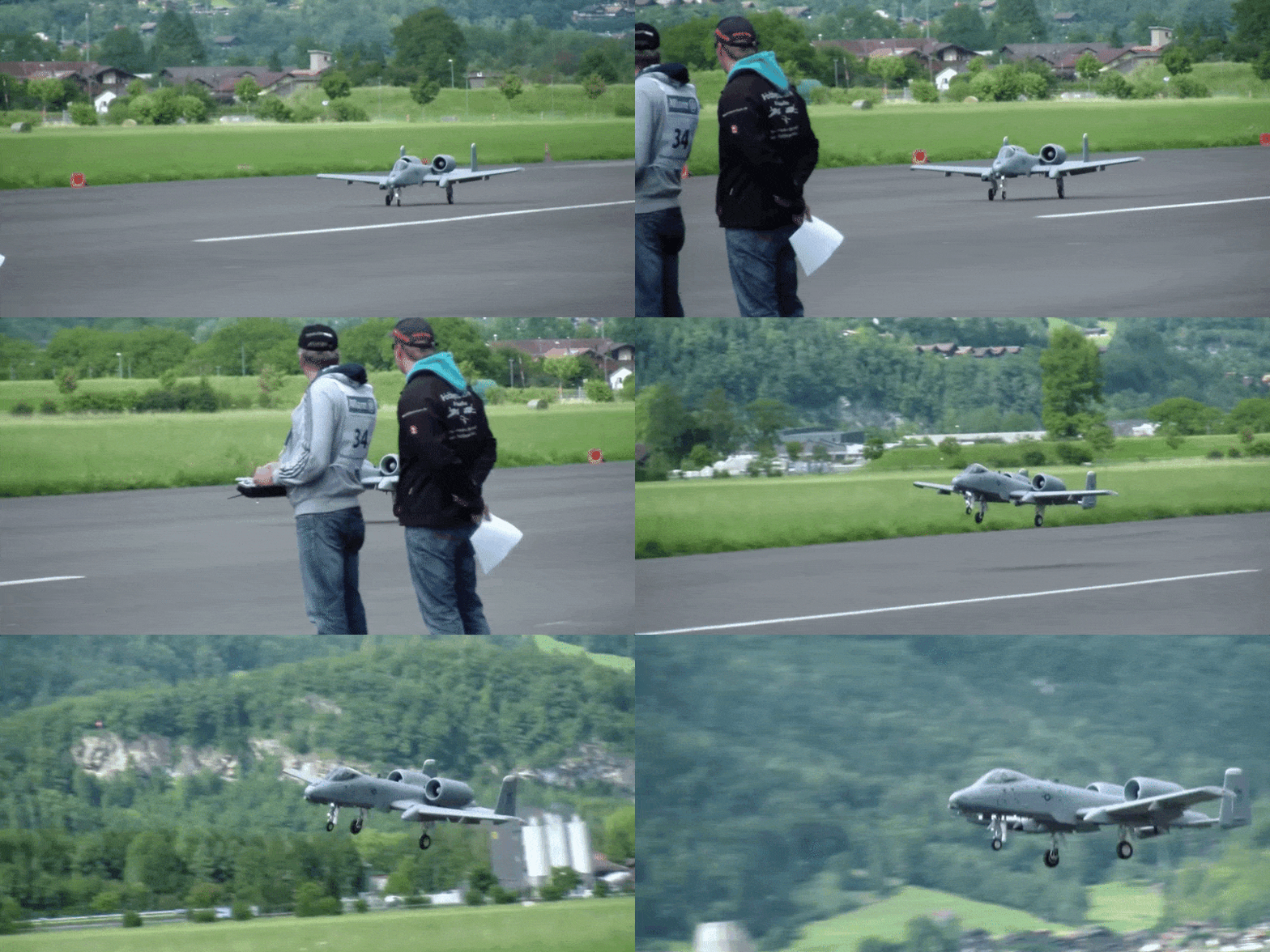
Some RC airplanes are elegant. Some are fast. Some look like they were born to sip coffee at a museum and discuss laminar flow. The RC A-10 Warthog is not one of those airplanes. It shows up like a flying bad attitude with twin fans, a blunt nose, and the kind of presence that makes everyone at the field stop mid-sentence and say, “Well… that looks serious.”
That is exactly the charm. The full-size A-10 Thunderbolt II earned its legendary reputation by being tough, stable at low altitude, and purpose-built for close air support. RC modelers have taken that same spirit and turned it into one of the most entertaining scale warbirds in the hobby. A good RC A-10 Warthog delivers the look people love, the twin-EDF sound people secretly adore, and the kind of runway presence that makes even a simple taxi test feel like a military documentary with better snacks.
If you are wondering why the RC A-10 Warthog has such a devoted following, the answer is simple: it combines scale drama with surprisingly practical flying traits. Compared with sleeker RC jets that demand constant attention and nerves made of titanium, many A-10 models offer a wider flight envelope, predictable handling, and forgiving low-speed manners. In other words, it looks mean, but it often flies like it actually wants you to have a good day.
Why the A-10 Is Catnip for RC Pilots
The full-size Warthog has always stood apart from flashy fighters. It was designed to fly low, loiter long, absorb punishment, and keep working when conditions got ugly. That identity matters in the RC world because the airplane’s shape translates beautifully into a scale model. The straight wing, twin-engine layout, high-mounted nacelles, twin tails, and chunky landing gear create a silhouette that is instantly recognizable from half a field away.
For modelers, that means the A-10 is not just another RC warbird. It is an icon. Even people who cannot tell a servo horn from a salad fork usually know a Warthog when they see one. That matters if you care about spectator appeal, and let’s be honest, most pilots do. There is a tiny performer inside every hobbyist, and the RC A-10 scratches that itch without requiring pyrotechnics or a soundtrack.
It also helps that manufacturers have leaned hard into what makes the airplane fun. Today’s RC A-10 Thunderbolt II models often come with twin electric ducted fans, detailed panel lines, scale weapons, navigation lights, operational flaps, retractable landing gear, and sturdy foam construction. Translation: you get the look of a serious scale jet without needing a hangar, a machine shop, and a second mortgage.
What Makes a Modern RC A-10 Warthog So Appealing?
Twin EDF Power With Real Personality
One of the biggest reasons pilots love an EDF A-10 is the sound. Twin electric ducted fans do not exactly reproduce the voice of the full-size aircraft, but they create a convincing, high-energy whoosh that feels wonderfully theatrical on a low pass. Many popular models in the 64mm to 70mm range use efficient 11-blade or 12-blade fans, giving pilots a mix of thrust, speed, and that addictive jet soundtrack.
The result is a model that feels lively without becoming ridiculous. A strong twin-EDF A-10 can climb with authority, track nicely through big loops, and rip through fast passes with enough swagger to make the pilot forget they are standing in a grass field wearing a sun hat that says “World’s Okayest Builder.” That is a powerful emotional package.
Scale Features That Actually Add to the Experience
Modern RC manufacturers understand that the A-10 is all about attitude. That is why many current models focus heavily on scale realism. You will often see molded rivets, panel lines, removable ordnance, pilot figures, nose art, shock-absorbing retracts, and LED lighting packages with navigation or strobe effects. These details are not just cosmetic fluff. They change how the airplane feels during setup, taxi, takeoff, and landing.
A model with well-done landing gear and flaps feels more convincing from the second it begins rolling. A model with bright lighting and realistic surface detail looks fantastic in the pits and even better on a late-afternoon pass. In the RC world, realism is part engineering, part theater, and the A-10 may be one of the best performers in the hobby.
A Layout That Often Flies Better Than It Looks Like It Should
Here is the funny part: the RC A-10 looks like it should be a handful, but many versions are more approachable than sleeker scale jets. The broad wing and familiar gear arrangement can help with stability, slow-flight confidence, and less dramatic landing behavior. That does not make it a beginner trainer, because it absolutely is not, but it does make it a smart step into scale RC jets for pilots who already have solid experience with warbirds or entry-level EDF aircraft.
This is one reason the model has staying power. An RC airplane that is beautiful but stressful gets admired, flown twice, and eventually becomes garage art. An airplane that is beautiful and genuinely fun keeps earning batteries. The Warthog tends to be the second kind.
Choosing the Right RC A-10 for Your Skill Level
If you are shopping for an RC A-10 Warthog, the first question is not “How cool does it look?” because the answer is always “extremely.” The better question is, “How much airplane am I ready for?”
Smaller 64mm-class models are often easier to transport, less demanding on storage, and a little friendlier on the wallet. They can still deliver excellent performance and strong scale presence while fitting more naturally into everyday club flying. For many intermediate pilots, this size is the sweet spot: enough power to feel thrilling, enough detail to feel special, and not so massive that every outing becomes a logistics exercise.
Move into the 70mm and larger category, and the airplane starts feeling more substantial in every sense. You get more visual authority, more runway presence, and often more scale detail, but you also take on more complexity. Larger models may need more space, more careful transport, more battery planning, and more respect on landing. Bigger Warthog energy is wonderful, but it comes with bigger Warthog consequences.
Another key factor is stabilization technology. Many current models include flight-assist systems that help smooth out turbulence and reduce pilot workload. These features do not fly the airplane for you, and they do not excuse weak fundamentals, but they can make a scale jet feel more predictable during takeoff, fast passes, and landing approaches. For many pilots, that extra confidence is the difference between a model that gets admired and one that gets flown every weekend.
How an RC A-10 Warthog Flies in the Real World
In flight, the best RC A-10 models tend to feel planted. That is the word pilots keep coming back to. Not lazy. Not sluggish. Planted. The airplane usually tracks well through big sweeping turns, holds lines nicely on fast passes, and looks exceptionally natural in low-level circuits. This matters because scale flying is not just about raw speed. It is about whether the airplane looks right in the air.
The A-10 usually does. It looks right in shallow banks. It looks right in a wide climbing turn. It looks right doing a mock attack run down the runway with just enough nose attitude to suggest business. The model’s twin-rudder layout can also make coordinated maneuvers look crisp and satisfying, especially when the pilot knows how to use the airframe instead of simply throwing it around like an overcaffeinated dart.
Landing is often where the Warthog wins people over. A well-set-up RC jet with flaps, proper center of gravity, and enough runway can settle in with a confidence that feels almost unfair for something that looks so intimidating. That does not mean every landing will be buttery. Sometimes the airplane reminds you that scale jets still demand respect. But compared with certain high-strung delta-wing screamers, the A-10 often arrives with a touch more dignity and a touch less chaos.
Building, Setup, and Maintenance: The Less Glamorous Truth
Every RC airplane is a romance until you have to route wires through a cramped fuselage. The good news is that many current A-10 models are much easier to assemble than older jets. Quick-release wings, auto-connect wiring, glueless construction, roomy battery compartments, and cleaner power-system layouts have made the category far more approachable.
That matters more than people think. A gorgeous model that takes forever to assemble at the field becomes exhausting. The newer generation of RC A-10 EDF jets is clearly designed with real hobby life in mind. Faster setup means more flights, fewer muttered insults, and less time kneeling in the dirt trying to plug in electronics with fingers that have suddenly become sausages.
Maintenance is also fairly manageable if you stay disciplined. Twin power systems mean there is simply more to inspect: fans, ESCs, motors, retracts, steering, gear doors, linkage security, and battery health. But the upside is that mainstream foam A-10s are now supported by established hobby brands with replacement parts, manuals, and community knowledge. You are not adopting a mechanical mystery. You are joining a very opinionated club.
Safety, Rules, and Not Acting Like a Villain in a Parking Lot
The phrase “aerial terror” is fun for a headline, but a real RC A-10 Warthog deserves disciplined operation. In the United States, recreational flyers need to know the FAA rules, complete the required safety test, stay within visual line of sight, and follow applicable community-based safety guidelines. That is not boring bureaucracy; it is how the hobby stays legal, respected, and open.
A twin-EDF warbird is not the machine for improvised flights behind a strip mall or casual “I’m sure it’ll be fine” decision-making. These models deserve a proper field, a preflight routine, a range check, a clear plan, and a pilot who understands that scale realism is coolest when it ends with the airplane coming home in one piece.
That discipline actually adds to the appeal. Flying an RC A-10 feels special because it is special. It asks for preparation. It rewards smooth inputs. It turns good habits into better flights. And when you land cleanly after a sharp low pass and a tidy traffic pattern, you feel less like somebody playing with a toy and more like somebody managing a miniature aviation event.
Why the RC A-10 Warthog Still Owns the Flight Line
Plenty of RC jets are faster. Plenty are more extreme. Some are even easier to pack into a car without rearranging your entire personality. But the RC A-10 Warthog occupies a rare middle ground between scale presence, satisfying flight characteristics, and plain old entertainment value.
It has a face only a hobbyist could love, which turns out to be a lot of people. It sounds good, looks fantastic in the air, and gives pilots room to enjoy the flight rather than merely survive it. It can be detailed without becoming delicate, dramatic without becoming ridiculous, and powerful without losing its sense of purpose.
That is why it keeps showing up at clubs, fly-ins, and workbenches. The Warthog is not a passing novelty. It is one of the most compelling expressions of what scale electric flight does best: take a beloved full-size aircraft, preserve its character, and turn it into something you can launch on a Saturday morning before grabbing lunch and telling the story three times.
Conclusion
If you want a model that combines iconic military styling, satisfying EDF jet performance, and enough scale detail to make every flight feel like an event, the RC A-10 Warthog deserves its reputation. It is not the easiest airplane in the hobby, and it should not be treated like one. But for pilots with the right experience, it offers a rare blend of confidence, realism, and drama that few aircraft can match.
In a hobby full of beautiful machines, the A-10 remains gloriously unapologetic. It is chunky. It is loud. It is a little absurd in the best possible way. And when it streaks past with twin fans singing and landing gear tucked up cleanly, there is no confusion about what you are watching. You are watching the aerial terror of an RC A-10 Warthog, and it is magnificent.
Extended Experience: What It Feels Like to Live With an RC A-10 Warthog
The real experience of owning and flying an RC A-10 Warthog starts long before takeoff. It begins in the workshop or garage, where the airplane sits on a bench looking half military machine, half impossible promise. Even standing still, it has presence. The nose art, the twin nacelles, the wide wing, the ordnance hanging under the wings like a warning label written in foameverything about it says this is not your average Sunday flier.
Then comes transport day, which is usually when owners remember that scale realism and trunk space are old enemies. You angle the fuselage in, protect the tail, tuck in batteries, transmitter, tools, charger, and maybe a folding chair, and suddenly it feels like you are deploying equipment rather than heading out for a hobby session. Oddly enough, that ritual is part of the fun. An RC A-10 does not feel casual. It feels like an event.
At the field, the airplane attracts a certain kind of crowd. Jet pilots come over to inspect the setup. Warbird fans start talking about paint schemes. Somebody always asks about the fans, the battery, or the retracts. Somebody else always makes a sound effect that is not even close to accurate but is offered with great confidence. The airplane creates conversation before it creates lift, and that social energy is a huge part of its charm.
Taxiing out is where the grin usually starts. With the nose pointed down the runway and the model rolling on its gear, the Warthog already feels convincing. Add lights, a shark-mouth livery, or visible ordnance, and the illusion gets stronger. Then throttle comes in, the twin EDFs spool up with that smooth rushing sound, and the airplane stops being a model on wheels and starts becoming a little performance. The takeoff roll feels deliberate, not frantic. It gathers speed, the nose lightens, and suddenly the ugly duckling is airborne and looking weirdly noble.
Once in the air, many pilots discover the same thing: the RC A-10 feels bigger than it is. It carries itself with confidence. It does not need frantic stick work to look good. A steady pass down the runway, a climbing turn, a gentle bank with the twin tails framed against the skythese simple moments sell the airplane better than any wild aerobatic display. That is part of the joy. Flying a Warthog is not just about doing more. It is about making the right things look excellent.
The best flights often include one or two crowd-pleasing moments: a low pass with the lights visible, a mock strafing run, a flap-assisted approach that looks wonderfully scale, or a clean rotation on the second flight after a battery swap. Pilots remember those details. They remember the sound. They remember how the model looked at mid-field. They remember the landing that felt locked in from the base leg onward. These are small victories, but in RC aviation, small victories are the entire emotional economy.
And yes, there are humbling moments too. A forgotten timer, a bouncy landing, a crosswind that suddenly becomes personal, or a wheel that finds the only bad patch on an otherwise perfect runway. The Warthog will occasionally remind you that admiration and mastery are not the same thing. But even those moments become part of the airplane’s story. Owners tinker, improve, rebalance, adjust rates, refine flap mixes, and come back stronger. That cycle of flying, learning, and refining is exactly why so many people keep falling for this wonderfully odd jet.
In the end, the RC A-10 Warthog is more than a model aircraft. It is a whole experience package: building anticipation, field-side conversation, dramatic takeoffs, satisfying passes, and the quiet pride of carrying an iconic machine back to the pits after a successful flight. It does not just occupy airspace. It occupies memory. That is why people keep bringing it home, battery after battery, weekend after weekend.