Homecoming has a funny way of making perfectly normal people forget how knees work. You can ace algebra, survive group projects, and post a decent photo without blinking, but put a DJ, a gym floor, and a crowd of classmates in front of you and suddenly you’re standing there like a decorative lamp. The good news? You do not need to be a trained dancer, a TikTok wizard, or the mysterious person who somehow knows every line dance after hearing it once. If you want to know how to dance at homecoming, the real secret is much less dramatic: keep it simple, stay on beat, and focus on having fun without making things weird.
The best homecoming dancing is not about pulling off a jaw-dropping routine. It is about confidence, rhythm, and reading the room. Most people at a school dance are not performing for Broadway. They are swaying, bouncing, stepping side to side, laughing with friends, joining a group dance when they recognize the song, and pretending they totally meant to do that move they just invented. In other words, homecoming dancing is less “professional choreography” and more “good energy with acceptable foot placement.”
This guide breaks the whole thing down into 11 realistic steps so you can walk into homecoming feeling prepared. Whether you are going with friends, with a date, or just hoping to survive the first twenty minutes without hiding near the snack table, these homecoming dance tips will help you move better, feel less awkward, and actually enjoy yourself.
Why Dancing at Homecoming Feels Harder Than It Really Is
A lot of teens assume dancing at homecoming means knowing what to do every second. It does not. A school dance is a social event, not a final exam in choreography. Most people are far more focused on themselves than on judging you. That is actually great news. It means you can stop trying to look perfect and start trying to look comfortable. Comfortable always wins.
If you feel nervous, that is normal. New social situations can make anyone stiff, quiet, or overly aware of their elbows. The easiest fix is not “be fearless.” It is “start small.” Once your body gets moving and your brain realizes nothing terrible is happening, dancing usually gets easier fast.
How to Dance at Homecoming: 11 Steps
Step 1: Stop Aiming for Perfect and Aim for Relaxed
The fastest way to look awkward is trying too hard not to look awkward. If you lock your arms, overthink every foot placement, and stare at the floor like it owes you money, you will feel ten times stiffer. Instead, tell yourself one simple thing before you step onto the dance floor: I only need to look comfortable, not perfect.
Relax your shoulders. Unclench your jaw. Let your knees bend a little. Dancing is movement, not math. A relaxed body naturally looks more confident, even if you are only doing a simple bounce and side step.
Step 2: Find the Beat Before You Do Anything Fancy
If you can find the beat, you can dance at homecoming. Period. Before you try any move, listen to the song for a few seconds. Tap your foot. Nod your head. Let your shoulders move a little. Most beginner dance problems are really rhythm problems, not talent problems.
Try counting quietly in your head: “1, 2, 3, 4.” Once your body matches that count, everything starts looking smoother. Even the most basic school dance moves look better when they land with the music.
Step 3: Master the Universal Two-Step
If homecoming had an unofficial national dance, it would probably be the two-step. It is beginner-friendly, low-pressure, and works for fast songs, slower songs, and those in-between songs that make everyone look mildly confused.
Here is the basic version:
- Step to the right with your right foot.
- Bring your left foot in.
- Step to the left with your left foot.
- Bring your right foot in.
That is it. Add a soft bounce in your knees and keep your upper body loose. Congratulations. You are now dancing. No fireworks needed.
Step 4: Let Your Upper Body Join the Party
A common homecoming mistake is moving your feet while the rest of your body remains emotionally unavailable. Once you have the beat, add a little motion up top. Sway your shoulders. Nod your head. Let your hands move naturally near your waist or chest level. Small movements look more natural than giant, random arm swings that seem to be directed by Wi-Fi lag.
Think smooth, not dramatic. You are trying to match the music, not flag down a helicopter.
Step 5: Keep Your Go-To Moves Simple
You do not need eleven signature moves for an event literally called homecoming. You need two or three reliable ones. That is enough to carry you through most songs. Good options include:
- The two-step
- A side-to-side sway
- A light bounce in place
- A step-touch with a shoulder groove
Simple moves are gold because they are easy to repeat, easy to control, and easy to adjust to different songs. They also save you from the classic mistake of trying something advanced and accidentally inventing a new form of public confusion.
Step 6: Use Group Dances to Your Advantage
When a line dance starts, join it. Seriously. Group dances are a gift to anyone who feels unsure on the dance floor. Songs with built-in dance patterns give you structure, a crowd to follow, and a reason to stop overthinking. At many school dances, familiar line dances or follow-along songs are where even shy people suddenly come alive.
If you do not know the choreography perfectly, stand somewhere in the middle or toward the back and copy the people around you. No one expects perfection. The whole point is shared energy. A little enthusiasm covers a lot of missed steps.
Step 7: Respect Personal Space and Read the Room
This is one of the most important homecoming dance tips. Not every dance move fits every situation. If you are dancing with friends in a circle, keep it light and fun. If you are dancing near a crowd, watch your elbows, feet, and backpack-sized arm motions. If you are dancing with another person, pay attention to their comfort level.
Keep space unless both people clearly want to dance closer. Never pressure anyone into a style of dancing that feels uncomfortable. Respect beats awkwardness every time. The coolest person on the dance floor is not the flashiest one. It is the one who makes the space feel fun and safe.
Step 8: Know What to Do If You Have a Date or Dance Partner
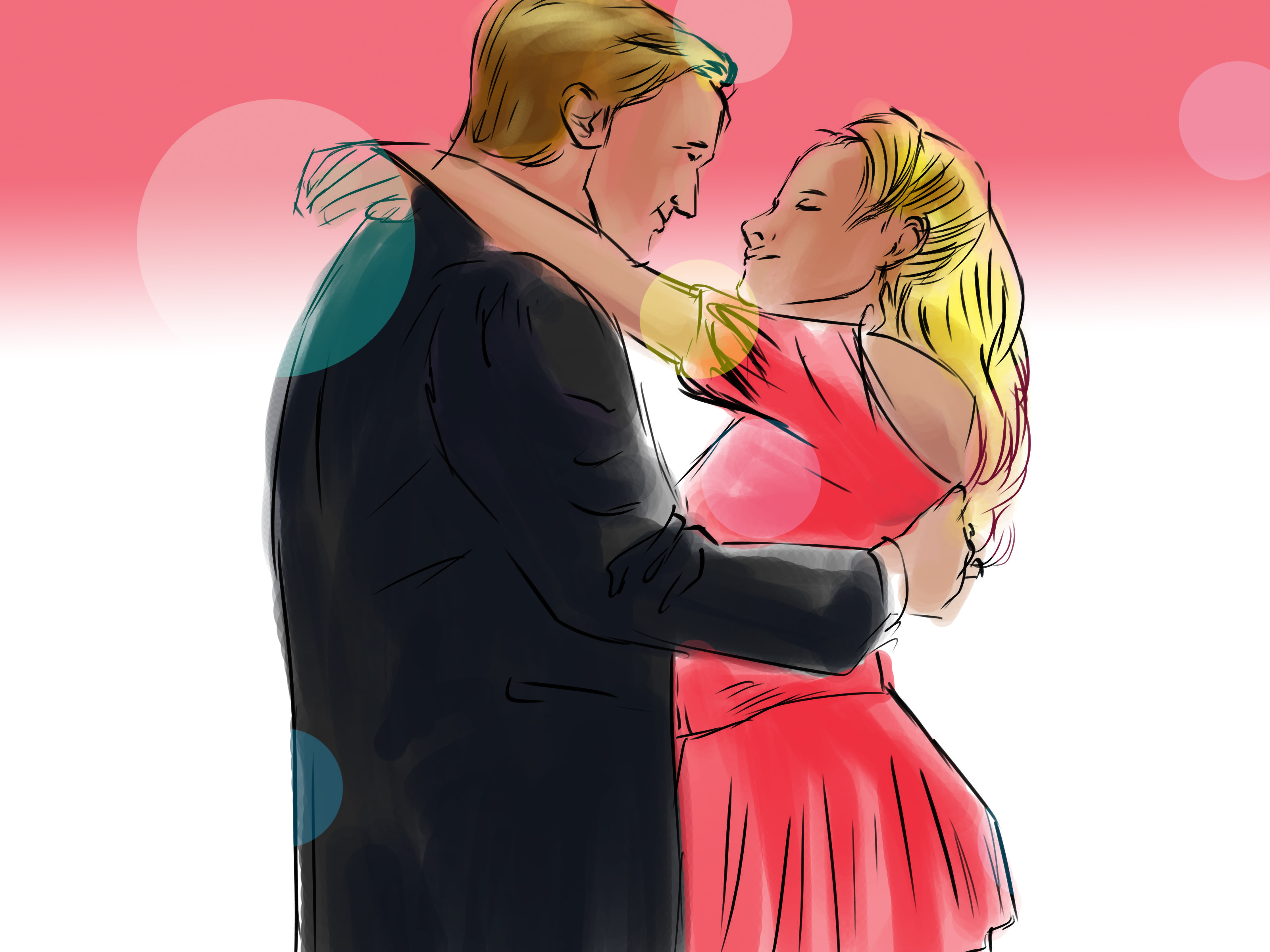
If you came with a date, do not assume you have to spend the whole night doing some movie-version slow dance. Real homecoming usually includes a mix of group dancing, joking around, photos, and occasional partner moments. Keep things easy. Face each other, smile, move to the beat, and mirror the energy of the song.
If a slow song comes on, a gentle sway is enough. You do not need a formal ballroom frame or a dramatic spin that ends with somebody apologizing to the punch bowl. If your partner seems more comfortable dancing side by side, that is completely fine too.
Step 9: Dress for Movement, Not Just Photos
Yes, homecoming photos matter. But if your outfit keeps you from breathing, stepping, or lifting your arms without negotiation, it is going to sabotage your night. Choose clothes and shoes that let you move comfortably. If your shoes are slippery, painful, or impossible to balance in, dancing becomes a survival sport.
The best homecoming outfit is one that looks good and lets you actually enjoy yourself. Fashion is great. Being able to walk normally is even better.
Step 10: Practice a Little Before the Dance
You do not need a full rehearsal montage, but a few minutes of practice at home can help a lot. Put on three songs and work on your two-step, your sway, and your bounce. Practice in front of a mirror if that helps. The goal is not to become a dance machine. The goal is to make your body feel familiar with moving to music.
This also helps if you feel nervous. When you have already tested a few moves in your room, the dance floor feels less like a mystery and more like a louder version of something you already know how to do.
Step 11: Focus on Fun, Not Performance
Homecoming is supposed to be memorable, not mechanically flawless. Smile. Laugh when something goes wrong. Join your friends when they pull you into a circle. Step away for water if you need a breather. Then come back in. The people who seem most confident at school dances are usually not the best dancers. They are the people who give themselves permission to enjoy the night.
That is the real answer to how to dance at homecoming: move with the music, be respectful, and act like you belong there. Because you do.
Common Homecoming Dance Mistakes to Avoid
Even if you are a beginner, you can avoid the biggest school dance disasters pretty easily. Do not stand frozen for half the night waiting for the perfect moment. Do not try to copy advanced moves you saw online five minutes before leaving the house. Do not swing your arms so wildly that nearby people start filing emotional insurance claims. And do not assume every song requires the same energy.
Another mistake is isolating yourself if you feel awkward at first. Some teens give up too early and decide they “cannot dance” after one uncomfortable song. That is like deciding you cannot swim because the pool was cold for the first thirty seconds. Give yourself time. Most people warm up once they stop analyzing themselves.
What to Do If You Feel Nervous at Homecoming
If anxiety kicks in, keep it simple. Start on the edge of the dance floor with a friend. Nod to the beat. Breathe slowly. Join a group dance instead of stepping into the center alone. You can also set a tiny goal, like dancing through one full song without leaving. Often, once you get through the first song, the second feels much easier.
Remember that confidence is not the absence of nerves. It is moving anyway. A lot of people at homecoming are pretending to be chill while internally running twelve tabs of panic. You are not the only one. Not even close.
Real Homecoming Dance Experiences: What It Usually Feels Like
For a lot of students, homecoming starts with way too much build-up. There are group chats, outfit photos, dinner plans, transportation plans, and approximately nine million opinions about what the night is “supposed” to be. Then you finally get there, and the first few minutes can feel surprisingly ordinary. The music is loud, people are adjusting to the room, and everyone seems just a little unsure of how to begin. That is why the students who have the best time are usually not the ones who arrive with a perfect script. They are the ones who adapt.
One common experience is realizing that dancing gets easier once your friends are involved. A student might walk in feeling nervous, stand near the edge for one song, and then get pulled into a circle by friends during a familiar track. Suddenly, nobody is thinking about whether their steps are technically correct. They are laughing, pointing at each other when a favorite part of the song comes on, and doing a version of dancing that is more about energy than precision. That is often the moment the night shifts from stressful to fun.
Another very normal experience is discovering that the songs everyone enjoys most are not always the coolest songs on paper. Sometimes the crowd comes alive for follow-along dances, throwback songs, or tracks with an easy beat. Students who thought they were bad dancers often realize they are actually fine once the music gives them something clear to do. A simple side step, a bounce, and a smile can carry an entire song. Add a familiar line dance, and suddenly even the shyest people look like they planned this all week.
There is also the experience of having one awkward moment and surviving it completely. Maybe you step the wrong way in a line dance. Maybe you and your date both move left at the same time and then laugh. Maybe your shoe briefly loses its commitment to the mission. In real life, those moments are usually tiny. They pass fast. Most people either do not notice or forget instantly because they are busy having their own weird little dance-floor moments.
Some students also find that they do not need to dance nonstop to have a great homecoming. A strong night often includes a mix of dancing, taking photos, getting water, talking with friends, and then heading back in when the next good song hits. That rhythm can make the event feel much more manageable, especially if you tend to get overstimulated in loud spaces.
In the end, the most memorable homecoming experiences are rarely about perfect moves. They are about feeling included, sharing the night with people you like, and letting yourself be present. The students who enjoy homecoming most are usually the ones who stop asking, “Do I look cool?” and start asking, “Am I having fun?” Once that happens, the dancing tends to take care of itself.
Conclusion
If you have been wondering how to dance at homecoming, here is the truth: you do not need to impress the gym floor. You just need a few basic moves, a sense of rhythm, and the willingness to have fun without overthinking every second. Find the beat, use simple steps, respect personal space, and lean into the group energy when the crowd gets going. Homecoming dancing is not about being the best dancer in the room. It is about being comfortable enough to enjoy the room you are in.
So when the music starts, do not wait for permission. Step in, move a little, smile a little, and let the night get easier one song at a time. Chances are, by the end of homecoming, you will not be thinking about whether you danced perfectly. You will just be glad you got out there.