Converting pounds to ounces is one of those everyday math skills that looks tiny until you actually need it. Maybe you are adjusting a recipe, weighing a package, tracking a workout, reading a baby scale, or trying to understand why your luggage scale seems personally offended by your vacation plans. The good news is that pounds-to-ounces conversion is refreshingly simple: 1 pound equals 16 ounces.
That means the basic formula is:
ounces = pounds × 16
Once you know that, converting pounds to ounces becomes less of a math problem and more of a quick multiplication habit. In this guide, you will learn how to convert pounds to ounces in 7 clear steps, how to handle decimal pounds, how to convert mixed pounds and ounces, and how to avoid common mistakes. We will also walk through practical examples so the numbers feel useful instead of floating around like a confused balloon at a grocery store.
What Are Pounds and Ounces?
Before jumping into the steps, it helps to understand what pounds and ounces are. In the United States, pounds and ounces are commonly used units of weight in the U.S. customary system. You see them on food labels, shipping boxes, body weight scales, baby records, pet food bags, dumbbells, and grocery items.
A pound, abbreviated as lb, is the larger unit. An ounce, abbreviated as oz, is the smaller unit. Since there are 16 ounces in 1 pound, ounces are useful when you need more detail. For example, saying a package weighs 2 pounds is fine, but saying it weighs 2 pounds 6 ounces is more precise.
Think of pounds and ounces like dollars and quarters. A dollar is the bigger unit, and quarters break it into smaller parts. In the same way, a pound is the bigger unit, and ounces divide that pound into 16 smaller pieces.
How to Convert Pounds to Ounces: The Simple Rule
The only rule you truly need is this:
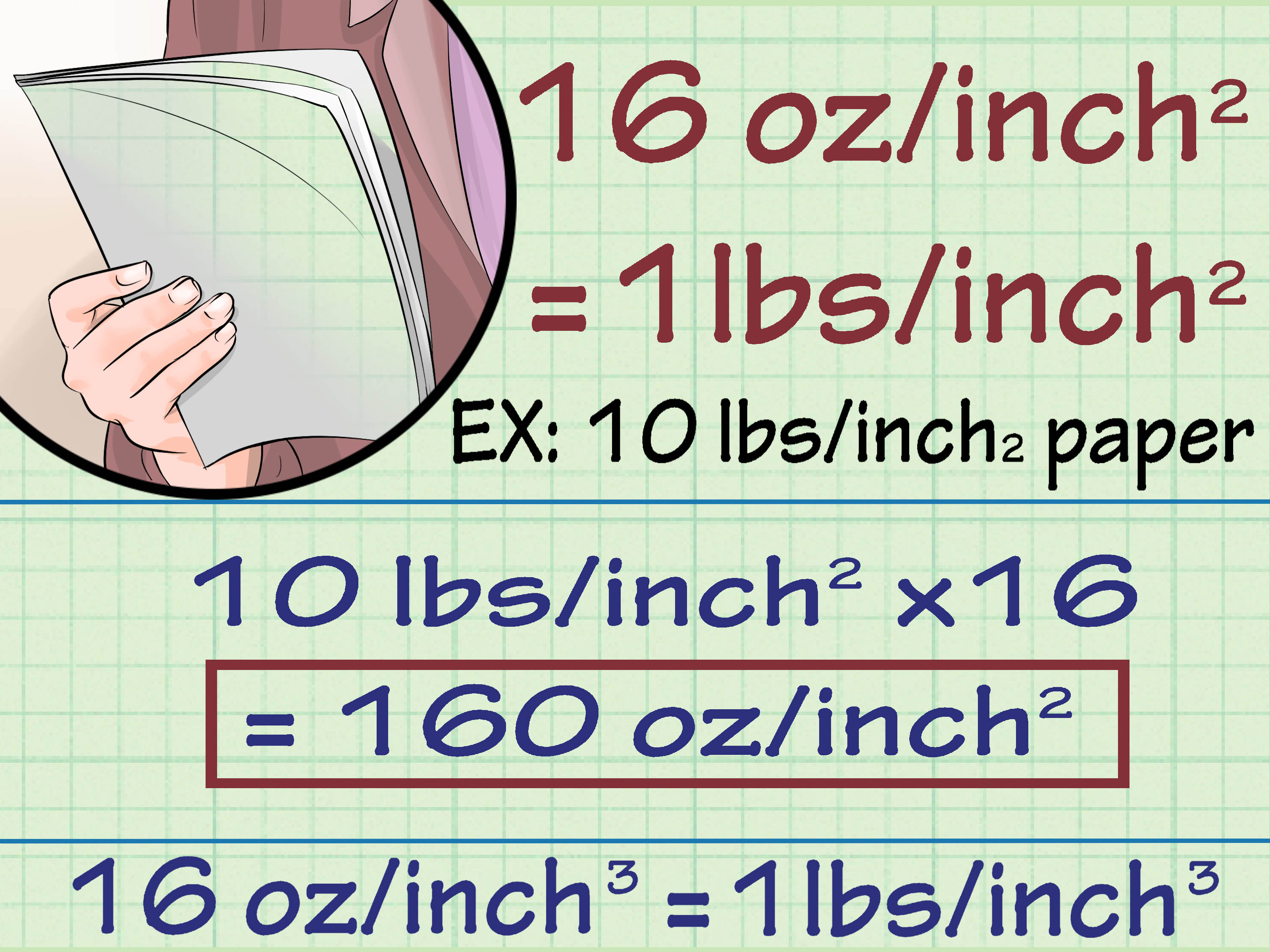
1 lb = 16 oz
So, to convert pounds to ounces, multiply the number of pounds by 16.
For example:
- 2 lb × 16 = 32 oz
- 5 lb × 16 = 80 oz
- 10 lb × 16 = 160 oz
- 0.5 lb × 16 = 8 oz
That is the entire secret. No secret handshake. No ancient math scroll. Just multiply by 16.
How to Convert Pounds to Ounces in 7 Steps
Step 1: Write Down the Weight in Pounds
Start with the weight you want to convert. This might be a whole number, a decimal, or a mixed measurement.
Examples:
- 4 pounds
- 7.5 pounds
- 2 pounds 8 ounces
- 0.25 pounds
If the number is already written only in pounds, you are ready to multiply. If it includes both pounds and ounces, you will handle the pounds first and add the remaining ounces later.
Step 2: Remember the Conversion Factor
The conversion factor is the number that connects the two units. For pounds and ounces, the conversion factor is 16.
Why? Because every pound contains exactly 16 ounces. So when you convert pounds to ounces, you are asking, “How many groups of 16 ounces do I have?”
For example, 3 pounds means 3 groups of 16 ounces:
3 × 16 = 48 ounces
Step 3: Multiply Pounds by 16
Now apply the main formula:
ounces = pounds × 16
Let’s say you want to convert 6 pounds to ounces:
6 × 16 = 96
So, 6 pounds equals 96 ounces.
This works for any number of pounds. If you have 12 pounds, multiply 12 by 16. If you have 1.75 pounds, multiply 1.75 by 16. The formula stays the same, which is one reason this conversion is so beginner-friendly.
Step 4: Add Any Extra Ounces If You Have a Mixed Measurement
Sometimes weight is written as pounds and ounces, such as 3 lb 5 oz. To convert the entire weight into ounces, first convert the pounds, then add the extra ounces.
Example:
Convert 3 lb 5 oz to ounces.
- Convert the pounds: 3 × 16 = 48 oz
- Add the extra ounces: 48 + 5 = 53 oz
So, 3 lb 5 oz equals 53 ounces.
Here is another example:
Convert 9 lb 12 oz to ounces.
- 9 × 16 = 144 oz
- 144 + 12 = 156 oz
So, 9 lb 12 oz equals 156 ounces.
Step 5: Convert Decimal Pounds Carefully
Decimal pounds are common on digital scales, shipping labels, fishing scales, and food packaging. The process is still simple: multiply the decimal pounds by 16.
Example:
Convert 2.5 pounds to ounces.
2.5 × 16 = 40
So, 2.5 pounds equals 40 ounces.
Another example:
Convert 0.75 pounds to ounces.
0.75 × 16 = 12
So, 0.75 pounds equals 12 ounces.
This is especially useful when reading package weights. A label that says 1.25 lb may look less familiar than ounces, but it converts easily:
1.25 × 16 = 20 ounces
So, 1.25 pounds equals 20 ounces.
Step 6: Check Your Answer with Estimation
Estimation helps you catch mistakes before they sneak into your recipe, shipping form, or homework assignment wearing a fake mustache.
Since 1 pound equals 16 ounces, your answer in ounces should always be larger than your original number in pounds. If you convert 5 pounds and get 0.3125 ounces, something has gone wrong. That answer would make a bag of flour weigh less than a sneeze.
Use quick mental checks:
- 1 lb is 16 oz
- 2 lb is 32 oz
- 5 lb is 80 oz
- 10 lb is 160 oz
If your answer is close to these benchmarks, you are probably on the right track.
Step 7: Label the Final Answer Correctly
Always write the final answer with the correct unit: oz. Numbers without units can cause confusion. For example, “48” could mean 48 pounds, 48 ounces, 48 grams, or 48 cookies. Only one of those is a weight conversion, though the cookie option is emotionally compelling.
Correct format:
3 lb = 48 oz
Incorrect or unclear format:
3 lb = 48
Adding the unit makes your work clear, professional, and easy to understand.
Pounds to Ounces Conversion Formula
The pounds-to-ounces formula is:
oz = lb × 16
Where:
- oz means ounces
- lb means pounds
- 16 is the number of ounces in one pound
For example, to convert 14 pounds to ounces:
14 × 16 = 224 oz
So, 14 pounds equals 224 ounces.
Pounds to Ounces Conversion Chart
Use this quick chart when you do not want to calculate from scratch:
| Pounds | Ounces |
|---|---|
| 0.25 lb | 4 oz |
| 0.5 lb | 8 oz |
| 0.75 lb | 12 oz |
| 1 lb | 16 oz |
| 2 lb | 32 oz |
| 3 lb | 48 oz |
| 4 lb | 64 oz |
| 5 lb | 80 oz |
| 10 lb | 160 oz |
| 25 lb | 400 oz |
Examples of Converting Pounds to Ounces
Example 1: Convert 8 Pounds to Ounces
Use the formula:
8 × 16 = 128
Answer: 8 pounds equals 128 ounces.
Example 2: Convert 3.25 Pounds to Ounces
Multiply by 16:
3.25 × 16 = 52
Answer: 3.25 pounds equals 52 ounces.
Example 3: Convert 6 lb 10 oz to Ounces
First convert the pounds:
6 × 16 = 96 oz
Then add the remaining ounces:
96 + 10 = 106 oz
Answer: 6 lb 10 oz equals 106 ounces.
Common Mistakes When Converting Pounds to Ounces
Mistake 1: Dividing Instead of Multiplying
When converting from a larger unit to a smaller unit, you multiply. Since ounces are smaller than pounds, one pound expands into 16 ounces. So pounds to ounces means multiply by 16.
Use this memory trick: bigger unit to smaller unit = bigger number.
Mistake 2: Confusing Ounces with Fluid Ounces
This is a big one. An ounce, or oz, measures weight. A fluid ounce, or fl oz, measures volume. They are not the same thing.
For example, 16 ounces of flour by weight is not the same as 16 fluid ounces of milk by volume. In cooking, this difference matters. A cup measures volume, while a kitchen scale measures weight. Your brownies will notice the difference, and they will not be polite about it.
Mistake 3: Forgetting Extra Ounces in Mixed Measurements
If a measurement is written as 4 lb 7 oz, do not convert only the 4 pounds and stop. You must add the 7 ounces afterward.
4 × 16 = 64
64 + 7 = 71 oz
So, 4 lb 7 oz equals 71 ounces.
Mistake 4: Rounding Too Early
If you are working with decimal pounds, do the multiplication first and round only at the end if needed. Rounding too early can create small errors, especially in shipping, science activities, food production, or any situation where accuracy matters.
When Do You Need to Convert Pounds to Ounces?
Pounds-to-ounces conversion shows up more often than people expect. It is useful in cooking, baking, mailing packages, weighing pets, measuring produce, tracking fitness equipment, and comparing product sizes at the store.
For example, if one bag of coffee is 12 ounces and another is 1 pound, converting the pound to ounces makes comparison easier. Since 1 pound equals 16 ounces, the 1-pound bag contains more coffee than the 12-ounce bag. Congratulations, you have just used unit conversion to defend your caffeine budget.
Shipping is another common use. Some carriers price packages by pounds and ounces, so converting the full weight into ounces can make it easier to compare rates or understand scale readings.
How to Convert Ounces Back to Pounds
To reverse the conversion, divide ounces by 16:
pounds = ounces ÷ 16
Example:
96 oz ÷ 16 = 6 lb
So, 96 ounces equals 6 pounds.
If the answer is not a whole number, you may get decimal pounds. For example:
44 oz ÷ 16 = 2.75 lb
That can also be written as 2 lb 12 oz, because 0.75 lb equals 12 oz.
Practical Experience: What Pounds-to-Ounces Conversion Looks Like in Real Life
Once you start paying attention, pounds and ounces are everywhere. One of the most common places people use this conversion is the kitchen. Imagine you are making a recipe that calls for 24 ounces of ground beef, but the package at the store says 1.5 pounds. Instead of standing in the aisle pretending the meat section is a math classroom, you can multiply 1.5 by 16. The result is 24 ounces, which means the package is exactly what you need.
Baking is another situation where ounces can save the day. Many home bakers eventually learn that measuring by weight is often more consistent than measuring by cups. A cup of flour can vary depending on whether it is scooped, spooned, packed, or handled by someone with the confidence of a game-show contestant. When a recipe gives weight in ounces but your ingredient bag is labeled in pounds, the conversion keeps everything accurate. If a bag contains 5 pounds of flour, that is 80 ounces. Suddenly, recipe planning becomes much easier.
Shipping packages is another real-world example. Suppose you sell handmade candles online. Your postal scale shows that a finished package weighs 2 lb 9 oz. To calculate the full weight in ounces, convert 2 pounds to 32 ounces, then add 9 ounces. The total is 41 ounces. This can help you record product weights, estimate shipping costs, and avoid underestimating postage. Nobody wants a package returned because a few ounces were ignored. Ounces may be small, but in shipping, they have main-character energy.
Parents and pet owners also run into this conversion often. Baby weights, pet weights, and small animal food portions may be recorded in pounds and ounces. If a puppy weighs 6 lb 4 oz, converting to ounces gives you 100 ounces. That may not be how you would describe the puppy at the dog park, but it can be useful for feeding charts, medication instructions from a professional, or growth tracking.
Fitness is another area where pounds and ounces can matter. Most gym weights are labeled in pounds, but smaller accessories, weighted gloves, ankle weights, or sports equipment may be listed in ounces. Understanding the relationship between pounds and ounces helps you compare loads more accurately. A 2-pound wrist weight equals 32 ounces. A 12-ounce training ball is 0.75 pounds. These conversions make it easier to understand what you are actually lifting, throwing, carrying, or wondering why you bought at midnight.
Shopping comparisons are also easier when everything is in the same unit. A 12-ounce bag of snacks and a 1-pound bag are not equal. The 1-pound bag is 16 ounces. If prices are close, converting pounds to ounces helps you figure out which product gives better value. This is especially useful for coffee, nuts, cereal, pet food, frozen foods, and bulk pantry items.
The biggest lesson from real-life use is this: converting pounds to ounces is not just school math. It is practical math. It helps you cook better, shop smarter, ship more accurately, and understand weight labels with less guesswork. Once you remember that pounds become ounces by multiplying by 16, the process becomes automatic. You may not use it every minute, but when you need it, it is wonderfully handy.
Conclusion
Converting pounds to ounces is simple once you remember the key relationship: 1 pound equals 16 ounces. To convert pounds to ounces, multiply the number of pounds by 16. If you are working with mixed measurements, convert the pounds first and then add the extra ounces. If you are working with decimal pounds, multiply the decimal by 16 and round only when necessary.
This conversion is useful in everyday life, from recipes and shipping labels to grocery shopping, fitness, and weight tracking. The more you practice, the faster it becomes. Soon, multiplying by 16 will feel as natural as checking your phone for the time and then immediately forgetting what time it is.
Note: This article is written for general educational and everyday measurement use. For professional, medical, industrial, or legal measurements, always follow the required standards, tools, and instructions for that specific situation.