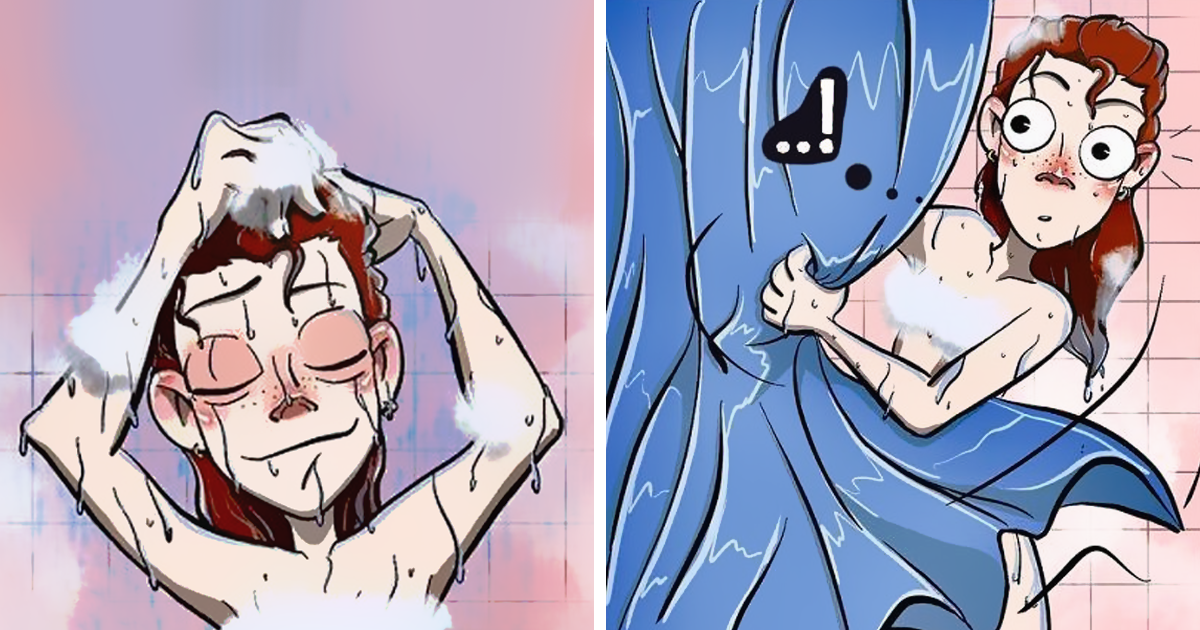
Some comics need capes, cosmic villains, and dramatic speeches delivered on rooftops during lightning storms. Others need only a messy bun, one judgmental cat, a fridge that contains exactly three sad ingredients, and the emotional damage of being a human before coffee. That is the irresistible charm behind “50 Hilarious Comics By Vegan Artist About Her Everyday Problems”: a collection of funny, relatable webcomics that turns ordinary life into tiny comedy grenades.
The artist behind these comics is Ariane, better known online as ari_stocrate, a French webcomic artist from Paris. Her work became widely shared because it feels personal without being too private, silly without being shallow, and cute without pretending life is a pastel-colored cupcake. She draws everyday problems with a playful eye: awkward social moments, cat chaos, creative struggles, relationship quirks, body frustrations, food dilemmas, and the special kind of confusion that happens when you try to be a functioning adult while your brain is buffering.
And yes, the “vegan artist” part adds an extra layer of flavor. Not every comic is about veganism, and that is part of the point. Her identity does not turn the series into a lecture about kale. Instead, it adds texture to a broader portrait of modern life: caring about animals, trying to live ethically, managing daily inconveniences, and still being absolutely ridiculous because humans are basically houseplants with anxiety and Wi-Fi.
Who Is Ari_stocrate?
Ariane, known to fans as ari_stocrate, is a Paris-based illustrator and webcomic creator whose online presence grew through short, punchy, highly shareable comics. Her style leans into expressive characters, simple compositions, and humor built around timing rather than visual clutter. That minimal approach matters. A good comic strip is not a museum painting with a punchline taped to the frame. It is more like a magic trick: setup, pause, surprise, laugh.
Her comics often feature a young woman navigating familiar everyday problems. The situations may be small, but they are emotionally accurate. Anyone who has battled long hair in summer, tried to act normal around a crush, lived with a cat who behaves like a tiny landlord, or attempted to “get life together” after lunch knows the territory.
Over time, Ariane’s work has also included projects such as Sally & Bean, a webcomic universe featuring a grumpy witch and a cheerful dragon. That shift shows how strong her comic instincts are: she can move from autobiographical everyday humor to character-driven fantasy while keeping the same playful energy. The common thread is personality. Her panels do not just deliver jokes; they feel like someone whispering, “Don’t worry, I’m a disaster too.”
Why These Everyday Problem Comics Feel So Relatable
Relatable comics succeed when they reveal the tiny truths people usually keep to themselves. Not dramatic secrets. Tiny secrets. The kind where you say, “I’m going to bed early,” then watch videos until your soul leaves your body. The kind where you buy vegetables with noble intentions and later discover them liquefying in the fridge like failed science fair projects.
In Ariane’s work, the humor often comes from exaggerating normal reactions. A minor inconvenience becomes a full emotional opera. A cat’s behavior becomes a supernatural event. A social interaction becomes a survival mission. This is why readers recognize themselves immediately. The comics are not saying life is always terrible; they are saying life is weird, and weirdness is easier to survive when you can laugh at it.
1. The Comedy of Being a Woman in Daily Life
Many of the comics revolve around the everyday absurdity of womanhood: uncomfortable clothes, period cramps, beauty expectations, hair problems, emotional swings, and the pressure to appear graceful while internally screaming into a decorative pillow. The humor works because it refuses to glamorize the routine. Instead of presenting the artist as effortlessly charming, the comics celebrate the unfiltered version: tired, hungry, dramatic, clever, and occasionally betrayed by her own body.
This approach gives the comics an honest tone. Readers are not laughing at a perfect character. They are laughing with someone who has clearly fought the same battles, including the battle against a bra strap that has chosen violence.
2. Cat Problems, Also Known as “Living With a Tiny Goblin”
Ariane’s cat, Jasper, is one of the recurring sources of inspiration. Cat humor is practically a universal internet language, but her version stands out because the pet is not just cute decoration. Jasper represents the strange power dynamic of cat ownership: you buy the food, clean the mess, provide the furniture, and somehow the cat is still the manager.
In comics like these, cats are funny because they are both adorable and completely unreasonable. They sit where they should not sit, demand affection at the worst possible time, reject expensive toys in favor of trash, and look at humans as if rent is overdue. If comedy is about conflict, a cat is basically a furry conflict generator with whiskers.
3. Vegan Life Without the Sermon
The title highlights Ariane as a vegan artist, but the appeal of the comics is not limited to vegan readers. That is important. The best vegan humor does not need to stand on a soapbox holding a cauliflower like a microphone. Instead, it can show how personal values quietly mix with regular life: food choices, awkward questions, social assumptions, and the occasional restaurant menu that treats vegetables like mysterious forest objects.
For vegan readers, the comics may feel especially familiar because veganism often comes with tiny social negotiations. What can you eat at a party? How many times can someone ask where you get protein before you start charging a consultation fee? How do you explain that being vegan does not mean you survive on lettuce and moonlight?
For non-vegan readers, the humor still lands because the deeper subject is not diet. It is identity. Everyone has some part of themselves that other people misunderstand, reduce, or turn into small talk. In that sense, vegan jokes become human jokes.
The Art Style: Simple, Expressive, and Built for the Internet
Ariane’s comics use a clean, digital style that fits perfectly into modern webcomic culture. The panels are easy to read on a phone, the characters are expressive, and the jokes do not require long explanations. This matters because online readers scroll quickly. A comic has only a few seconds to say, “Hey, stop here, this one understands your emotional damage.”
The minimal style also helps the humor breathe. Too much detail can slow down a gag. In a short comic, every facial expression, pause, and panel transition needs to serve the joke. Ariane’s work often depends on timing: a hopeful setup, a sudden reversal, a blank stare, a chaotic ending. It is the visual equivalent of telling a joke with perfect deadpan delivery.
That is why these comics spread well on platforms like Instagram, Webtoon, and social media feeds. They are snackable but memorable. You can read one in ten seconds and think about it later when your cat knocks a glass off the table while maintaining eye contact like a villain in a low-budget thriller.
What Makes the 50 Comics So Funny?
The collection works because it covers a broad range of everyday problems without losing a consistent voice. The humor is cute, but not overly sweet. Self-deprecating, but not miserable. Observational, but not cold. The comics laugh at the messiness of life while still making that mess feel oddly lovable.
Awkward Social Moments
Some of the best everyday comics come from social discomfort. The forced smile. The failed conversation. The moment after you say something strange and your brain immediately opens a courtroom to prosecute you. Ariane captures that inner spiral with the kind of accuracy that makes readers feel personally attacked, but in a friendly way.
Relationship Humor
Relationship jokes appear throughout this style of slice-of-life webcomic because love is basically two people trying to be adorable while also stealing blankets, miscommunicating, and asking what to eat for dinner until civilization collapses. Ariane’s relationship-based humor often plays with expectations: romance meets laziness, affection meets absurdity, and couple life becomes a sitcom made of tiny domestic negotiations.
Creative Struggles
As an artist, Ariane also taps into the strange emotional circus of making things. Creative people know the pattern: inspiration appears at 2 a.m., disappears at 9 a.m., returns during a shower, and then refuses to cooperate when you finally sit down to work. Comics about drawing, motivation, and artistic self-doubt are funny because they are painfully real.
Body, Mood, and Food Problems
Many everyday problem comics are built around the body’s refusal to behave like a polite machine. Hunger changes personality. Cramps interrupt plans. Tiredness ruins ambition. Hair develops political opinions. Clothes betray you. Snacks become emotional support staff. Ariane’s humor understands that the body is not just something we live in; it is also the roommate who keeps making noise at inconvenient hours.
Why Vegan Artists and Webcomic Creators Connect With Online Audiences
Vegan artists often bring a strong point of view to their work, even when the subject is not directly about food or animal rights. Veganism is rooted in attention: attention to choices, habits, systems, and consequences. That habit of noticing can make someone a sharper observer of everyday life. Comedy also begins with noticing. A joke is often just a tiny truth wearing a party hat.
Webcomics are especially good at carrying that kind of observation because they are intimate. Unlike big animated productions or polished magazine cartoons, webcomics often feel like diary entries with punchlines. Readers follow not only the art but the person behind it. They become familiar with the creator’s pets, moods, favorite jokes, recurring characters, and personal obsessions. It feels less like consuming content and more like checking in on a funny friend who happens to draw her breakdowns beautifully.
This is one reason Ariane’s comics appeal to such a wide audience. They are specific enough to feel authentic but broad enough to be shared. A comic about a cat can reach cat owners. A comic about social awkwardness can reach introverts. A comic about food can reach anyone who has ever opened the fridge expecting miracles. Spoiler: the fridge is not a wizard.
How the Comics Turn Small Problems Into Big Laughs
The secret is escalation. A tiny problem appears, and the reaction grows beyond what the situation technically deserves. That gap creates comedy. For example, a normal person might say, “It is too hot outside.” A comic character might melt into a puddle, declare war on the sun, and reconsider every life choice involving pants. The bigger reaction reveals the emotional truth: heat really can feel like a personal attack.
Another technique is contrast. Cute art can make a dark or sarcastic joke feel lighter. A cheerful expression can make an awkward moment funnier. A calm panel before chaos can create the perfect setup. Ariane’s work often uses these contrasts naturally, which helps the comics stay breezy even when the subject is frustration, embarrassment, or exhaustion.
Then there is repetition. Everyday life is repetitive, and comics make that repetition funny by naming it. The same problem returns in a slightly different costume: procrastination, hunger, cat behavior, social anxiety, creative burnout. Readers laugh because they recognize the loop. We all keep learning the same lessons, then ignoring them, then acting surprised. Humanity is nothing if not consistent.
Why Readers Love “Everyday Problems” Comics
People do not always read funny comics because they want to escape life. Sometimes they read them because they want life explained in a way that makes it less annoying. A good relatable comic says, “Yes, this is ridiculous, and no, you are not the only one.” That can be oddly comforting.
In Ariane’s comics, the problems are rarely huge. That is exactly why they matter. Most days are not defined by epic disasters. They are defined by small irritations: the missing sock, the awkward text, the empty pantry, the cat on the keyboard, the ambitious to-do list that somehow becomes a nap. These are the moments where humor does its best work. It does not erase the problem, but it makes the problem easier to carry.
The comics also remind readers that imperfection is more interesting than perfection. A flawless life is not funny. A person who always eats well, sleeps early, answers messages on time, and never overthinks anything is not a comic protagonist. That person is probably a haunted mannequin. Real life is messy, and messy is where the jokes live.
Experience Section: What These Comics Teach Us About Laughing at Daily Life
Reading a collection like “50 Hilarious Comics By Vegan Artist About Her Everyday Problems” feels a little like opening a group chat with every version of yourself: the hungry one, the dramatic one, the motivated one who lasts eight minutes, the animal-loving one, the socially awkward one, and the one who thinks buying a planner counts as having a plan. The experience is funny because it is familiar, but it is also surprisingly useful.
One lesson is that humor can turn embarrassment into connection. We often treat awkward moments like private disasters. We replay them, edit them, and punish ourselves for not being smoother. But a comic can take that same awkwardness and make it public in a gentle way. Suddenly, the thing that felt embarrassing becomes a shared joke. That shift matters. It reminds us that most people are not judging our tiny failures as harshly as we are. They are too busy remembering their own weird handshake from 2017.
Another experience these comics capture beautifully is the strange comedy of trying to live according to values. Vegan life, creative life, pet life, relationship lifenone of these are perfectly tidy. A person can care deeply about animals and still be chaotic in the kitchen. An artist can be talented and still procrastinate. A loving partner can still steal the good side of the bed. A cat owner can adore their pet and still wonder if the cat is plotting a quiet household coup. These contradictions do not make someone fake; they make someone human.
The comics also encourage readers to notice small stories in their own routines. Once you spend time with relatable webcomics, the day starts looking more drawable. The grocery store becomes a stage. The laundry pile becomes a villain. Your pet becomes a recurring character with suspicious motivations. Your own mood swings become panel transitions. This is the gift of slice-of-life humor: it trains you to see ordinary moments as material, not just inconvenience.
For anyone who creates content, Ariane’s comics offer another useful lesson: specificity creates universality. A comic about one artist’s cat can make thousands of readers think of their own pets. A joke about one woman’s everyday problem can travel across countries because the emotion is recognizable. The more honestly a creator observes her own life, the more likely readers are to see themselves in it.
There is also comfort in the visual simplicity. These comics do not demand that readers decode a complicated plot. They are quick, bright, and emotionally direct. That makes them perfect for modern attention spans, but it also makes them feel personal. A short comic can meet someone in the middle of a busy day, deliver a laugh, and leave behind a tiny emotional reset. It is not therapy, but it is cheaper than therapy and comes with more cats.
Perhaps the biggest takeaway is that everyday problems do not need to be solved before they can be laughed at. The dishes may still be there. The inbox may still be rude. The cat may still be sitting on something important. But humor gives us a little distance. It lets us step back and say, “This is annoying, but it is also kind of hilarious.” That is a powerful survival skill, especially in a world where everyone is trying to appear polished while secretly eating cereal over the sink.
So the next time life feels like a badly organized comic panel, it may help to think like Ari_stocrate: simplify the scene, exaggerate the feeling, add a cat if available, and find the joke hiding under the inconvenience. Everyday life may not always be elegant, but with the right sense of humor, it can be wonderfully readable.
Conclusion
“50 Hilarious Comics By Vegan Artist About Her Everyday Problems” is more than a catchy title. It points to a style of webcomic that thrives because it is honest, quick, expressive, and deeply relatable. Ariane’s work shows how daily frustrations can become charming comic moments when filtered through sharp timing and playful self-awareness. From vegan lifestyle quirks and cat chaos to creative burnout, social awkwardness, body struggles, and relationship silliness, these comics turn the ordinary into something worth laughing about.
In a crowded internet full of noise, Ari_stocrate’s humor works because it feels human. It does not pretend life is perfect. It simply suggests that if life insists on being messy, we might as well draw it, caption it, and let the cat take partial blame.
Note: This article is an original SEO-friendly editorial based on publicly available information about Ari_stocrate, webcomic culture, vegan lifestyle humor, and relatable slice-of-life comics. It is written for web publication without source-link blocks or citation placeholders.