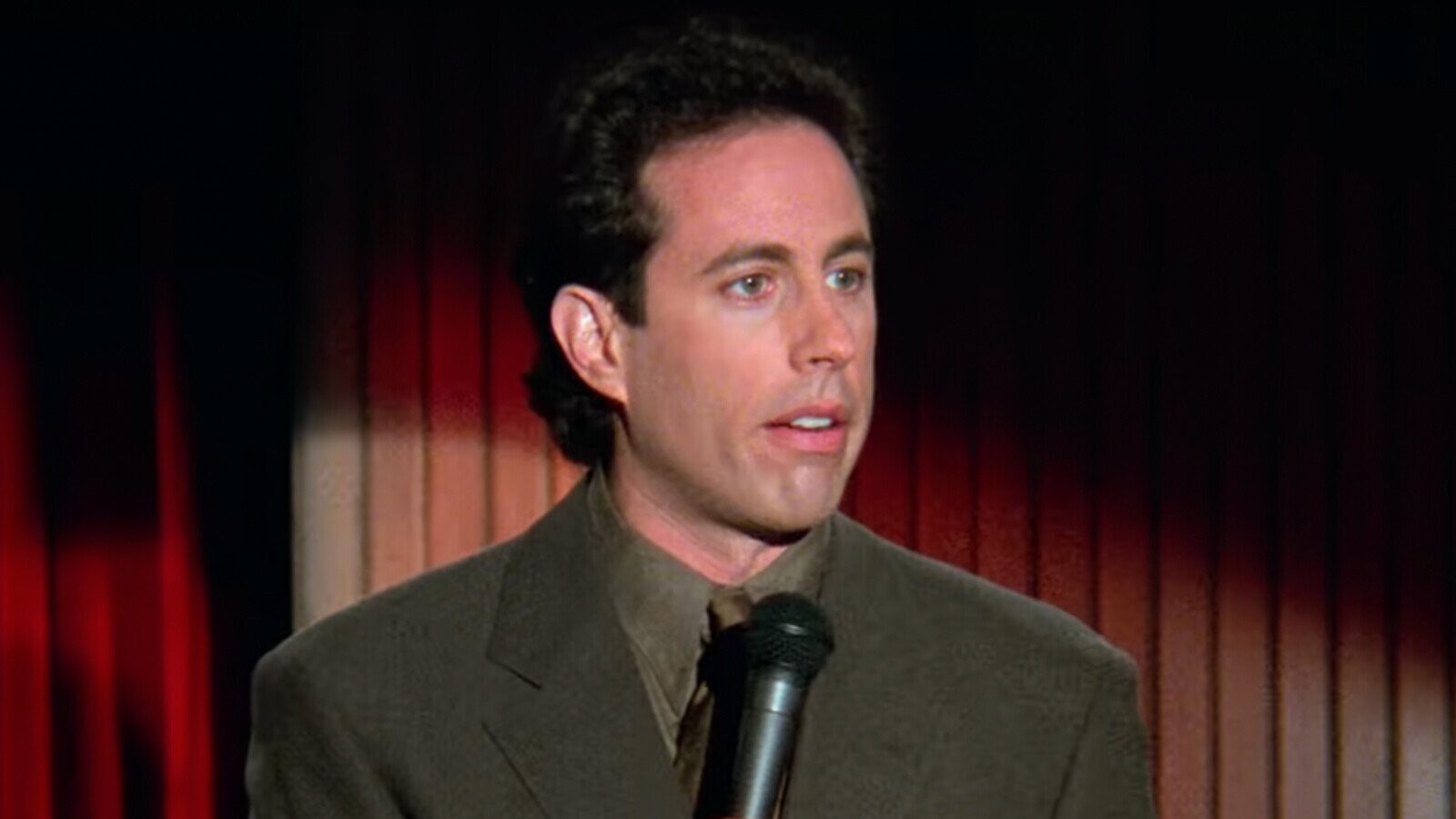
For a show that became one of the most influential sitcoms in American television history, Seinfeld began with a surprisingly narrow idea. It was not originally sold as a “show about nothing,” at least not in the way pop culture likes to remember it. The earliest concept was more literal, more mechanical, and honestly a little less magical: a series about how a stand-up comedian gets his material from everyday life.
That pitch sounds neat in a meeting. It sounds structured. It sounds like the kind of thing an executive can nod at while pretending to understand comedy, which is already a risky hobby. But here’s the twist: the finished series did not really become that show. In fact, the more Seinfeld matured, the further it moved away from its original premise. And that “failure” is a huge reason it became great.
To say Seinfeld failed to live up to its original pitch is not to say it failed as a sitcom. Quite the opposite. It failed upward. It abandoned a tidy concept and evolved into something stranger, sharper, meaner, and much funnier: a precision-built ensemble comedy about social rules, petty grievances, and the absurd drama of very small problems treated like global emergencies.
The Pitch Everyone Quotes Is Not the Pitch They Actually Sold
The “show about nothing” line became Seinfeld lore because it was catchy, self-mocking, and perfectly quotable. But that famous phrase came from the show itself, not from the real pitch that Jerry Seinfeld and Larry David originally took into NBC. Their earliest concept was closer to a backstage theory of observational comedy. The basic idea was that viewers would see how ordinary conversations, tiny annoyances, and random New York encounters turned into stand-up bits.
In other words, the original promise was not “watch four selfish weirdos ruin each other’s afternoons.” It was more like, “watch a comedian experience life, then convert that life into jokes.” That is a very different engine. One is built on process. The other is built on personality, escalation, and collision.
There is a reason the first version sounded appealing. Jerry Seinfeld’s stand-up persona was already recognizable: clean, observational, and fascinated by the ridiculous hidden inside routine behavior. Why do we wait in line the way we do? Why are people so weird in restaurants? Why does laundry feel like a punishment for wearing clothes? Those questions fit neatly into a television concept. Or at least they seemed to.
The problem is that a premise about a comedian gathering material is more interesting in theory than in long-form practice. It is a smart frame, but it is not automatically a rich dramatic machine. Watching someone notice things is not the same as watching stories explode.
The Pilot Tried to Deliver That Concept—and Revealed Its Limits
The pilot, originally titled The Seinfeld Chronicles, still carries the DNA of that first idea. It mixes stand-up segments with scenes from Jerry’s daily life, hoping the audience will connect the dots between experience and material. On paper, that sounds elegant. On screen, it is more awkward than elegant, like someone trying to dance while still reading the instructions.
That early version is full of slice-of-life business: laundry, dating uncertainty, diner talk, low-stakes confusion, and the general hum of urban indecision. Today, it is fascinating as a prototype. At the time, it was also a little disorienting. The show had not yet figured out whether the stand-up was commentary, structure, garnish, or a life raft. The answer, briefly, was “yes.”
And audiences noticed the wobble. The pilot was considered weak in testing, and one complaint was that viewers were not fully sure how the stand-up fit with the story. That confusion matters because it gets to the heart of why the original pitch had a built-in ceiling. If the format itself makes people ask, “Wait, what exactly am I watching?” that is not a great sign for a network sitcom trying to survive the era of broader, cleaner, more instantly legible comedies.
Even more telling, the pilot does not feel like the show most people now mean when they say “Seinfeld.” It feels like a sketch of a future classic, not the classic itself. The atmosphere is there. The rhythms are forming. The attention to everyday absurdity is in place. But the comic engine has not fully started roaring yet.
How the Finished Series Drifted Away From the Original Idea
Jerry stopped being the sole comic engine
If Seinfeld had stayed faithful to its initial pitch, Jerry would have remained the clear center of gravity. His day would matter because his observations would become the joke supply. But that is not what happened. As the series developed, Jerry became less the subject of the show than its stabilizer. He was often the calm eye in a storm of nonsense, the least deranged person in a room full of highly committed overreactors.
That change was crucial. It freed the series from being a TV diary of a comedian’s life and turned it into a wider comic ecosystem. Jerry still mattered, of course, but he no longer had to carry the whole premise on his back like a human microphone stand.
The ensemble became the real story machine
Once George, Elaine, and Kramer fully clicked as comic forces, the show found a much bigger playground. George brought panic, pettiness, and delusional self-confidence. Elaine added force, impatience, and social judgment with a hair-trigger fuse. Kramer wandered in from another dimension and somehow made every room less stable. Suddenly the show was no longer about how one comedian sees the world. It was about what happens when four people with terrible instincts navigate ordinary situations as if civilization were a fragile vase one sneeze away from disaster.
This shift changed everything. The funniest Seinfeld episodes are rarely about Jerry converting experience into stage material. They are about the gang turning simple situations into elaborate catastrophes. Waiting for a table becomes epic. Losing a car becomes mythic. A contest of self-control becomes a cultural landmark. A golf ball in a whale somehow feels inevitable.
That is not the original pitch. That is the show discovering a better one in real time.
The tone got darker and less sentimental
Another way the finished series drifted from its initial sales pitch was tonal. A show about a comedian mining daily life suggests warmth, curiosity, maybe even a little artistic insight. The actual Seinfeld that conquered television was much colder and more cynical. Larry David’s famous “no hugging, no learning” ethos pushed the series away from traditional sitcom comfort. Characters did not grow much. They did not become better people. They certainly did not gather in a tasteful final scene to explain what they learned about friendship.
Thank goodness.
That darkness gave Seinfeld its edge. The show was not just about noticing annoying things. It was about exposing how small, selfish, irrational, and socially ridiculous people can be. In lesser hands, that could have become cruel or exhausting. In Seinfeld, it became liberating. The series trusted that comedy did not need a moral dessert after the main course.
The structure became far more ambitious than the pitch suggested
The original concept was relatively straightforward: daily life in, stand-up material out. But the mature series became famous for something much more architecturally impressive. Its plots grew denser, more interlocked, and more formally playful. Story lines crossed, collided, echoed, and snapped together at the end with the satisfaction of a well-built machine.
That is a different achievement from observational comedy. It is narrative engineering. Episodes like “The Chinese Restaurant,” “The Parking Garage,” “The Contest,” “The Marine Biologist,” and “The Puffy Shirt” are not memorable because they document how a comic writes a joke. They are memorable because they turn social triviality into high comic design.
So yes, Seinfeld retained observational humor. But it stopped being about the observational comedian’s process. Instead, it became a world where everyone behaved as though minor inconvenience were a constitutional crisis.
Why Failing the Original Pitch Made the Show Better
Television history is full of projects that cling too tightly to their opening concept and slowly suffocate inside it. Seinfeld did the opposite. It treated its first pitch like scaffolding: useful for getting the building started, but not something you keep wrapped around the finished structure forever.
If the show had stayed committed to the literal idea of showing how Jerry got his material, it might have remained clever, maybe even charming, but it probably would not have become a cultural phenomenon. There are only so many times you can dramatize the path from diner conversation to microphone without starting to feel like you are watching a very neurotic factory tour.
By drifting away from that setup, Seinfeld discovered its true subject: not stand-up craftsmanship, but the comedy of social existence itself. The show was never really strongest when it answered the question “How does a comedian think?” It was strongest when it answered the question “Why is being around other people such a ridiculous experience?”
That broader focus gave it more room, more conflict, and more surprise. It also made the series more universal. You do not need to be a stand-up comic to understand the pain of waiting, dating, posturing, misreading signals, pretending to care, or insisting on a principle that absolutely nobody else asked for. You just need to be alive and occasionally forced to leave your apartment.
So Did Seinfeld Betray Its Own Premise?
In the most literal sense, yes. The show did not consistently deliver the exact concept suggested in its earliest pitch. It was not ultimately a steady, sustained exploration of how a comedian builds material from daily life. That thread remained visible, especially in the stand-up bookends and in Jerry’s observational voice, but it stopped being the central reason the show existed.
But in another sense, Seinfeld stayed true to the spirit of the idea while abandoning its strict mechanics. The series still found comedy in the tiniest details of ordinary life. It still treated mundane experience as worthy of close comic attention. It still believed that lunch, laundry, parking, waiting, and dating were not filler. They were the whole point.
What changed was the method. Instead of showing us how Jerry turned life into jokes, the show turned life itself into the joke.
That is a smarter move. It is also a far more durable one.
Rewatching the Gap: The Experience of Seeing the Pitch and the Finished Show Side by Side
One of the most interesting experiences a modern viewer can have with Seinfeld is watching the pilot and then jumping ahead to the series at full strength. The difference is almost comical in itself. The pilot feels like an introduction written by smart people who have not yet realized how weird they are allowed to be. The later seasons feel like those same people discovered they could build an entire cathedral out of irritation, vanity, and poor judgment.
That viewing experience changes the way you understand the show’s legacy. At first, you can see the original pitch working hard to explain itself. Jerry observes. Jerry comments. Jerry lives. Jerry performs. The structure wants you to notice the pipeline. It is almost educational: behold, a comedian in his natural habitat, feeding on shirts, dates, and cereal-level existential dread.
Then you move deeper into the series and the whole thing mutates into something much richer. The stand-up segments start to feel less essential. The world of the show becomes the real event. George lies with the intensity of a man defusing a bomb. Elaine can turn a minor annoyance into a moral crusade. Kramer enters a room like physics has lost interest. And Jerry, rather than serving as the documentary subject, becomes the ringmaster of an emotional circus where no one has insurance.
That contrast is what makes the “failed pitch” idea so satisfying. You are not just reading about creative evolution; you can feel it. The show becomes faster, stranger, more confident. It stops asking for permission to be about little things and starts treating little things as if they are the only things worth discussing. There is real pleasure in watching a series figure out its own identity and then sprint past the boundaries of its opening concept.
There is also something oddly reassuring in that evolution. It reminds writers, creators, and even regular overthinkers that a strong beginning idea does not have to be a prison. Sometimes the pitch is merely the bait. The real work starts after the project is alive enough to rebel against its own outline. Seinfeld is a near-perfect example of that. Its first promise got the door open. Its later confidence built the house.
And viewers can feel that confidence. Rewatching the mature series, you sense that the creators no longer care about proving the concept. They care about finding the funniest possible outcome. That difference matters. It is the gap between explanation and execution. Between theory and style. Between “here is what our show is” and “watch what our show can do.”
In that sense, the experience of revisiting Seinfeld today is not just nostalgic. It is instructive. You see a famous sitcom become itself by outgrowing the sales pitch that launched it. You see a premise shrink while a voice expands. And you come away with the rare feeling that the creators were right to leave part of their original idea behind. The show did not lose itself. It found itself by refusing to stay small.
Conclusion
Seinfeld did not become the exact show it originally promised to be. The early concept suggested a semi-structured comedy about a stand-up comic extracting material from daily life. The finished series became something more elastic and more influential: an ensemble sitcom that transformed everyday social friction into comic mythology.
So yes, Seinfeld failed to live up to its original pitch. But that failure was not a flaw. It was a creative upgrade. The series kept the obsession with mundane reality, ditched the narrow delivery system, and grew into a smarter machine for comedy. It traded a neat premise for a great one.
And if television history teaches anything, it is this: sometimes the best thing a show can do for its original pitch is politely ignore it and go make something funnier.