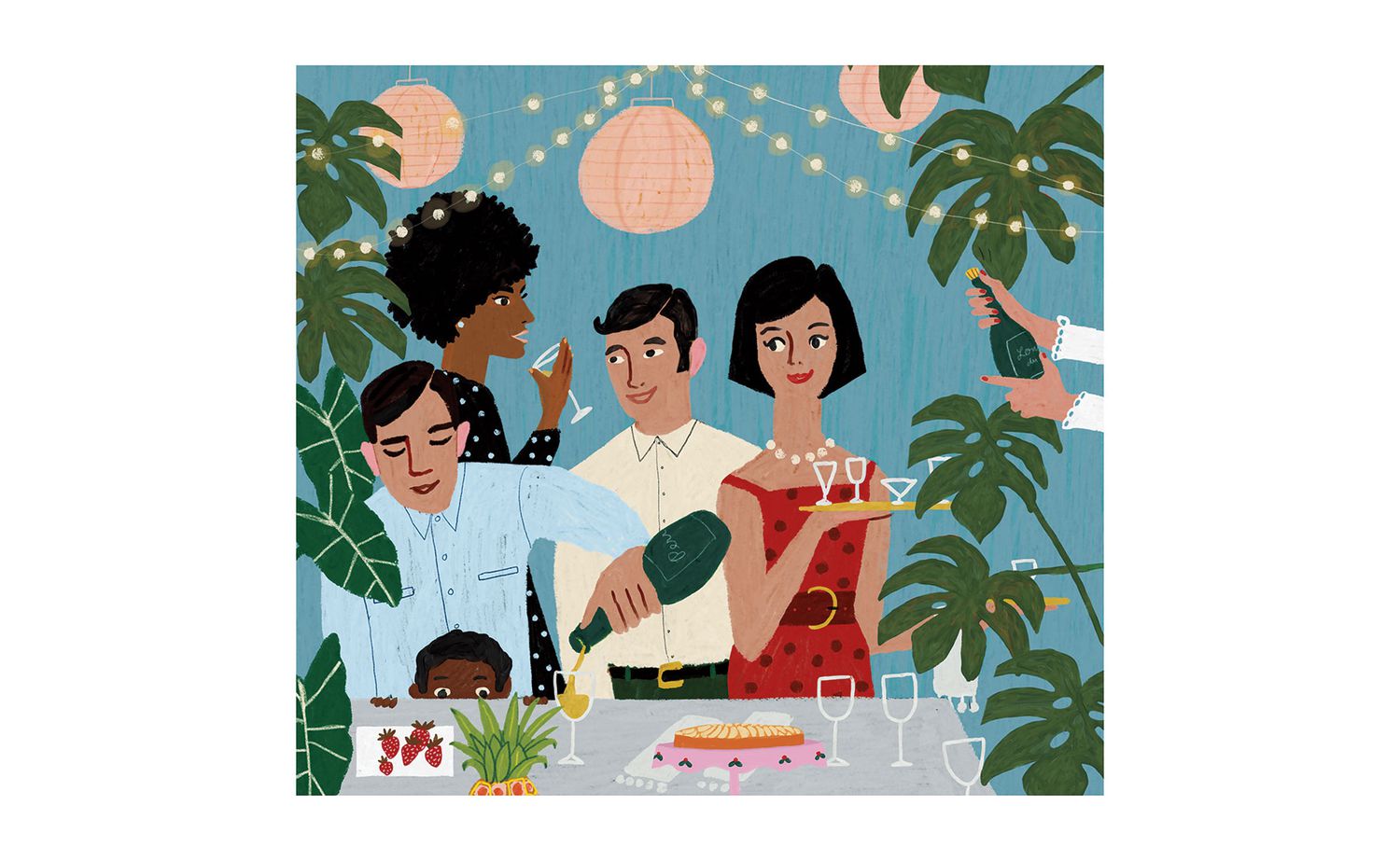
I used to think great parties were created by magical people with matching napkins, effortless hair, and a mysterious ability to pull hot appetizers out of the oven exactly when guests said, “Wow, this smells incredible.” Meanwhile, my early attempts at hosting looked more like a reality show called Someone Forgot the Ice Again. I overcooked, overdecorated, overthought, and somehow still underprepared. I believed amazing parties required perfection. It turns out they require something much better: a plan that leaves room for people to relax, laugh, snack, and stay a little longer than they intended.
That was the real lesson. The best hosts are not the fanciest people in the room. They are the calmest. They create a feeling. They make guests comfortable. They think ahead about food, timing, music, traffic flow, and the tiny practical details that keep a night from wobbling off course. Once I stopped trying to “perform” hosting and started building a repeatable system, everything changed. My parties got easier, my guests got happier, and I finally got to enjoy my own events instead of speed-walking around the house like a panicked wedding planner with a spatula.
If you want to know how to throw amazing parties every time, here is the honest answer: I learned by making mistakes, then creating simple rules that work for birthdays, casual get-togethers, dinner parties, game nights, holiday gatherings, and those “come by around seven” evenings that somehow turn into the best night of the month.
I Stopped Trying to Impress People and Started Trying to Take Care of Them
This was the breakthrough. My first instinct used to be, “How do I make this look impressive?” Now I ask, “How do I make this feel easy for my guests?” That one shift improved my party planning more than any centerpiece ever could.
Guests do not walk into your home hoping to judge your folded napkins. They want to know where to put their coats, whether they can find the bathroom without a scavenger hunt, whether the room feels welcoming, and whether there is something good to nibble on in the first twenty minutes. A party feels amazing when people feel considered. That means enough seating, enough food, clear flow, a warm greeting, and a host who is not visibly unraveling in the kitchen.
Once I embraced that idea, my hosting style got simpler and better. I stopped chasing “perfect” and started building comfort. I light the room so people look like they sleep eight hours a night. I make the first food easy to grab. I keep the music lively enough to fill silences but quiet enough that nobody has to shout like they are ordering at a baseball game. I make sure the bathroom is clean, stocked, and easy to find. None of this is glamorous, but all of it works.
The Party Formula That Changed Everything
After enough trial and error, I realized that every successful party I hosted followed the same basic framework. The theme changed. The menu changed. The guest list changed. But the structure stayed the same.
1. Start with one clear purpose
Every good party has a job. Is it meant to help people mingle? Celebrate something? Feed everyone a real meal? Keep things casual? Once I define the purpose, every other decision gets easier. A birthday dinner has different needs than a game night. A backyard hangout works differently than a holiday open house. If I do not know what kind of night I am trying to create, I end up planning six parties at once, which is how you wind up with fancy desserts, paper plates, no chairs, and emotional confusion.
Now I choose one lane. Cozy dinner. Easy buffet. Finger-food hangout. Dessert-and-games night. Potluck-style catch-up. That clarity keeps me from overspending, overbuying, and overcomplicating everything.
2. Build around the guest experience, not just the menu
I used to plan parties from the stove outward. Big mistake. Now I plan from the front door inward. What happens when guests arrive? What do they see first? Where do they stand? What do they eat first? What can they do if they do not know anyone yet?
That changed everything. I set up a natural landing zone near the entrance. I make sure there is a place for bags and jackets. I put drinks where they do not block the kitchen. I leave space for people to hover, chat, and casually inspect snacks as if they are art critics. If guests can settle in quickly, the party starts faster and feels more natural.
3. Choose a menu that forgives you
This may be my favorite hosting rule of all: never make the party depend on a single high-maintenance dish. If a menu requires me to stand over a pan while twelve people ask where the cups are, that menu is not hosting me back.
I learned to choose food that can be made ahead, held at room temperature for a bit if needed, or finished with minimal fuss. A great party menu is not necessarily flashy. It is steady. Think dips, skewers, big salads, baked pastas, grain dishes, sliders, sheet-pan mains, cookie trays, brownie bites, and desserts that are happy to wait their turn. My best menus are the ones that let me step away from the kitchen and actually speak in complete sentences.
How I Plan Amazing Parties Without Losing My Mind
The difference between a chaotic party and a smooth one is almost always what happened before the first guest arrived. Great hosting is won in advance. I do not mean with military precision. I mean with sensible timing.
A week or more ahead
This is when I set the guest list, confirm the start time, decide the menu, and make the shopping list. I also think about practical things people forget until the last minute: serving spoons, extra ice, enough cups, trash bags, hand soap, and whether I own enough chairs to avoid creating a dramatic “musical stools” situation.
I also choose what I call the “hero element.” Every party gets one thing that makes it feel intentional. Maybe it is a taco bar, a dessert table, a playlist, a color theme, a board game station, a hot cocoa setup, or a ridiculously good baked brie. One hero element is charming. Seven hero elements are a hostage situation.
The day before
This is the golden window. I prep whatever I can, tidy the guest-facing rooms, set out serving dishes, and get as much done as possible before the actual event day starts eating my soul. If food can be chopped, mixed, baked, chilled, portioned, or labeled ahead, I do it. If the table can be set early, even better. If the candles can be found before sunset, I consider that personal growth.
Most importantly, I write a timeline. Not a complicated spreadsheet. Just a realistic sequence: food in the fridge, dishes on the counter, playlist ready, trash hidden, bathroom stocked, candles lit, music on, host dressed like a functional adult. That list keeps me from forgetting the obvious while obsessing over parsley.
One hour before
This hour used to be my downfall. I would suddenly decide to mop a floor nobody was going to inspect. Now I do the opposite. I stop chasing perfection and focus on impact. I clear visible clutter. I put out the first round of food. I chill beverages. I check lighting. I open the bathroom door if it is hard to find. I put on music that sounds like people with excellent social lives recommended it.
Then I get myself ready before the first knock at the door. This sounds small, but it matters. When I am dressed and breathing normally, I greet guests better. And the tone of the first five minutes sets the tone for the whole party.
The Small Touches That Make a Party Feel Special
People remember how a party felt more than they remember exactly what was served. That is good news for the rest of us, because atmosphere is often cheaper and easier than trying to produce a restaurant-quality menu from a home kitchen.
Music does half the work
A quiet room can make even funny people become deeply interested in the cheese plate instead of each other. Music fixes that. I keep it upbeat but never overwhelming. It should support the room, not audition for it. If conversation drops for a second, the room still feels alive.
Lighting matters more than decor
I have hosted nights with basic snacks and simple plates that felt wonderful because the room looked warm and inviting. Soft lamps, candles, string lights, or even just turning off an overly harsh ceiling light can change everything. Dim lighting is the party version of good posture: subtle, powerful, and instantly more flattering.
Give people something easy to do
This is especially helpful when guests do not all know one another. The best parties often have a gentle built-in activity: assembling tacos, voting on desserts, grabbing a game, writing notes for a guest of honor, decorating cookies, or picking songs. Nothing forced. Just enough structure to make mingling easy. People love to interact when you remove the pressure.
Make the first ten minutes effortless
I always try to have a welcome moment ready. A tray of sparkling drinks, a bowl of popcorn with a fancy-sounding salt, a platter of bite-size snacks, or even a simple “Put your stuff here and grab something cold” helps guests settle in right away. Early comfort prevents that awkward doorway shuffle where everyone politely acts as if they are not wondering where the food is.
The Mistakes I Stopped Making
If you want better parties fast, remove the things that reliably make hosting harder. I learned this the dramatic way.
Mistake one: making brand-new recipes for important gatherings. I know. It feels exciting. It is also how you discover that your oven runs hot, your sauce breaks, and your confidence evaporates in front of six hungry people.
Mistake two: hiding in the kitchen. Guests can feel when the host is absent. Now I build a menu that lets me be present for the actual event I invited people to attend.
Mistake three: trying to clean the whole house. Nobody needs your laundry room to achieve spiritual enlightenment. Focus on the spaces people will actually see.
Mistake four: not labeling or arranging things clearly. If people cannot find cups, napkins, utensils, or the bathroom, they start asking questions every three minutes. A party should not require customer support.
Mistake five: forgetting that food safety is part of hospitality. I learned not to leave perishable foods sitting out forever, not to crowd the counter with delicate dishes too early, and not to wing leftovers like a brave but misguided pirate. Responsible hosting is still good hosting.
My Repeatable Checklist for Throwing Amazing Parties
When I want to host without stress, this is the checklist I follow every single time:
Pick the vibe
Decide what kind of gathering it is and let that choice simplify the rest.
Limit the menu
Choose a few solid items that can be prepped ahead and served with confidence.
Create flow
Make arrival, drinks, seating, and snacking feel obvious and easy.
Prep early
Do the chopping, setting, cleaning, and organizing before the pressure kicks in.
Be visible
Once people arrive, stop fussing and start hosting. The host’s energy is contagious.
Let “done” beat “perfect”
This is the secret nobody puts on the invitation. The best parties feel alive, not flawless.
Why Amazing Parties Are Really About Confidence
I used to think confidence came after hosting a great party. Now I know it is also what creates one. Not fake confidence. Not “I definitely meant for the dessert to lean slightly to the left” confidence. Real hosting confidence comes from preparation, simplicity, and accepting that a lived-in evening will always beat a staged one.
When I know the food is manageable, the rooms are ready, the bathroom is stocked, and the first snack is already out, I relax. And when I relax, guests relax. They linger. They laugh louder. They go back for seconds. They introduce themselves without needing rescue. They start saying things like, “This is so fun,” which is host gold.
That is when I know I have done my job. Not because every plate matched or every cushion was fluffed into architectural precision, but because people feel comfortable enough to enjoy themselves. That is what amazing parties are made of.
What Throwing Parties Taught Me About People, Panic, and Perfection
Over time, hosting taught me more than how to arrange a snack table or time a casserole. It taught me how people actually connect. Some of my favorite moments from parties were never the things I carefully planned. They were the spontaneous, slightly messy, unexpectedly funny parts: two people who had never met becoming instant friends over a shared obsession with terrible reality TV, someone hovering by the kitchen island telling the funniest story of the night, a tray of cookies disappearing in twelve minutes because apparently I had accidentally invited a highly organized wolf pack.
I learned that guests are usually rooting for you. They are not arriving with clipboards. They are arriving hoping to have a nice time. Once I understood that, I stopped treating hosting like a final exam and started treating it like an act of generosity. A party does not have to be lavish to be memorable. It just has to feel welcoming, intentional, and relaxed enough that people can be themselves.
I also learned that every host has a panic point. Mine used to hit about forty minutes before arrival, when I would become convinced that the room looked weird, the food was insufficient, and every person I invited would somehow arrive at the exact same second. Now I expect that feeling and ignore it. It is basically background music. Experience taught me that pre-party anxiety lies. The lights come on, the first guest arrives, someone compliments the snacks, and suddenly the whole thing starts working.
Some of my best hosting lessons came from little disasters. I have burned appetizers, forgotten serving utensils, run out of ice, and once played a playlist so chaotic it felt like my speaker was being controlled by six different personalities. But even those nights were often still fun. That surprised me at first. Then it reassured me. Great parties are resilient. If the mood is warm, small mistakes become part of the story, not evidence of failure.
Another thing I learned is that people love being included. They love being welcomed at the door, offered something right away, and gently drawn into the rhythm of the evening. They love when there is one obvious place to gather and one obvious thing to do first. They love when the host seems happy to see them, not frazzled by their existence. That sounds basic, but it is powerful. Hospitality is often just a series of thoughtful little signals that say, “I’m glad you’re here.”
And maybe the biggest lesson of all is this: a party gets better when the host allows it to be human. Candles burn unevenly. Someone arrives early. Someone else texts that they are “five minutes away” from three neighborhoods over. Chips run low. Ice melts. A dessert leans. None of that ruins the night. In fact, a little imperfection often makes a gathering feel more real, more lived-in, and more inviting.
Now when I host, I do not chase the fantasy of the flawless party. I chase the feeling of a good one. A room that hums. A table that people return to. A kitchen that feels lively instead of frantic. A night where people leave full, smiling, and vaguely tempted to ask when I am doing this again. That, to me, is an amazing party every time. Not because nothing went wrong, but because the right things went right: people felt comfortable, the food made sense, the energy stayed warm, and the host got to be part of the memory instead of just the person washing dishes at the end.