Some years are remembered for headlines. Others are remembered for the afternoon someone stared at a blank wall, picked up a nail gun, and accidentally began a three-week relat the second kind of year.
The favorite projects of 2012 captured a lively moment in do-it-yourself culture. Home bloggers shared ambitious room makeovers beside modest crafts, storage fixes, furniture rescues, and family recipes. Pinterest turned inspiration into a competitive sport, while the maker movement encouraged ordinary people to build, repair, reuse, and personalize the things around them.
The strongest projects were not always the costliest or most technically complex. They became favorites because they solved real problems, gave basic homes custom character, and proved that useful design could begin with leftover lumber, a thrift-store cabinet, or one mildly dangerous sentence: “How hard could it be?”
Why the Favorite Projects of 2012 Still Matter
DIY publishing in 2012 felt personal. Readers wanted measurements and material lists, but they also wanted honest mistakes, mid-project messes, and evidence that the person using the drill occasionally had to read the manual. That openness made home improvement feel accessible.
Many popular projects began with builder-grade finishes, awkward layouts, unused wall space, or everyday clutter. Their goal was not to manufacture a showroom. It was to make a real home work better while adding warmth and identity. Paint, trim, fabric, hardware, reclaimed wood, and patient problem-solving did most of the heavy lifting.
1. The Great Wall of Built-Ins
Wall-to-wall built-ins represented the grand ambition of 2012. In a family room, they could combine bookshelves, cabinets, media storage, display space, and architectural detail in one hardworking feature. They organized books, baskets, electronics, photographs, and the mysterious nest of cords nobody was emotionally prepared to throw away.
The value went beyond storage. Built-ins made a plain room look intentional, framed a television or fireplace, and created the feeling of custom construction. Their lasting lesson is to plan around real behavior: use open shelves for attractive objects and closed cabinets for toys, cables, and everything that becomes “decor” only after the doors shut.
2. A Faux Mantel With Real Personality
A faux mantel proved that architectural charm did not require a working chimney. Built from lumber, molding, paint, and careful proportions, it turned a blank wall into a focal point for artwork, mirrors, greenery, candles, or seasonal decorations.
This idea captured a defining DIY attitude: build the visual feature the house lacks instead of waiting for a major renovation. The best versions remained simple enough to blend with existing trim. A mantel should appear to belong in the room, not look as though it escaped from a stage set and is waiting for applause.
3. Rustic Wood Frames, Bins, and Plank Walls
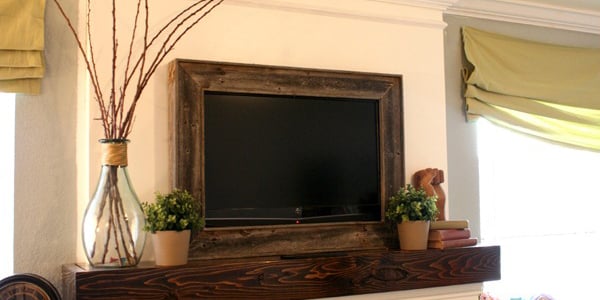
Rustic wood was everywhere in the best DIY projects of 2012. A wood frame softened the visual dominance of a television. Wall-mounted bins stored mail, magazines, towels, toys, or craft supplies. An inexpensive plank wall introduced texture without rebuilding the room.
These projects welcomed knots, uneven color, visible grain, and light distressing. Imperfection became part of the design, which made reclaimed boards and affordable lumber especially appealing. Yet function still mattered. Television frames needed ventilation and cable access, while storage bins worked best when installed where clutter naturally collected. An organizer placed far from the household drop zone will remain beautifully empty while the kitchen counter continues its career as a paper habitat.
4. A Handmade Play Kitchen
A cottage-style play kitchen combined woodworking, imagination, and family life. Old cabinets, nightstands, or entertainment centers could become child-sized kitchens with painted doors, shelves, knobs, curtains, and a metal bowl serving as a sink.
The project was memorable because it transformed unwanted furniture into a toy designed for a specific child. It also demonstrated that good DIY should serve its user. Stable construction, rounded edges, secure fasteners, child-safe finishes, and washable surfaces mattered more than tiny accessories. Children will eventually “cook” a wooden block, three socks, and a crayon in the same pot. The kitchen should be ready.
5. Barn Doors, Dutch Doors, and Pocket Doors
Door projects brought character and better movement to 2012 interiors. A sliding barn-style door separated a closet, pantry, or utility space without requiring swing clearance. A Dutch door allowed its upper and lower sections to operate independently, offering visibility and ventilation while helping manage children or pets. A pocket door disappeared into the wall and saved valuable floor area.
These were not merely decorative upgrades; they solved transition problems. Successful installations depended on level tracks, strong wall support, adequate overlap, reliable latches, and safe finger clearance. A charming door should improve daily life, not create a standing appointment with the bandage box.
6. Targeted Bathroom Improvements
Several favorite projects addressed common bathroom frustrations without demanding total demolition. Raising a short vanity improved comfort and proportions. Framing a large builder-grade mirror made it look finished. An inlaid tile “rug” added pattern in a controlled area instead of covering every surface.
These upgrades demonstrated the power of selective remodeling. Homeowners could preserve what worked and improve what felt awkward. Trim, lighting, height, hardware, and one carefully chosen focal feature often changed the entire room. This approach remains budget-friendly and creates fewer chances to discover an expensive surprise behind the wall.
7. Mudroom Benches and Small Organizers
Mudroom benches, cabinet-door bins, laundry basket towers, jewelry racks, and measuring-cup organizers represented the practical heart of 2012 DIY. They were not always glamorous, but they eliminated recurring irritation and earned appreciation every day.
A strong organizer reduces steps. It keeps an item visible, assigns it a clear home, and places it near the point of use. A mudroom bench could combine seating, hooks, cubbies, and concealed storage where bags and shoes entered the house. Even a narrow wall-mounted rail could stop clutter from migrating through every room like a determined weather system.
8. Furniture Upcycling and IKEA Hacks
Curbside dressers, basic flat-pack furniture, old end tables, pallets, and unexpected household objects were repeatedly turned into better-looking, more useful pieces. Paint, upholstery, trim, new hardware, and creative assembly produced desks, benches, campaign-style chests, shelves, laundry storage, and conversation-piece lighting.
The best upcycling was not unusual merely for the sake of being unusual. It matched sound material with a sensible new purpose. A sturdy table became shelving; a plain dresser gained better proportions; scrap wood became storage. The work saved money while producing something personal and difficult to purchase off the shelf.
9. Crafts That Made Creativity Approachable
Paper flowers, pinwheels, wreaths, painted vases, pillows, signs, costumes, place cards, and seasonal decorations made the 2012 project scene welcoming to beginners. They required less money and fewer specialized tools than room renovations, which made them ideal for families or anyone recovering from a built-in installation.
Humble materials such as felt, paper, ribbon, drop cloth, glass containers, branches, and leftover paint became highly personal decorations. The most enduring crafts also taught transferable skills: stenciling fabric, sewing a simple form, refinishing glass, constructing a wreath, and learning that “quick-drying” is a description, not a legally enforceable promise.
10. Recipes and Home Life as Creative Projects
Year-end roundups often placed freezer-meal exchanges, soups, casseroles, cupcakes, cookies, and cooking charts beside sawdust and paint. That mix reflected a broad and sensible definition of making. A home was not treated as a display object. It was a place where people built shelves, hosted parties, prepared dinner, made costumes, and occasionally ate dessert directly over the newly refinished counter.
This is one reason the favorite projects of 2012 feel warm rather than staged. Their purpose was to support routines, celebrations, comfort, creativity, and the people actually living in the rooms.
How to Choose a Favorite DIY Project Today
The 2012 archives suggest a useful method. Begin with a recurring problem rather than a random trend. Choose an idea with a clear functional benefit, confirm that the materials and skill level match the available time, and leave room for personality.
Inspiration is a starting point, not a command. Measurements, finishes, colors, hardware, and layout should respond to the actual home. The goal is not to reproduce an old photograph pixel for pixel. It is to borrow an enduring idea and make it more useful now.
Experiences and Lessons From Revisiting the Favorite Projects of 2012
Revisiting these projects feels like opening an old toolbox and finding a handwritten shopping list beneath the sandpaper. The materials are familiar, but the memories change how they look. The favorite projects of 2012 remind us that DIY is partly construction and partly autobiography.
Large projects share a predictable moment when confidence quietly leaves the building. A wall has been opened, the room is covered in plastic, and the “simple weekend project” has entered its second weekend without consulting the calendar. Built-ins, doors, and bathroom upgrades all pass through stages that look worse before they improve. The practical lesson is to plan the middle: label parts, photograph wiring and hardware, protect walkways, organize tools, and keep essential rooms usable. Progress is easier to tolerate when everyone can still find a clean towel.
Small projects teach a different form of patience. A painted vase, sewn pillow, wreath, or paper flower may look effortless in a finished image, yet drying time and repetition often determine the result. The final ten percent matters most. Clean edges, adequate curing, careful hanging, and touch-ups separate an intentional handmade object from the aftermath of a craft emergency.
Another lesson is that personal favorites and audience favorites are not always the same. A practical organizer may receive more attention than an imaginative lamp. A simple flower tutorial may outperform a complex room makeover. Popularity measures usefulness, timing, search behavior, and shareability, but it does not completely measure creative value. The project that makes its creator smile every day may be the genuine winner, even when the analytics politely disagree.
Upcycling also changes the way a maker sees ordinary objects. Once a discarded dresser becomes useful storage, it becomes harder to label all old furniture as worthless. The habit encourages inspection: Is the frame sound? Can the hardware change? Would paint reveal better proportions? This does not mean every broken chair deserves a heroic rescue. Sometimes a broken chair is simply applying for retirement. Experience means recognizing the difference.
Most importantly, these projects show how homes gain meaning through accumulated decisions. A framed mirror, a child’s play kitchen, a shelf made from inherited furniture, or a wall completed during a chaotic month can carry more emotional value than a perfectly coordinated purchase. These objects document learning, problem-solving, family routines, and the willingness to try.
A useful retrospective therefore does more than rank finished work. It records growth. Successful projects reveal improved skills, while imperfect or abandoned projects reveal better judgment and clearer preferences. Looking back should create pride without demanding perfection. Every crooked early attempt helped make the next shelf straighter.