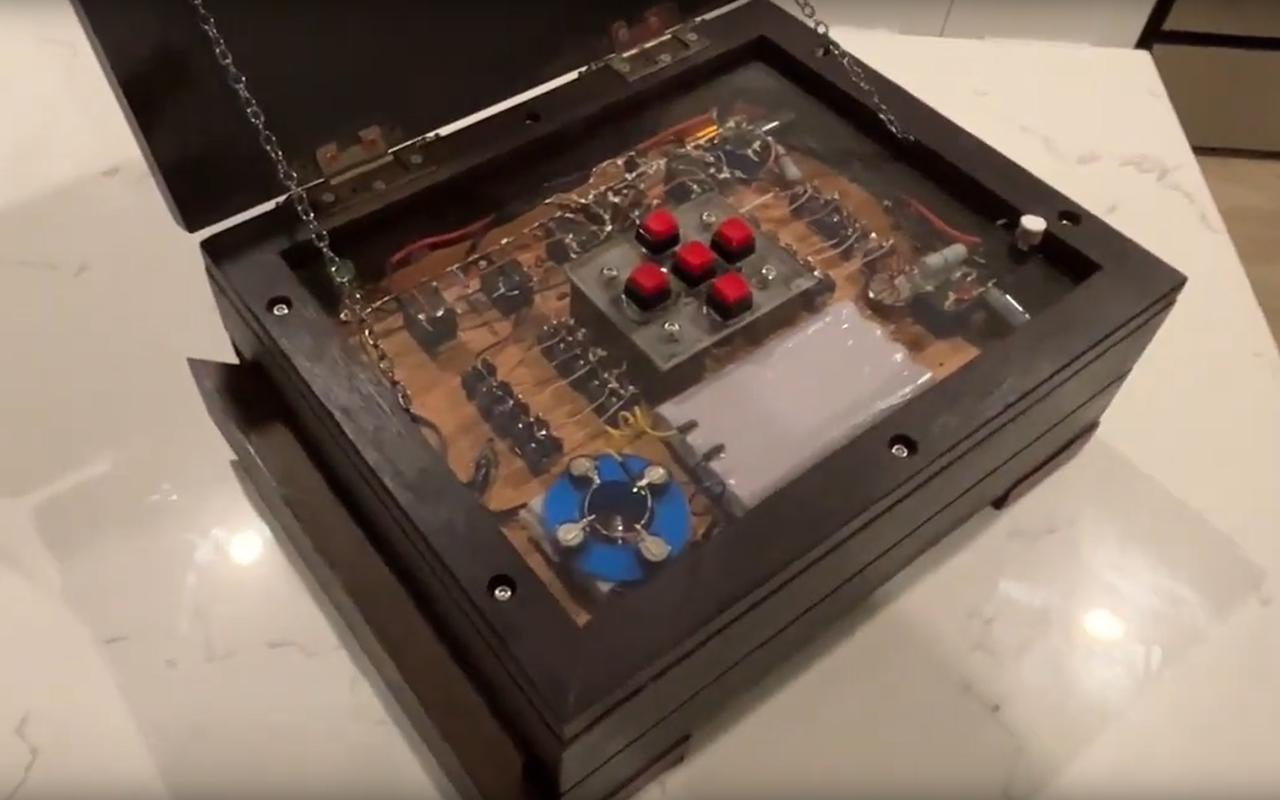
Give a maker unlimited parts, unlimited code, unlimited budget, and unlimited time, and what happens? Sometimes, oddly enough, the project gets boring. Add a rule like “no microcontroller allowed,” and suddenly the workshop wakes up. That is the delicious irony behind Design Constraints Bring Lockbox To Life: a lockbox project that proves limitations can be less like handcuffs and more like a gym membership for creativity.
The lockbox at the center of this story is not just a container with a secret drawer. It is a small lesson in constraint-driven design, passive components, relay logic, hidden mechanisms, and thoughtful presentation. Instead of leaning on a tiny microcontroller to remember a code, scan a keypad, and fire a solenoid, the design uses old-school electromechanical logic: push buttons, hidden switches, diodes, relays, capacitors, and a solenoid that physically releases the drawer when the correct sequence is entered.
That may sound like building a calculator with marbles, but that is exactly the charm. The project is interesting because it chooses the harder road on purpose. It asks: what happens when the design constraint becomes the design feature?
Why Constraints Make Better Design Stories
In product design, constraints are the rules, limits, boundaries, and inconvenient little gremlins that shape what can actually be built. Budget, size, materials, tools, safety, assembly, usability, and available components all count. A designer may dream of a sleek titanium vault with biometric access and cinematic blue LEDs, but the workbench may offer plywood, relays, switches, and a drawer slide that has seen better days.
That gap between dream and reality is not a failure. It is where design begins.
The lockbox works because it treats constraints as creative instructions. No microcontroller? Fine. Then the memory function must be physical. No software? Then the logic has to live in the wiring. Need a user interface? The keypad must do more than look cool; it must guide power through a sequence. Need secrecy? The visible circuit can be theatrical, while the actual combination-setting switches remain hidden.
This is the difference between a gadget and a designed object. A gadget performs a task. A designed object explains itself, hides what should be hidden, reveals what should be admired, and makes every limitation feel intentional.
The Lockbox Concept: A Secret Drawer With Visible Brains
The project is a small wooden lockbox with a concealed drawer. When the box is opened, it reveals a keypad and the locking circuitry. This is already a clever bit of stagecraft. Most electronic devices hide their insides like they are embarrassed. This one says, “Look at these relays. They clicked their way here honestly.”
The correct button sequence energizes a chain of relays. Each correct press advances the system to the next stage. Pressing the wrong button interrupts the chain and resets the lock to the beginning. When the final correct input lands, power reaches the solenoid. The solenoid retracts, the drawer unlocks, and the box rewards the user with that small mechanical satisfaction no touchscreen can quite replace.
The combination itself is programmed with hidden switches. That detail matters. A visible keypad is an interface; hidden switches are configuration. Separating those two ideas makes the project more elegant. The user sees the puzzle, not the backstage clipboard.
Relay Logic: The Beautiful Click of Physical Thinking
Relay logic is one of those technologies that feels ancient until you remember how much modern automation owes to it. A relay is an electrically controlled switch. Energize the coil, and its contacts change state. Wire enough relay contacts together, and the circuit can perform logic: AND, OR, sequence control, latching, reset behavior, and interlocking.
In a microcontroller-based lockbox, code might say, “If button 1, then button 3, then button 7, unlock.” In a relay-based lockbox, the same idea becomes a physical chain. One relay must be energized before the next can receive power. The logic is not stored in memory chips; it is embodied in contacts, coils, and wiring paths.
Why This Feels More Alive Than Software
Software is powerful, but it is invisible. A relay gives feedback. It clicks. It moves. It consumes space. It asks to be mounted, wired, and heard. The lockbox gains personality because the logic has a body. Every correct input creates a physical consequence, and every wrong input collapses the sequence like a tiny electromechanical game show buzzer.
That physicality turns the lockbox into more than a secure container. It becomes a demonstration of cause and effect. Anyone looking inside can follow the logic with their eyes, at least partly. That is rare in modern devices, where the most common explanation is “a chip did something.” Helpful? Yes. Romantic? Not especially.
Diodes, Capacitors, and the Art of Doing More With Less
The design uses diodes to route signals through the relay sequence. Diodes are useful because they allow current to flow in one direction while blocking it in the other. In combination-lock logic, that one-way behavior can prevent one button path from accidentally feeding another. It is the circuit equivalent of a hallway with one-way doors.
Capacitors add another layer of subtlety. In relay circuits, timing can be tricky because relays do not behave like instant mathematical symbols. They have coil pickup times, release times, mechanical movement, and contact bounce. Capacitors can smooth or delay voltage changes, helping relays energize in the intended order rather than all trying to join the party at once.
This is where the design constraint becomes educational. A microcontroller would solve timing with a few lines of code. A passive or mostly passive circuit must solve timing through component behavior. That means the builder must understand the difference between a diagram that should work and a real mechanism that does work after the tolerances, delays, resistance, and power draw have had their say.
The Solenoid: Where Logic Becomes Motion
A lockbox needs a moment when thinking becomes action. That moment is the solenoid. A solenoid is essentially an electromagnet with a movable metal plunger. Apply power, the magnetic field pulls the plunger inward, and a latch can move out of the way. Remove power, and the mechanism returns to its normal locked position, depending on the design.
For a small drawer or cabinet lock, a solenoid is a natural choice because it converts an electrical decision into a physical release. The relays decide whether the user deserves access. The solenoid delivers the verdict.
However, solenoids also introduce practical constraints. They can draw significant current, they may be designed for short activation times, and they need the right power source. That means the lockbox cannot be designed only as a logic puzzle. It must also be designed as a power system, a thermal system, and a mechanical system. The latch must align. The drawer must not bind. The solenoid must pull with enough force. The power path must handle the current. Suddenly the cute box is a full engineering conversation wearing a wooden jacket.
Woodworking as User Experience
The woodworking in a project like this is not decoration; it is interface design. The box must feel inviting enough to open, sturdy enough to trust, and precise enough for the drawer and latch to work reliably. If the drawer sticks, the electronics look guilty even when the wood is the culprit. If the lid opens awkwardly, the circuit reveal loses its theatrical timing. If the hidden switches are too easy to see, the mystery evaporates.
Good enclosure design always balances protection, access, clearance, serviceability, and aesthetics. In electronics, the enclosure is not merely a shell around the “real” project. It determines how the project is assembled, cooled, handled, repaired, and understood. In this lockbox, the enclosure also determines the emotional experience. The reveal of the keypad and circuitry is part of the reward.
Visible Circuitry, Hidden Secrets
One of the smartest choices is making the circuit visible while keeping the combination switches hidden. That creates a pleasing contradiction. The lockbox appears transparent and mysterious at the same time. You can admire the relays, wiring, and components, but you cannot immediately read the code.
That is good design storytelling. The project shares enough to create curiosity and hides enough to preserve the puzzle.
Why Not Just Use a Microcontroller?
The practical answer is: you absolutely could. An Arduino, Raspberry Pi Pico, ESP32, or other small board could scan buttons, store a password, debounce inputs, drive a transistor, and unlock the solenoid. It would probably use fewer parts. It would be easier to change the code. It could add LEDs, sound effects, lockout timers, wireless features, or logging.
But easier is not always better for the purpose of a project. The goal here is not maximum efficiency. The goal is exploration. By banning the microcontroller, the builder forces the design to expose hidden layers of logic that software usually conceals. The result is bulkier, clickier, and less commercially sensible. It is also far more memorable.
That tradeoff is the heart of constraint-driven design. A constraint should not be judged only by whether it makes the product easier. Sometimes it makes the product more meaningful.
Design Lessons From the Lockbox
1. A Clear Constraint Creates Direction
“Build a lockbox” is a broad prompt. “Build a lockbox without a microcontroller” is a design challenge. The second version immediately narrows the field, encourages research, and gives the project a stronger identity.
2. Physical Logic Improves Understanding
Relay logic makes the invisible visible. It invites troubleshooting by observation. You can hear a relay click, see a contact state, test a stage, and understand sequence control in a hands-on way.
3. Enclosure Design Is Part of the Circuit
The wooden box is not just packaging. It affects alignment, access, user experience, component placement, and the drama of the reveal. A bad enclosure can ruin a good circuit faster than a misplaced resistor.
4. Reset Behavior Matters
A combination lock must know what to do when the wrong input is pressed. In this design, an incorrect button resets the relay chain. That makes the interaction feel logical: one mistake sends the user back to the start, just like a traditional combination mechanism.
5. Constraints Should Serve the Experience
The passive-component constraint is not random decoration. It supports the identity of the project. The lockbox feels like a mechanical puzzle because its decision-making is mechanical and electrical rather than hidden inside firmware.
What Makers, Designers, and Engineers Can Take Away
The bigger lesson is that constraints should be named early. Before designing any hardware product, ask what must be true. What size must it fit? What materials are available? What power source is realistic? What tools can be used? What must be visible? What must be hidden? What should be easy to repair? What should be impossible to access without permission?
For the lockbox, the answers lead to a tactile, expressive design. For a commercial product, the same thinking might prevent redesigns, reduce assembly headaches, or make the difference between a clever prototype and something people can actually use.
Constraints also help prevent the classic maker problem: feature sprawl. Without boundaries, a lockbox could become a smart safe, then a home automation hub, then a Bluetooth-enabled puzzle game with cloud backup and a companion app nobody asked for. The constraint keeps the project honest. It says, “Make the core idea excellent first.”
Final Thoughts: A Lockbox With a Point of View
Design Constraints Bring Lockbox To Life is a fitting title because the lockbox is interesting precisely because it refuses the obvious solution. It takes a familiar object and gives it a point of view: logic can click, memory can be wired, and a secret drawer can become a small theater of engineering.
The project reminds us that good design is not the absence of limitations. It is the graceful use of them. The best constraints do not shrink imagination; they focus it. In this case, they turn a box, a keypad, relays, diodes, capacitors, and a solenoid into something with character. That is the sort of design lesson worth locking away safelypreferably in a drawer that opens with a satisfying click.
Experience Notes: Building Around Constraints in Real Projects
Anyone who has spent time building physical projects knows that constraints rarely arrive politely. They do not knock, remove their shoes, and ask where to sit. They barge in. The screw is too long. The drawer rail is slightly crooked. The relay needs more current than expected. The wire path looked clean in the sketch but turns into spaghetti once real components enter the room.
That is why a project like this lockbox feels familiar to experienced makers. The first version of any mechanism is usually too optimistic. A box that looks spacious in a CAD model suddenly becomes crowded when wires need bend radius, connectors need fingers, and a solenoid needs room to move. A keypad that seems obvious on the bench may feel awkward once mounted inside a lid. A latch that works perfectly with the box open may bind when the wood shifts slightly or the drawer is pushed from an angle.
The best approach is to treat every constraint as information. If the solenoid pulls weakly, the answer may not be “buy a bigger solenoid” immediately. It may be to reduce friction, improve alignment, shorten the latch travel, stiffen the mounting bracket, or improve the power supply. If the relay sequence behaves unpredictably, the answer may be better timing, cleaner wiring, flyback protection, or a more deliberate reset path. The constraint is pointing to the next design decision.
One useful habit is to prototype the ugly version first. Before polishing the box, build the locking path on a scrap board. Before hiding the combination switches, make them accessible and label everything. Before final mounting, test the drawer with the solenoid disconnected, then test the solenoid alone, then test the relay chain, then combine the systems. This staged approach is not glamorous, but it prevents the classic disaster where five small unknowns team up and pretend to be one giant mystery.
Another lesson is to preserve service access. A beautiful sealed box is impressive until one wire pops loose. In a lockbox project, hidden does not have to mean unreachable. Panels, removable bottoms, labeled wires, and modular mounting plates can make the difference between a project that survives one demonstration and one that keeps working after curious friends press every button like they are trying to launch a submarine.
Finally, constraints can improve pride. When a project works despite limited tools, simple parts, and self-imposed rules, the result feels earned. A microcontroller solution may be efficient, but a relay-based lockbox tells a richer story. You can point to each stage and explain why it exists. You can hear the design think. That soundthe click of a relay, the snap of a latch, the drawer sliding openis the voice of constraints doing their best work.