Note: This article is written for web publication and synthesizes real, widely used interior design principles for breakfast nooks, banquette seating, small kitchen dining areas, storage, lighting, textiles, and family-friendly finishes.
A kitchen nook makeover is one of those home projects that sounds small until it quietly changes how the whole house works. Suddenly, the awkward corner that used to collect backpacks, mail, and one mysterious spoon becomes the place where coffee tastes better, homework gets finished faster, and weekend pancakes feel like a tiny restaurant moment. That is the magic of a well-designed kitchen nook: it gives everyday life a proper seat.
Unlike a full kitchen remodel, a breakfast nook makeover does not always require knocking down walls, moving plumbing, or having a dramatic conversation with your bank account. Many successful transformations start with simple upgrades: a built-in bench, a round table, washable cushions, better lighting, wallpaper, paint, open shelving, or storage under the seat. The goal is not just to make the space pretty. The goal is to make it useful, comfortable, and so inviting that people naturally drift toward it.
Whether your kitchen nook is a sunny bay window, a forgotten corner, a narrow wall, or a small eat-in kitchen zone, the right design choices can make it feel intentional. Think café charm, family command center, cozy reading corner, casual dining spot, and sneaky storage solution all rolled into one. In other words, it is the Swiss Army knife of kitchen design, but with throw pillows.
What Is a Kitchen Nook?
A kitchen nook is a small dining or seating area located in or near the kitchen. It is often used for casual meals, morning coffee, kids’ snacks, quick laptop sessions, or low-pressure conversations that begin with “I’m only sitting for five minutes” and somehow last an hour.
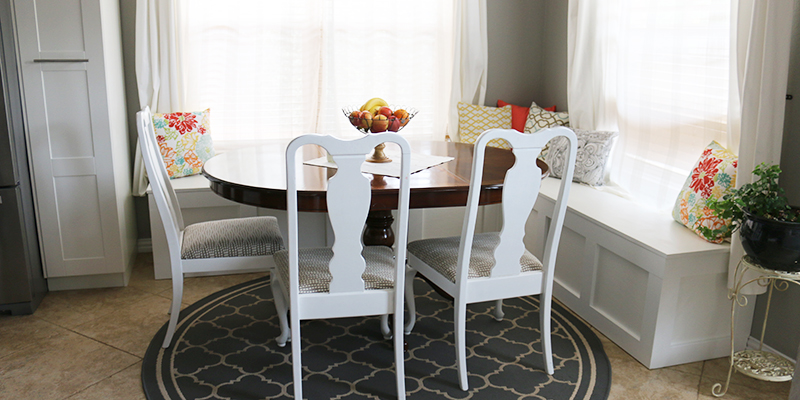
Most kitchen nooks use one of three layouts: a built-in banquette, a freestanding bench and table, or a compact dining set placed near a window or wall. Built-in banquette seating is especially popular because it hugs the wall, saves floor space, and can often include hidden storage. Freestanding furniture is easier for renters or homeowners who want flexibility. A hybrid approachsuch as a ready-made upholstered bench paired with a pedestal tablecan deliver the custom look without the custom invoice.
Why a Kitchen Nook Makeover Is Worth It
A kitchen nook makeover works because it improves both form and function. It gives unused space a reason to exist. It can add seating without needing a separate dining room. It can hide clutter. It can make a small kitchen feel warmer and more complete. Most importantly, it creates a daily-use zone, not a decorative corner that looks beautiful but serves no purpose beyond judging you silently.
It Maximizes Small Spaces
In compact kitchens, every inch has to earn its keep. A corner banquette or wall bench can seat more people than individual chairs because it eliminates the clearance needed to pull chairs in and out. This is especially helpful in apartments, older homes, galley kitchens, and open-plan spaces where the dining area has to share oxygen with the cooking zone.
It Adds Storage Without Looking Like Storage
Under-seat drawers, lift-up bench lids, baskets, and toe-kick cubbies can store table linens, board games, kids’ art supplies, extra dish towels, seasonal décor, or rarely used serving pieces. The best storage is the kind guests do not notice. They simply admire the cozy nook, unaware that beneath the cushion lives an entire civilization of placemats.
It Creates a Cozy Gathering Spot
Kitchens naturally attract people. A nook gives them somewhere to land without hovering near the stove like hungry satellites. With soft seating, warm lighting, and a table that fits the scale of the room, the nook becomes a casual gathering zone for breakfast, tea, snacks, quick work sessions, and after-school conversations.
Start With the Layout: Measure Before You Make It Cute
Before choosing wallpaper, cushions, or a pendant light, measure the space carefully. Beauty matters, but comfort decides whether the nook gets used every day or becomes an expensive place to stack unopened mail.
For a comfortable kitchen nook, bench seating usually works best when the seat height is close to standard dining chair height. The seat should feel natural with the table, leaving enough room for knees and legs. A seat depth that is too shallow feels stiff; one that is too deep makes people perch awkwardly or disappear into cushions like they have entered a decorative marshmallow.
A practical rule is to allow enough clearance around the table so people can sit, slide in, and move through the kitchen without creating a traffic jam. If your nook sits in a busy walkway, keep the table compact and avoid bulky chair legs. A pedestal table is often a smart choice because it gives feet more freedom and makes it easier to scoot around a banquette.
Best Kitchen Nook Layout Ideas
L-shaped banquette: Perfect for a corner. It creates generous seating and makes the nook feel built-in and intentional.
Straight bench against a wall: Great for narrow kitchens. Pair it with a slim rectangular table or small round table.
U-shaped nook: Best for larger corners or bay windows. It feels cozy and restaurant-like but needs enough space for easy access.
Window nook: Ideal for sunny spaces. Add cushions, Roman shades, and a table that does not block the light.
Freestanding nook: Best for renters or budget-conscious makeovers. Use a bench, chairs, small table, rug, and wall décor to define the area.
Choose the Right Seating
Seating is the star of any kitchen nook makeover. It determines how the space looks, feels, and functions. If the seating is uncomfortable, no amount of gorgeous wallpaper will save it. People will admire it, take one photo, and then sit somewhere else.
Built-In Banquette Seating
A built-in banquette gives a kitchen nook a polished, custom look. It can be designed to fit the exact dimensions of the room, wrap around corners, follow a bay window, or include storage underneath. Built-ins are especially useful when the kitchen has odd angles or limited square footage.
For a timeless look, paint the banquette the same color as the kitchen trim or cabinetry. For more personality, try a contrasting color such as soft sage, navy, warm beige, dusty blue, or creamy white. Add cushions in performance fabric so the space can survive coffee, jam, tomato sauce, and the occasional artistic yogurt incident.
Freestanding Benches and Chairs
If a built-in banquette is not realistic, a freestanding bench can still create the same cozy effect. Look for a bench with a low profile, comfortable seat depth, and upholstery that can handle daily use. Pair it with one or two lightweight chairs so the arrangement feels flexible rather than cramped.
A freestanding option is also easier to change later. This is helpful if you rent, plan to move, or enjoy rearranging furniture at 10 p.m. because “the energy feels off.”
Pick a Table That Fits the Nook, Not Your Fantasy Dinner Party
The table should match the actual way you live. A giant farmhouse table may look dreamy online, but if it blocks the refrigerator, dishwasher, and everyone’s will to live, it is not the table for your nook.
Round tables are excellent for small kitchen nooks because they soften corners and make movement easier. Oval tables offer similar benefits while giving a little more surface area. Rectangular tables work well with straight benches or narrow spaces. Drop-leaf tables are useful when you need flexibility, especially in apartments or smaller homes.
For banquette seating, a pedestal table is often the hero. Since there are no corner legs to battle, people can slide in and out more comfortably. This detail seems minor until someone has to perform a full-body sideways shuffle just to sit down with a bowl of cereal.
Use Color to Define the Space
A kitchen nook makeover does not need a huge color commitment. Even a modest shift in paint, wallpaper, textiles, or trim can visually separate the nook from the rest of the kitchen.
Soft neutrals create a calm, classic look. Warm white, oatmeal, greige, pale gray, and mushroom tones work beautifully when paired with wood, woven shades, and simple linen cushions. For a cheerful nook, try butter yellow, sky blue, sage green, terracotta, or muted coral. If the kitchen gets plenty of natural light, a deeper color like charcoal green, navy, or rich brown can make the nook feel intimate and stylish.
Wallpaper and Pattern
Wallpaper is one of the fastest ways to give a kitchen nook personality. A small area can handle pattern better than an entire kitchen, making the nook a perfect place for florals, stripes, checks, botanical prints, or geometric designs. Peel-and-stick wallpaper is a friendly option for renters or cautious decorators who love commitment only in theory.
If wallpaper feels too bold, use pattern in smaller doses. Try striped cushions, café curtains, patterned Roman shades, a washable rug, or a row of colorful pillows. Pattern adds charm and also helps disguise everyday wear. Translation: crumbs become less emotionally powerful.
Lighting Makes the Makeover
Lighting can turn a kitchen nook from “table in a corner” into “favorite seat in the house.” A pendant light, small chandelier, wall sconce, or plug-in fixture creates a focal point and gives the nook its own identity.
Hang lighting low enough to feel intimate but high enough that no one bumps their head while reaching for the syrup. Warm light works best for dining because it flatters food, faces, and the overall mood. Harsh overhead lighting has its place, but that place is usually not above a cozy breakfast nook unless you want your pancakes to feel like they are being interrogated.
Layered Lighting Ideas
Use a pendant over the table for the main glow. Add under-shelf lighting if the nook includes open shelves. Try a wall sconce for a café effect. If wiring is not available, plug-in sconces and battery-powered picture lights can still create a polished look. A dimmer switch is a small upgrade that makes a big difference, especially when the nook doubles as a dinner spot.
Add Smart Storage
A kitchen nook makeover should solve problems, not just create a prettier place to place problems. Storage is where the makeover earns bonus points.
If you are building a bench, consider drawers instead of lift-up lids when possible. Drawers are easier to access because you do not have to remove cushions, pillows, pets, children, or one adult who “just sat down for a second.” Lift-up lids can still work well for items used less often, such as holiday linens or special serving pieces.
Wall shelves above or beside the nook can hold cookbooks, coffee mugs, small plants, framed art, or baskets. Keep open shelving edited so the area feels charming rather than cluttered. The goal is “cozy café,” not “tiny storage unit with seating.”
Choose Durable Materials
Kitchen nooks live dangerously close to food, drinks, grease, pets, and humans with questionable spill records. That means durability matters. Performance fabrics, treated cotton, polyester blends, vinyl, leather, faux leather, and washable slipcovers can all be practical choices depending on the style of your home.
For cushions, choose removable covers whenever possible. For rugs, use a washable or indoor-outdoor option. For tables, consider finishes that can handle daily wiping. Wood brings warmth, but it should be sealed well. Stone, laminate, and durable veneers can also work beautifully in high-use spaces.
Decorate With Personality, Not Clutter
The best kitchen nook makeovers feel personal. Add framed art, a small gallery wall, a vintage mirror, a plant, a bowl of fruit, a ceramic vase, or a stack of favorite cookbooks. If your nook has a window, use curtains or shades to soften the light. If the wall is blank, add artwork that matches the mood: modern, cottage, coastal, farmhouse, retro, or quietly elegant.
Keep accessories practical. A tray can hold napkins, salt, pepper, and a small vase. A basket can store kids’ crayons or placemats. A few pillows add comfort, but too many can turn the bench into a decorative obstacle course. Nobody wants to remove six pillows before eating toast.
Budget-Friendly Kitchen Nook Makeover Ideas
You do not need a custom carpenter to create a beautiful kitchen nook. Start with what you have and upgrade in layers.
Paint the Wall or Bench
Paint is one of the most affordable ways to change the mood. A fresh wall color behind the nook can define the area instantly. If you already have a bench, painting it to match the cabinets or trim creates a built-in effect.
Add Peel-and-Stick Wallpaper
Use wallpaper on one wall, inside a niche, or above wainscoting. This adds personality without overwhelming the kitchen.
Swap the Light Fixture
A new pendant or small chandelier can make the nook feel designed. Choose a fixture that matches the table size and does not overpower the space.
Use Ready-Made Cushions
Custom cushions look beautiful, but ready-made bench cushions can work well for standard sizes. Add a few pillows in coordinating fabrics for a finished look.
Bring in a Vintage Table
A secondhand pedestal table, café table, or drop-leaf table can add character and save money. Vintage pieces often make a nook feel collected rather than copied from a catalog.
Common Kitchen Nook Makeover Mistakes to Avoid
The first mistake is choosing a table that is too large. A nook should feel cozy, not trapped. The second mistake is ignoring seat comfort. A bench with no cushion or back support may look sleek, but it will not invite long breakfasts or relaxed conversations.
Another common mistake is using delicate fabric in a high-traffic eating area. If the cushion cannot survive coffee, crumbs, and daily wiping, it belongs somewhere safer. Also avoid placing a heavy-legged table in front of a banquette. It makes getting in and out harder than it needs to be.
Finally, do not forget lighting. A kitchen nook without dedicated lighting can feel unfinished. Even a simple pendant, sconce, or shaded lamp can make the area feel warm and intentional.
Kitchen Nook Makeover Style Ideas
Modern Café Nook
Use a round pedestal table, upholstered bench, black metal accents, simple art, and a globe pendant. Keep the palette clean with white, walnut, cream, and matte black.
Cottage Breakfast Nook
Try a painted bench, floral cushions, gingham curtains, a vintage wood table, and woven baskets. This look feels friendly, layered, and relaxed.
Coastal Kitchen Nook
Choose soft blues, sandy neutrals, rattan shades, white walls, and linen-look cushions. Add natural wood and simple stripes for a breezy feel.
Bold and Playful Nook
Use patterned wallpaper, colorful upholstery, painted chairs, and a statement light fixture. This is perfect for homeowners who want the nook to become the happiest corner of the kitchen.
Minimalist Small-Space Nook
Choose a slim bench, small round table, neutral cushions, and one strong piece of art. Keep accessories limited and let negative space make the room feel larger.
Real-Life Experience: What a Kitchen Nook Makeover Actually Teaches You
A kitchen nook makeover looks simple on a mood board. You pick a cute bench, add a table, hang a light, toss in a few pillows, and suddenly your home looks like it belongs in a magazine where nobody owns charging cables. In real life, the process is still rewarding, but it teaches you a few practical lessons very quickly.
The first lesson is that measuring is not optional. A nook can look spacious when it is empty, but once a table, bench, chairs, cushions, and humans arrive, the truth appears. A table that seemed “cozy” online may feel like a wooden island blocking the entire kitchen. Before buying anything, tape the table size on the floor. Sit in the space. Pretend to slide in and out. Open the refrigerator. Walk around the imaginary chair. Yes, it feels silly. No, it is not sillier than returning a table that weighs as much as a small piano.
The second lesson is that comfort wins. Many people focus on the look first, especially with banquette seating. But a kitchen nook is not a museum exhibit. It has to support real meals, real backs, real elbows, and real mornings when everyone is slightly grumpy and looking for toast. A cushion that is too thin, a bench that is too deep, or a table that sits too far from the seat can make the nook feel awkward. When the proportions are right, people naturally use the space more often.
The third lesson is that fabric choice matters more than you think. A pale linen cushion may look dreamy for about twelve minutes. Then someone sits down with blueberry jam. For families, pets, or anyone who drinks coffee with enthusiasm, performance fabric or washable slipcovers are worth it. A kitchen nook should not require emotional support every time someone eats spaghetti.
The fourth lesson is that storage can be both wonderful and slightly sneaky. Under-bench drawers are fantastic for items you actually use: napkins, placemats, kids’ supplies, chargers, candles, or serving trays. But if you use the bench to hide random clutter, it can become a decorative black hole. The best approach is to give each storage area a category. One drawer for linens. One basket for homework supplies. One cubby for board games. Organization does not need to be perfect; it just needs to be understandable.
The fifth lesson is that lighting changes everything. A nook with basic overhead kitchen lighting can feel like an afterthought. Add a pendant, sconce, or warm lamp, and suddenly the same corner feels designed. Warm lighting softens the space and makes even a Tuesday bowl of cereal feel slightly more charming.
Finally, a kitchen nook makeover teaches you that small spaces can carry big personality. Because the nook is contained, you can take design risks that might feel too bold in the whole kitchen. Try a patterned wall, a vintage table, colorful cushions, or a dramatic light fixture. The nook is allowed to have a little flair. In fact, it should. A great kitchen nook does not just fill a corner; it creates a habit. It becomes where the day begins, where guests linger, where kids draw, where coffee cools, and where the kitchen finally feels complete.
Conclusion
A kitchen nook makeover is one of the smartest ways to improve a kitchen without rebuilding the entire room. By combining space-saving seating, the right table, durable materials, good lighting, thoughtful storage, and personal style, even a forgotten corner can become the most loved spot in the home.
The best kitchen nook is not just beautiful in photos. It works on busy mornings, lazy Sundays, school nights, snack breaks, coffee dates, and everything in between. Plan the layout carefully, choose comfort over trends, and let the design reflect how your household actually lives. Do that, and your kitchen nook will not just look better. It will make everyday life feel a little warmer, a little easier, and a lot more inviting.