If you’ve ever walked into an old American house and immediately felt like your shoulders dropped two inches (in a good way), there’s a decent chance a few small details did the heavy liftingwarm wood trim, a chunky baseboard, maybe some leaded glass… and a set of brass coat hooks that look like they’ve been politely holding everyone’s winter hats since Theodore Roosevelt was in the headlines.
“c1910” coat hooks are the hardware equivalent of a great supporting actor: not flashy, always reliable, and somehow makes the whole scene feel more expensive. In this guide, we’ll dig into what makes classic brass coat hooks from around 1910 special, how to identify the good stuff, how to clean them without erasing their story, and how to use them todaywithout turning your entryway into a clutter museum.
What “c1910” really means (and why it matters for coat hooks)
“c1910” is short for circa 1910roughly the late 1900s through the early 1910s. In American homes, this sits at a fascinating design crossroads: Victorian ornament is still hanging around, but simpler Arts & Crafts and early Craftsman influences are gaining ground. That mix shows up in coat hooks as a tug-of-war between curves and restraint.
Practically speaking, this was a moment when the entry hall and “cloak area” weren’t afterthoughts. A lot of houses were designed with a sense of procession: you came in, you hung up your coat and hat, and then you entered the “good rooms” without tracking the outdoors across the whole first floor. Coat hooks weren’t just convenient; they were part of the choreography.
And yespeople wore more layers. When outerwear has structure (wool coats, capes, hats with actual opinions), you need hardware that doesn’t bend, snap, or sigh dramatically every time someone hangs a bag on it.
Why brass was the star of builder hardware
Brass became a go-to for builder hardware because it hits the sweet spot: it’s durable, workable, naturally corrosion-resistant, and its color reads as “warm luxury” even when it’s being used for something as unglamorous as holding a damp scarf.
Brass is an alloymostly copper and zincand manufacturers could tune the look and performance by adjusting the recipe. For household hardware, brass offered a combination of strength and formability that made it ideal for casting, stamping, and finishing into everything from hooks to hinges.
Around the turn of the century, brass hardware showed up everywhere: lighting, plumbing trim, and the everyday builder pieces that get touched a thousand times a month. In other words: brass wasn’t a “special occasion” metal. It was the hardworking favorite.
Signature coat hook styles you’ll see around 1910
1) The classic “hat & coat” double hook
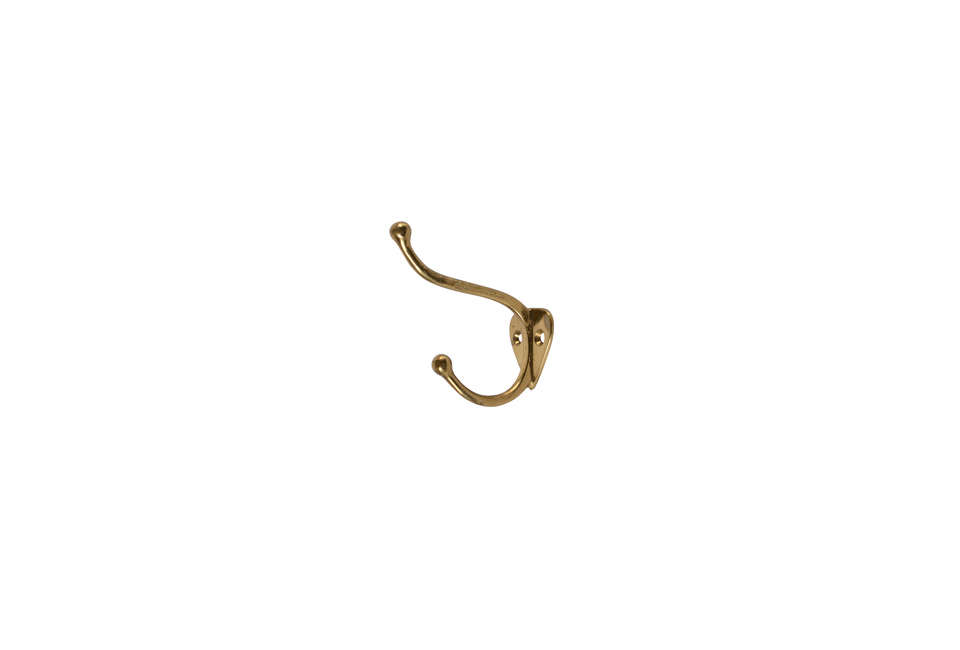
This is the familiar silhouette: one upper hook for a hat (or a handbag strap) and one lower hook for a coat. Many examples have rounded ball tips or gently flared ends to keep fabric from snagging. It’s simple, balanced, and quietly confidentlike the hardware is wearing a waistcoat.
2) The ornate Victorian carryover (faces, scrolls, and flourish)
Some c1910 hooks still lean Victorian: figural motifs, scrolling arms, and decorative backplates. These are the pieces that can make an entry feel like it should come with a calling card tray. They’re also great at hiding minor wall scars because the backplate covers more areaan underrated superpower.
3) Arts & Crafts / Craftsman “Mission” hooks
As the Craftsman influence rises, you’ll see hooks simplify: straighter profiles, squarer shoulders, and a more architectural stance. Often these are paired with oak backboards or a wall-mounted rail. The goal is honest function, clean geometry, and hardware that doesn’t need to shout to be noticed.
4) Schoolhouse and utility hooks
Early 1900s institutional buildingsschools, libraries, civic hallsoften used sturdy, repetitive hook patterns. The charm here is the unapologetic practicality: strong castings, simple shapes, and spacing designed for crowds. This is the aesthetic origin story of the modern “mudroom wall of hooks.”
How to tell if your hook is truly brass (and possibly truly old)
A lot of “antique brass” on today’s market is actually a finish, not a material. That doesn’t make it bad but it does change how you clean it and what you should expect over time.
Material reality check: solid brass vs. brass-plated
- Magnet test: Brass itself isn’t magnetic. If a magnet sticks strongly, you may have steel underneath with a brass plating or brass-colored finish.
- Look at wear points: On plated pieces, edges and high-contact spots sometimes reveal a different metal color beneath.
- Weight and feel: Solid brass often feels denser and more substantial, though this isn’t foolproof (cast iron is heavy too).
Age clues that whisper “early 1900s”
- Tool marks and casting seams: Older cast pieces may show subtle seam lines or finishing marks in hidden areas.
- Patina in layers: Real age tends to look like depthdarker tones in crevices, smoother wear where hands touched it for decades.
- Fasteners: Slotted screws fit the era’s look. A bright new Phillips-head screw on “1910 hardware” is like sneakers with a tuxedo.
One note: there are excellent reproductions today that intentionally mimic early 1900s forms. So “not old” doesn’t mean “not worth it.” If you love the style and the quality is there, you’re still winning.
Patina: the glow-up that time gives brass
The best thing about brass is also the thing that confuses people: it changes. Unlacquered brass (sometimes called “living finish”) reacts to air, moisture, and touch, gradually deepening from bright gold to a warmer, darker tone.
That mellowing isn’t necessarily damageit’s often a protective oxidation layer and a visual record of use. Think of it like laugh lines for hardware. (If your hook has none, it’s either brand-new or has lived a suspiciously sheltered life.)
The key decision is this: do you want your brass to look freshly polished or honestly aged? Both are valid. The mistake is accidentally stripping the patina when you actually loved it.
Cleaning classic brass coat hooks without ruining the vibe
Cleaning brass is less about “what’s the strongest thing in my cabinet?” and more about choosing the right level of intervention. Start gentle. Escalate only if you truly want a brighter look.
Step 1: The gentle clean (best for keeping patina)
- Dust with a soft, dry cloth (microfiber works well).
- Wipe with a slightly damp cloth and a drop of mild dish soap if there’s grime.
- Use a soft toothbrush for crevices, then rinse with a clean damp cloth.
- Dry thoroughly. Brass and lingering moisture are not best friends.
If your goal is to keep an antique look, avoid aggressive abrasives and strong acids. Many “make it shiny” methods work by removing tarnishand tarnish is basically patina’s more dramatic cousin.
Step 2: “Brighten, but don’t erase” (for slightly dull, spotty brass)
Some homeowners use gentle household options to brighten brass without taking it back to mirror-shine. A classic example is a ketchup-based wipe-down: mild, accessible, and oddly satisfying in a “why is this working?” way. Apply, wait briefly, rinse, and dryalways spot-test first.
Step 3: Full polish (only if you want shiny brass)
If you want the “new penny” look, you’re intentionally removing patina. Common DIY approaches include vinegar-based pastes (often with salt and flour) or lemon-and-salt combinations. These can be effectivebut they’re also more likely to change the finish dramatically.
Two important cautions:
- Protect original finishes: On truly antique hardware, repeated polishing can wear away detail and remove historic surface character.
- Be careful with harsh compounds: Some cleaners (especially those with ammonia or abrasive grit) can cause issues on copper alloys or leave residues. If you polish, rinse thoroughly and dry completely.
What about painted-over hooks?
Old hooks sometimes get entombed under paint during a “quick refresh” decades ago. Paint removal on metal can be done with approaches like heat/softening methods, careful scraping, or appropriate strippers. If you’re dealing with very old paint, assume it may contain lead and follow safety best practices (ventilation, PPE, containment).
For small hardware, people often remove pieces from the wall to work on them safely and evenly. Once the paint is off, you can assess the underlying finish and decide whether to preserve patina or polish.
Installing brass coat hooks today (without a drywall tragedy)
The original 1910 context was often plaster over lath or solid wood backingmaterials that forgive a lot. Modern drywall is… not that. If you want your hooks to hold more than a polite scarf, plan the mounting like you mean it.
Best-practice mounting tips
- Hit studs when possible (especially for heavy coats and bags).
- Use appropriate anchors when studs aren’t available, and respect the anchor’s load rating.
- Pre-drill to prevent splitting wood rails and to keep screws straight.
- Choose the right screws: For a period look, slotted screws in a matching finish help. For strength, the screw length and bite matter more than the head style.
Spacing that actually works
If your hooks are too close, coats overlap, sleeves tangle, and suddenly your entry becomes a wearable Jenga tower. A practical spacing approach:
- 4–6 inches apart for light-use zones (scarves, hats, keys, dog leashes).
- 6–10 inches apart for heavy coats, backpacks, and the “winter is serious” wardrobe.
Bonus tip: if you’re building a hook rail, a slightly taller backboard protects the wall from scuffs and makes the installation look intentional, not like the hooks just wandered onto the wall on their own.
Styling ideas: letting brass look like it belongs (not like an accident)
Brass coat hooks play well with both historic and modern interiors, as long as you choose a laneor at least a plausible story. Here are a few reliable combinations:
Classic c1910 entryway
- Quarter-sawn oak (or oak-toned wood)
- Off-white or warm neutral walls
- Unlacquered brass hooks with a soft patina
Modern-but-warm
- Simple black or deep green wall color
- Clean-lined hook shapes (Mission/Craftsman silhouettes)
- Brass as the “glow” accent that keeps things from feeling cold
Powder room surprise
A single beautiful brass hook (or pair) in a powder room is the smallest upgrade with the biggest “someone thought about this” energy. Add a hand towel that isn’t the size of a napkin, and congratulationsyou’ve entered the realm of functional luxury.
Buying guide: antique originals vs. high-quality reproductions
If you’re shopping for classic brass coat hooks, you’ll typically choose between true antiques (salvage) and new reproductions inspired by early 1900s designs.
When antiques make sense
- You want authentic wear and a patina you can’t fake.
- You’re restoring a period home and want matching “character.”
- You’re okay with minor imperfections and the hunt for sets that match.
When reproductions are smarter
- You need a consistent set (same finish, same mounting pattern).
- You want solid brass with reliable strength for daily abuse (hello, backpacks).
- You want an unlacquered finish that will patina naturally, but you’d prefer to start from “fresh.”
Checklist before you buy
- Material: solid brass vs plated vs brass-colored finish
- Mounting: surface-mount holes, included screws, wall compatibility
- Scale: hook projection and height (especially for bulky coats)
- Finish style: polished, satin, antique, or unlacquered/living
Conclusion: small hardware, big atmosphere
A classic brass coat hook from around 1910 is proof that practical objects can still be beautiful. It’s a tiny piece of daily ritual: come home, hang your coat, reset the day. Whether you’re restoring an old house, building a mudroom rail, or just trying to get your family to stop using the dining chair as a coat mountain, brass hooks deliver.
Keep the patina if you love the history. Polish if you want the sparkle. Mount them well so they can do their job. And if you find a mismatched set at a salvage shop? Don’t panicearly 1900s houses were full of small inconsistencies. You’re not being “imperfect.” You’re being period-accurate.
Field Notes: of Real-Life Hook Experience (Because Hooks Deserve Stories Too)
The first thing you notice when you install a row of classic brass coat hooksespecially the chunky, slightly overbuilt kind that feel c1910is how quickly your entryway stops looking like a place where life happens to you, and starts looking like a place you run on purpose. Suddenly there’s a “home base.” Keys go here. The dog leash goes here. The tote bag full of things you swear you’ll return goes here.
Day one is all optimism. You hang a coat and step back like you just curated a museum exhibit titled Responsible Adult, Early 20th Century. The brass glows, even if it’s not polished; it’s that warm, honey-gold tone that makes white paint look creamier and wood grain look richer. If your hook is unlacquered, you’ll also realize you can leave fingerprints on ittiny little autographs from modern life. It’s oddly charming. Like the hook is quietly keeping attendance.
By day three, the hooks reveal their true personality: they are honest. They will not pretend a drywall screw into soft gypsum is “good enough.” Hang a heavy bag on a poorly mounted hook and it will respond with a subtle but unmistakable tilt that says, “I have survived world wars and shag carpet trends. I will not be defeated by a casual installation.” Fix it properlyhit a stud, use a solid rail, or choose the right anchorand suddenly the hardware feels like it could hold your entire winter. Possibly your neighbor’s winter too.
Then comes the comedy of categories. Hats are light, so they migrate upward. Coats hog the lower prongs. Scarves drape wherever they want, like they pay rent. A kid’s backpack ignores every rule and somehow occupies three hooks at once. This is where c1910-inspired double hooks shine: one prong can take the backpack loop while the other holds a jacket, and you’re not left with a twisted fabric knot that requires a minor engineering degree to remove.
Around week two, you’ll probably decide whether you’re a “patina person.” If you wipe the brass constantly, you’re chasing shine. If you let it mellow, you’re letting the house look lived-in in the best way. Either path is finejust choose intentionally. The happiest brass hooks aren’t the ones that look brand-new; they’re the ones that look like they belong exactly where they are.
And the sneakiest benefit? Hooks change behavior. A good hook makes it easier to be tidy than messy. It’s not that your household suddenly becomes organizedit’s that the room stops fighting you. Which, honestly, is the most classic early-1900s upgrade of all: practical design that makes daily life feel a little more graceful.