Note: Faro is a historic casino card game, not a common modern casino offering. This guide explains the rules for educational, historical, and home-game purposes. If real money is involved, play only where legal, set limits, and remember that gambling should never be treated as a dependable way to make money.
Introduction: Meet Faro, the Casino Game That Once Ruled the West
Before poker became the smoky saloon superstar, before blackjack got its strategy charts, and long before slot machines learned how to sing, flash, and swallow quarters with theatrical enthusiasm, there was Faro. Also called Pharaoh, Pharo, or the wonderfully dramatic bucking the tiger, Faro was once one of the most popular gambling card games in America.
In the 1800s, Faro tables were everywhere from frontier saloons to riverboat gambling rooms. Cowboys, miners, merchants, soldiers, professional gamblers, and a few people who probably should have gone home three hours earlier gathered around the green table to wager on cards. It was fast, simple, social, and easy to understand. That was part of its charm. Unlike poker, you did not have to bluff anyone. Unlike blackjack, you did not have to decide whether hitting on 16 was brave, foolish, or both. In Faro, you simply bet on which card rank would win or lose.
At its heart, how to play Faro comes down to a clean idea: players bet on card ranks, the banker deals cards in pairs, and one card loses while the next card wins. Of course, the details add flavor. There are coppered bets, split bets, casekeepers, the final “calling the turn,” and enough Old West vocabulary to make the whole table sound like it needs a banjo soundtrack.
This guide explains the classic Faro card game rules step by step, including the layout, equipment, betting options, payouts, examples, and practical tips for running a friendly historical game at home.
What Is Faro?
Faro is a banking card game played with a standard 52-card deck. One person acts as the banker or dealer, while one or more players place bets against the bank. Players do not compete against each other. Instead, everyone is betting on the order in which card ranks appear from the deck.
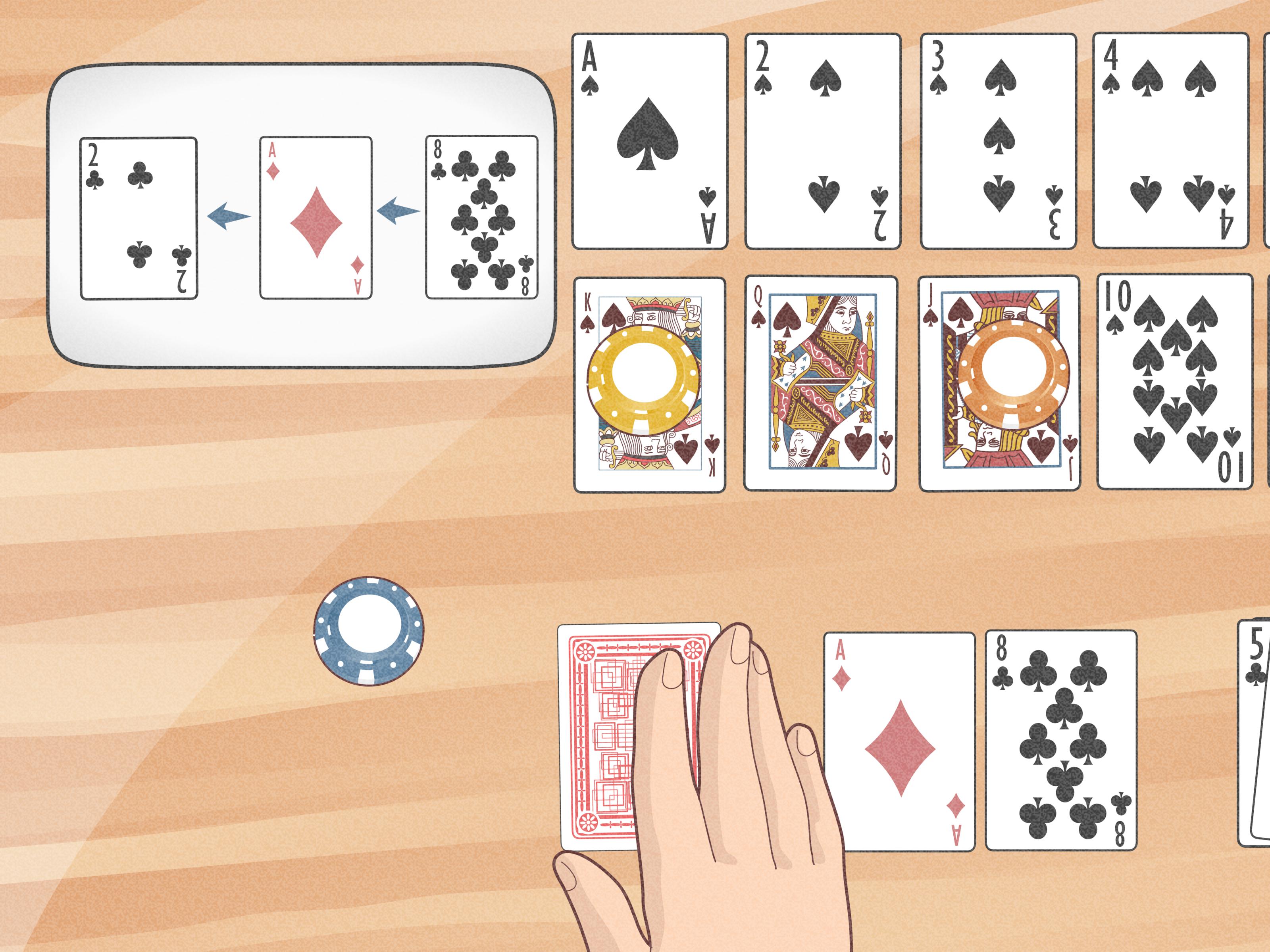
The game uses a special betting board called a Faro layout. This layout shows the thirteen card ranks: Ace, 2, 3, 4, 5, 6, 7, 8, 9, 10, Jack, Queen, and King. Traditionally, the layout used one suit, often spades, to represent all ranks. A bet on the Queen, for example, is not a bet on the Queen of Spades specifically. It is a bet on any Queen.
Faro became famous because the rules were easy to learn and the pace was quick. A single round, called a turn, usually required only two exposed cards. The first card was the losing card. The second card was the winning card. If your chosen rank appeared as the second card, you won. If it appeared as the first card, you lost. If it did not appear, your bet usually stayed on the table for the next turn.
Faro Equipment: What You Need to Play
You do not need a museum-grade saloon table to play Faro, although it would certainly improve the drama. For a basic home version, you need a few simple items.
1. A Standard 52-Card Deck
Faro is played with one full deck. Jokers are not used. Aces are generally treated as low and Kings as high, especially for high-card wagers.
2. A Faro Layout
The layout displays the thirteen ranks. You can print one, draw one, or arrange thirteen spare cards from Ace through King on the table. If you use actual cards as the layout, make sure they are not part of the dealing deck.
3. Chips or Counters
Players use chips, tokens, coins, or counters to place bets. In old Faro language, chips were often called checks.
4. A Copper Token
A copper is a small marker placed on top of a bet to reverse its meaning. Historically, a hexagonal token was used, and pennies sometimes did the job. In a home game, any distinct marker works. A button, coin, or small bead is fine, as long as everyone knows what it means.
5. A Casekeeper
A casekeeper is a board or counting device that tracks which cards have already appeared. Traditional casekeepers looked a little like an abacus, with markers for each rank. You can use a printed tracking sheet or simply write down card ranks as they come out. This matters because Faro is a game where players can see what cards remain in the deck.
The Basic Goal of Faro
The goal is simple: bet on the rank that will appear as the winning card. The dealer reveals cards in pairs. The first card in the pair loses for players. The second card wins for players. If you bet on the rank of the second card, you are paid even money. If you bet on the rank of the first card, the banker collects your wager.
For example, imagine you place one chip on the 8. The dealer reveals a 4 first and an 8 second. Congratulations. Your 8 is the winning card, and you receive a 1-to-1 payout. If the dealer reveals an 8 first and a 4 second, your bet loses. If the dealer reveals a 4 first and a Jack second, your 8 is not involved, so your bet remains on the layout unless you choose to move it before the next turn.
How to Set Up a Faro Game
Step 1: Choose the Banker
One person acts as the banker. The banker controls the deck, pays winning bets, collects losing bets, and announces the action. In historical casino Faro, the banker represented the house.
Step 2: Arrange the Layout
Place the thirteen ranks on the table in order from Ace to King. This is where players place their chips. Keep the layout clear and organized. Faro moves quickly, and a messy table can turn a friendly game into a courtroom drama.
Step 3: Shuffle and Cut the Deck
The deck is shuffled thoroughly. In traditional games, it was placed into a dealing box, sometimes called a shoe, to reduce handling and reassure players. For a casual home game, the dealer can deal from the deck by hand, but should do so clearly and consistently.
Step 4: Burn the First Card
The first card is removed from play. This card is often called the soda. It does not win or lose. It simply starts the deck and is recorded as out of play.
Step 5: Players Place Bets
Players place chips on one or more ranks. They may bet on a single card rank, split their wager across multiple ranks, or use a copper token to bet that a rank will lose instead of win.
How a Turn Works in Faro
A turn is the basic action unit of Faro. Each turn uses two cards.
The First Card: The Losing Card
The dealer reveals the first card of the turn. This is the banker’s card, also called the losing card. Any standard bet on that rank loses. The banker collects those chips.
The Second Card: The Winning Card
The dealer reveals the second card of the turn. This is the player’s card, or winning card. Any standard bet on that rank wins and is paid at even money.
Cards Not Involved
If your chosen rank does not appear as either card, your bet usually remains in place. You may leave it there, remove it, or move it before the next turn, depending on the house rules.
Example of a Simple Faro Turn
Suppose three players make these bets:
- Player A places two chips on the 6.
- Player B places one chip on the King.
- Player C places three chips on the 10.
The dealer reveals the first card: King. Player B loses one chip because the King appeared as the losing card.
The dealer reveals the second card: 10. Player C wins and receives three chips in profit, because Faro usually pays even money.
Player A’s 6 did not appear, so that bet remains on the layout. Player A may keep it there or move it before the next turn.
What Is Coppering a Bet?
Coppering is one of Faro’s most distinctive rules. When you place a copper token on top of your chips, you reverse the bet. Instead of betting that the rank will win, you are betting that it will lose.
For example, you place one chip on the 7 and add a copper token. Now you want the 7 to appear as the first card of a turn, not the second. If the 7 appears first, your coppered bet wins. If the 7 appears second, it loses. If the 7 does not appear, the bet stays unresolved.
Coppering adds strategic variety because it lets players bet against a rank. It also makes Faro feel different from many other casino card games. You are not just cheering for your card. Sometimes you are politely asking it to fail first. Cards can be sensitive about that, but they manage.
Split Bets and Multiple-Card Bets
In Faro, players are not limited to one rank at a time. A chip may be positioned to cover more than one card on the layout. These are often called split bets or multiple-card bets.
A chip placed between two ranks can cover both. A chip placed at the corner where several ranks meet may cover three or four cards, depending on the layout. This increases the chance that one of your selected ranks will appear, but it also increases the chance that one of them will appear as the losing card.
Here is a simple example. If you place a chip between the 5 and 6, you are betting on both ranks. If the winning card is a 5 or 6 and neither rank was the losing card on that same turn, you win. If the losing card is a 5 or 6 and the winning card is unrelated, you lose. If one covered rank loses and another covered rank wins in the same turn, the bet may push, depending on the exact house rules being used.
What Happens When the Two Cards Match?
When the two cards in a turn have the same rank, it is called a split or doublet. For example, the dealer reveals a 9 as the losing card and another 9 as the winning card.
In classic Faro, the banker takes half of the money wagered on that rank. This split rule is one of the banker’s main built-in advantages in an otherwise relatively balanced game. It is also one reason honest Faro was not always as profitable for gambling houses as flashier legends suggest. When a game offers players close-to-even chances, the house starts looking around nervously for other ways to pay rent. Historically, that “other way” was not always honorable, which is why Faro developed a reputation for cheating.
The Casekeeper: Faro’s Built-In Memory
The casekeeper tracks cards that have already appeared. Since Faro uses a single deck, knowing which ranks remain can influence betting decisions. If three Queens have already appeared, only one Queen remains. If no 4s have appeared late in the deck, a 4 may become more interesting to players.
This tracking element gives Faro a mild counting component. It is not the same as modern blackjack card counting, but it does reward attention. A player who watches the casekeeper understands the deck better than a player who is busy telling a long story about his “guaranteed system.” Spoiler: the system usually has a hat and no math.
Calling the Turn: The Final Bet
Near the end of the deck, only three cards remain. By that point, the casekeeper should show exactly which ranks are left. Players may then make a special wager called calling the turn. This means betting on the exact order in which the final three cards will appear.
Because predicting the exact order is harder than a normal win-or-lose bet, calling the turn traditionally pays more, often 4 to 1. However, the true odds depend on the remaining cards. If all three remaining cards are different, there are six possible orders. A 4-to-1 payout is exciting, but it is not generous compared with the full mathematical risk. That is Faro in miniature: simple rules, big drama, and a little house edge hiding behind the curtain.
Faro Payouts
The most common Faro payout is straightforward: winning standard bets pay 1 to 1. Bet one chip and win one chip in profit. Lose, and the banker takes your chip.
| Bet Type | How It Works | Typical Result |
|---|---|---|
| Flat Bet | Bet on one rank to appear as the winning card | Pays 1 to 1 |
| Coppered Bet | Bet on one rank to appear as the losing card | Pays 1 to 1 if that rank loses |
| Split or Multiple-Card Bet | One chip covers two or more ranks | Wins, loses, or pushes depending on dealt ranks |
| Doublet | Both cards in the turn have the same rank | Banker usually takes half the bet on that rank |
| Calling the Turn | Predict the exact order of the last three cards | Often pays 4 to 1 |
Basic Faro Strategy for Beginners
Faro is mostly a game of chance, but smart habits can help you understand the game better and avoid silly mistakes.
Watch the Casekeeper
The casekeeper tells you which ranks remain. Betting blindly in Faro is like cooking without tasting. Technically possible, but your guests may suffer.
Understand That More Coverage Means More Risk
Covering several ranks can feel safer because you have more ways to win. But you also have more ways to lose. Multiple-card bets should be used carefully, not just because they look fancy on the layout.
Use Coppered Bets Clearly
If you use a copper token, make sure everyone sees it. Confusion over whether a bet was coppered can ruin the rhythm of the game. In friendly play, announce it: “Copper on the Jack.” Now nobody has to squint dramatically.
Do Not Chase Losses
Classic advice, modern relevance. Faro moves quickly, and quick games can make losses feel smaller than they are. Set a limit before the game begins and stick to it.
Why Faro Disappeared from Modern Casinos
Faro faded for several reasons. Poker became more fashionable. Blackjack offered stronger casino control and clearer profitability. Slot machines and modern table games became easier to standardize. Faro also carried a reputation for cheating, partly because dishonest dealing boxes, manipulated decks, and crooked tables were a major problem in its heyday.
In an honest Faro game, the house advantage was often relatively modest. That sounds good for players, but casinos prefer games that produce steady revenue. Faro’s combination of low edge, visible card tracking, and historical baggage made it less attractive to modern gambling operators.
Today, Faro survives mostly among card-game historians, Old West reenactors, collectors, writers, and curious players who enjoy learning forgotten games. It is more likely to appear at a historical demonstration than beside a roulette wheel in Las Vegas.
Common Faro Terms
- Banker: The dealer or house representative who pays and collects bets.
- Punter: A player betting against the bank.
- Checks: Chips or betting counters.
- Layout: The board showing thirteen card ranks.
- Soda: The first burned card, removed before play begins.
- Turn: A two-card dealing sequence.
- Banker’s Card: The first card of a turn; standard bets on this rank lose.
- Player’s Card: The second card of a turn; standard bets on this rank win.
- Copper: A token that reverses a bet.
- Split or Doublet: A turn where both cards have the same rank.
- Casekeeper: A device or sheet used to track played cards.
- Calling the Turn: Betting on the exact order of the last three cards.
How to Play Faro at Home
If you want to try Faro with friends, keep it simple. Use play-money chips and focus on learning the rhythm. Print a layout, assign one person as banker, and use a tracking sheet for the casekeeper. Before the first deal, agree on rules for split bets, coppered bets, doublets, and calling the turn.
A good beginner version uses only flat bets and coppered bets for the first few rounds. Once everyone understands the losing card and winning card sequence, add multiple-card bets. Save calling the turn for last. Faro is much easier to learn in layers than all at once.
Also, rotate the banker role if you are playing casually. It keeps everyone involved and prevents one person from developing an alarming saloon-owner personality.
Faro Experiences: What Playing the Classic Game Feels Like
Playing Faro for the first time can feel surprisingly modern. The rules are old, but the pace is quick and the suspense is immediate. There is no long hand to evaluate, no complicated betting street, and no secret card hiding in someone’s grip. The table watches the same two cards together. First card: groans. Second card: cheers. Then everyone adjusts their chips and waits for the next turn.
One of the most enjoyable experiences is seeing how the casekeeper changes the mood of the table. Early in the deck, players often bet casually. There are plenty of ranks available, and the game feels wide open. By the middle of the deck, people begin studying the tracker more seriously. Someone notices that all the Kings are gone. Someone else points out that only one Ace remains. Suddenly the game becomes less like blind luck and more like a shared puzzle.
The copper token also creates memorable moments. A new player may forget that coppering reverses the bet and celebrate at exactly the wrong time. That mistake usually produces laughter, followed by a quick explanation and, ideally, a forgiving house rule for the first round. After a few turns, coppering becomes second nature. It adds personality to the game because two players can bet on the same rank in opposite directions. One wants the 9 to win. The other wants the 9 to lose. The 9, being cardboard, remains emotionally unavailable.
Another strong impression is how social Faro feels. Poker can become quiet because players hide information. Blackjack can feel individual because each player makes separate decisions. Faro is communal. Everyone watches the same cards. Everyone understands the result immediately. Even people who are not betting on a particular turn can enjoy the reveal. That quality helps explain why Faro once worked so well in crowded saloons. It was not just a game; it was a public performance.
Calling the turn is the most theatrical part of the experience. When only three cards remain, the table slows down. The casekeeper tells everyone what is left, so the mystery is not about which cards remain but about their order. A player who calls the exact sequence feels like a genius for approximately twelve seconds, which is one of the finest rewards available in card gaming. A player who misses by one card will explain, with great confidence, that they “almost had it.” This is true in the same way that almost catching a train still leaves you on the platform.
For home play, Faro works best when treated as a historical card-night feature rather than a serious gambling contest. Use small chips, rotate roles, and encourage table talk. The fun comes from the flow: place bets, reveal the loser, reveal the winner, update the casekeeper, and adjust strategy. After a few rounds, players begin using old terms naturally. Someone will say “copper the Queen” or “call the turn,” and suddenly your dining table sounds like it has been transported to an 1880s gambling hall.
The main lesson from playing Faro is that simplicity can be powerful. The game does not need complex hands or elaborate scoring to create tension. Two cards are enough. One hurts. One helps. Everything else is timing, observation, and the irresistible human belief that the next card is definitely going to behave.
Conclusion: Faro Is Easy to Learn, Hard to Forget
Faro may no longer dominate casino floors, but it remains one of the most fascinating classic card games ever played. Its rules are simple enough for beginners: bet on a rank, watch the banker reveal two cards, lose on the first card, win on the second. Yet the game has enough texture to stay interesting, thanks to coppered bets, split wagers, doublets, casekeeping, and the dramatic final call of the turn.
Learning how to play Faro is also a way to understand a piece of gambling history. This was the game that filled Old West saloons before poker became king. It was fast, loud, risky, and sometimes scandalous. In a fair home setting with play chips, it can still be an entertaining way to explore classic casino card game rules without needing a velvet rope, a riverboat, or a suspicious man named Doc watching the door.
If you enjoy historic card games, Faro deserves a seat at the table. Just keep your bets friendly, your casekeeper accurate, and your copper token easy to see. The tiger may be old, but it still has a few stripes.