Note: This original article is written for web publishing and is based on publicly available information about Emily Dunlap’s animal artwork, the broader tradition of animal portraiture, and why cute animal art connects so strongly with modern audiences.
Some animal portraits politely ask for attention. Emily Dunlap’s animal portraits grab a tiny tambourine, hop onto the coffee table, and announce that your day is about to become 38% more adorable. The collection often shared under the title “37 Whimsical And Very Cute Portraits Of Animals By This Artist” introduces viewers to a world where cats look like dessert philosophers, sharks become unexpectedly lovable, and tiny creatures seem to have wandered out of a fairy tale after stopping for bubble tea.
Dunlap, an Ohio-based artist associated with Youngstown, has become known online for original paintings and prints that blend animal portraiture, fantasy charm, and a color palette bright enough to make a rainy Tuesday reconsider its attitude. Her work has been featured by art and design outlets, including Bored Panda and Visualflood, and her Etsy presence has shown thousands of sales over the years. That online popularity is not hard to understand: her paintings give animals the kind of personality usually reserved for beloved storybook characters, childhood plush toys, and pets who know exactly when you opened a snack bag.
Who Is Emily Dunlap?
Emily Dunlap is an interdisciplinary artist whose portfolio includes people, animals, landscapes, and fantasy-inspired subjects. But her animal portraits have developed a special fan base because they sit in a delightful middle ground: they are cute without being flat, imaginative without becoming confusing, and painterly without losing emotional clarity. She works with oil and acrylic, two media that allow both softness and texture. That matters because her animals do not look like clip art. They look hand-built, layer by layer, with visible affection in the brushwork.
Many of her pieces feature cats, dogs, birds, bunnies, sharks, frogs, marmots, penguins, and other creatures placed in playful or dreamlike scenarios. One animal may appear surrounded by bubbles. Another may look ready to steal your pancakes and then somehow convince you it was a team-building exercise. The subjects are recognizable, but the mood is magical. This balance is a big reason her paintings travel so well across social media: viewers can understand the subject instantly, then stay for the expressive details.
Why These Whimsical Animal Portraits Feel So Irresistible
There is a real reason cute animal art works so well. Psychologists and animal-behavior writers often discuss “baby schema,” a set of visual traits such as large eyes, rounded faces, soft shapes, and small proportions that can trigger nurturing feelings in humans. Dunlap’s art does not simply copy those features; it amplifies them through composition, color, and mood. A tiny animal with wide eyes is already charming. Put it in a glowing, candy-colored setting with a face that says, “I have seen the universe, and it is shaped like a strawberry milkshake,” and suddenly you have emotional magic.
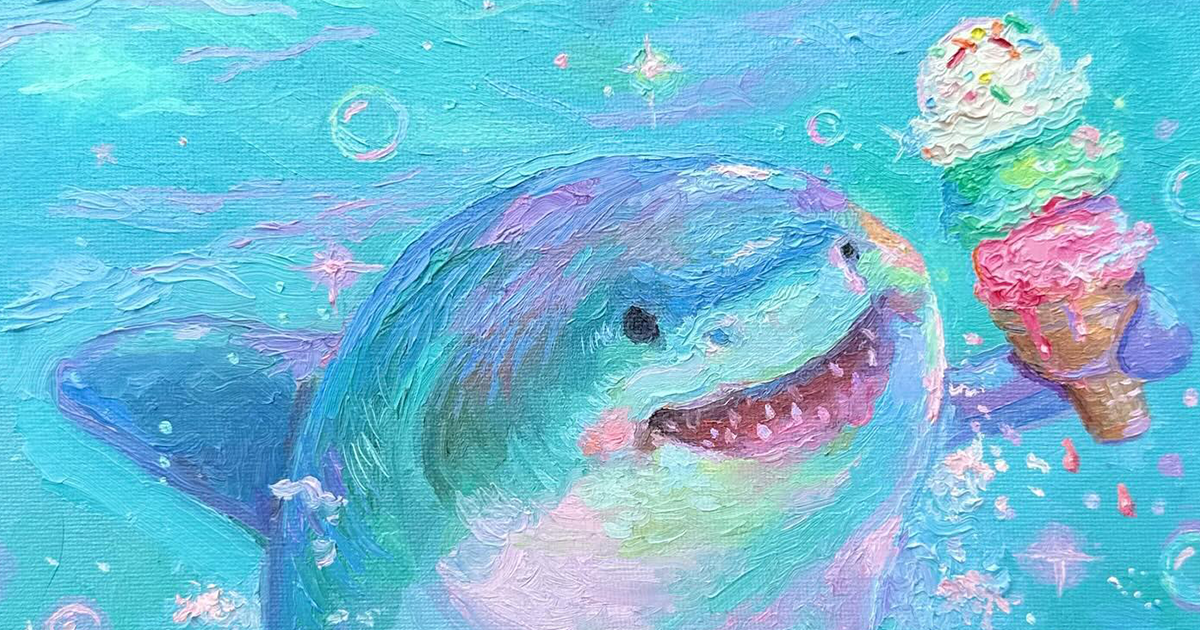
Her portraits also benefit from expressive exaggeration. The animals are not rendered as strict scientific illustrations, and that is the point. Their expressions are slightly theatrical. Their surroundings often carry a hint of story. A shark is not merely a shark; it is a shark with main-character energy. A cat is not simply sitting; it is contemplating either world peace or the exact location of the treat drawer. This makes each painting feel like a tiny narrative rather than a static image.
The Art Style: Dreamy, Textured, and Full of Personality
Color That Feels Like a Mood Ring
One of the strongest features of Dunlap’s animal artwork is color. Her paintings often lean into bright, soft, or candy-like tones: pinks, blues, yellows, lavenders, creamy whites, and warm highlights. These colors create a dreamy atmosphere, but they are not random decoration. They help shape the animal’s emotional world. A blue background can make a little creature feel peaceful and floating. A pastel pink setting can make a cat look like it has personally invented sweetness. Warm golden accents can turn an ordinary animal portrait into a miniature celebration.
Brushwork That Keeps the Art Human
In an age when images can be polished until they feel almost plastic, Dunlap’s visible brushwork is part of the appeal. Thick strokes and layered surfaces give the paintings a tactile quality. You can sense that a real person made decisions: where to soften an edge, where to brighten a highlight, where to let texture stay lively. That hand-painted feeling is important because it gives the artwork warmth. Cute art can sometimes feel mass-produced, but Dunlap’s portraits keep the wobble, texture, and glow of a human-made object.
Fantasy Without Losing the Animal
Whimsical animal portraits can easily drift too far into costume or gimmick. Dunlap avoids that by keeping the animal’s identity at the center. The fantasy elements enhance the creature rather than bury it. A bunny remains a bunny. A cat remains unmistakably cat-like. A bird still feels birdy, which is a technical art term meaning “likely to judge you from a branch.” The imaginative details act like stage lighting: they frame the subject, add emotion, and invite the viewer into a playful world.
Animal Portraiture Has a Long, Wonderful History
Although Dunlap’s style feels perfect for the internet age, animal art is far from new. Animals have appeared in art for thousands of years as symbols, companions, sacred figures, status markers, and beloved subjects. Museums such as the Metropolitan Museum of Art, the Smithsonian American Art Museum, the Getty, and the National Gallery of Art all show how deeply animals are woven into visual culture. Dogs, cats, horses, birds, rabbits, deer, and even more unusual creatures have long helped artists express loyalty, mystery, wealth, humor, tenderness, and wonder.
In older portraits, pets often appeared beside human sitters to suggest social position, domestic affection, or symbolic meaning. In medieval and Renaissance art, animals could represent virtues, warnings, myths, or religious ideas. In modern and contemporary art, animals have become even more flexible: they can be companions, comic characters, emotional stand-ins, or full subjects worthy of portrait treatment. Dunlap’s paintings belong to this broad tradition, but they speak in a language that feels fresh, sweet, and very shareable.
Why the Internet Loves Cute Animal Paintings
Online audiences respond quickly to images that are emotionally clear. A viewer scrolling through a feed may not pause for a complex ten-paragraph explanation of art theory, but a tiny painted animal with sparkling eyes and a suspiciously delicious dessert? That stops thumbs. Cute animal portraits have a built-in advantage because they combine instant recognition with emotional reward. We know the subject. We feel the charm. We share it because someone else deserves a tiny joy snack too.
Dunlap’s work also benefits from the “collectible character” effect. Each portrait feels like it could belong to a larger universe. Viewers do not just see one cute animal; they imagine an entire cast. There is the shy one, the dramatic one, the snack thief, the bubble enthusiast, the tiny philosopher, and the creature who clearly needs a nap but refuses to admit it. This sense of personality encourages fans to follow along, look for favorites, and imagine which piece fits their own mood or pet.
What Makes These 37 Portraits Stand Out?
The collection stands out because it does not rely on one formula. Yes, the portraits are cute, but they are not all cute in the same way. Some feel cozy. Others feel silly. A few carry a dreamy fantasy quality, as if the animal has just returned from a moonlit picnic in a secret meadow. The variation keeps the viewer engaged. You are not simply looking at 37 versions of the same idea; you are moving through a small gallery of moods.
The best pieces in this kind of collection often succeed because they create a “double reaction.” First, the viewer says, “Aww.” Then, after a second look, they notice the craft: the shape of the eyes, the glow of the highlights, the looseness of the fur, the playful composition, or the clever use of color. That second reaction is what separates memorable animal artwork from ordinary cuteness. Dunlap’s portraits are charming at first glance, but they reward slower looking.
How Whimsical Animal Art Fits Into Home Decor
Animal portraits like Dunlap’s are especially popular as prints because they bring personality into a room without making the space feel too formal. A dramatic oil portrait of a historic general may look impressive above a fireplace, but it does not always say, “Welcome, please enjoy this cheerful breakfast nook.” A whimsical cat with bubbles, however, can make a kitchen, office, nursery, studio, or reading corner feel warmer and more personal.
These pieces also work well because they are flexible. A small print can sit on a shelf beside books and plants. A larger piece can become the happy focal point of a gallery wall. In a minimalist room, a colorful animal portrait adds softness and humor. In a maximalist space, it joins the party with zero hesitation and probably brings snacks. For pet lovers, fantasy fans, cottagecore decorators, and people who simply enjoy a little visual serotonin, this kind of art can feel instantly at home.
The Emotional Power of Cute Art
Cute art is sometimes dismissed as lightweight, but that misses the point. Joy is not a minor emotion. Comfort, humor, nostalgia, tenderness, and delight are all powerful experiences, especially in a busy digital world where bad news can arrive faster than a cat knocking a glass off the table. Looking at gentle, funny, imaginative animal portraits can provide a short emotional reset. It is not a cure for life’s problems, obviously. No painted penguin can do your taxes. But it can make the room feel a little brighter.
Creative activity and art viewing are also often connected with relaxation, reflection, and emotional expression. That does not mean every cute animal print should be treated like formal therapy. It does mean that the art we choose to live with can influence the mood of our spaces. A whimsical animal portrait says, “This room is allowed to be playful.” That message is more valuable than it sounds.
What Artists Can Learn From Emily Dunlap’s Animal Portraits
For artists, Dunlap’s work offers several useful lessons. First, personality matters as much as accuracy. A perfectly realistic animal can be beautiful, but a slightly exaggerated animal with a strong expression may be more memorable. Second, color can carry emotion. The right background can turn a small creature into a story. Third, texture adds authenticity. Even highly adorable art benefits from painterly confidence.
Another lesson is that specific details create connection. A pancake, a bubble, a flower, a tiny dessert, or a funny pose can make a portrait feel personal. Viewers like to imagine context. Why is that animal there? What just happened? What will it do next? A good whimsical portrait leaves room for those questions. It does not over-explain. It simply opens a tiny door and lets the viewer peek inside.
Experience: What It Feels Like to Spend Time With These Animal Portraits
Spending time with a collection like “37 Whimsical And Very Cute Portraits Of Animals By This Artist” feels a little like walking into a miniature pet parade organized by a fairy with excellent taste in paint. At first, the experience is simple: everything is adorable. You smile at the cats. You pause at the sharks because your brain needs a second to accept that a shark can look like it deserves a birthday cupcake. You admire the soft colors and the big eyes. The collection works immediately, the way a warm cookie works immediately. No instruction manual required.
But the longer you look, the more specific the enjoyment becomes. You begin to notice how each animal seems to have a different temperament. One portrait may feel shy, as if the creature is asking permission to exist. Another feels mischievous, like it has already hidden three socks and is waiting for applause. Another looks serene, almost ceremonial, as if it has been appointed mayor of a tiny pastel kingdom. This variety creates a personal viewing experience. Different people will choose different favorites because the portraits reflect different emotional flavors.
There is also a pleasant nostalgia in the work. Many adults grew up with illustrated storybooks, animated animals, plush toys, stickers, and bedroom posters that gave animals human-like charm without turning them into full humans. Dunlap’s portraits tap into that memory while still feeling modern. They remind us of childhood wonder, but the painterly texture and careful color choices keep them from feeling childish. That balance is difficult. Too much sweetness can become syrupy. Too much seriousness can drain the fun. These paintings stand comfortably in the middle, wearing a tiny party hat.
For someone decorating a home, the experience can become even more personal. Choosing a whimsical animal print is not just about filling wall space. It is about choosing a small emotional companion for a room. A cheerful animal portrait near a desk can make work feel less mechanical. A dreamy cat print in a bedroom can soften the space. A funny shark or frog in a hallway can surprise guests and quietly announce that the person living there has a sense of humor. Art does not always need to be grand to be meaningful. Sometimes it just needs to make you grin before coffee.
There is an especially strong connection for pet owners. Even when the animal in the painting is not their own pet, viewers may recognize a familiar expression: the hopeful stare, the dramatic side-eye, the “I have never been fed in my entire life” face, or the blank royal gaze of a cat who has decided the household hierarchy is non-negotiable. That recognition creates intimacy. The painting becomes less about one imaginary animal and more about the relationship humans have with animals in general: affectionate, ridiculous, loyal, messy, and full of tiny daily rituals.
Finally, the experience of viewing these portraits is refreshing because they do not demand cynicism. They are sincere. They like joy. They are not embarrassed to be cute. In contemporary culture, where irony often walks into the room first and puts its shoes on the couch, sincere cuteness can feel surprisingly brave. Dunlap’s work gives viewers permission to enjoy something gentle without needing to defend it. A painted animal can be funny, beautiful, comforting, and technically skillful all at once. And if that animal happens to look like it wants pancakes, well, art history has survived stranger things.
Conclusion
Emily Dunlap’s whimsical animal portraits succeed because they combine sweetness with craft. They are cute, yes, but they are also expressive, textured, colorful, and full of narrative possibility. The collection known as “37 Whimsical And Very Cute Portraits Of Animals By This Artist” gives viewers a joyful tour through animals that feel familiar and fantastical at the same time. It is the kind of art that makes people pause, smile, share, and maybe look at their own pet with renewed suspicion: “Are you secretly a magical forest character?”
In a world full of polished digital images, Dunlap’s paintings remind us why hand-painted charm still matters. A brushstroke can carry warmth. A tiny animal face can tell a story. A playful color palette can turn an ordinary wall into a happier place. These portraits are not just cute pictures; they are small invitations to notice wonder, humor, and tenderness in the creatures we love.