Real stargazing is magicaluntil clouds, mosquitoes, light pollution, or your neighbor’s security floodlight decide to join the party. That is where the best star projectors come in. These compact devices turn bedrooms, nurseries, game rooms, meditation corners, and movie-night caves into glowing mini-universes. Some are accurate home planetariums that teach constellations. Others are galaxy projectors built for dreamy nebula clouds, aurora effects, white noise, and “wow, my ceiling looks expensive now” ambience.
But not all star projectors are created equal. A serious astronomy fan may want realistic stars, interchangeable discs, sharp optics, and constellations that actually make sense. A college student may want colorful galaxy effects for a dorm room. Parents may need a soothing night light with a timer. Smart-home lovers may want app control, Alexa, Google Home, or Matter compatibility. And everyone wants something that does not feel like a plastic UFO from the discount bin.
This guide breaks down the best star projectors for at-home stargazing and galaxy effects, including what to buy, what to skip, and how to choose the right model for your space.
What Is a Star Projector?
A star projector is a small light projector that casts stars, constellations, nebula clouds, aurora patterns, galaxies, or planetarium-style images onto ceilings and walls. The simplest models create pretty dots and colorful clouds. More advanced home planetariums use optical discs to display realistic star fields, deep-space objects, or constellation maps.
The key difference is purpose. A home planetarium projector is usually designed for astronomy learning and realistic night-sky viewing. A galaxy projector is usually designed for mood lighting, relaxation, parties, sleep routines, and room decor. Both can be wonderful, but buying the wrong type is like ordering a telescope and receiving a lava lamp. Fun? Yes. Accurate? Not so much.
Best Star Projectors at a Glance
| Best For | Recommended Projector | Why It Stands Out |
|---|---|---|
| Best overall home planetarium | Sega Toys Homestar Flux | Realistic star field, 60,000+ stars, glass optics, interchangeable discs |
| Best smart galaxy projector | Govee Star Light Projector | Large coverage, app control, many scene modes, smart-home support |
| Best relaxing nebula effects | BlissLights Sky Lite Evolve | Smooth cloud effects, laser stars, app customization, compact design |
| Best value disc projector | Orzorz Galaxy Lite | Rechargeable, vivid images, simple controls, affordable disc-based design |
| Best gift projector | POCOCO Galaxy Projector | Soft design, replaceable discs, attractive packaging, calming visuals |
| Best educational choice | National Geographic Astro Planetarium | Constellation learning, multimedia features, family-friendly setup |
How to Choose the Best Star Projector
1. Decide Between Accuracy and Atmosphere
If you want to learn the night sky, choose a planetarium-style projector such as the Sega Homestar Flux, Homestar Classic, National Geographic Astro Planetarium, Orzorz Galaxy Lite, or POCOCO Galaxy Projector. These models use discs or realistic images and are better for identifying constellations, exploring nebulae, or giving kids a gentle astronomy lesson.
If you mainly want your bedroom to look like a chill interstellar spa, choose a galaxy projector such as the Govee Star Light Projector or BlissLights Sky Lite Evolve. These are less about scientific accuracy and more about atmosphere: drifting clouds, color blends, aurora waves, music, timers, and cozy lighting.
2. Check Projection Coverage
Coverage matters more than most shoppers expect. A small nursery needs less power than a vaulted living room. Some projectors create a focused circular image, while others splash light across a large area. For example, planetarium models often project a defined dome-like circle, while smart galaxy projectors may cover hundreds of square feet with moving light.
3. Look for Focus Control
A projector without focus control can look fuzzy, especially on textured ceilings. If you want crisp stars or readable constellations, adjustable focus is essential. The best home planetariums usually include a focus dial, while cheaper mood lights may prioritize colors over sharpness.
4. Consider Timers and Sleep Features
A sleep timer is not glamorous, but it is incredibly useful. Nobody wants to wake up at 3 a.m. under a full-blast cosmic rave. Timers help save power and make star projectors better for kids, bedtime routines, meditation, and relaxation.
5. Pay Attention to Laser Safety
Many galaxy projectors use low-power lasers for sharp star points. Look for proper laser classification, safety labeling, and clear instructions. Avoid staring directly into any laser source, and keep laser-based projectors away from very young children who may treat them like toys. A good starry ceiling is lovely; a laser in the eye is not the plot twist anyone ordered.
1. Sega Toys Homestar Flux: Best Overall for Realistic Stargazing
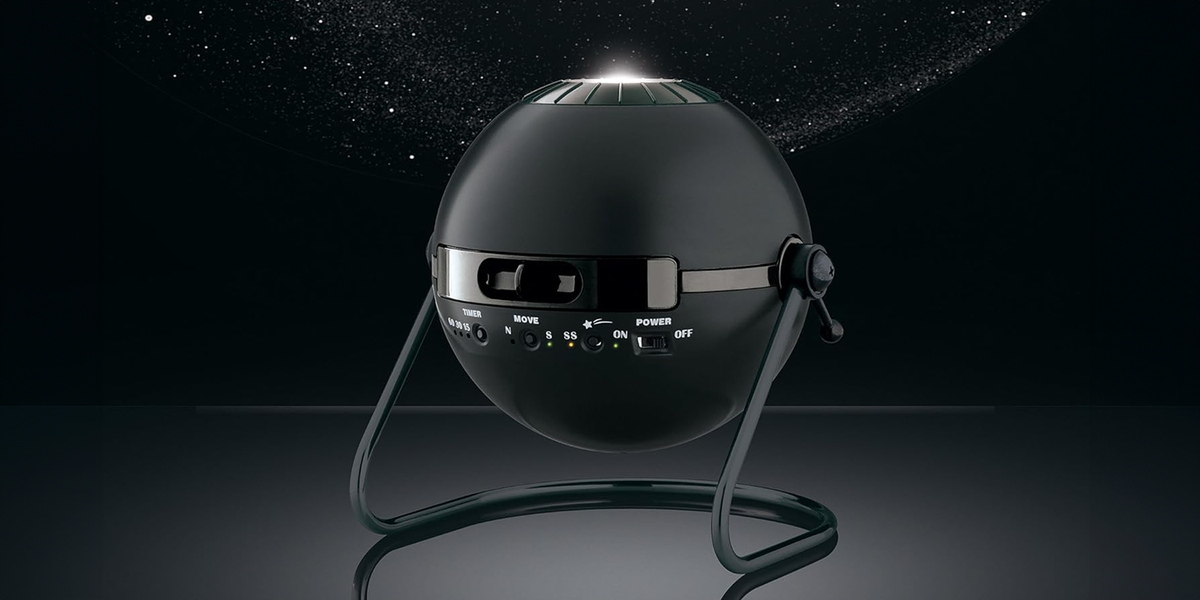
The Sega Toys Homestar Flux is one of the best star projectors for people who want a true home planetarium experience. It is not just a colorful night light with ambition. It is designed to recreate a realistic-looking sky with more than 60,000 high-definition stars, glass optical lenses, a 5-watt warm white LED, silent disc rotation, and adjustable focus.
The Homestar Flux works with interchangeable discs, which means you can switch between different star maps and celestial scenes. It usually includes Northern Hemisphere star discs, with additional discs available for auroras, galaxies, nebulae, planets, and other deep-space imagery. This makes it a strong choice for astronomy lovers, homeschooling families, science teachers, or anyone who has ever looked at the ceiling and thought, “This could use more Milky Way.”
Why It Is Worth Buying
The main advantage is realism. The stars look sharper and more natural than typical galaxy projectors. The projection feels calm rather than chaotic, and the disc system gives the product a longer life because you can expand your collection.
Potential Downsides
The price is higher than most casual star projectors, and it does not focus on party-style lighting effects. If you want rainbow clouds pulsing to music, this is probably too serious. If you want a believable night sky indoors, it is a star performerpun fully intended.
2. Govee Star Light Projector: Best Smart Galaxy Projector
The Govee Star Light Projector is a great pick for people who want full-room galaxy effects, smart controls, and plenty of customization. Instead of aiming for an accurate sky chart, it creates an immersive lighting experience with aurora-style movement, rich colors, scene modes, and built-in sound features.
Govee’s model stands out because it blends convenience with spectacle. It supports app control, voice control through major smart-home platforms, and Matter compatibility on supported versions. Many models include dozens of scene modes, adjustable brightness, movement settings, sleep features, and white noise options. For a bedroom, gaming setup, dorm room, or cozy movie corner, it can make the room feel instantly more polished.
Why It Is Worth Buying
Govee is best for people who want a customizable galaxy projector that fits into a smart home. The large coverage area is useful for bigger rooms, and the app makes it easy to adjust colors, patterns, speeds, and routines without climbing out of bed like a medieval peasant.
Potential Downsides
This is not the best choice for learning constellations. The stars and aurora effects are beautiful, but they are atmospheric rather than astronomically accurate. The built-in speaker or white noise features are helpful, but serious music lovers will still prefer a dedicated speaker.
3. BlissLights Sky Lite Evolve: Best for Soothing Nebula Effects
The BlissLights Sky Lite Evolve is one of the most recognizable galaxy projectors for bedrooms and relaxation spaces. It creates drifting nebula clouds with bright laser stars, and its spherical design allows flexible positioning. It is especially good for people who want a calming, spa-like lighting effect rather than a strict planetarium display.
The Sky Lite Evolve is compact, stylish, and app-controlled. It offers adjustable colors, motion, brightness, timers, and automation. The cloud effect is the star of the showsoft, smooth, and hypnotic without feeling like your ceiling joined a nightclub without asking.
Why It Is Worth Buying
This projector is ideal for meditation, sleep routines, sensory rooms, date nights, and quiet evenings. It is easy to use and does not demand much setup. Place it on a nightstand, angle it toward the ceiling, lower the lights, and suddenly your room feels like a tiny cosmic lounge.
Potential Downsides
Laser stars require sensible placement and supervision around children. It is also more of a mood projector than an educational tool. If you want labeled constellations or realistic star maps, look elsewhere.
4. Orzorz Galaxy Lite: Best Affordable Disc-Based Projector
The Orzorz Galaxy Lite has become popular because it offers many of the things people like about premium disc-based projectors at a lower price. It uses projection discs, has simple on-body controls, includes rotation and sleep timer functions, and is rechargeable. That last point is convenient because you are not chained to a wall outlet like a sad little astronaut.
What makes Orzorz interesting is its balance. It is more realistic than a basic galaxy light but more affordable than high-end home planetariums. The images can be colorful and vivid, especially with nebula or deep-space discs. It is a good pick for kids, casual astronomy fans, students, or anyone who wants a better-than-basic projector without spending premium money.
Why It Is Worth Buying
The rechargeable design makes placement easy. You can move it from bedroom to living room, use it for a reading nook, or bring it to a sleepover. The disc library also gives you room to grow.
Potential Downsides
The discs can be small and easy to misplace. Some users may also prefer a remote or app, but the simple controls are part of the appeal. It is straightforward, not fussy.
5. POCOCO Galaxy Projector: Best Gift-Friendly Star Projector
The POCOCO Galaxy Projector is a charming option for people who want a disc-based home planetarium that looks soft, friendly, and gift-ready. It uses replaceable optical film discs and is designed for relaxing visuals, study sessions, meditation, and bedroom ambience.
POCOCO leans into the emotional side of stargazing. The packaging is attractive, the design is approachable, and the projector is easy to enjoy even if you do not know Orion from a frying pan. It is a strong birthday, holiday, dorm, or “please relax, you are vibrating” gift.
Why It Is Worth Buying
The replaceable disc system adds variety, and the softer design makes it feel less technical than some astronomy gadgets. It is especially good for families, teens, and adults who want calm visuals without dealing with complicated settings.
Potential Downsides
Like other disc projectors, the experience depends heavily on the quality and variety of discs you own. It is also not as feature-packed as smart galaxy projectors with app controls, voice commands, and color automation.
6. National Geographic Astro Planetarium: Best Educational Star Projector
The National Geographic Astro Planetarium is a strong educational choice for families and curious kids. It can project stars or constellations and may include multimedia features such as speakers, radio, or audio input depending on the version. It is designed less like a trendy room light and more like a family-friendly astronomy tool.
This projector is useful for introducing children to constellations, seasonal sky patterns, and the idea that the night sky changes depending on time and date. It turns a ceiling into a simple classroom without making anyone sit through a worksheet. That alone deserves applause.
Why It Is Worth Buying
It is a good choice for learning. Parents can use it to talk about constellations before a camping trip, teachers can use it for basic astronomy lessons, and kids can enjoy stars indoors even when the actual sky is cloudy.
Potential Downsides
It may not create the most dramatic galaxy effects compared with Govee or BlissLights. If the goal is room ambience first and education second, a smart galaxy projector may be more exciting.
Star Projector vs. Galaxy Projector: Which One Should You Buy?
Choose a star projector or home planetarium if your priority is realistic stars, constellations, astronomy education, and crisp sky maps. These are best for science-minded users, families, classrooms, and anyone who wants to recognize real celestial patterns.
Choose a galaxy projector if your priority is mood lighting, colorful nebula effects, aurora movement, meditation, sleep, parties, or room decor. These projectors are better for ambience and usually come with more color controls, scene modes, app features, and music or white noise options.
The easiest way to decide is to ask one question: do you want to learn the sky or decorate the room? If the answer is “both,” consider pairing a disc-based projector with a smart galaxy light. Your ceiling will become the overachiever of the house.
Best Features to Look For
Interchangeable Discs
Interchangeable discs make a projector more versatile. You can switch from a realistic Northern Hemisphere sky to nebulae, auroras, planets, or deep-space images. This is especially useful for long-term use because the projector does not become boring after one week.
App and Voice Control
App control is useful for adjusting brightness, motion, colors, and timers from bed. Voice control is even better when your blanket has achieved burrito-level security and you refuse to move.
Adjustable Brightness
Brightness control helps match the mood. Use higher brightness for parties or game rooms, and lower brightness for sleep, meditation, or nurseries.
Rotation and Motion
Slow movement makes projections feel alive. However, fast motion can be distracting or dizzying, especially before sleep. The best star projectors let you slow things down.
Rechargeable Battery
A rechargeable projector is easier to place anywhere in the room. This is helpful if your outlets are in inconvenient locations or already occupied by chargers, lamps, and one mysterious plug nobody dares unplug.
Tips for Getting the Best At-Home Stargazing Experience
For the sharpest projection, use the projector in a dark room with a light-colored ceiling or wall. Smooth ceilings work better than heavily textured surfaces. Place the projector at the recommended distance and adjust the focus until stars or images look crisp.
For relaxing galaxy effects, aim the projector slightly off-center rather than straight up. This helps the light spread naturally across walls and ceiling. If your projector has motion settings, start slow. Gentle movement feels dreamy; fast movement can make the room feel like a spaceship with engine trouble.
For kids, use a sleep timer and keep laser-based units out of reach. Choose lower brightness at bedtime and avoid placing the projector where a child can stare directly into the light source. For learning, pair the projection with a simple constellation book or astronomy app.
Common Mistakes to Avoid
The first mistake is buying a galaxy projector and expecting NASA-level accuracy. Most colorful projectors are designed for vibes, not science. The second mistake is ignoring ceiling height. Some projectors need a specific distance to focus properly. The third mistake is choosing based only on price. Cheap projectors can be fun, but they may have dim light, blurry patterns, noisy motors, or limited controls.
Another mistake is using bright room lighting at the same time. Star projectors look best in darkness. Even a small lamp can wash out details. Finally, do not forget safety. Avoid looking into lasers, follow the manufacturer’s instructions, and supervise children around projector lights.
Real-Life Experience: What It Is Like to Use a Star Projector at Home
Using a star projector at home sounds simple: plug it in, turn it on, enjoy the universe. In reality, the experience changes depending on the room, the ceiling, and your expectations. A projector that looks stunning in a dark bedroom may look weak in a bright living room. A sharp planetarium display may feel magical during a quiet evening but less exciting during a party. A galaxy projector may impress guests immediately, but it will not help anyone identify Cassiopeia unless Cassiopeia has recently become a purple cloud.
The best experience usually starts with placement. A nightstand works well for bedrooms, but a low shelf can create a wider wash of light. If the projector has a focus wheel, spend a minute adjusting it. That one minute can be the difference between “beautiful star field” and “ceiling dandruff.” For disc-based projectors, test different distances. The image may look sharper when the projector is closer than you first expect.
For bedtime, the winning formula is low brightness, slow rotation, and a timer between 15 and 60 minutes. This gives the room a calming glow without turning sleep into an all-night light show. White noise can help if the projector includes it, but do not expect tiny built-in speakers to replace a real sound machine or Bluetooth speaker. They are convenient, not concert-ready.
For kids, star projectors can become part of a comforting routine. A parent can point out simple shapes, tell a short space story, or let the child choose a disc for the night. This makes bedtime feel special without adding a screen. The trick is to keep controls simple. Too many colors, speeds, and buttons can turn relaxation into a negotiation with a tiny lighting director.
For adults, the biggest surprise is how useful star projectors are outside the bedroom. They can soften a home office after work, make a bath feel more luxurious, improve a yoga corner, or create a memorable background for a quiet dinner. They are also excellent for movie nights, especially science fiction films. Watching a space movie while your ceiling glows like a galaxy is unnecessary, dramatic, and completely delightful.
One practical lesson: dust matters. Projector lenses and discs can collect dust, which may show up as blurry spots. Store discs in cases and wipe lenses gently with a soft cloth when needed. Also, manage expectations with textured ceilings. Popcorn ceilings scatter light, so crisp constellations may look softer. Smooth white ceilings deliver the cleanest results.
The best star projector is the one you will actually use. If you love learning, choose a realistic disc model. If you want mood lighting, choose a smart galaxy projector. If you need a gift, choose something attractive, easy, and low-maintenance. The goal is not to replace the real night sky. The goal is to bring a little wonder indoors when the real sky is cloudy, crowded, or hiding behind apartment lights.
Final Verdict: Which Star Projector Is Best?
For the most realistic at-home stargazing experience, the Sega Toys Homestar Flux is the best overall choice. It is sharp, accurate, expandable, and genuinely planetarium-like. For smart galaxy effects and full-room ambience, the Govee Star Light Projector is the most flexible pick. For relaxation and smooth nebula clouds, the BlissLights Sky Lite Evolve is excellent. For value, portability, and disc-based visuals, the Orzorz Galaxy Lite deserves serious attention.
Whether you want to teach constellations, upgrade your bedroom, calm a child at bedtime, or make your ceiling look like it has a secret life, a good star projector is an easy way to bring the cosmos home. The universe may be expanding, but thankfully, your shopping list does not have to.
Note: This article synthesizes current manufacturer specifications, independent product reviews, astronomy-focused buying guidance, and consumer laser-safety recommendations. No source links or citation placeholders are embedded in the publish-ready HTML.