There is a point in every technological arms race when somebody should probably ask, “Do we actually need more?” More resolution. More lenses. More computational photography. More artificial intelligence quietly deciding that your face would look better if it were slightly less like your face.
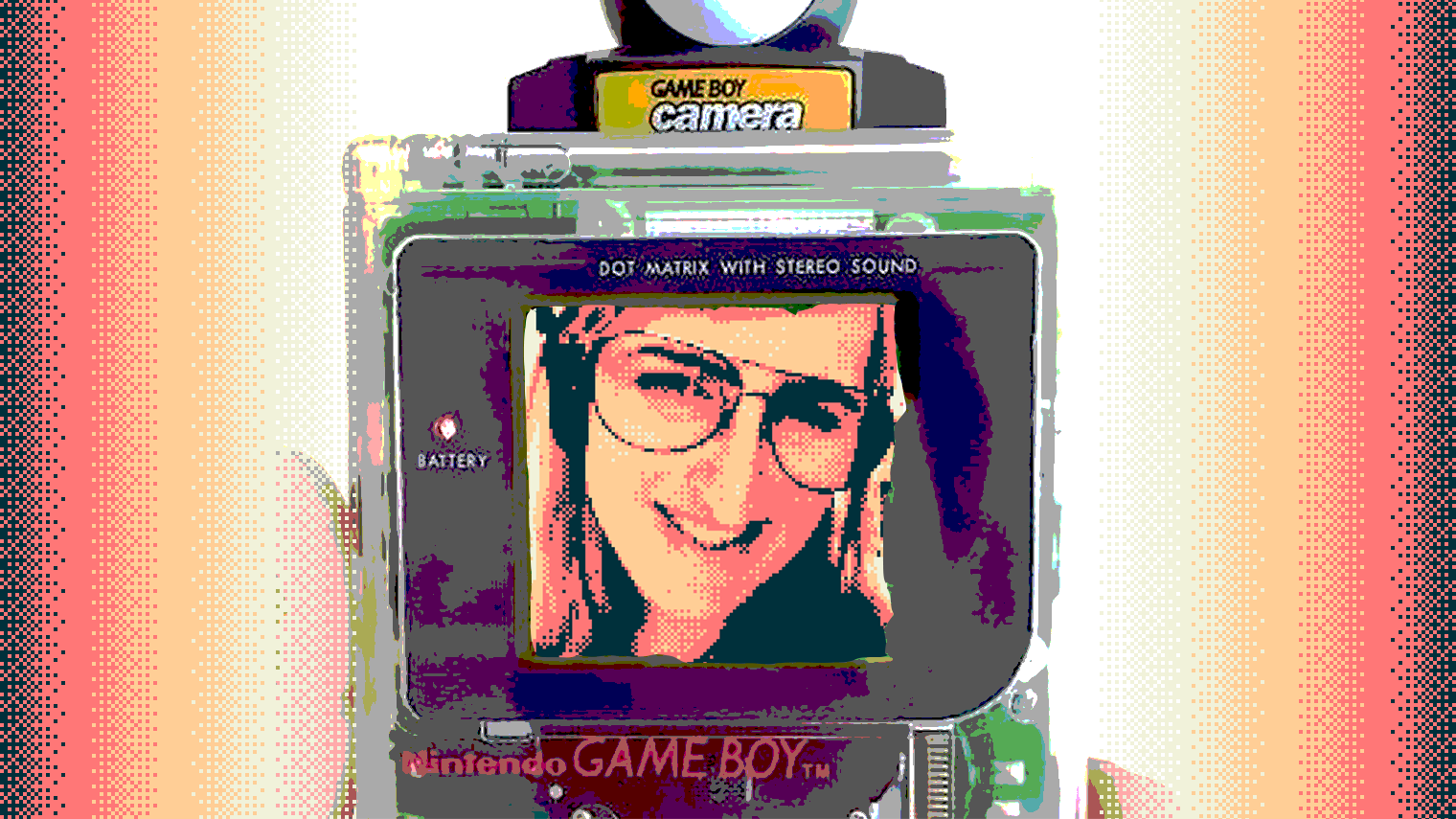
The Game Boy Camera offers a wonderfully stubborn alternative. Released by Nintendo in 1998, this cartridge-shaped digital camera turns a Game Boy into a tiny photography studio capable of capturing images at just 128 by 112 pixels in four shades of gray. By modern standards, that specification sounds less like a camera and more like a printer error. Yet decades later, photographers, modders, artists, and retro-gaming enthusiasts are still using it precisely because of those limitations.
The Game Boy Camera does not compete with modern cameras. It refuses the competition entirely. It takes the idea of photographic perfection, shrinks it to approximately 0.014 megapixels, adds a few bizarre minigames, and then walks away whistling.
And somehow, that is exactly why it remains fascinating.
A Digital Camera From an Era When Digital Cameras Were Still Weird
In 1998, digital photography had not yet become the invisible background technology it is today. Taking a digital photograph was still an event. Cameras were dedicated devices, storage was limited, transferring files could be a nuisance, and nobody had yet developed the deeply modern habit of taking 37 nearly identical photographs of lunch.
Nintendo entered this environment in the most Nintendo way possible: not by building a serious camera for serious photographers, but by producing a camera cartridge for a monochrome handheld game system.
Known as the Pocket Camera in Japan, the accessory was designed to slot directly into the Game Boy cartridge port. Its camera module could rotate 180 degrees, making it possible to photograph the world or turn the lens toward yourself. Long before “selfie” became an unavoidable part of the global vocabulary, Game Boy owners were already pointing a rotating camera at their own faces and converting themselves into chunky clusters of pixels.
The camera used a small CMOS image sensor and produced 128-by-112-pixel images rendered with the Game Boy’s four-tone monochrome palette. It could store up to 30 photographs. Thirty. Not thirty thousand. Thirty. Deleting a photograph was therefore an editorial decision rather than an archaeological project involving five years of screenshots and restaurant menus.
The Specs Were Bad. That Was Not the Point.
Judging the Game Boy Camera only by image quality is like criticizing a harmonica because it cannot perform the entire orchestration of a Hollywood blockbuster. Technically correct, perhaps, but spiritually confused.
The accessory was designed around play. After taking a picture, users could draw on it, add stamps, apply visual effects, combine images, experiment with animation, and explore other built-in creative tools. Nintendo’s own 1998 “Funtography” material emphasized composing, manipulating, and animating pictures rather than simply recording them with documentary accuracy.
In other words, the Game Boy Camera was not merely an early digital camera. It was an early consumer platform for user-generated visual content. You captured something, edited it, personalized it, and shared the result. The technology was primitive, but the behavior feels remarkably familiar.
The Secret Weapon: A Camera That Turns Reality Into Pixel Art
Modern cameras work hard to disappear. Autofocus becomes faster, noise reduction becomes smarter, dynamic range expands, and computational processing tries to deliver a photograph that looks natural without revealing the staggering amount of software involved.
The Game Boy Camera does the opposite. Its fingerprints are all over every picture.
Faces become mosaics. Buildings become geometric masses. Shadows collapse into dramatic blocks. Fine textures vanish. A tree may turn into an abstract explosion. A badly exposed portrait can look like evidence recovered from a haunted fax machine.
This is not realism. It is translation.
The camera forces the world through a tiny visual vocabulary: four tones and a very small grid. Because the available information is so limited, the viewer’s brain has to participate. You recognize a face from a few dark squares around the eyes. You identify a skyline from its silhouette. You infer details that are not technically present.
Low Resolution Can Create High Character
Photographers often talk about sharpness as though it were a moral virtue. The Game Boy Camera is a useful reminder that clarity and character are not the same thing.
A technically flawless photograph may tell you exactly what something looked like. A Game Boy Camera photograph can tell you what it felt like after reality was squeezed through late-1990s hardware.
That aesthetic has become increasingly attractive in an age of photographic abundance. Modern phones can automatically brighten shadows, identify faces, combine multiple exposures, sharpen details, and produce an image before the user has finished wondering whether the lens was clean. The Game Boy Camera gives you almost none of that assistance.
You have to think about light. You have to look for bold shapes. You have to accept that some pictures simply will not work. The limitations are not an obstacle sitting outside the creative process. They are the creative process.
The Software Was Half Photo Lab, Half Nintendo Fever Dream
One of the most charming things about the Game Boy Camera is that Nintendo could have stopped after making the shutter button work. Instead, the cartridge included a surprisingly playful ecosystem.
Users could edit photographs with stamps and drawings, experiment with visual tricks, create simple animations, and explore photography-oriented functions. The software also included minigames and a music component, reinforcing the idea that this was not a conventional camera with a Game Boy attached. It was a Game Boy experience built around a camera.
Among its curiosities were games such as Space Fever II, a version of the classic Ball, and the unlockable Run! Run! Run!. A DJ mode allowed users to experiment with simple chiptune-style music. Your own photographed face could also become part of the experience, because apparently the logical next step after taking a 128-by-112 portrait is to make that face participate in a video game.
Honestly, Nintendo had a point.
The Game Boy Printer Completed the Ecosystem
The optional Game Boy Printer allowed users to turn their tiny monochrome creations into tiny physical prints using thermal sticker paper. Nintendo’s support documentation describes prints measuring roughly 27 by 23 millimeters including the frame. These were not gallery-sized archival masterpieces. They were miniature artifacts that could be stuck onto notebooks, letters, collections, and probably at least one unfortunate sibling.
This physical output mattered. A photograph did not have to remain trapped on a cartridge. It could become an object.
Today, when billions of photographs can disappear into cloud libraries and never be viewed again, the appeal of a tiny thermal print is surprisingly easy to understand. It is imperfect, immediate, and tangible. It asks for almost no storage space and absolutely no password reset.
Why the Game Boy Camera Still Matters
The Game Boy Camera survived culturally because its weaknesses aged into a style.
When it was new, low resolution was simply the unavoidable result of limited hardware. Today, that same low resolution is a deliberate aesthetic choice. Photographers use the camera because they want the distortion, blockiness, and unpredictability that newer technology spends billions of dollars trying to eliminate.
Modern enthusiasts have photographed cities, sporting events, landscapes, portraits, and even celestial objects with the device. Photographers and engineers have also adapted different lenses, developed ways to transfer images to modern hardware, miniaturized the camera assembly, and created new workflows around the original sensor.
In June 2026, the wonderfully excessive spirit of Game Boy Camera experimentation reached another level when the device was used with the historic 60-inch telescope at Mount Wilson Observatory to photograph Jupiter. The resulting image was still unmistakably a Game Boy Camera image: tiny, heavily abstracted, and produced with only four shades. But visible planetary detail emerging from a camera accessory designed for a 1989 handheld console is exactly the kind of technological absurdity worth celebrating.
Some cameras chase the moon. The Game Boy Camera apparently decided Jupiter was next.
Modern Technology Keeps Bringing the Pixels Back
The modern revival is not limited to collectors running original hardware. New adapters and software have made it easier to preserve or transfer photographs from aging cartridges, while developers continue to recreate the Game Boy Camera experience on contemporary devices.
The Analogue Pocket demonstrated renewed interest in using original Game Boy Camera cartridges with modern handheld hardware. Other projects have explored exporting photographs to SD cards, connecting cartridges to computers, converting the accessory into a webcam, and bringing Game Boy Camera-inspired photography to smartphones. Recent tools have even made it possible to connect original hardware more directly with modern mobile workflows.
That may sound ironic. Why use powerful modern hardware to reproduce photographs that look technologically ancient?
Because aesthetics are not a ladder where every new technology automatically stands above the previous one. Oil paint did not become useless when photography appeared. Vinyl records did not vanish when digital audio arrived. Black-and-white photography did not become an embarrassing technical failure after color film.
Likewise, a 128-by-112-pixel image can remain artistically useful even when a phone can capture millions of pixels before breakfast.
What the Game Boy Camera Teaches About Better Photography
1. Constraints Can Improve Attention
When you know the camera cannot preserve fine detail, you stop depending on fine detail. You look for silhouettes, contrast, expressions, architecture, gesture, and light. Instead of asking, “How much can this camera record?” you ask, “What can this camera actually see?”
That is a useful question with any camera.
2. Not Every Photograph Needs to Be Perfect
Photography can become strangely stressful when every image is expected to be sharp, correctly exposed, beautifully processed, instantly shareable, and aesthetically consistent with the rest of an online feed.
The Game Boy Camera lowers the stakes by lowering nearly everything else.
Sometimes the highlights disappear. Sometimes a face becomes six ominous rectangles. Sometimes the photograph is simply terrible. You move on. The world continues rotating.
3. A Distinctive Tool Can Change What You Notice
Use a modern smartphone and almost anything can become a technically competent photograph. Use the Game Boy Camera and you begin searching for subjects that can survive radical simplification.
A bright window against a dark room becomes interesting. So does a lone figure, a staircase, a streetlight, a face near the lens, or a skyline with a strong outline. The camera changes your attention before you even press the button.
That may be its most valuable feature.
The Experience: Learning to Stop Worrying and Love the Pixels
Imagine approaching the Game Boy Camera after years of using modern phones. Your first instinct is probably to laugh. The screen is small. The image is monochrome. The controls feel like they belong to a game because, inconveniently for anyone attempting to look sophisticated, they do.
You point the rotating lens at a subject and immediately discover that normal photographic expectations have become useless.
A carefully arranged scene may dissolve into gray mush. A beautifully textured wall may become an undistinguished rectangle. Your first portrait might make a perfectly healthy friend look like the final transmission from an abandoned space station.
Then something changes.
You stop trying to force the Game Boy Camera to behave like a modern camera.
You move closer. You look for harder light. You place a face against a simple background. You notice how a shadow becomes more important than a color. You discover that a small change in angle can determine whether the subject is recognizable or becomes an exciting collection of anonymous blocks.
The failures become entertaining rather than frustrating. There is no temptation to zoom into eyelashes at 400 percent and complain about corner sharpness. There are barely enough pixels to have corners.
Soon, the limited storage begins changing the experience too. With only a small number of saved photographs available, keeping every image forever is not the default. You review. You decide. You delete. A photograph has to earn its place.
That process feels almost rebellious today.
Modern photography often encourages accumulation. Take ten shots. Take twenty. Let burst mode handle the moment. Back everything up. Sort it out later. “Later,” of course, is a mythical destination where humanity apparently has unlimited free time to organize screenshots from 2022.
The Game Boy Camera gives you less, so you pay more attention.
Printing an image adds another layer to the experience. The tiny thermal result is not impressive in the conventional photographic sense. Nobody will mistake it for a museum-grade pigment print. Yet holding a miniature physical version of a photograph that began inside a Game Boy creates a peculiar satisfaction. The object feels personal precisely because the process is awkward.
And that awkwardness is important.
Modern devices are designed to remove friction. The Game Boy Camera is practically a friction generator. Capturing, storing, exporting, and printing images can require patience, old hardware, or modern adapters. But the inconvenience gives each step a sense of intention.
After spending time with this way of seeing, you may return to a modern camera slightly changed. The millions of available pixels still have value. Fast autofocus is wonderful. Good dynamic range is wonderful. Being able to take a photograph indoors without producing a portrait of a mysterious cave creature is also wonderful.
But maximum capability is no longer the only standard.
You begin to understand why people intentionally use old lenses, instant cameras, expired film, toy cameras, and strange digital hardware. The goal is not always to capture more information. Sometimes the goal is to create a stronger interpretation.
That is where the Game Boy Camera becomes more than a novelty. It turns technical deficiency into a visual language.
You start by worrying about the pixels because there are so few of them. Eventually, you realize the shortage is the whole adventure.
Conclusion: A Terrible Camera and a Brilliant Creative Tool
The Game Boy Camera is objectively outclassed by almost every modern imaging device, including budget phones and probably several household appliances that were never intended to take photographs.
That does not make it obsolete.
Its enduring value comes from the things it cannot do. The 128-by-112-pixel images, four-tone palette, tiny storage capacity, playful editing tools, rotating camera, strange software, and optional thermal printer create an experience unlike contemporary photography. The result is not a weaker version of a smartphone camera. It is a different medium with its own rules.
More than a quarter-century after its debut, the Game Boy Camera continues to inspire photographers, hardware hackers, developers, and artists. Its images survive because they are immediately recognizable. They have texture, mystery, humor, and an almost aggressive refusal to be technically perfect.
So perhaps the lesson is simple: stop counting pixels for a moment.
Turn the lens. Find some interesting light. Make something weird.
Note: This article synthesizes established historical, technical, photographic, and modern enthusiast reporting about the Nintendo Game Boy Camera while presenting the subject in original language and analysis.