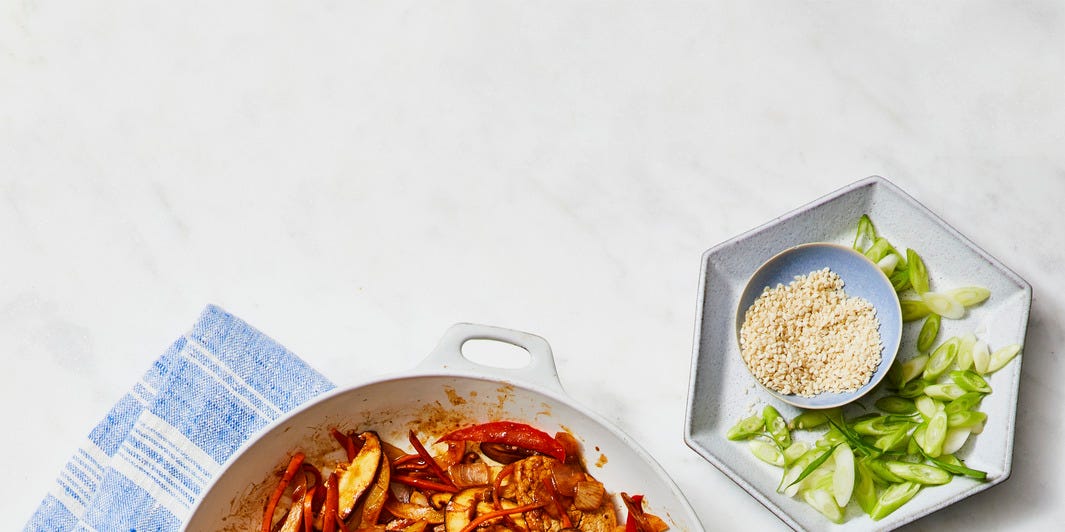
A great pork and veggie stir fry should be fast, colorful, and just saucy enough to make a bowl of rice nervous. This version delivers tender pork, crisp-tender vegetables, and a glossy garlic-ginger sauce without restaurant equipment or a pantry full of mysterious bottles. It is practical enough for Tuesday night and flexible enough for refrigerator-cleanout nightwhich are often the same night.
Why This Pork and Vegetable Stir Fry Works
The secret is a sequence, not one magical ingredient: slice the pork thinly, coat it with a quick cornstarch marinade, prepare everything before heating the pan, cook in batches, and add the sauce at the end. Stir-frying moves quickly, so mise en place is how you avoid discovering that the garlic is still wearing its paper jacket while the pork becomes shoe leather.
Pork tenderloin is lean, mild, and easy to slice. The vegetable combinationbroccoli, bell peppers, carrots, mushrooms, and snap peascreates contrasting colors and textures. High heat and short cooking help keep vegetables bright and crisp-tender, while staged cooking prevents crowding and steaming. Reputable test kitchens and health organizations consistently recommend advance preparation, quick cooking, and adding ingredients according to cooking time.
Recipe at a Glance
- Prep time: 20 minutes
- Cook time: 12 to 15 minutes
- Total time: About 35 minutes
- Yield: 4 servings
- Serve with: Rice, noodles, or cauliflower rice
Ingredients
For the Pork
- 1 1/4 pounds pork tenderloin or boneless pork loin
- 1 tablespoon low-sodium soy sauce
- 1 tablespoon cornstarch
- 1 teaspoon toasted sesame oil
- 1 teaspoon rice vinegar
- 1/4 teaspoon black pepper
For the Stir-Fry Sauce
- 1/3 cup low-sodium chicken broth or water
- 1/4 cup low-sodium soy sauce
- 2 tablespoons oyster sauce
- 1 tablespoon hoisin sauce
- 1 tablespoon rice vinegar
- 1 tablespoon honey or brown sugar
- 2 teaspoons cornstarch
- 1 teaspoon toasted sesame oil
- 1 teaspoon chili-garlic sauce or sriracha, optional
For the Vegetables
- 2 cups small broccoli florets
- 2 bell peppers, sliced
- 1 large carrot, thinly sliced
- 8 ounces mushrooms, sliced
- 1 cup snap peas
- 1/2 medium yellow onion, sliced
- 4 garlic cloves, minced
- 1 tablespoon grated fresh ginger
- 3 tablespoons avocado, peanut, canola, or vegetable oil, divided
- 3 scallions, sliced
- Sesame seeds and cooked rice or noodles, for serving
You may also peel and thinly slice the broccoli stalk; its tender center is perfectly useful in stir fry.
How to Make Pork and Veggie Stir Fry
1. Slice and Marinate the Pork
Trim the pork and cut it across the grain into 1/4-inch strips. Chilling it in the freezer for 15 to 20 minutes makes even slicing easier. Toss the pork with soy sauce, cornstarch, sesame oil, rice vinegar, and pepper. Let it stand for 10 to 15 minutes.
This simplified velveting technique helps protect the meat from intense heat, improves tenderness, and gives the sauce a surface to cling to. Traditional versions may use egg white, wine, starch, and oil or water blanching; the streamlined coating is better suited to a weeknight skillet.
2. Mix the Sauce
Whisk the broth, soy sauce, oyster sauce, hoisin, rice vinegar, honey, cornstarch, sesame oil, and optional chili sauce in a small bowl. Whisk it again just before cooking because cornstarch likes to sink to the bottom and quietly abandon its responsibilities.
3. Organize the Vegetables
Group the carrots, broccoli, and onion together because they need a head start. Keep the mushrooms and peppers in another bowl. Set the snap peas, garlic, and ginger nearby. Vegetables cook at different speeds, so staging them preserves texture.
4. Sear the Pork
Heat a wok or 12-inch skillet over medium-high to high heat. Add 1 tablespoon oil. Cook half the pork in a single layer for 1 to 2 minutes, stirring after the first 30 seconds. Transfer it to a clean plate and repeat with another tablespoon oil and the remaining pork. Working in batches prevents the meat from steaming.
5. Stir-Fry the Vegetables
Add the final tablespoon oil. Cook the carrots, broccoli, and onion for 2 minutes. If the broccoli remains very firm, add 2 tablespoons water and cover for 45 seconds. Uncover, add the mushrooms and peppers, and cook for 2 to 3 minutes. Add snap peas, garlic, and ginger; cook for 30 to 45 seconds. The vegetables should be crisp-tender, not soft enough to request a recliner.
6. Add the Sauce and Finish
Whisk and pour in the sauce. Stir until it bubbles and thickens, about 30 seconds. Return the pork and its juices, then toss for 1 to 2 minutes until evenly glazed and fully cooked. Whole-cut pork should reach at least 145°F, followed by a three-minute rest; ground pork should reach 160°F. Check a thick piece with an instant-read thermometer when possible.
Remove from the heat, add scallions and sesame seeds, and serve immediately over rice or noodles.
Tips for Restaurant-Style Results
Use a Wide, Hot Pan
A wok is excellent but optional. A broad skillet provides enough hot surface for browning. A small pan turns stir-frying into an accidental vegetable sauna.
Keep Ingredients Dry
Pat the pork dry before marinating and drain washed vegetables well. Surface moisture must evaporate before browning can begin.
Choose the Right Oil
Avocado, peanut, canola, and vegetable oil tolerate high-heat cooking. Reserve toasted sesame oil for flavoring the marinade and sauce.
Do Not Drown the Stir Fry
The sauce should form a glossy coating rather than a soup. If it is too thick, add water or broth one tablespoon at a time. If it is thin, let it bubble briefly before changing the recipe.
Variations and Substitutions
Spicier: Add fresh chile, crushed red pepper, extra chili-garlic sauce, or chile crisp.
Sweeter: Add another teaspoon of honey or a handful of pineapple chunks.
Different vegetables: Try asparagus, green beans, bok choy, cabbage, zucchini, baby corn, or frozen stir-fry vegetables. Crisp green vegetables are especially adaptable.
Different protein: Substitute thinly sliced chicken, beef sirloin, shrimp, or firm tofu, adjusting the cooking time for doneness.
Gluten-free: Use certified gluten-free tamari and verify the labels on hoisin and oyster sauce.
Serving, Storage, and Reheating
Jasmine rice absorbs the savory sauce beautifully, while brown rice adds nuttiness and rice noodles create a satisfying bowl. For a lighter plate, use cauliflower rice or add a cucumber salad dressed with rice vinegar.
Cool leftovers promptly and refrigerate them in an airtight container. USDA guidance recommends using cooked pork within three to four days when stored at 40°F or below. Reheat gently in a skillet with a splash of water or broth; prolonged reheating will soften the vegetables.
Common Pork Stir Fry Questions
What Cut of Pork Is Best?
Pork tenderloin is the easiest lean option. Boneless loin chops or pork loin also work. Slice any cut thinly and across the grain.
How Do You Keep Pork Tender?
Use thin, even slices, a short cornstarch marinade, a hot pan, and two small batches. Remove the pork while it is nearly cooked and finish it in the sauce.
Why Is My Stir Fry Watery?
The usual causes are wet ingredients, overcrowding, insufficient heat, or adding sauce before moisture evaporates. The pan should sound like a lively sizzle, not a polite simmer.
Kitchen Experience: What Home Cooks Learn After a Few Batches
The first experience many cooks have with pork and veggie stir fry is deceptively hopeful. The vegetables are chopped, the sauce smells terrific, and the skillet looks large enough. Then everything goes into the pan at once. Five minutes later, the broccoli is soft, the pork is pale, and a mysterious lake has appeared beneath the mushrooms. The meal is still edible, but it feels more like a conference call than a celebration.
The useful lesson is that stir-frying is less about frantic stirring and more about controlling moisture and timing. A batch with beautifully browned pork usually begins with restraint. Half the meat goes into the hot pan, spreads into one layer, and remains untouched for a few seconds. That quiet pause creates color. The second batch gets the same treatment. Suddenly, the kitchen smells like dinner rather than warm soy sauce.
Vegetable order makes an equally dramatic difference. Carrots and broccoli need a head start, but snap peas do not. When all three enter together, one stays stubbornly raw while another becomes limp. After cooks begin grouping ingredients by cooking speed, the process becomes calmer. The pan receives sturdy vegetables first, quick-cooking vegetables later, and aromatics near the end so the garlic does not burn.
Another common experience involves sauce enthusiasm. It is tempting to double the sauce because glossy food photographs make more seem better. In practice, excess sauce dilutes the seared flavor and turns rice into a flotation device. The best batch usually contains just enough sauce to coat the ingredients. A few spoonfuls collect at the bottom of the serving bowl, but the pork and vegetables remain distinct.
Thin slicing also changes everything. Thick pork chunks take longer to cook, which encourages overcooked vegetables and scorched aromatics. Slightly firming the pork in the freezer makes even strips much easier to cut. Once cooks try this trick, it tends to become part of the routine, right beside sharpening the knife and finding the one cutting board that does not slide around like it has weekend plans.
Substitutions teach flexibility. A missing bell pepper is not an emergency. Cabbage, green beans, asparagus, zucchini, or frozen vegetables can all work when their moisture and cooking times are respected. The same sauce can lean sweeter with pineapple, sharper with extra vinegar, or hotter with chile crisp. This is why pork and vegetable stir fry becomes a repeat dinner rather than a one-time recipe.
The biggest improvement, however, comes before the burner is switched on. When the sauce is mixed, the pork is marinated, the vegetables are grouped, and the serving rice is nearly ready, stir-frying feels fast but not frantic. The actual cooking may take only twelve minutes. Preparation turns those minutes from chaos into choreography.
After a few batches, home cooks stop treating the recipe as a rigid list and start seeing it as a reliable formula: tender protein, vegetables with contrasting textures, aromatic garlic and ginger, a balanced sauce, and high heat used in stages. That experience is the real reason this dinner becomes dependable. It adapts to the refrigerator, rewards good technique, and produces a meal that tastes far more ambitious than the amount of cleanup suggests.
Final Thoughts
The best pork and veggie stir fry is organized rather than complicated. Thin pork, a quick cornstarch coating, properly staged vegetables, and a balanced garlic-ginger sauce create restaurant-style texture in about 35 minutes. Keep the pan hot, avoid overcrowding, and dinner will be colorful, flexible, and very unlikely to require a takeout menu.