There was a time when the strangest thing on social media was your aunt accidentally posting a blurry photo of her thumb. Those innocent days maNow, the smiling woman giving relationship advice might never have had a relationship. The passionate political commentator yelling into a camera might not possess lungs, a voter registration card, or a camera. Even the teary-eyed stranger telling a deeply personal story could be an artificial intelligence creation assembled to make you angry, sympathetic, curious, or just irritated enough to leave a comment.
Independent journalist James Li drew widespread attention to this uncomfortable reality with a blunt warning: AI-generated rage bait could be “rotting our brains.” His point was not simply that artificial intelligence can make fake videos. We have known that for a while. The bigger problem is the economic machine forming around synthetic personalities, manufactured opinions, and content engineered for engagement.
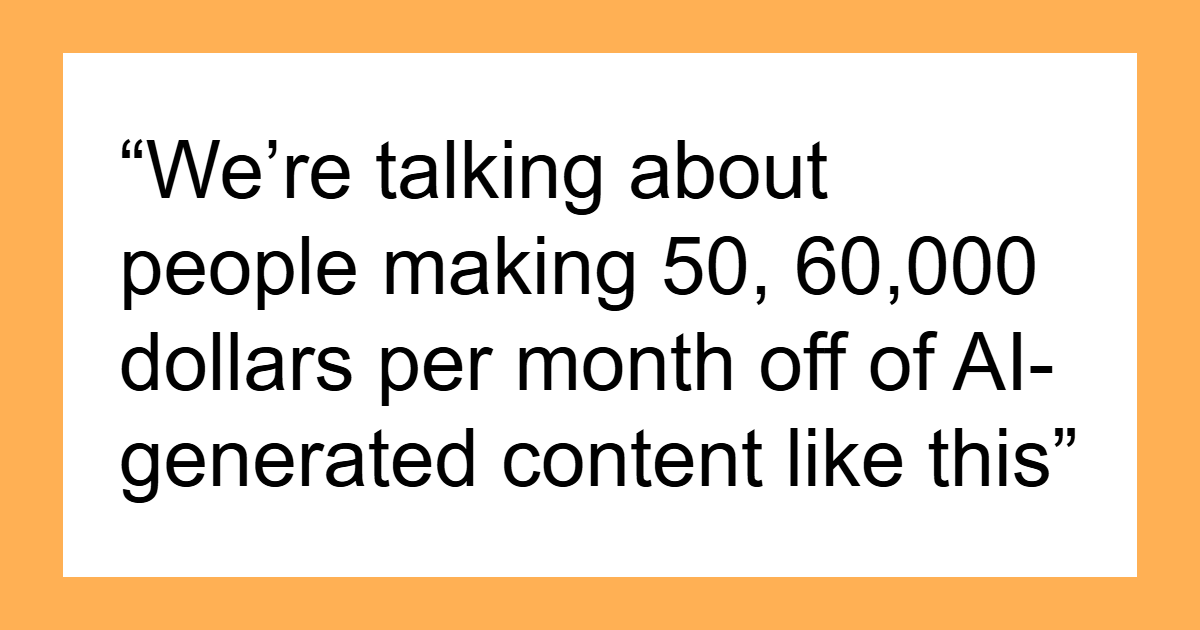
Li pointed to claims that operators behind these artificial personalities can potentially earn tens of thousands of dollars a month by attracting enormous audiences with controversial videos. The human face viewers argue with may simply be a digital puppet performing a carefully selected script.
Welcome to the new internet, where asking “Is this true?” may no longer be enough. Increasingly, we may also need to ask a more basic question: “Does this person even exist?”
The Person Making You Furious Might Be Computer-Generated
Rage bait is hardly a new invention. Radio hosts, newspaper columnists, reality television producers, and that one neighbor who attends every homeowners association meeting have understood the power of outrage for decades.
Social media perfected the business model. A provocative statement attracts angry replies. Angry replies signal engagement. Engagement can increase distribution. More people see the post, more people argue, and suddenly a ridiculous opinion has traveled around the world before reasonable context has finished tying its shoes.
Generative AI changes the scale of this process.
AI Can Manufacture the Speaker, Not Just the Script
Traditional engagement bait still required somebody to perform it. A creator needed to write a script, stand in front of a camera, record several takes, edit the footage, and accept the possibility that relatives would discover their embarrassing online persona at Thanksgiving.
AI content production can remove many of those obstacles.
A creator can generate a realistic face, create a voice, produce an emotionally charged script, and repeatedly publish variations of a character. The artificial personality can have a specific age, appearance, political attitude, fashion style, or fictional history designed for a target audience.
It does not get tired. It does not demand a weekend. It never calls the brand manager at 3 a.m. after making a spectacularly unfortunate nightclub decision.
That efficiency explains why synthetic creators are increasingly attractive to marketers and content operators. The Wall Street Journal has reported that AI-generated product demonstrations and avatars are spreading through TikTok Shop, creating concerns about consumer trust and competition with human creators who actually use and demonstrate products.
The Real Product Is Your Reaction
One mistake people make is assuming fake AI creators must persuade viewers to believe their opinions.
They do not.
Sometimes disbelief is equally profitable.
Imagine an AI-generated woman saying, “Men who earn less than $500,000 a year should not be allowed to date.” Half the audience may agree that she sounds ridiculous. That does not mean the video failed.
Someone comments, “This generation is doomed.”
Another replies, “Nobody thinks this way.”
A third sends the video to six friends with the message, “Please tell me this is satire.”
Congratulations. The content has collected comments, replies, shares, and repeat views. Everyone “won,” except possibly civilization.
Outrage Does Not Need to Be Authentic
WIRED has documented AI-powered rage bait operating in several forms. One investigation identified more than 100 YouTube channels using fabricated celebrity scenarios and sensational scripts, sometimes presenting fictional confrontations as though viewers were watching genuine entertainment news.
Another WIRED report described an AI-generated political influencer whose operator openly characterized controversial material as rage bait. The creator recognized a brutally simple principle: furious critics still generate engagement when they rush to the comments.
This is why arguing with obvious nonsense online can feel strangely unsatisfying. You may believe you are correcting a fool. In reality, you could be completing the fool’s marketing strategy.
Fake Influencers Are Already Borrowing Real Human Experiences
The unsettling part of AI influencers is not merely that fictional people exist online. Fictional characters have entertained human beings since somebody first exaggerated a hunting story beside a campfire.
The ethical problem becomes much sharper when artificial accounts imitate real communities, identities, and lived experiences.
CBS News Confirmed identified more than 30 AI-generated accounts impersonating people with Down syndrome across Instagram, TikTok, and YouTube. Some artificial personalities used emotional messages, disability-related hashtags, and fabricated personal narratives. CBS reported that several gained huge audiences, with certain profiles exceeding 100,000 followers. Only a small number clearly disclosed AI use.
That is not a harmless dancing robot wearing a digital cowboy hat. These accounts can compete for attention with actual advocates who spent years sharing genuine experiences.
AI makes imitation cheap. Human experience, unfortunately, becomes raw material.
The Internet Has Always Rewarded Performance
Of course, human influencers are not documentary cameras either.
Creators use lighting. They edit pauses. They retake jokes. The “casual morning routine” may require three ring lights and a production assistant named Kevin quietly holding a reflector.
But even a highly polished human influencer has a body, history, reputation, and life outside the post. A fully synthetic influencer can be rebuilt the moment a character stops performing well.
Did “Sophie” fail to attract an audience? Delete Sophie.
Create “Emma.” Make her slightly older. Give her stronger opinions about marriage. Put her in a digitally generated kitchen. Test 40 videos.
Emma performs better.
Emma gets a skincare deal.
Emma has never had skin.
Why Humans Struggle to Recognize AI Content
People often respond to deepfake warnings with tremendous confidence.
“I can always tell.”
Sometimes they can. Six fingers, disappearing earrings, mysterious background furniture, and teeth that briefly merge into one glowing piano keyboard remain wonderful clues.
But the technology is improving quickly, and human judgment is not an infallible AI detector. Researchers and public institutions increasingly emphasize that realistic synthetic video, images, and audio can be difficult for ordinary viewers to identify.
Stanford researchers and journalists have warned that generative AI has greatly lowered the technical barrier to creating convincing misinformation. Content that once required advanced visual-effects knowledge can now be produced with accessible tools and simple instructions.
We Watch Fast, Not Like Forensic Investigators
The problem is also behavioral.
Most people do not examine a TikTok video frame by frame while wearing white laboratory gloves. They watch it while eating lunch, walking to the kitchen, waiting for an elevator, or pretending to pay attention during a video meeting.
A suspicious clip may receive three seconds of attention before the emotional message lands.
That matters because emotion can arrive before verification.
You see a person apparently insulting a group you care about. You become angry. You share the video. Five minutes later, somebody in the comments says the face is AI-generated.
The correction is now chasing the reaction.
And reaction is very, very fast.
Does AI Actually “Rot Our Brains”?
Let us be precise before somebody generates an AI neuroscientist to yell at us.
There is no medical diagnosis called “AI brain rot.” James Li’s phrase is a provocative description of an information problem, not a clinical conclusion.
The legitimate concern involves habits of attention, critical thinking, emotional manipulation, and media overload.
The American Psychological Association has discussed how continuous media exposure and information overload can contribute to stress. Meanwhile, researchers are examining how people judge AI-generated misinformation and how interventions could improve digital literacy.
The danger is not that watching one synthetic influencer instantly turns your brain into mashed potatoes.
It is that an endless environment of optimized artificial provocation may train users into unhealthy information habits.
See, React, Scroll, Repeat
Imagine consuming hundreds of tiny emotional triggers every week.
A fake celebrity argument.
A fabricated political rant.
An AI mother supposedly furious about schools.
A synthetic boyfriend sharing an outrageous dating opinion.
A nonexistent employee “exposing” a company.
Each video demands a quick judgment. Agree or disagree. Good person or bad person. Hero or villain. Comment or scroll.
Nuance performs poorly in a system designed around immediate reaction.
Over time, the greatest danger may be epistemic exhaustion: people become so tired of determining what is authentic that they stop trying.
Instead of believing everything, they believe nothing.
That is not media literacy. That is surrender wearing sunglasses.
The “Liar’s Dividend” Makes the Problem Even Stranger
Deepfakes create a second problem beyond fake content.
When people know believable fabrications exist, genuine material becomes easier to dismiss.
A real video appears.
“AI,” somebody comments.
A legitimate recording surfaces.
“Deepfake.”
A politician, celebrity, business leader, or influencer faces embarrassing footage.
Suddenly, the existence of generative AI provides an extremely convenient escape hatch.
This is sometimes described by researchers as the liar’s dividend: widespread awareness of synthetic media can help dishonest people cast doubt on authentic evidence.
That may be one of the most damaging long-term consequences of deepfake culture. The crisis is not limited to believing false things. It also involves losing confidence in true things.
Platforms Know There Is a Transparency Problem
Major social platforms are not completely ignoring synthetic media.
YouTube requires creators to disclose meaningfully altered or synthetic content in situations such as making a real person appear to say something they did not say or generating a realistic scene that never occurred. TikTok requires labels for realistic AI-generated content, while Meta has developed systems for identifying and labeling some AI-made material.
The difficult question is whether labels can keep up with production volume, evasive creators, reposted videos, removed metadata, and constantly improving generation tools.
Labels also have behavioral limitations.
A 2025 study involving 7,579 Americans found that labels on misleading AI-generated images reduced belief in the presented claims. However, simply telling participants that something was AI-generated had little effect on their stated likelihood of engaging with a post.
In everyday language: a viewer might recognize that a post is artificial and still leave a 900-word angry comment underneath it.
The robot does not care. The engagement counter goes up.
How to Avoid Becoming Free Labor for an AI Rage-Bait Farm
Pause When a Video Seems Perfectly Designed to Infuriate You
Ask whether the content is supplying information or merely pressing an emotional button. Extreme dating opinions, exaggerated generational wars, staged customer confrontations, and suspiciously clean political monologues deserve extra skepticism.
Check the Account, Not Just the Viral Post
Scroll through earlier material. Does the face remain consistent? Does the person’s biography make sense? Are there genuine interactions with other identifiable people? Does every video use the same rhythm, background, and outrage formula?
One odd finger is amusing. An entire fictional life with no verifiable history is more important.
Look for AI and Synthetic-Content Disclosures
Check platform labels, descriptions, captions, and profile biographies. Do not assume an unlabeled post is human, but use available disclosures as one part of the verification process.
Verify the Event Behind the Video
If a clip supposedly shows a famous person making an explosive statement, search for trustworthy reporting on the event. Major incidents usually leave a wider information trail.
A celebrity supposedly starting a fistfight on national television should produce more evidence than one channel called CelebrityTruthShock247.
Do Not Reward Obvious Rage Bait
Sometimes the healthiest response is not a devastating comment.
It is nothing.
No reply. No quote post. No angry share accompanied by “LOOK AT THIS IDIOT.”
Attention is the currency. You are allowed to keep your wallet closed.
Human Creators May Become More Valuable in a Synthetic Internet
Interestingly, the AI flood could produce the opposite of total synthetic domination.
Instagram head Adam Mosseri has argued that an abundance of artificial content may increase demand for genuine human creativity and recognizable personal perspectives. His reasoning is straightforward: when polished synthetic imagery becomes cheap, authentic human context becomes more distinctive.
There is something AI cannot manufacture merely by generating a beautiful face.
History.
A real creator can say, “I recommended this terrible restaurant three years ago, and you people still remind me every Thursday.”
The audience remembers.
Shared experience creates relationships.
Synthetic personalities can imitate continuity, but genuine communities develop through time, mistakes, disagreements, inside jokes, and unpredictable human change.
Ironically, the arrival of perfect digital people may remind us why imperfect real people are interesting.
A Familiar Experience: Realizing the Viral “Person” Was Never Real
Picture a typical evening online. You have five minutes to spare, which social media interprets as legal permission to steal 47 minutes of your life.
You scroll past a dog, a recipe, and somebody organizing a refrigerator with the seriousness of a NASA launch. Then a video appears.
A young woman is sitting in a bright apartment. She looks directly at the camera and delivers an absolutely outrageous opinion about relationships. According to her, people who cannot afford international vacations three times a year have “no business dating.”
You pause.
What?
You replay the video because surely you misunderstood.
Nope. Digital Marie Antoinette has doubled down.
You open the comments. Thousands of people are furious. Some insult her. Others defend her. A few suspicious users say she is AI-generated, but their comments are buried beneath debates about modern relationships, capitalism, entitlement, and whether a weekend in Wisconsin technically counts as travel.
You visit the profile.
At first, everything looks normal. Coffee videos. Gym videos. Fashion posts. Another relationship opinion. She apparently has a dog, although the dog’s markings seem to change slightly between uploads.
Then the weirdness begins.
Her apartment window shows a skyline that does not quite resemble a real city. Her earrings occasionally change shape. In one video, a cup on the table appears to melt into her hand for half a second.
You search her name.
Nothing useful appears.
No old photos. No tagged birthday pictures from friends. No embarrassing high school sports results. No abandoned Pinterest account from 2016. This person somehow emerged online fully formed, perfectly lit, and immediately ready to explain why the rest of humanity is dating incorrectly.
Eventually, you find a discussion identifying the account as synthetic.
The feeling is surprisingly strange.
You are not devastated. You did not send her money or name your firstborn after her. Still, you feel mildly cheated.
For several minutes, you treated a generated performance as a human opinion. You compared the fictional speaker’s life with your own. You made assumptions about her personality. You considered writing a comment.
Your emotional reaction was real even though its target was not.
That experience changes the next scroll.
A man appears telling a dramatic workplace story. Is he real?
A woman cries while describing an argument with her family. Real?
A handsome doctor offers health advice. Please be real, and preferably licensed.
Suddenly, every smooth face and strangely structured sentence looks suspicious. This is the deeper cost of synthetic-media saturation. The problem is not only being fooled once. The experience can plant permanent doubt.
At first, skepticism feels intelligent. You slow down. You investigate accounts. You notice editing errors. Good.
But constant verification is exhausting.
After a while, you understand why some people simply stop checking. They laugh at the clip, become angry for 30 seconds, and keep scrolling. Tomorrow’s content will replace today’s outrage anyway.
That is where James Li’s “rot our brains” warning feels most relevant. Not because artificial intelligence magically damages a viewer’s neurons, but because a feed crowded with artificial personalities may reward the fastest and least reflective version of ourselves.
The machine says: react now.
Verification says: slow down.
The machine has autoplay.
Verification has homework.
We all know which one has the better marketing department.
Conclusion: The Internet Needs a New Kind of Street Smarts
AI-generated influencers are not automatically evil. Virtual characters can be used for entertainment, art, education, satire, and creative storytelling. The technology itself is not the villain twirling a digital mustache.
Deception is the issue.
When artificial people are deliberately presented as genuine human beings, given manufactured experiences, and deployed to provoke emotional reactions for profit, the relationship between creators and audiences changes.
James Li’s warning succeeds because “AI will rot our brains” sounds ridiculous, funny, and alarmingly plausible all at once. The more accurate concern is that synthetic rage bait can overwhelm our abilityor willingnessto slow down and evaluate what we see.
The solution is not to panic every time a person has unusually smooth skin. It is to develop new internet instincts.
Check the source. Examine the account. Search beyond the post. Notice when outrage feels manufactured. And remember that commenting “THIS IS EVERYTHING WRONG WITH SOCIETY” under a fake person’s video may be exactly what the real person operating the account hoped you would do.
The next influencer on your feed might be completely artificial.
Your attention, however, is still very real.
Spend it carefully.