Superman has been flying around in red boots since 1938, which means he has outlasted rotary phones, soda fountains, disco, dial-up internet, and at least twelve different “this will kill cinema forever” panics. Yet somehow, the original Man of Steel still feels strangely modern. Not modern in the “he needs a podcast and a skincare routine” way, but modern because the core ideas behind O.G. Superman are exactly the things people keep looking for in a noisy, suspicious, endlessly scrolling world.
Created by writer Jerry Siegel and artist Joe Shuster, Superman first appeared in Action Comics No. 1 in 1938. He arrived during the Great Depression as a bold, brightly colored answer to fear, corruption, and powerlessness. The earliest Superman was not simply a musclebound alien tossing cars around like empty cereal boxes. He was a champion of the oppressed, a defender of ordinary people, and a reminder that strength without compassion is just bad gym etiquette.
Today, when audiences are surrounded by antiheroes, fractured institutions, artificial intelligence, misinformation, online outrage, and superhero fatigue, the original Superman feels less outdated than upgraded. His relevance does not come from nostalgia alone. It comes from four timeless qualities: hope, moral clarity, immigrant identity, and humble humanity. In other words, O.G. Superman is not just still standing. He is hovering politely above the chaos, cape fluttering, waiting for us to remember what heroism can look like.
Who Is O.G. Superman?
Before we list the four big reasons, it helps to define “O.G. Superman.” In this article, O.G. Superman refers to the classic version of the character rooted in early DC Comics, the Golden Age superhero tradition, and the enduring image of Clark Kent as a principled reporter who becomes Superman not for fame, revenge, or brand partnerships, but because helping people is the right thing to do.
His origin is one of the most famous in pop culture. Kal-El is sent from the doomed planet Krypton to Earth, raised by the Kent family, and grows into Clark Kent, a mild-mannered journalist in Metropolis. Instead of using his powers to rule, profit, or win every office arm-wrestling contest, he chooses service. That decision is the secret engine of the character. Superman is powerful because of what he can do, but he is inspiring because of what he refuses to do.
1. Superman Makes Hope Feel Practical, Not Corny
Hope Is Not Escapism When the World Is Exhausted
One reason O.G. Superman is even more relevant today is that he treats hope as a responsibility. Modern culture often confuses optimism with naivety. If a character believes in goodness, some viewers immediately ask, “What’s the twist?” We have become so trained to expect betrayal, irony, and moral collapse that sincerity can feel like a special effect.
Superman pushes back against that cynicism. His optimism is not soft. It is muscular. He sees danger, cruelty, greed, and fear, then chooses to act anyway. That is very different from pretending everything is fine. Superman is hopeful because he understands that things are not fine and still believes they can be better.
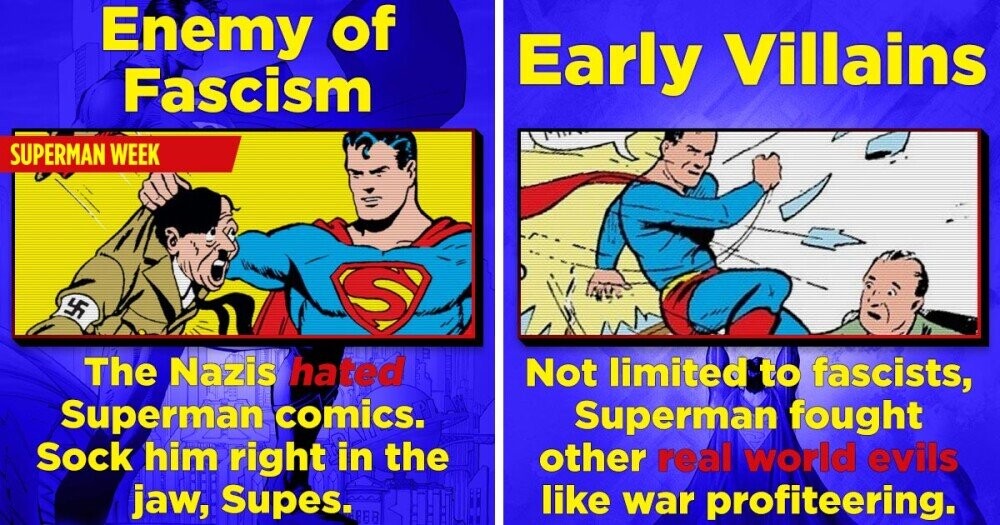
In the earliest Superman stories, the character often fought bullies, corrupt figures, unsafe systems, and people abusing power. He was not originally defined by cosmic villains alone. He was a wish-fulfillment hero for people who felt ignored by institutions. He stood up for the vulnerable at a time when many Americans were living with economic uncertainty and social anxiety. That makes him feel surprisingly current.
The Man of Steel Works Because He Cares About Regular People
The best Superman stories rarely depend only on whether he can punch the biggest monster. Of course he can. The man can bench-press a nightmare. The more interesting question is whether he notices the frightened person under the rubble, the lonely kid on the rooftop, the worker being exploited, or the journalist trying to tell the truth under pressure.
That is why Superman’s hope lands differently from empty positivity. He does not float above humanity because he thinks he is better than us. He floats above humanity so he can see who needs help. In a time when many people feel digitally connected but emotionally isolated, that kind of attention is powerful. Superman says, without a TED Talk or a ring light, “You matter.”
2. Superman Offers Moral Clarity in a Confusing Age
He Is Not Simple; He Is Centered
Another reason original Superman remains relevant is his moral clarity. That phrase can sound old-fashioned, like something embroidered on a throw pillow in the Fortress of Solitude. But moral clarity is not the same as moral simplicity. Superman is compelling because he faces complicated situations while holding onto a clear center.
Clark Kent’s values are easy to understand: protect life, tell the truth, defend the vulnerable, and use power responsibly. Those principles matter today because people are surrounded by persuasive noise. Social feeds reward outrage. Public trust is fragile. Powerful voices can twist facts until they look like balloon animals. In that environment, a hero connected to truth and justice does not feel dusty. He feels necessary.
Superman’s famous motto has evolved over time, but the central idea remains the same. Whether audiences associate him with “Truth, Justice and the American Way” or the more recent “Truth, Justice and a Better Tomorrow,” the point is that Superman represents an ethical horizon. He is not perfect because he never struggles. He is heroic because he keeps choosing the harder right over the easier wrong.
Clark Kent Makes Journalism Part of the Heroism
One underrated part of O.G. Superman is that Clark Kent is a reporter. That detail is not decoration. It is not the comic book equivalent of giving a superhero a sensible day job for tax purposes. Clark’s work at the Daily Planet reflects his belief that truth matters before the cape even comes out.
As Superman, he saves people physically. As Clark Kent, he tries to serve the public through facts, investigation, and accountability. That dual identity is more relevant than ever in an era of misinformation, viral rumors, deepfakes, and headline skimming. Superman reminds us that truth is not just something heroes shout about while dramatically backlit. It is something people have to research, verify, publish, defend, and sometimes risk their careers to protect.
Lois Lane strengthens this theme as well. She is not merely Superman’s love interest; she is one of pop culture’s great fictional reporters. Her courage, skepticism, and refusal to be intimidated make the Superman universe a place where journalism itself becomes heroic. In a modern context, that is not just relevant. It is practically wearing a press badge and waving for attention.
3. Superman’s Immigrant Story Speaks to Identity and Belonging
Kal-El Is Both Alien and Deeply Human
Superman is one of the most famous immigrant stories in American fiction. Kal-El arrives from another world, is raised by a loving family, and grows up balancing two identities: his Kryptonian heritage and his human upbringing. He is not powerful because he erases one side of himself. He becomes Superman because both sides shape him.
That theme has grown more meaningful with time. Today, conversations about identity, migration, belonging, and cultural difference are everywhere. Superman offers a hopeful version of those questions. He is not asking, “Where do I belong?” because he wants one simple answer. He belongs to Krypton through birth, to Kansas through love, to Metropolis through service, and to the world through responsibility.
The fact that Superman was created by two young Jewish men from Cleveland, both connected to immigrant family backgrounds, adds depth to the character’s legacy. The dream of someone arriving from elsewhere and becoming a protector rather than a threat is woven into the DNA of the story. In the hands of Siegel and Shuster, the outsider becomes the hero. That idea still carries emotional weight.
Superman Turns Difference Into Service
Many modern stories about outsiders focus on alienation, and for good reason. Feeling different can be painful. Superman does not ignore that pain, but he transforms it. His difference gives him perspective. His strength gives him responsibility. His upbringing gives him empathy. That combination makes him a powerful symbol for anyone who has ever felt out of place and wondered whether their difference could become a gift.
This is why O.G. Superman is not just a patriotic icon or a comic book mascot. He is a global figure. Readers and viewers from many backgrounds can see something of themselves in him: the adopted child, the immigrant, the small-town dreamer, the city worker, the person with hidden gifts, the person afraid of being misunderstood, and the person trying to do good in a world that often rewards selfishness.
His cape may be bright red, but his emotional appeal is not one-color-fits-all. Superman works because his story is specific enough to matter and broad enough to welcome people in.
4. Superman Proves Kindness Is Still a Superpower
In a Cynical Culture, Kindness Feels Radical
The fourth reason O.G. Superman is even more relevant today is perhaps the simplest: he is kind. Not weak. Not clueless. Not a flying golden retriever with laser eyes, although frankly that would also sell tickets. He is kind in the active sense. He helps. He listens. He restrains himself. He treats power as something to be governed by compassion.
That matters because modern entertainment often equates depth with darkness. The more damaged, sarcastic, and morally compromised a character is, the more “serious” the story is assumed to be. Superman challenges that assumption. He proves that goodness can be dramatic. Restraint can be interesting. Mercy can be brave. Choosing not to crush your enemies, even when you absolutely could, is not boring. It is character.
Lex Luthor is a perfect contrast. Luthor often represents ego, resentment, intellect without humility, and power without love. Superman represents the opposite. He has the power Luthor craves, but not the insecurity that poisons it. That rivalry remains relevant because society still struggles with the difference between brilliance and wisdom, influence and service, control and leadership.
Superman’s Humanity Is the Point
The great irony of Superman is that the alien is often the most human person in the room. He can fly through space, but he worries about doing the right thing. He can survive bullets, but he is wounded by human suffering. He can hear cries for help from miles away, yet he still values quiet conversations with his parents, friends, coworkers, and the people he protects.
That is the magic of Clark Kent. The glasses are not just a disguise; they are a reminder that Superman’s greatness is grounded in humility. He does not need everyone to know what he has done. He does not need applause after every rescue. He does not turn compassion into content. In a world where even lunch can become a personal brand, Superman’s quiet service feels almost rebellious.
O.G. Superman teaches that the most impressive thing about a hero is not the ability to dominate. It is the ability to care while powerful, to stay gentle while strong, and to keep serving when cynicism would be easier.
Why O.G. Superman Still Beats Superhero Fatigue
Superhero fatigue is real, or at least real enough that people keep writing about it with the dramatic intensity of a meteor approaching Earth. Audiences have seen multiverses, origin stories, team-ups, reboots, post-credit scenes, evil twins, fake deaths, real deaths, reversed deaths, and timelines that require a spreadsheet and possibly a snack.
Yet Superman survives because he is not built only on spectacle. His appeal is mythic. He is Moses in a rocket, Hercules in a cape, a small-town farm boy in a newsroom, and a sci-fi immigrant trying to be a good neighbor. That blend of myth, Americana, journalism, family, and moral responsibility gives him more staying power than any single trend.
The original Superman is also refreshingly direct. He does not need to be deconstructed every time he appears. Sometimes audiences do not want another hero asking whether heroism is secretly impossible. Sometimes they want a character who looks at a burning building and flies toward it. That is not simplistic. That is satisfying.
Experiences and Reflections: Why Superman Still Feels Personal
The experience of returning to O.G. Superman today is a bit like finding an old family photograph and realizing the person in it looks younger than you expected. Many people first meet Superman as children, when the appeal is obvious: he flies, he is strong, he wears a cape, and he can make bullies regret their life choices without messing up his hair. At that age, Superman is pure fantasy. He is the answer to every playground injustice and every childhood wish to be brave without being afraid.
But the character changes as viewers grow older. The flying is still fun, obviously. Nobody is saying no to flying. Yet the emotional weight shifts. Adults begin to notice that Superman is not inspiring because life is easy for him. He loses his home planet before he can understand it. He must hide parts of himself. He is constantly judged by people who either worship him, fear him, or want to control him. He hears more suffering than anyone should. Still, he chooses kindness.
That choice becomes more meaningful with age. In daily life, most people are not asked to stop alien invasions. They are asked to be patient in traffic, honest at work, generous with family, fair to strangers, and decent online when the algorithm is practically handing them a pitchfork. Superman’s relevance lives in those smaller tests. He makes heroism feel less like a costume and more like a habit.
There is also something comforting about Clark Kent’s ordinariness. He has cosmic power, but he still has a job, deadlines, awkward conversations, and a very suspicious pair of glasses doing far more labor than most eyewear should. Clark reminds us that identity is layered. A person can be quiet and strong, gentle and brave, different and deeply connected. You do not have to announce every good thing you do. Sometimes the work matters more than the recognition.
For fans who discovered Superman through comics, cartoons, Christopher Reeve’s iconic performance, later films, television versions, or modern DC stories, the character often becomes a kind of moral bookmark. People may outgrow certain costumes, catchphrases, or special effects, but they rarely outgrow the desire to believe that goodness can stand up to power and win without becoming cruel. That is the real experience Superman offers. Not escape from the world, but a cleaner view of what the world could ask from us.
O.G. Superman remains relevant because he gives audiences permission to admire decency again. He makes sincerity feel strong. He turns compassion into action. And when everything feels loud, divided, and suspicious, the image of one person using extraordinary ability to protect ordinary lives still lands with surprising force. The cape is classic. The message is current. The hair curl is optional, but honestly, it helps.
Conclusion: The Original Superman Is Still the Hero We Need
O.G. Superman is more relevant today because he represents values that modern culture often questions but still desperately needs: hope, truth, belonging, and kindness. He is not a relic from a simpler past. He is a challenge to the present. In an age of cynicism, he asks us to imagine courage without cruelty. In an age of misinformation, he reminds us that truth matters. In an age of division, he shows how an outsider can become a protector. In an age obsessed with power, he proves that compassion is what makes strength heroic.
The original Superman endures because he is bigger than one comic, one movie, one slogan, or one generation. He is a symbol of what people wish power would do: help, protect, serve, and inspire. The world has changed dramatically since 1938, but the need for a hero who believes in a better tomorrow has not gone anywhere. If anything, it has put on glasses, taken a job at the Daily Planet, and started typing.
Note: This article is written in original, publication-ready American English and is based on established public information about Superman’s comic book history, creators, cultural legacy, and modern relevance.