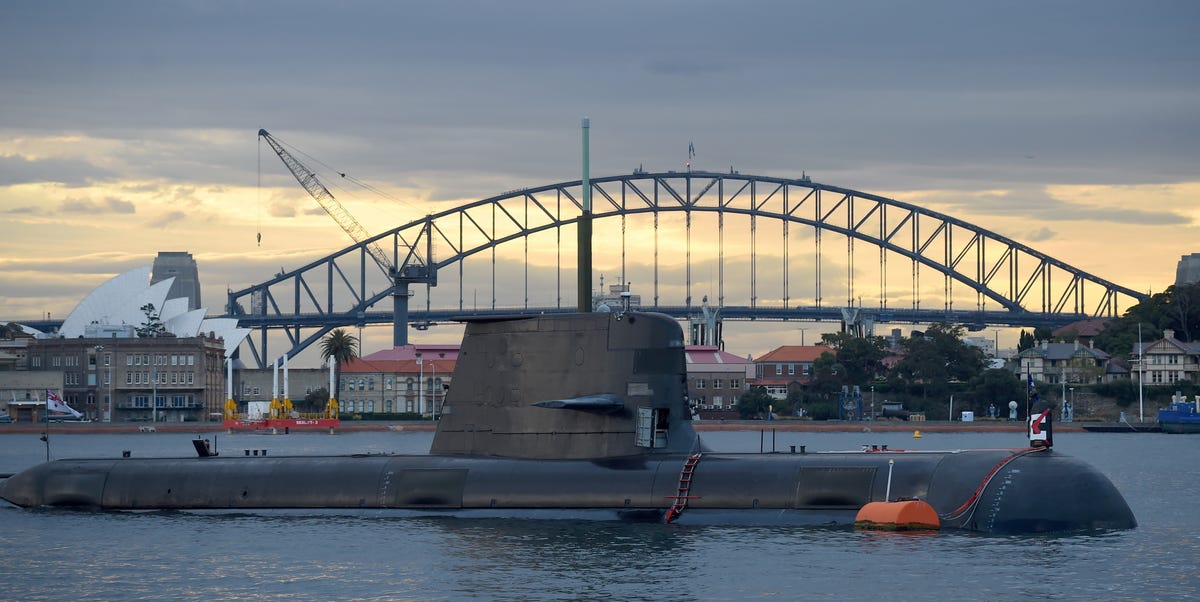
Submarines are already some of the most intimidating machines ever launched into the ocean. They are quiet, patient, heavily engineered, and about as forgiving as a tax audit in a steel tube. But the next boost to submarine lethality may not come from a new missile, a stealthier hull shape, or a Hollywood-style sonar trick. It may come from something that sounds almost absurdly simple: a supersonic metal spray.
The technology is called cold spray, though the name is a bit cheeky. It is not exactly cold, and it is definitely not a can of silver paint from the hardware aisle. Cold spray additive manufacturing uses a high-pressure gas stream to blast tiny metal particles at supersonic speeds onto a surface. Instead of melting the metal like traditional welding, the particles hit so fast that they deform, bond, and build up dense layers of solid material.
For submarines, that could be a very big deal. A submarine is only useful when it is available, certified, repaired, and ready to disappear beneath the waves. If a worn shaft, damaged fitting, corroded surface, or hard-to-source part keeps a boat tied to a pier or trapped in dry dock, its advanced sensors and weapons are doing exactly nothing. Cold spray could help change that equation by making submarine repair faster, more flexible, and less dependent on long supply chains.
What Is Supersonic Metal Spray?
Cold spray is a solid-state metal deposition process. In plain English, it shoots metal powder through a specially designed nozzle at extremely high velocity. The particles may be aluminum, titanium, copper, nickel alloys, stainless steel, or other engineered materials depending on the job. When those particles strike a prepared surface, they flatten like microscopic pancakes and bond to the base material.
The key difference between cold spray and welding is heat. Welding melts material. Cold spray usually operates below the melting point of the material being repaired. That means less thermal distortion, less risk of changing the strength of the original metal, and fewer complications when repairing components that do not appreciate being cooked like a grilled cheese sandwich.
This is why defense engineers are interested. Ships and submarines are full of parts that wear, corrode, pit, rub, vibrate, and age. Some are expensive. Some are difficult to remove. Some have long lead times because the supplier vanished, the tooling is ancient, or the original design was created when fax machines still felt futuristic. Cold spray gives maintainers another tool: restore material where it is missing, machine it back to tolerance, inspect it, and return the component to service.
Why Submarines Care About Repair Speed
Submarines live in a harsh world. Saltwater is rude. Pressure is relentless. Vibration never takes a vacation. Even a well-maintained submarine is a floating checklist of mechanical, electrical, hydraulic, and structural systems that must be kept within strict limits. When a repair requires a replacement part that takes months to manufacture, the problem becomes more than mechanical. It becomes strategic.
Navies measure power not only by how many submarines they own, but by how many can deploy. A submarine unavailable because of a maintenance bottleneck is like a star quarterback stuck in traffic. Still talented, not currently helpful.
This is where submarine cold spray repair becomes exciting. If a damaged component can be restored in days instead of months, the fleet gains operational time. If a repair can be performed at a shipyard, near a pier, or eventually in more expeditionary settings, the Navy becomes less dependent on fragile supply chains. If the technology can meet strict quality and safety requirements, especially for submarine-critical systems, the impact could ripple across the entire undersea force.
How Cold Spray Could Make Subs “Deadlier”
The word “deadlier” sounds dramatic, but in naval warfare, lethality often comes from boring things done very well. Logistics. Maintenance. Certification. Parts availability. Repair discipline. The glamorous side of undersea power is the submarine slipping silently through deep water. The unglamorous side is the team making sure a worn component does not delay that deployment by six weeks.
1. More Time at Sea
A submarine that spends less time waiting for repairs can spend more time performing missions. Cold spray does not need to turn every sailor into a metallurgist or every boat into a floating factory. Its value begins with reducing preventable downtime. When the Navy can restore damaged surfaces, worn shafts, bearing journals, valve components, or other approved parts faster, it increases the number of mission-ready assets.
2. Faster Recovery From Wear and Corrosion
Corrosion is the villain in nearly every maritime maintenance story. It is patient, sneaky, and deeply committed to ruining everyone’s schedule. Cold spray can be used for dimensional restoration, meaning it rebuilds material that has been worn or corroded away. After deposition, the part can be machined back to its required dimensions. That can preserve components that otherwise might be scrapped.
3. Less Heat, Less Distortion
Many naval parts are made from materials that can lose desirable properties when overheated. Traditional welding is powerful, but it introduces heat-affected zones, distortion, and inspection concerns. Cold spray’s lower-temperature approach helps preserve the base material. That makes it attractive for situations where welding may be risky, impractical, or simply not the best tool for the job.
4. A Stronger Submarine Industrial Base
The U.S. Navy has openly focused on expanding additive manufacturing, advanced repair, and maritime industrial base capacity. That is not just a technology story. It is a workforce story, a supply chain story, and a readiness story. Cold spray supports all three by giving shipyards and industrial partners another method to restore and manufacture approved components.
Real-World Navy Momentum
Cold spray is not a science-fair volcano with better funding. The Navy has already been moving it into practical repair work. Norfolk Naval Shipyard completed an early organic cold spray repair on a U.S. naval shipyard component. Southwest Regional Maintenance Center later supported a major cold spray repair on rudder stock bearing journals for USS Essex, using hundreds of pounds of specialized powder and avoiding a lengthy delay compared with traditional repair methods.
Submarine-focused facilities are also exploring the method. Trident Refit Facility Bangor, which supports ballistic missile submarines, reported progress with an in-house cold spray process. The significance is obvious: if a facility responsible for strategic deterrent platforms can add cold spray to its approved maintenance toolbox, the technology moves from “interesting” to “potentially fleet-changing.”
There is also movement around SUBSAFE, the U.S. Navy’s demanding quality assurance program for submarine safety systems. Industry partners have been selected to investigate whether cold spray additive manufacturing can produce materials and parts that meet those rigorous standards. This is the serious part. Making a metal shape quickly is impressive; making it correctly, repeatedly, inspectably, and safely for submarine use is the real mountain.
Cold Spray vs. Traditional Welding
Welding is not going away. It is essential, proven, and deeply embedded in shipbuilding and repair. But not every repair wants a welding torch. Cold spray offers a different path.
In welding, heat melts filler and base material together. That can create a strong joint, but it can also alter material properties, create distortion, require extensive preparation, and demand strict fire-safety controls. In cold spray, metal powder is accelerated by gas and bonded through kinetic energy. The result can be a dense coating or restored surface with much less heat input.
That distinction matters on submarines because space is tight, access is limited, and every repair must respect the surrounding systems. You do not casually bring heat into a cramped naval environment and hope for the best. Submarines are not forgiving places for “Oops, we’ll fix that next Tuesday.”
The Additive Manufacturing Connection
Cold spray is often grouped with metal 3D printing and additive manufacturing because it can build material layer by layer. But it is not the same as laser powder bed fusion, wire-arc additive manufacturing, or binder jetting. Its superpower is speed and solid-state deposition. Instead of slowly melting tiny zones of metal with a laser, cold spray can deposit material at high rates, especially for coatings, repairs, and near-net-shape forms.
The Navy’s broader additive manufacturing push includes polymer printers aboard submarines, metal parts for ships, digital technical data packages, and expeditionary manufacturing experiments. Cold spray fits into that ecosystem as a repair-first technology with manufacturing potential. In other words, the Navy is not asking one machine to do everything. It is building a toolbox.
What Parts Could Benefit?
Specific submarine applications must be approved through formal engineering, testing, and certification. Still, based on public repair examples and cold spray capabilities, the best candidates are often components suffering from wear, corrosion, or dimensional loss. These can include shafts, bearing surfaces, valve bodies, pump components, actuators, fittings, and other metallic parts where rebuilding material is more practical than replacing the entire component.
Cold spray can also apply protective coatings. That matters because preventing corrosion is usually cheaper than repairing it later. A good coating is not glamorous, but neither is dental floss, and both save a lot of pain if used consistently.
The technology may also support low-volume manufacturing where old parts are no longer easy to buy. Naval platforms often remain in service for decades. The original supplier may no longer exist, the production line may be gone, or a casting may take months to procure. If cold spray can create or restore an approved component faster, it becomes a readiness multiplier.
The Big Challenge: Certification
Cold spray sounds simple until certification enters the room wearing a hard hat and carrying a clipboard. Naval components, especially submarine components, must meet strict requirements for material quality, strength, corrosion resistance, fatigue performance, dimensional accuracy, traceability, and inspection. A repair that looks good is not enough. It must be proven.
That proof can include test coupons, mockups, bond testing, tensile testing, corrosion testing, nondestructive inspection, machining validation, process qualification, operator training, and documentation. The Navy must know not only that cold spray worked once, but that it can work consistently under controlled conditions.
This is why the transition from laboratory success to fleet use takes time. The ocean does not care about marketing slides. Neither does a submarine safety program. Cold spray must earn trust the hard way: data, testing, repeatability, and conservative engineering judgment.
Why This Matters in a Pacific-Centered World
The U.S. and its allies are paying close attention to undersea warfare because the Indo-Pacific is vast. Distances are enormous. Ports are not always nearby. Supply chains can be contested. In that environment, a submarine force that can repair faster and rely less on distant depots has a real advantage.
Cold spray supports a concept known as expeditionary sustainment. That simply means fixing more things closer to where they are needed. If a submarine, surface ship, or forward maintenance team can restore a part without waiting for a traditional supply process, operational flexibility improves.
This does not mean every repair will happen at sea, or that cold spray will magically replace shipyards. It means the Navy may gain more options. Options are valuable. In naval operations, the side with more reliable options usually sleeps better.
AUKUS, Allies, and Shared Manufacturing
Cold spray also fits neatly into allied defense cooperation. Australia has investigated cold spray for submarine repair, and the United States has worked with allied and industry partners on additive manufacturing. Under AUKUS, the U.S., United Kingdom, and Australia are all interested in strengthening submarine production, sustainment, and industrial capacity.
Shared manufacturing standards could eventually allow allies to produce approved parts across a distributed network. That is not as flashy as a new torpedo, but it may be just as important. A shared repair ecosystem means allied fleets can support one another more effectively, especially when operating far from home ports.
Not a Magic Wand, But a Serious Tool
Cold spray will not fix every submarine problem. It cannot replace disciplined maintenance planning, skilled trades, certified welders, machinists, inspectors, engineers, and supply specialists. It will not turn a damaged submarine into a showroom model with one dramatic hiss of metal powder.
But it can give maintenance teams a powerful new option. In many cases, the ability to restore a worn or damaged surface without high heat, long lead times, or total component replacement is enough to change the maintenance math. Multiply that across a fleet, and the result is better readiness.
That is the real reason a supersonic metal spray could make subs deadlier. Not because it fires at the enemy, but because it helps keep the submarine available for the mission. The deadliest submarine is not the one with the coolest brochure. It is the one that can leave port on time, stay hidden, and do its job.
Experience Notes: What Cold Spray Teaches About Real-World Readiness
Anyone who has spent time around heavy maintenance, ship repair, or industrial manufacturing knows one universal truth: the tiny problem is never tiny when the schedule is already on fire. A worn surface may look unimpressive to an outsider. A corroded journal, a damaged shaft, or a pitted fitting will not make a dramatic movie poster. Yet that modest defect can hold up an entire maintenance availability, delay testing, or force a team to wait for a replacement part that takes months to arrive.
This is where cold spray feels less like futuristic wizardry and more like common sense wearing safety glasses. In a practical repair environment, the value is not only the metal being deposited. It is the time saved by avoiding unnecessary disassembly. It is the risk reduced by using less heat. It is the flexibility gained when a team can restore material, machine the surface back to tolerance, and move the job forward without restarting the whole maintenance plan.
Picture a maintenance team facing a damaged component in a cramped space. Traditional repair options might involve removing the part, shipping it elsewhere, waiting for electroplating, machining, inspection, and reinstallation. Or the team might discover that replacement is technically possible but painfully slow. Cold spray introduces a different conversation: Can the damaged area be prepared? Can the correct powder be qualified? Can the spray path reach the surface? Can the restored area pass inspection? If yes, the repair may move from a months-long headache to a tightly managed restoration task.
The human side matters too. Cold spray requires machinists, engineers, inspectors, safety specialists, planners, and operators to trust a process that may be newer than the methods they learned first. That trust does not arrive because someone says “innovation” three times in a conference room. It arrives when coupons pass testing, mockups prove access, procedures are clear, and the finished repair survives scrutiny. In naval maintenance, credibility is built one inspected repair at a time.
The technology also changes how people think about parts. Instead of treating every worn component as a replacement problem, maintainers can ask whether it is a restoration problem. That mindset matters for submarines because the supply chain is not an infinite vending machine. Many parts are specialized, low-volume, and tied to strict quality requirements. When a certified repair process can safely extend the life of an approved component, the fleet gains breathing room.
The best way to understand cold spray is not as a gadget, but as a readiness habit. It rewards preparation, data, repeatability, and practical engineering. It gives skilled workers another way to solve problems without pretending that physics is optional. And in the submarine world, where delays are expensive and availability is power, that kind of habit can be quietly revolutionary. The spray may be supersonic, but the real impact is strategic: fewer bottlenecks, faster repairs, stronger sustainment, and more submarines ready when commanders need them.
Conclusion
A supersonic metal spray could make submarines deadlier because modern military power depends on availability as much as technology. Cold spray additive manufacturing offers a faster, lower-heat, more flexible way to repair and restore critical metal components. It supports submarine maintenance, strengthens the industrial base, and gives the Navy another tool for keeping high-value platforms at sea.
The technology still has to clear demanding certification hurdles, especially for submarine safety systems. That is exactly how it should be. But the direction is clear: cold spray is moving from interesting research to real naval sustainment. For submarines, that could mean fewer delays, shorter repair cycles, and more time doing what submarines do best: staying hidden, staying ready, and making adversaries nervous.