College life is often advertised as a highlight reel: leafy quads, late-night pizza, lifelong friendships, and someone dramatically discovering themselves in a philosophy class. Lovely. But behind the brochure smile, many university students are juggling deadlines, debt, homesickness, identity questions, social pressure, sleep deprivation, and a calendar that looks like it was assembled by a caffeinated raccoon.
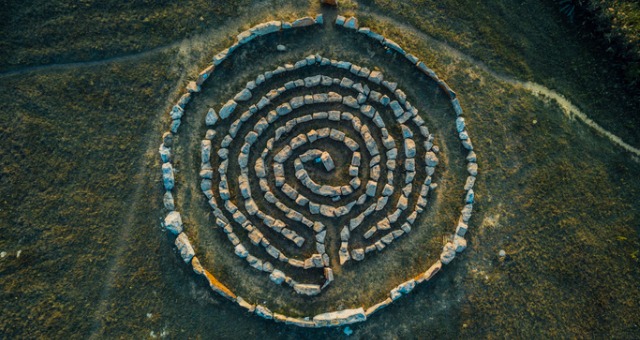
That is why simple, low-cost, non-clinical self-care practices matter. One surprisingly powerful tool is the labyrinth. No, not the kind with goblins, trapdoors, or a pop star in a cape. A labyrinth is a single winding path that leads to a center and back out again. Unlike a maze, it is not designed to trick you. There are no dead ends. No wrong turns. No tiny academic committee hiding behind a hedge asking for your learning outcomes.
As a self-care tool for university students, labyrinth walking offers something rare on campus: permission to slow down without needing to explain yourself. It combines gentle movement, mindful breathing, reflection, and symbolic release. For faculty, student affairs professionals, counselors, librarians, and wellness teams, the labyrinth can become a practical bridge between academic life and emotional regulation.
What Is a Labyrinth?
A labyrinth is an ancient pattern with one continuous path that moves from the outside toward a center and then leads back out. People have used labyrinths for thousands of years for meditation, prayer, reflection, ritual, and personal meaning-making. In modern higher education, the practice is usually framed in inclusive, nonsectarian language: walking meditation, reflective practice, stress management, or contemplative pedagogy.
The difference between a maze and a labyrinth is important. A maze asks, “Can you find your way?” A labyrinth gently says, “Keep walking; you are already on the path.” That distinction matters for students who are tired of being evaluated, ranked, graded, compared, and asked whether they have updated their LinkedIn profile yet.
Why the Single Path Matters
Because a labyrinth has only one path, students do not have to make decisions while walking. That reduces cognitive load. The mind is free to notice breath, footsteps, body tension, emotions, and thoughts. For a student whose brain has seventeen tabs open, four of them playing music, this simplicity can feel oddly luxurious.
The path also creates a physical metaphor for the student experience. You move forward, then seem to curve away from the center. You get close, then the path turns. Progress is not always linear. That message can be deeply comforting during finals week, clinical rotations, student teaching, thesis writing, or the mysterious emotional event known as “checking the gradebook at 1:13 a.m.”
Why University Students Need More Self-care Tools
Student mental health has become one of the defining challenges in higher education. Many students report moderate to high stress, loneliness, anxiety, depression symptoms, and emotional difficulty that interferes with academic performance. Counseling centers remain essential, but they cannot carry the entire weight of campus well-being alone.
Self-care tools are not replacements for therapy, medical care, crisis services, disability accommodations, or compassionate academic policies. They are part of a broader ecosystem. Think of them as the campus equivalent of water fountains: not the whole health plan, but still very useful when people are running on fumes.
A labyrinth can be especially helpful because it is accessible, inexpensive, adaptable, and easy to introduce. It can be painted outdoors, taped on a gym floor, projected in a library, printed on paper, traced with a finger, or walked in miniature form with a tabletop design. Students who dislike sitting meditation may find walking easier. Students who feel awkward in group wellness programs may appreciate the quiet individual nature of the practice.
The Labyrinth as Mindfulness in Motion
Mindfulness is often described as paying attention to the present moment with openness and without harsh judgment. For students, that may sound wonderful until they try to sit still and immediately remember an unread email, a quiz, a lab report, and the laundry currently evolving into a new life-form.
Labyrinth walking offers mindfulness through motion. The student does not have to “empty the mind,” which is good news because minds do not empty on command. Instead, the walker focuses on the path, breath, pace, and bodily sensation. Thoughts can come and go. The walking creates a rhythm that helps the nervous system settle.
A Simple Three-Part Practice
Faculty and wellness leaders often introduce labyrinth walking in three stages:
- Release: As students enter the path, they notice what they are carrying: stress, frustration, fear, grief, confusion, or mental clutter.
- Receive: At the center, they pause. This may be a moment for breathing, prayer, silence, gratitude, or a question such as, “What do I need right now?”
- Return: As they walk out, they consider one small action they can take after leaving the labyrinth.
This structure is simple enough for a ten-minute class activity, yet meaningful enough for a retreat, orientation program, wellness fair, or reflective assignment.
How Faculty Can Use the Labyrinth Without Making It Weird
Let us be honest: when faculty introduce contemplative practices, some students may raise an eyebrow. That is fine. Eyebrows are allowed. The key is to frame the activity clearly, inclusively, and academically.
Instead of saying, “Today we are going on a mystical journey,” try: “Today we will use a structured walking reflection to practice attention, stress regulation, and meaning-making.” Same path, fewer nervous glances.
In First-Year Seminars
First-year students often face transition stress. A labyrinth activity can help them reflect on leaving home, building routines, managing uncertainty, and finding support. After the walk, students might write a short reflection: “What is one concern I am bringing into college, and what is one resource I can use this semester?”
In Health Professions Education
Nursing, medicine, counseling, social work, education, and public health students often prepare for careers built on service. The danger is that students may learn to care for everyone except themselves. Labyrinth walking can reinforce the message that self-care is not selfish; it is professional maintenance. Even the most compassionate future nurse cannot pour from an empty coffee cup forever.
In Teacher Education
Future teachers can use the labyrinth to reflect on patience, classroom stress, equity, and emotional presence. A prompt might ask: “What kind of educator do I want to become when the day gets difficult?” This turns self-care into professional identity development.
In Writing, Art, and Humanities Courses
The labyrinth works beautifully as a prewriting ritual. Students can walk with a question, image, character, argument, or creative problem in mind. The goal is not to force inspiration, but to give the brain a quiet runway. Sometimes ideas land more gracefully when they are not being chased with a butterfly net.
Campus Locations That Make Sense
A labyrinth does not need a cathedral courtyard or a landscaping budget large enough to frighten the finance office. Universities can begin small and scale up.
The Academic Library
Libraries are natural homes for labyrinths because they already serve as spaces of focus, quiet, and transition. A temporary projected or taped labyrinth near a low-traffic area can provide a pause point for students who spend hours in screen-heavy study. It says, “Yes, research databases matter. So does your spine.”
Student Wellness Centers
A wellness center can use a labyrinth during stress relief weeks, mental health awareness events, grief support programs, or mindfulness workshops. Staff can pair the walk with breathing exercises, journaling, or resource referrals.
Residence Halls
Resident assistants can use finger labyrinths during community meetings or quiet programming. This is especially useful when outdoor space is limited or when the weather has decided to become dramatic.
Outdoor Campus Spaces
An outdoor labyrinth can become a long-term campus landmark. It may be installed with stone, brick, paint, grass, mulch, or pavers. The best designs consider accessibility, lighting, seating, safety, and proximity to student traffic without placing the labyrinth in the middle of a shortcut to the dining hall.
How to Introduce a Labyrinth Walk to Students
A successful labyrinth experience does not require a long lecture. In fact, the more you talk, the less time students have to experience the practice. Keep the introduction brief, practical, and respectful.
Step 1: Explain the Purpose
Tell students the labyrinth is a reflective walking practice that may support calm, focus, and self-awareness. Make participation invitational when possible. Students should know they can observe, journal, trace a finger labyrinth, or step out if the activity does not feel right for them.
Step 2: Offer a Prompt
Good prompts are open-ended and low-pressure. Examples include:
- What am I ready to release before beginning this week?
- What is one thing I need in order to feel more grounded?
- Where am I trying too hard to control what cannot be controlled?
- What small next step would help me today?
Step 3: Encourage Slow Walking
Students can walk at their own pace. Some may move slowly; others may move briskly because silence feels unfamiliar. Both are acceptable. The goal is awareness, not winning the mindfulness Olympics.
Step 4: Reflect Briefly
After the walk, invite students to write for five minutes. Reflection questions might include: “What did I notice in my body?” “What thought kept returning?” “What changed between entering and leaving?” “What is one action I can take today?”
Benefits of Labyrinth Walking for Student Wellness
The labyrinth is not magic. It will not complete a statistics assignment, fix a broken group project, or make cafeteria eggs less mysterious. Its value comes from how it supports common elements of well-being: slowing down, breathing, moving, reflecting, and reconnecting with personal agency.
Stress Reduction
Students often live in a state of constant activation. A labyrinth walk creates a short interruption in that cycle. The slow rhythm of walking, paired with breath and attention, can help students downshift from panic mode into a more regulated state.
Emotional Regulation
The path provides containment. Students can bring anger, grief, disappointment, or anxiety into the walk without needing to explain it to anyone. The center offers a symbolic pause. The return path suggests re-entry: “I still have responsibilities, but I can meet them with a little more steadiness.”
Focus and Creativity
Because the labyrinth removes decision-making, it can free mental space. Students may find that ideas surface during or after the walk. This makes the practice useful before writing, designing, problem-solving, or preparing for difficult conversations.
Belonging and Shared Humanity
When used in a class or campus event, the labyrinth can remind students that stress is not a private failure. Everyone is carrying something. In a culture that often rewards looking effortlessly busy, a shared quiet practice can be quietly radical.
Accessibility and Inclusion Considerations
A campus labyrinth should be inclusive by design. Not every student can or wants to walk. That does not mean they should be excluded from the practice.
Offer finger labyrinths, printed templates, digital labyrinth images, seated reflection, or guided breathing alternatives. Use language that welcomes religious, spiritual, secular, skeptical, and “I just came for extra credit” students. Avoid assuming that silence feels safe for everyone; some students with trauma histories may prefer eyes open, a visible exit, or the option to participate from the edge.
Physical accessibility also matters. Outdoor labyrinths should consider smooth surfaces, adequate width, wheelchair access, seating, shade, lighting, and safe maintenance. A beautiful labyrinth that becomes slippery, isolated, or impossible to navigate with mobility aids is not a wellness tool; it is a decorative liability.
Assessment: How Campuses Can Measure Impact
Faculty Focus-style conversations often ask a practical question: “This sounds meaningful, but how do we know it helps?” Campuses can assess labyrinth programs without turning them into a bureaucratic obstacle course.
Short pre- and post-walk reflections can ask students to rate stress, focus, or emotional steadiness on a simple scale. Anonymous feedback cards can capture whether students found the activity useful. In courses, reflective writing can connect the experience to learning outcomes such as self-awareness, professional identity, empathy, attention, or resilience.
For wellness offices, usage counts and optional surveys can show whether students return to the practice. The best assessment combines numbers with stories. Data tells you whether students came. Reflection tells you what the walk meant.
Common Mistakes to Avoid
The first mistake is overselling. A labyrinth is a helpful self-care tool, not a cure-all. Students with serious distress should be connected with appropriate professional support. The second mistake is making participation feel mandatory in a way that ignores personal boundaries. The third is using vague spiritual language without context, which can make some students uncomfortable.
The fourth mistake is rushing. If the activity is squeezed into four frantic minutes between a quiz and a lecture on chapter seven, students may experience it as one more task. Give the practice enough breathing room to actually breathe.
Practical Ideas for Faculty and Student Affairs Teams
Start with what you have. Print finger labyrinths for a class reflection. Tape a temporary labyrinth in a multipurpose room. Partner with the library for finals week. Invite counseling services to provide resource cards nearby. Ask art students to design a portable canvas labyrinth. Work with facilities if an outdoor installation becomes possible.
Faculty can also integrate the labyrinth into assignments. A leadership course might ask students to walk with the question, “How do I respond under pressure?” A biology course might use it before a unit on stress physiology. A literature course might connect it to journeys, transformation, or narrative structure. A social work course might pair it with reflective practice and burnout prevention.
The point is not to make every course a wellness retreat. The point is to recognize that learning happens in bodies, not just brains. And those bodies occasionally need to unclench.
Additional Experiences: What Labyrinth Self-care Can Feel Like on Campus
Imagine a student named Maya arriving at the labyrinth during finals week. She has three exams, two papers, and one group project in which “group” has become a generous term. At first, she feels silly. She is walking in circles, sort of, and there is no app tracking her productivity. But after a few turns, her shoulders drop. She notices that her breathing has been shallow all morning. By the time she reaches the center, she has not solved everything, but she has remembered one important fact: she is allowed to pause before she panics.
Or picture a first-generation student named Luis using a finger labyrinth before meeting with a professor. He is nervous about asking for help because he thinks needing clarification means he does not belong. As he traces the path, he silently names what he is carrying: embarrassment, pressure, hope. At the center, he pauses and writes one sentence in his notebook: “Asking is part of learning.” That sentence becomes the tiny bridge he needs to walk into office hours.
In a nursing program, a group of students might walk a portable labyrinth after a difficult simulation. They have practiced clinical skills, but the scenario stirred up fear and self-doubt. The walk gives them a structured way to process the emotional residue of learning to care for others. One student realizes she holds her breath when she feels judged. Another recognizes that perfectionism is making her less present. A third simply enjoys five minutes without beeping monitors, rubrics, or someone saying “critical thinking” with alarming intensity.
During orientation, a labyrinth can help new students reflect on transition. They enter thinking about what they are leaving behind: family routines, old friendships, familiar streets, the comfort of knowing where the spoons are. At the center, they name what they want to cultivate: courage, curiosity, patience, community. On the way out, they choose one concrete action: attend a club meeting, visit tutoring, call home, introduce themselves to a roommate, or find the counseling center before they urgently need it.
Faculty can benefit, too. A professor might walk the labyrinth before the semester begins, carrying the familiar mix of excitement and inbox dread. The path becomes a reminder that teaching is not a straight line. Students will surprise us. Technology will misbehave. Someone will ask whether the final is cumulative five minutes after the syllabus discussion. The walk does not remove the messiness of teaching, but it helps educators return to the classroom with more presence and fewer imaginary arguments.
Perhaps the most meaningful experience is the simplest: a student walks in silence, alone, between classes. No one grades it. No one photographs it for the wellness newsletter. No one turns it into a brand campaign involving pastel fonts. The student walks in, pauses, walks out, and feels one notch more human. In a university culture that often celebrates speed, that small act of intentional slowness can be a form of resistance, recovery, and care.
Conclusion
Using the labyrinth as a self-care tool for university students is both ancient and refreshingly practical. It gives students a structured way to slow down, reflect, move, breathe, and return to their responsibilities with greater calm. It supports mindfulness without requiring students to sit perfectly still. It helps faculty connect learning with lived experience. It gives campuses a low-cost, adaptable strategy for promoting well-being in classrooms, libraries, residence halls, wellness centers, and outdoor spaces.
The labyrinth will not replace counseling, compassionate teaching, financial support, inclusive policy, or real institutional change. But it can become one meaningful thread in a stronger campus safety net. Sometimes students do not need another lecture about resilience. Sometimes they need a path, a pause, and a reminder that they are not lost just because the road is winding.