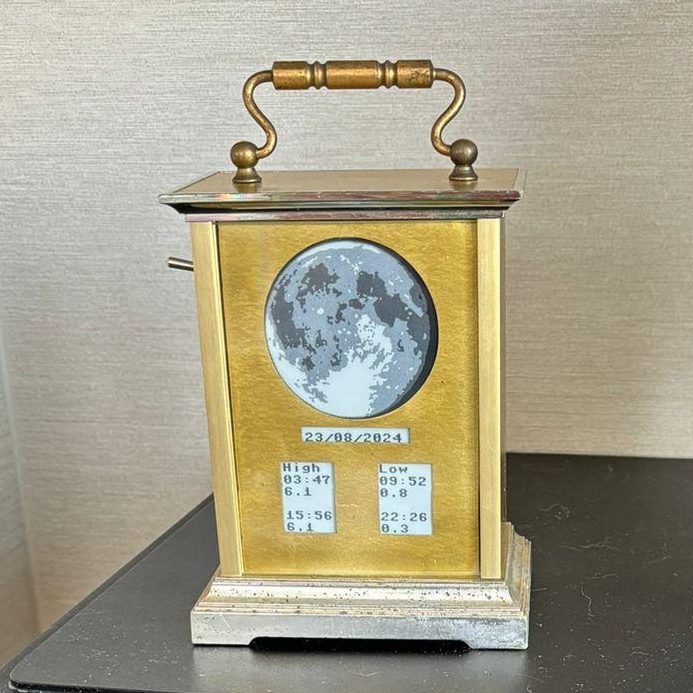
Some home accessories sit quietly in the background, doing their best impression of a well-behaved lamp. A moon and tide clock is not that kind of object. It is moodier, smarter, and far more likely to make guests ask, “Wait, what exactly does that do?” That, frankly, is part of the charm.
At first glance, a moon and tide clock feels like a piece of old-world magic for a modern living room. It nods to astronomy, coastal rhythm, craftsmanship, and the kind of collected decorating style that makes a mantel feel personal rather than painfully staged. Put one on a mantlepiece and the entire room gets a little more interesting. Not louder. Not cluttered. Just more alive. It suggests that the person who lives here appreciates beautiful objects, but also likes those objects to have a purpose beyond “sitting there looking expensive.”
That is why this kind of clock is having such a compelling moment. It blends practical information with decorative appeal. It bridges science and style. And unlike some trendy decor pieces that vanish faster than a scented candle in December, a moon and tide clock has staying power. The moon is not going out of fashion anytime soon, and the sea has never exactly struggled with relevance.
Why a Moon and Tide Clock Looks So Good on a Mantel
The mantlepiece is prime real estate in any room. It naturally pulls the eye, which means whatever sits there has to earn its place. A moon and tide clock does that beautifully because it brings together two qualities every great mantel object needs: visual presence and conversational value.
Visually, these clocks often lean into materials that already feel at home near a fireplace or decorative ledge: brass, dark metal, wood, deep blue faces, ivory markings, and vintage-inspired cases. That combination reads as both refined and relaxed. A polished brass version can feel nautical and traditional. A beechwood or matte-finished design reads softer and more Scandinavian. A smart DIY version tucked into a restored carriage clock lands somewhere between gentleman’s library and charming coastal laboratory. Yes, that is a real vibe, and yes, it works.
Just as important, the subject matter itself is visually poetic. The moon phases are naturally graphic. Tide markers, crescent imagery, wave lines, celestial symbols, and rounded dials all look elegant in a display. Even people who do not know a spring tide from a spring chicken tend to appreciate the aesthetic instantly.
On a mantel, this matters. A good mantel arrangement usually benefits from a focal object that feels intentional. A moon and tide clock can serve as that anchor piece, especially when paired with a mirror, framed art, candlesticks, a small stack of books, or a vessel filled with branches. It reads as curated rather than random, which is the holy grail of home styling.
What a Moon and Tide Clock Actually Does
Let’s clear one thing up before decorative enthusiasm gets carried away: a moon and tide clock is not merely a normal clock wearing a sailor costume. It is based on real natural cycles.
A moon phase display tracks the lunar cycle, which takes about 29.5 days from one new moon to the next. That means the face or display changes gradually through the familiar sequence: new moon, crescents, quarter moons, gibbous phases, full moon, and back again. In a traditional clock, this may happen mechanically. In a more modern version, a microcontroller and digital display can handle the work with much more flexibility.
The tide side of the equation is equally fascinating. In many coastal areas, especially places with semidiurnal tides, there are two high tides and two low tides in a lunar day. Because that cycle is tied to the moon’s apparent motion, high tides are not spaced exactly 12 hours apart in the same way a wall clock splits a day. The interval is closer to 12 hours and 25 minutes. In other words, the ocean keeps its own schedule, and it is not overly concerned with your calendar app.
Traditional tide clocks work best as approximations in places where tide patterns are fairly regular. That is why they have long appealed to sailors, anglers, coastal homeowners, and anyone who likes the practical romance of knowing when the water will rise or retreat. But a tide clock is not a substitute for precise marine forecasting if you are boating, fishing, or planning something safety-critical. Think of it as elegant awareness rather than legal testimony.
The moon and the sun both affect tides, and the strongest tidal ranges usually appear around the new and full moon, when those gravitational influences line up. That relationship adds another layer of beauty to the object. You are not just looking at a decorative dial. You are looking at a small domestic translation of celestial mechanics. Which sounds intimidating until you realize it basically means the moon is helping your mantel do something cool.
Why This Particular Style Feels Fresh Right Now
The title A Stylish Moon And Tide Clock For The Mantlepiece evokes more than a generic decor trend. It also lines up with a genuinely clever build that drew attention for combining old-fashioned casework with modern electronics. The concept is delightful: take a repurposed carriage clock, hide a compact digital brain inside, and use an e-paper display to show lunar imagery and tide information in a format that feels antique from across the room and wonderfully nerdy up close.
That blend is exactly why the idea resonates. Today’s best home objects often live at the intersection of technology and texture. People do not necessarily want their homes to look like a spaceship dashboard. They want warmth, character, and a sense of history. But they also appreciate smart functionality. A moon and tide clock gives both. It can look like something inherited from a maritime great-uncle who definitely owned a telescope, while quietly relying on contemporary hardware behind the scenes.
It also taps into several decor directions that continue to appeal: coastal interiors with more restraint and less kitsch, celestial motifs that feel grown-up rather than gimmicky, and heritage-inspired accents that make a room feel layered. The best versions avoid the trap of looking overly themed. You do not need an anchor pillow, a ship’s wheel, and a bowl of decorative shells the size of helmets. The clock itself can do the storytelling.
How to Style a Moon and Tide Clock on the Mantlepiece
1. Let it be the hero piece
If your clock has real presence, do not bury it in a crowd of tiny accessories. Give it breathing room. A mantel looks more sophisticated when one object clearly leads the composition. Place the clock slightly off center beneath a mirror or artwork, or center it if the design is symmetrical and substantial enough to hold that position confidently.
2. Use height, texture, and asymmetry
One of the easiest ways to make a mantel look designer-styled is to vary heights and textures. Pair the clock with tall taper candles, a medium-height ceramic vase, and a lower stack of books or a small bowl. This prevents the arrangement from feeling flat. The goal is not military precision. The goal is balance with personality.
3. Keep the palette disciplined
Moon and tide clocks often look best in palettes pulled from nature: navy, cream, brass, charcoal, driftwood brown, sea-glass green, and soft white. If your mantel already has a lot happening, choose supporting decor in two or three complementary tones rather than every color in the decorating rainbow. Your clock should feel elevated, not trapped in a craft store aisle explosion.
4. Mix natural and polished elements
The tension between organic and refined materials is what makes this kind of display sing. A brass or wood clock looks fantastic with weathered books, stone objects, coral-inspired sculpture, dried branches, or a matte ceramic vessel. That contrast makes the setup feel collected over time.
5. Do not ignore what is above it
A mantel vignette is never just about what sits on the ledge. The wall above matters too. If you hang a mirror, make sure it is proportionate to the mantel and to the clock below it. A too-small mirror floating awkwardly above your beautiful celestial clock is the visual equivalent of wearing dress shoes with swim trunks. Technically allowed, spiritually wrong.
6. Add glow, not glare
Candlelight, warm sconces, or soft accent lighting work especially well with moon-themed decor. The clock already carries a nocturnal identity, so evening ambiance helps it feel even more intentional. If the piece includes an illuminated or e-paper component, keep surrounding lighting warm and gentle so the display remains readable without becoming harsh.
Who Should Buy One and What to Look For
A moon and tide clock is a particularly smart choice for a few types of people: coastal homeowners, frequent beachgoers, sailing enthusiasts, amateur astronomers, lovers of vintage-inspired decor, and anyone trying to make a mantel feel more personal than generic. It also makes an excellent gift because it feels thoughtful and unusual without sliding into novelty.
When shopping, pay attention to five things. First, decide whether you want decorative approximation or more accurate smart functionality. A traditional tide clock can be charming and low-maintenance, but a connected version may better suit someone who wants localized information. Second, consider the case material. Wood softens the look, brass sharpens it, and matte black gives it a cleaner contemporary edge.
Third, think about scale. Mantel decor should feel proportionate to the ledge and to nearby objects. Too small and the piece disappears. Too large and it looks like it is attempting a takeover. Fourth, look for readability. Beautiful design is lovely, but if nobody can tell moon from menu, the experience falls apart. Fifth, check whether the style matches your room’s personality. Coastal? Traditional? Modern classic? Slightly academic with a hidden pirate soul? There is a version for that.
If you are drawn to handcrafted or specialty designs, you will find plenty of examples that already blend lunar tracking with strong visual identity. Some lean into natural wood and navy faces, while others go all-in on custom tide mapping or museum-inspired celestial instruments. The key is choosing one that feels like part of the room, not a guest star from a completely different show.
Conclusion: A Small Object With Big Atmosphere
A stylish moon and tide clock for the mantlepiece succeeds because it does more than decorate a room. It gives the room a rhythm. It introduces a sense of passing time that feels older, slower, and more elemental than the numbers on a phone screen. It connects home life to lunar cycles, ocean patterns, and the pleasure of living with objects that reward repeated attention.
In practical terms, it is a handsome mantel accent. In emotional terms, it is a mood machine. It can make a fireplace wall feel more layered, a living room feel more intentional, and an ordinary evening feel just a little more cinematic. That is a lot to ask from one decorative object, but a good moon and tide clock pulls it off with surprising ease.
And honestly, any accessory that manages to be elegant, intelligent, and just mysterious enough to spark conversation deserves a very good seat on the mantel. Preferably center stage.
Experience: Living With a Moon and Tide Clock on the Mantel
The first experience of living with a moon and tide clock is usually visual. You notice it in passing. The dial catches the light in the late afternoon. The moon graphic looks slightly different than it did three days ago. The tide marker has shifted again. Nothing about it is loud, yet it keeps inviting another glance. That is what makes it different from ordinary decor. A vase is lovely, but it does not quietly tell you that the sea has its own schedule and the sky is changing above your roof whether you are paying attention or not.
Over time, the clock starts to influence the mood of the room. In the morning, it feels crisp and curious, especially if the mantel is styled with pale ceramics, books, and a mirror that bounces daylight back into the space. At night, the same clock can feel almost theatrical. Light a few candles, let the fire glow, and suddenly the piece looks less like an accessory and more like a relic from some wonderfully improbable story about astronomers, sailors, and people who wrote letters with fountain pens.
There is also a surprisingly personal side to it. People begin checking it for small rituals. Someone heading out for a beach walk may glance at the tide display before grabbing shoes. Someone who likes stargazing may look at the moon phase before deciding whether tonight is a good night for backyard skywatching. Even people who are not particularly “moon people” tend to get pulled in. The clock turns natural cycles into household knowledge. It makes time feel less abstract and more lived in.
Guests notice it too, and almost always with delight. A standard mantel arrangement earns a polite nod. A moon and tide clock earns questions. How does it work? Is it accurate? Where did you find it? Is it antique? Did you build it? Those questions are useful because they do something good decor should always do: they create connection. Suddenly, the room has a story to tell. The mantel is not just arranged; it is expressive.
The experience becomes even richer through the seasons. In summer, the clock feels breezy and coastal. In fall, surrounded by darker woods, brass candlesticks, and branches, it feels scholarly and atmospheric. In winter, it becomes almost magical, especially when the room is dim and the fireplace turns the metal and glass warm. In spring, paired with fresh greenery and lighter colors, it feels renewed and quietly optimistic. Very few decor objects adapt this well without trying too hard.
Perhaps the best part is that it slows you down a little. Not in a dramatic, abandon-all-technology-and-move-to-a-lighthouse way. Just enough to make you look up. Just enough to make you notice patterns. Just enough to remind you that time is not only measured in appointments and screen alerts, but also in tides, phases, weather, light, and habit. That is a rare quality in home design. It is decoration with depth.
So the experience of owning a moon and tide clock is not simply about having a stylish mantel. It is about living with an object that changes, teaches, and gently entertains. It is a daily little nudge toward wonder, wrapped in a very handsome case. And really, that is the dream: a home that looks good, feels good, and occasionally makes you feel smarter than you were five minutes ago.