There are two kinds of investors: the ones who “set it and forget it,” and the ones who can’t resist turning their portfolio into a personalized burrito bowl with extra guac, no onions, and “just a little” hot sauce (until their eyes water). If you’ve ever wanted your investments to match your beliefs, your tax situation, your risk tolerance, and your sleep schedule, you’re in the right place.
“Talk your book” is Wall Street shorthand for telling a compelling story about what you ownsometimes for good reasons (clarity, conviction), sometimes for questionable ones (marketing, ego, or trying to recruit more buyers to your trade). Portfolio customization is where that story becomes real: you’re not just picking what to own, you’re shaping how you own iton the upside (return potential) and on the downside (risk control).
This article breaks down the upside and downside of customizing your portfolio, with practical examples, plain-English trade-offs, and a few gentle jokesbecause money is serious, but you don’t need to suffer to learn.
What “Talk Your Book” Means (and Why You Should Care)
In finance, “talk your book” means advocating for the investments you already hold. At best, it’s a transparent way to communicate your thesis: “Here’s what I own and why.” At worst, it’s a sales pitch wearing a lab coat: “Trust me, this is the future” (conveniently, the future they’re invested in).
Customization forces a useful question: if you had to write your portfolio’s “book jacket,” would it be coherent? Or would it read like a streaming service algorithm got access to your brokerage account at 2 a.m.? A customized portfolio can be a disciplined expression of your goalsor a high-fee scrapbook of opinions.
Portfolio Customization 101: What It Is (and What It Isn’t)
Portfolio customization is adjusting your investments to better fit your personal needstaxes, values, cash-flow needs, risk limits, and preferenceswithout accidentally turning the whole thing into a fragile art project. Common forms include:
- Direct indexing / personalized indexing (owning many individual stocks to mimic an index)
- Factor tilts (value, quality, momentum, low volatility)
- Values-based screens (exclude industries or companies)
- Concentration management (handling employer stock or inherited positions)
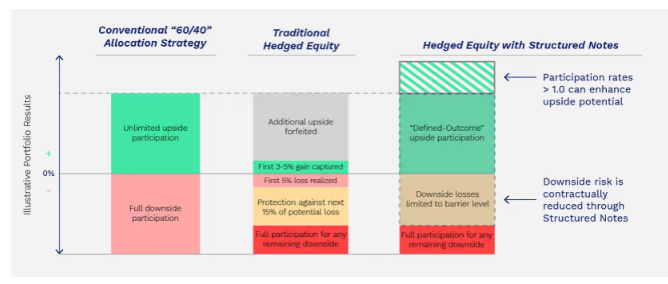
- Downside overlays (options collars, protective puts, buffered strategies)
- Tax management (tax-loss harvesting, gain deferral, charitable gifting strategies)
Customization is not code for “make my portfolio always go up.” It’s about shaping the distribution of outcomes: more of the upside you want, less of the downside you can’t tolerate, and fewer surprises at tax time.
Upside Customization: How People Try to Earn More (or Feel Smarter)
1) Tilts, Factors, and “Let’s Nudge the Odds” Investing
Upside customization often starts with a tilt: you keep a diversified core but lean into something you believe has a long-term edge. Examples: a quality tilt (profitable, stable businesses), a value tilt (cheaper companies), or a small-cap tilt (smaller firms with potentially higher growth).
The upside: you can align your portfolio with a repeatable idea rather than a hot take. The downside: tilts can underperform for long stretches, and the pain isn’t just financialit’s emotional (“Why am I losing to an index fund my neighbor bought in three clicks?”).
2) Themes and Satellites (a.k.a. “My Portfolio Has a Personality”)
Many investors use a core-satellite approach: a broad, low-cost core (like a total market or S&P 500-style exposure) plus satellites that express convictionAI, clean energy, healthcare innovation, dividend growth, and so on.
The upside: you can “talk your book” without betting your whole retirement on one storyline. The downside: thematic bets often overlap (you think you own five different ETFs; you actually own the same mega-cap tech companies in five outfits).
3) Values-Based Screens (ESG, SRI, Faith-Based, or Just “No Thanks” Lists)
Values-based customization can be as light as excluding a single company, or as strict as removing entire industries (tobacco, weapons, fossil fuels, gambling). This can make investing feel more aligned and intentional.
The trade-off is real: exclusions can increase tracking error (how different your performance is from the benchmark) and may shift factor exposures in ways you didn’t intend. In plain terms: you might also be “tilting” without meaning to.
Downside Customization: How People Try to Lose Less (Without Living Under a Mattress)
1) The Classic Shock Absorbers: Bonds, Cash, and Diversifiers
The simplest downside customization is adjusting asset allocation. More high-quality bonds and cash-like instruments generally reduce volatility. A bond ladder can also match upcoming spending needs (college tuition, home down payment, “I’d like to retire before my knees retire first”).
The catch: too much safety can quietly sabotage long-term growth, especially after inflation and taxes. Downside protection always has a pricesometimes paid in dollars, sometimes paid in opportunity.
2) Options: Protective Puts, Collars, and the “Insurance Premium” Reality
Options-based hedging is the most literal form of downside customization. A protective put can limit losses. A collar (own the stock, buy a put, sell a call) can reduce hedge costbut caps upside.
The upside: a smoother ride during sharp drawdowns. The downside: hedges cost money, and if markets grind upward, you can feel like you’re paying for home insurance while your house stubbornly refuses to catch fire (rude, honestly).
3) Buffered / Defined-Outcome Strategies and Trend Tools
Some investors use buffered strategies designed to absorb a portion of losses over a set period, usually with a trade-off that limits gains. Others use trend-following or managed futures strategies intended to respond differently than stocks and bonds.
The benefit is psychological and mathematical: fewer “panic sell” moments. The drawback is complexity and expectation management: buffers are not force fields, and trend strategies can lag when markets reverse quickly.
The Trade-Offs: Where Customization Can Bite Back
Tracking Error: The Hidden Cost of Being Different
Tracking error sounds like a spreadsheet problem. It’s actually a feelings problem. The more you customize, the more your results can diverge from “the market.” That can be fineuntil it isn’t. Underperformance relative to a benchmark can cause investors to abandon a strategy at the worst time.
Tax Complexity: Harvesting Losses Without Harvesting a Headache
Tax-loss harvesting (TLH) is a major reason people customize, especially through direct indexing. The idea: realize losses to offset gains and potentially reduce your tax bill, improving after-tax returns. The complication: the wash-sale rule can disallow a loss if you buy the same or “substantially identical” investment within the restricted window around the sale. Automatic dividend reinvestment and multiple accounts can accidentally trigger it.
Fees, Friction, and “Who’s Driving This Thing?”
Some customization is cheap (adjusting allocations). Some is not (options overlays, separately managed accounts, sophisticated optimization). Even when management fees look reasonable, implementation details matter: trading costs, bid/ask spreads, and operational complexity can erode the value of personalization.
Behavioral Finance: Customization Can Turn Into Confirmation Bias With a Dashboard
The biggest risk isn’t mathit’s you. A customized portfolio can become a constant temptation to tinker. If your strategy requires perfect discipline, it’s not a strategy; it’s a wish. The goal is to customize the plan, not customize your emotions every time the market has a mood swing.
Direct Indexing: The Star Player of Personalized Portfolios
Direct indexing (also called personalized indexing) aims to replicate an index by owning the underlying stocks directly, often with fractional shares and automation. That control unlocks two big levers: tax management (like TLH) and customization (screens, exclusions, tilts).
Where Direct Indexing Can Shine
- Large taxable accounts (more positions = more opportunities to harvest losses)
- High tax brackets (tax savings matter more)
- Values-based rules (exclude or underweight specific stocks/industries)
- Transition planning (moving from a concentrated position toward broader diversification over time)
Where Direct Indexing Can Disappoint
- Small portfolios (fewer holdings, fewer losses to harvest)
- Tax-advantaged accounts (TLH benefits are limited when taxes aren’t the main issue)
- Too many restrictions (heavy exclusions can increase tracking error and concentration risk)
- Frequent cash flows without coordination (risk of wash-sale issues and messy implementation)
A Concrete Example: Custom Core + Tax Smarts
Imagine a $750,000 taxable account invested as a large-cap U.S. core. The investor wants: (1) broad market exposure, (2) to exclude tobacco, (3) to reduce exposure to their employer’s stock because they already get it through compensation, and (4) ongoing TLH to improve after-tax results.
A direct indexing approach can hold hundreds of stocks, skip the excluded names, and harvest losses across individual positions when markets wobble. But the investor must accept: performance will differ from the index (sometimes pleasantly, sometimes not), and the strategy needs disciplined rules around rebalancing, cash flows, and wash-sale avoidance across all accounts.
A Simple Framework to Customize Without Over-Engineering Your Life
Step 1: Define Your Non-Negotiables
Start with what customization must respect: your time horizon, spending needs, emergency fund, risk tolerance, tax location (taxable vs. retirement accounts), and concentration risks (like employer stock or a big inherited holding).
Step 2: Choose a “Customization Budget”
Every customization spends three currencies: (a) fees, (b) tracking error, and (c) attention. Decide how much of each you’re willing to pay. If your attention budget is low, keep it simplereven if the fancy version looks cooler on a chart.
Step 3: Write Your Portfolio’s One-Paragraph “Book”
If you can’t explain your portfolio in a paragraph, you don’t have a strategyyou have a collection. Try this template (not for Google, for you): “My core is diversified to capture broad market returns. I tilt modestly toward X because of Y. I protect downside using Z so I can stay invested through volatility. I manage taxes by doing A, and I rebalance by rule B.”
Step 4: Put Guardrails on Rebalancing and “Fun Money”
Guardrails beat willpower. Use scheduled reviews (quarterly or semiannual), set rebalancing bands, and cap speculative positions as a percentage of the whole portfolio. Your future self will thank you. Your future self is also the one who has to live with your current self’s choices.
Conclusion: Talk Your BookBut Audit It
Customization can be powerful: better tax outcomes, values alignment, more comfortable risk, and a portfolio that fits you like a tailored suit. It can also become expensive, complex, and emotionally demanding if you customize every knob and dial just because you can.
The sweet spot is intentional personalization: a sturdy core, thoughtful tilts, and downside protection that keeps you invested when markets misbehave. Talk your bookclearly, honestly, and with enough humility to revise it when facts change.
Important note: This article is for educational purposes only and is not financial, investment, or tax advice. Consider consulting qualified professionals for your situation.
Experiences From the Portfolio Trenches: What Customization Looks Like in Real Life
People rarely customize portfolios because they’re bored (although boredom has funded some truly fascinating financial decisions). They customize because something about the default “market portfolio” doesn’t match their real-world constraints. Over time, a few repeat scenarios show up again and againeach with a lesson hiding in plain sight.
Experience #1: The Values-First Investor Who Accidentally Builds a Sector Bet.
An investor starts with a simple request: “No tobacco, no private prisons, and preferably less fossil fuels.” Reasonable! The surprise comes later: after exclusions, the portfolio ends up structurally heavier in technology and lighter in energy and industrials. When energy rallies, the investor feels “wrong,” even though the portfolio is behaving exactly as designed. The takeaway is that values-based screens aren’t just moral choicesthey’re also exposure choices. A good customization process includes a “before and after” check: sector weights, factor tilts, and concentration risk. If you want values alignment and benchmark-like behavior, you need optimization and clear expectations about tracking error.
Experience #2: The Tech Believer Who Confuses Conviction With Concentration.
Another investor says, “I work in tech, I understand tech, and tech is the future.” Also reasonableuntil you notice their paycheck, their stock grants, and their portfolio are all tied to the same industry. That’s not just a thesis; that’s a lifestyle. Customization here isn’t about adding more tech; it’s about risk management. The solution often looks boring: keep a broad-market core, limit thematic satellites, and use rules to trim employer stock over time. The investor can still “talk their book,” but now the book has chapters besides “Chapter 1: Tech” and “Chapter 2: More Tech.”
Experience #3: The Tax-Savvy Professional Who Wants Every Basis Point.
High earners in high-tax states frequently hear about tax-loss harvesting and direct indexing and think, “If there’s free money in taxes, I want it.” The best outcomes happen when they treat tax benefits as probabilistic, not guaranteed, and coordinate across accounts. They turn off automatic dividend reinvestment where needed, monitor wash-sale risks, and accept that TLH works best with patience and scale. The worst outcomes happen when they demand constant harvesting in a small account, add too many restrictions, and then get frustrated that the strategy can’t manufacture losses on command. The lesson: tax management is powerful, but it’s not a slot machine that pays out every week.
Experience #4: The “I Want Downside Protection” Investor Who Hates Paying For It.
Some investors want smoother returns but don’t want to sacrifice any upside. Unfortunately, markets do not offer “premium comfort, economy pricing” on volatility. When investors use collars or buffered strategies, the emotional win often arrives during a drawdown: they panic less and stay invested. The emotional loss arrives during melt-up markets: “Why am I not keeping up?” This is where a written plan matters. If the goal of downside customization is to prevent a catastrophic behavior mistake (selling low), then giving up some upside can be a rational trade. The lesson: downside protection is like insuranceif you never need it, you still didn’t waste it; you bought peace of mind.
Across all these experiences, the pattern is clear: the best customization is anchored in a strong core, uses constraints deliberately, and measures success by after-tax, after-feelings outcomesnot by whether you “beat the market” in any random three-month window. Customize your portfolio so you can stick with it. Consistency is an underrated superpower.